Peptídeos
Subcategorias de "Peptídeos"
Foram encontrados 29608 produtos de "Peptídeos"
SGS tripeptide
SGS-acid is a tripeptide consisting of a serine residue followed by a glycine and another serine residue. SGS-acid was synthesised from the dipeptide glycyl-L-serine (GS-acid)- the dipeptide GS-acid is also available in our catalogue. SGS-acid has a net charge of 0, it can act as a Bronsted base by accepting a hydron from a donor thus giving it diverse biological and chemical uses.Peso molecular:249.1 g/molIFNB1 (118-132) Human
Recombinant human interferon-β (IFNB) is a therapeutic for certain stages of multiple sclerosis (MS). However, a significant portion of patients develop neutralising antibodies within 2 years and prevent clinical efficacy of the treatment, this was correlated to a specific rise in IgG. Sequencing of IFNB1 revealed a CD4+ T cell epitope residues (118-132) that contains critical T cell activation residues. The identification of this sequences can now allow it to be manipulated to hopefully provide new interferon treatments that reduces the capacity for induction of neutralising antibodies in MS patients. The IFNB1 (118-132) epitope can be used for immunological investigations such as T cell activation, antibody recognition via immunoassays and immunohistochemistry. This may provide further insights into certain haplotypes correlating to IFNB responses in MS treatment.Peso molecular:1,906.23 g/molSARS-CoV-2 Spike (236-250)
The SARS-CoV-2 spike protein is present on the outside of the virus particles and can bind to angiotensin-converting enzyme II (ACE2) present on the host cells. The C-terminal receptor binding domain (RBD) of the spike protein binds to the N-terminal peptidase M2 domain of ACE2. This receptor binding results in the internalisation of the virus-receptor complex and is, therefore the mechanism of entry of SARS-CoV-2 into host cells.The spike protein residues TRFQTLLALHRSYLT (236-250) from C have been identified as a T-cell epitope with a predicted HLA restriction. Immune targeting of confirmed epitopes may potentially offer protection against SARS-CoV-2 and help the development of vaccines for long-lasting immunity.Peso molecular:1,819 g/molCyclo(RGDfK)
The cyclic pentapeptide cyclo(Arg-Gly-Asp-[D-Phe]-Lys) is a highly potent and selective inhibitor for the alphavβ3 integrin receptor. A related compound, cyclo(Arg-Gly-Asp-[D-Phe]-Val), is a promising anticancer drug candidate- it inhibits angiogenesis and induces apoptosis in vascular cells.Cyclic RGD-containing peptides are selective antagonists of integrins, proteins that play important roles in cell-cell and cell-matrix interactions. In a suitably labelled form, these peptides may serve as useful tools for diagnostic imaging and peptide targeted therapy of some types of cancer.Cor e Forma:PowderPeso molecular:603.3 g/molalpha-gliadin (58-73)
α-Gliadin (58-73) is derived from Gliadin peptides, the component of wheat involved in the gastrointestinal symptoms of wheat allergy and Celiac Disease (CD). During wheat allergies histamines and leukotrienes are secreted due to gliadin peptide sequences cross-linking two IgE molecules on mast cells and basophils.The glutamine and proline rich peptides of which Gliadin is composed of are resistant to proteolysis during digestion, leaving them active in the gastrointestinal tract. Subsequently these are deamidated by tissue transglutaminase and can bind to HLA-DQ2 or DQ8. As a result in patients with the autoimmune disease CD, there is a Th1-mediated inflammatory immune response against these gliadin peptides.Gliadin can exert additional effects on the intestinal microbiota and ileal barrier function. It has been found that gut microbiota members such as Bifidobacterium and lactobacillus have the ability to digest and inactivate gliadin peptides hence reducing their inflammatory effects in the gastrointestinal system.Cor e Forma:PowderPeso molecular:1,906 g/molACTH (1-17) Human
Amino acids 1-17 of human adrenocorticotropic hormone (ACTH). ACTH, also known as corticotropin, is a tropic hormone produced and secreted by the anterior pituitary gland and member of the melanocortins peptide family. ACTH is cleaved from the precursor proopiomelanocortin (POMC). ACTH is an important component of the hypothalamic-pituitary-adrenal (HPA) axis and is often produced in response to biological stress. ACTH acts to increase the production and release of cortisol via its interaction with the ACTH receptor- ACTHR, also known as melanocortin type 2 receptor (MC2R). Receptor activation increases the intracellular concentration of cAMP via adenylyl cyclase.Abnormal ACTH levels in the body has been linked to primary adrenal insufficiency/Addison's disease, Cushing's disease and secondary adrenal insufficiency.Peso molecular:2,093.42 g/molFdM
FdM, ferredoxin maquette is a synthetic peptide which can bind a [4Fe-4S] cluster and contains a bacterial ferredoxin consensus motif (CIACGAC).Peso molecular:1,525.6 g/molTAT-Beclin Scrambled
TAT-Beclin Scrambled is a scrambled version of the peptide derived from a region of the Beclin 1 protein. The original peptide interacts with a newly identified negative regulator of autophagy, GAPR-1 (also called GLIPR2) to act as a potent inducer of autophagy. Autophagy is an essential process that maintains cellular homeostasis and carries out lysosome-mediated degradation of unwanted proteins in the cytoplasm. It is often examined when looking at disease pathways because of this regulatory function. While the immune system initiates the removal of viruses and pathogens through the autophagic pathway, some viruses (such as HIV) are able to evade this process.The scrambled sequence in this peptide means it can be used as an effective negative control in such experiments because whilst it contains the same amino acids as Beclin-1 (and thus has the same molecular weight), it does not express the same properties as the original peptide.TAT (47-57) is present due to its properties as a cell penetrating cationic peptide (CPP). It derived from the N-terminus of the Tat protein, which is a trans-activator of the transcription protein present in the human immunodeficiency virus (HIV). As a CPP, TAT (47-57) is able facilitate the delivery of the Beclin Scrambled protein across the plasma membrane.This peptide contains a GG linker between the C-terminus of TAT (47-57) and the N-terminus of Beclin Scrambled.Cor e Forma:PowderPeso molecular:3,738.9 g/molHistone H4 (1-21) R3Me1
Histone 4 (H4) is one of the four core histones (H2A, H2B, H3 and H4) which are fundamental in compacting eukaryotic DNA into the nucleosome. Due to the high lysine and arginine content, histones have a net positive charge and therefore electrostatically interact with negatively charged DNA. The nucleosome arises when 147 base pairs of DNA wrap around a H3-H4 tetramer and two H2A-H2B dimers, forming the histone octamer core. Like other core histones, H4 has a globular domain and a flexible N-terminal domain, the histone tail, which can undergo modifications such as acetylation, methylation, phosphorylation and ubiquitination.Gene transcriptional activation or inactivation is controlled by ATP-dependent chromatin remodelling factors and histone modifying enzymes. Both processes function to alter the positioning of the nucleosome, allowing the DNA within to be either accessible to the transcription machinery or inaccessible. H4's lysine rich tail plays a role in the higher order chromatin folding.Modifications allow histones to contribute to gene regulation, chromosome condensation and DNA repair. In yeast, methylation of R3 of Histone 4 results in the recruitment of histone acetyl transferase to the chromatin and the acetylation of Histone 4 K5.Peso molecular:2,105.3 g/molH-VITAFNDGLNHLDSLK^-OH
Peptide H-VITAFNDGLNHLDSLK^-OH is a Research Peptide with significant interest within the field academic and medical research. This peptide is available for purchase at Cymit Quimica in multiple sizes and with a specification of your choice.a-Gliadin (229-246)
a-Gliadin (229-246) is derived from Gliadin peptides, the component of wheat involved in the gastrointestinal symptoms of wheat allergy and Celiac Disease (CD). During wheat allergies histamines and leukotrienes are secreted due to gliadin peptide sequences cross-linking two IgE molecules on mast cells and basophils.The glutamine and proline rich peptides of which Gliadin is composed of are resistant to proteolysis during digestion, leaving them active in the gastrointestinal tract. Subsequently these are deamidated by tissue transglutaminase and can bind to HLA-DQ2 or DQ8. As a result in patients with the autoimmune disease CD, there is a Th1-mediated inflammatory immune response against these gliadin peptides.Gliadin can exert additional effects on the intestinal microbiota and ileal barrier function. It has been found that gut microbiota members such as Bifidobacterium and lactobacillus have the ability to digest and inactivate gliadin peptides hence reducing their inflammatory effects in the gastrointestinal system.Peso molecular:2,083.1 g/molExendin-4 [Lys(AF647)]
Exendin-4 is part of a group of peptide hormones, the exendins. These are members of the glucagon superfamily of peptides and are secreted from the Gila monster lizard (Heloderma suspectum) venom gland. Exendins stimulate insulin secretion in response to rising blood glucose levels and modulate gastric emptying to slow the entry of ingested sugars into the bloodstream. Exendin-4 increases insulin sensitivity and improves glucose tolerance in humans and animals with diabetes. Exendin-4 is currently used for treating type 2 diabetes mellitus in its synthetic form, Exenatide.Exendin-4 shares 53% sequence homology, and specific activities, with glucagon-like-peptide-1 (GLP-1). Enteroendocrine L-cells produce GLP-1 upon nutrient ingestion, its central role relates to insulin secretion. Unlike GLP-1, exendin-4 is resistant to cleavage by plasma dipeptidyl peptidase IV (DPP-IV), resulting in a longer half-life and duration of action than GLP-1, as well as greater potency in vivo. Exendin-4 binds and activates the glucagon-like peptide-1 receptor (GLP-1R). In addition to its role in insulin sensitivity, exendin-4 also has a role in pancreas development and has anti-cancer properties.This exendin-4 contains AF647, a structural analog to Alexa Fluor® 647, a widely used far-red fluorescent dye. Its excitation is ideally suited to 594nm or 633nm. This dye is suited for low abundance targets as it has high initial brightness and a high photostability allowing detection of low abundance peptides. If you desire an alternative dye, please contact us to request a custom synthesis.Peso molecular:5,454.4 g/molLCBiot-VYPDHA-OH
Peptide LCBiot-VYPDHA-OH is a Research Peptide with significant interest within the field academic and medical research. This peptide is available for purchase at Cymit Quimica in multiple sizes and with a specification of your choice.
H-VTSPNITVTLK^-OH
Peptide H-VTSPNITVTLK^-OH is a Research Peptide with significant interest within the field academic and medical research. This peptide is available for purchase at Cymit Quimica in multiple sizes and with a specification of your choice.Echinotocin neuropeptide
Echinotocin is a neurophysin containing precursor neuropeptide derived from the sea urchin Strongylocentrotus purpuratus.Cor e Forma:PowderPeso molecular:964.4 g/molMHV EP™
Post-transmembrane region (PTM) from the envelope protein (E) of the coronavirus- Mouse Hepatitis Virus (MHV). This protein region is involved in direct membrane binding, with the C-terminal hydrophobic residues of this peptide, thought to be most relevant for membrane binding. After replication, coronaviruses (CoVs) assemble on intracellular membranes, the coronavirus envelope protein (E) is involved in virus assembly and release. E proteins have been located in the endoplasmic reticulum Golgi intermediate compartment (ERGIC) and Golgi of infected cells but are not thought to traffic to the cell surface of infected cells. CoV E is a small hydrophobic protein which is conserved between coronaviruses. E consist of a short hydrophilic amino terminal region, a hydrophobic transmembrane region and a carboxy-terminal region. CoV E protein is an integral membrane protein.E has been considered a therapeutic target for SARS-CoV-2.Peso molecular:1,781 g/mol[5-FAM]-PR9
CPPs can transport molecules such as nucleic acids, proteins and imaging agents into cells of inter-est. PR9, Pas non-arginine, is an arginine rich CPP. It is composed of the nona-arginine: R9 and Pas which is a peptide penetrating accelerating sequence and it functions to export molecules out of endocytic vesicles. During a study in which PR9 was in complex with a Quantum dot probe (QD) it was evident that the PR9/QD complex was transported into the cell through endocytosis where it co-localises with actins, lysosomes, early endosomes and the nucleus. Due to the non-toxicity of the PR9/QD complex it can be used as a safe vector for biomedical purposes.It contains 5-Carboxyfluorescein (5-FAM), a widely used green fluorescent tag.Peso molecular:2,584.01 g/mol(Arg)9
(Arg)9 is a cationic cell-penetrating peptide (CPP)consisting of 9 arginines. Arginine rich CPPs enter cells in a passive manner through membrane multilamellarity and fusion. Evidently as a CPP, (Arg)9 can function to deliver specific molecules to target cells and can be used for drug delivery purposes.Peso molecular:1,423.69 g/molBim BH3, Peptide IV
A 26-residue fragment from BH3 only protein Bim, BH3 only proteins constitute a major proportion of pro-apoptotic members of the B-cell lymphoma 2 (Bcl-2) family of apoptotic regulatory proteins and participate in embryonic development, tissue homeostasis and immunity.Cor e Forma:PowderPeso molecular:3,267.6 g/molOVA peptide (257-264) TFA salt
CAS:Ovalbumin (OVA) is the primary protein in egg-white, and is involved in initiating food allergies and asthma. It is a highly immunogenic protein and can be used for peptide conjugation in the development of antibodies.OVA (257-264) is a class I (Kb)-restricted peptide epitope of OVA. The ovalbumin fragment is presented by the class I MHC molecule, H-2Kb. Ovalbumin (257-264) chicken has been used to trigger T cell activation in immunology studies.
Sold as the TFA saltFórmula:C45H74N10O13·xC2HF3O2Cor e Forma:PowderPeso molecular:963.13 g/molH-STTTGHLIYK^-OH
Peptide H-STTTGHLIYK^-OH is a Research Peptide with significant interest within the field academic and medical research. This peptide is available for purchase at Cymit Quimica in multiple sizes and with a specification of your choice.FSY tripeptide
Angiotensin I-converting enzyme (ACE) plays a critical role in blood pressure regulation. There is a rise in conditions linked to hypertension such as heart attacks, strokes, and dementia. This has led to search for novel inhibitors of ACE to regulate blood pressure. Food-derived bioactive peptides have been identified and utilised for their health-promoting abilities. The tripeptide FSY (Phe-Ser-Tyr) was identified from shrimp (Pandalus borealis) protein hydrolysate as a highly potent inhibitor of ACE activity. FSY is capable of being absorbed in the digestive tract to be transported in the blood to the receptors which is a useful feature for clinical application. Further study can provide deeper understanding of FSY potency on ACE function and may lead to drug development.Peso molecular:415.2 g/molPAR-3 Agonist (Mouse)
Protease activated receptors (PARs) are a distinctive four-member family of seven transmembrane G protein-coupled receptors (GPCRs) widely expressed in inflammatory cells. PARs are cleaved by certain serine proteases to expose a tethered ligand domain, this ligand domain then binds to and activates the receptors to initiate multiple signalling cascades. These PAR-activating proteases therefore represent PAR agonists. This PAR-2 agonist peptide mimics the sequence of the 'tethered ligand' and is therefore capable of activating the receptor independently of N-terminal proteolysis.PAR-3 is required for intercellular adhesion molecule 1 (ICAM-1) expression in endothelial cells and PAR-3 cooperates with PAR-1 to mediate the effect of thrombin on cytokine production and vascular cell adhesion molecule (VCAM-) 1 expression.PAR activation has been linked to inflammation, therefore compounds that mimic or interfere with the PAR-activating processes are attractive therapeutic candidates.Peso molecular:576.3 g/molHistone H3 (1-20) K4Me3-GG-[Cys(Aurora™ Fluor 647)]
Histone H3 (1 - 20) K4Me3 is derived from Histone 3 (H3), which is one of the four core histones (H2A, H2B, H3 and H4) fundamental in compacting eukaryotic DNA into the nucleosome. The nucleosome arises when 147 base pairs of DNA wrap around a H3-H4 tetramer and two H2A-H2B dimers, forming the histone octamer core. H4 and H3 are highly conserved and perform roles in binding to segments of DNA which enter and leave the nucleosome and in chromatin formation. Like the other core histone, H3 has a globular domain and a flexible N-terminal domain, 'histone tail' which can undergo modifications such as acetylation, methylation, phosphorylation and ubiquitination. Due to histones containing many lysine and arginine residues, they have a positive net charge which interacts electrostatically with the negatively charged phosphate groups in DNA. The transcriptional activation or silencing of the chromatin is controlled by ATP-dependent chromatin remodelling factors and histone-modifying enzymes which target histone proteins. Both processes alter the positioning of the nucleosome, allowing the DNA to be either available or inaccessible to the transcription machinery.Histone tails can undergo multiple modifications, including acetylation, methylation, ubiquitylation and sumoylation. The modification pattern is believed to alter chromatin function/structure. Lysine 4 of histone H3 (1 - 20) K4Me3 has been tri-methylated. This is a common cis-tail histone methylation pattern, read by histone effectors such as Spindlin1. H3 (1 - 20) K4Me3 has been used to understand interactions with histone effectors in co-crystallisation. H3 (1 - 20) K4Me3 is labelled with the Aurora Fluor 647 fluorescent tag.Peso molecular:3,435.7 g/molH-TVSLGAGAK^-OH
Peptide H-TVSLGAGAK^-OH is a Research Peptide with significant interest within the field academic and medical research. This peptide is available for purchase at Cymit Quimica in multiple sizes and with a specification of your choice.
Codesane
Codesane (COD), is a cationic α-helical amphipathic-anti-microbial-peptide isolated from the venom of the wild bee Colletes daviesanus (Hymenoptera Colletidae). COD exhibits-anti-microbial-activity against Gram-positive and Gram-negative bacteria and Candida albicans but also noticeable haemolytic activity.COD peptide works by permeating both the outer and inner cytoplasmic membranes of Escherichia coli.Peso molecular:1,915.2 g/mol[Tyr4]-Bombesin
Custom research peptide; min purity 95%. For different specs please use the Peptide Quote Tool
Fórmula:C74H108N24O19SPeso molecular:1,669.9 g/molH-SFGWDLAK^-OH
Peptide H-SFGWDLAK^-OH is a Research Peptide with significant interest within the field academic and medical research. This peptide is available for purchase at Cymit Quimica in multiple sizes and with a specification of your choice.H-DTLLK^ALLEIASCLEK^ALQVF-OH
Peptide H-DTLLK^ALLEIASCLEK^ALQVF-OH is a Research Peptide with significant interest within the field academic and medical research. This peptide is available for purchase at Cymit Quimica in multiple sizes and with a specification of your choice.H-YTIAALLSPYSYSTTAVVTNPK^E-OH
Peptide H-YTIAALLSPYSYSTTAVVTNPK^E-OH is a Research Peptide with significant interest within the field academic and medical research. This peptide is available for purchase at Cymit Quimica in multiple sizes and with a specification of your choice.Cyclo(-RGDyK)
The cyclic pentapeptide cyclo(-Arg-Gly-Asp-d-Phe-Lys-) is a highly potent and selective inhibitor for the alphavβ3 integrin receptor. A related compound, cyclo(-Arg-Gly-Asp-d-Phe-Val), is a promising anti-cancer drug candidate- it inhibits angiogenesis and induces apoptosis in vascular cells.Cyclic RGD-containing peptides are selective antagonists of integrins, proteins that play important roles in cell-cell and cell-matrix interactions. In a suitably labelled form, these peptides may serve as useful tools for diagnostic imaging and peptide targeted therapy of some types of cancer.
Peso molecular:619.3 g/molSapecin B
The peptide Sapecin B exhibits antimicrobial properties against gram-positive bacteria. It is originally derived from the sarcophaga peregrine embryonic cell line, NIH-Sape-4.Peso molecular:1,094.8 g/molLL-13-37
LL-13-37 is an active fragment of the LL-37 peptide which has been shown to have anti-fungal properties against Candida albicans.LL-37 is a member of the large cationic family of anti-microbial peptides called cathelicidins which have broad-spectrum anti-microbial activity and are expressed in many species. The only cathelicidin found in humans is LL-37- this is produced in epithelial cells, by proteolytic cleavage from the C-terminal of the hCAP-18 protein. LL-37 can be processed into different forms of anti-microbial peptides. As well as its anti-microbial properties LL-37 also has anti-cancer properties and regulates many aspects of the innate immune system- overexpression of LL-37 has been linked to autoimmune diseases such as asthma and psoriasis.Peso molecular:3,043.57 g/molSARS-CoV-2 Membrane protein (141-158)
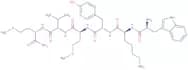
SARS-CoV-2 Membrane protein (141-158)Peso molecular:1,932.1 g/molH-Trp-Lys-Tyr-Met-Val-Met-NH2
CAS:H-Trp-Lys-Tyr-Met-Val-Met-NH2 is a natural compound that belongs to the group of pharmacological agents. It has been shown to have a therapeutic effect on congestive heart failure, bowel disease and autoimmune diseases. This compound has also been shown to stimulate locomotor activity in mice by increasing dopamine levels in the brain. H-Trp-Lys-Tyr-Met-Val-Met NH2 has been found to inhibit the growth of HL60 cells in culture, which are a type of white blood cell that is involved in immune response. H-Trp-Lys Tyr Met Val Met NH2 also binds to receptors for formyl and sesquiterpenoid lactones, which are chemical compounds that are used as pharmacological agents for cancer therapy and treatment of inflammatory bowel disease.Fórmula:C41H61N9O7S2Pureza:Min. 95%Peso molecular:856.11 g/molHIV-1 reverse transcriptase (A2-YI9)
HIV-1 replication is rapid and error prone which is beneficial to the virus as it allows mutations to arise that aid evasion of the host immune system and resistance to drug treatment. RT is the key target for most anti-HIV drugs and therefore conserved sequences are useful to aid further research into new less toxic antiviral treatments. HIV-1 reverse transcriptase (RT) converts the RNA genome into DNA during retroviral replication. HIV-1 RT is a heterodimer composed of 2 subunits, p66 and p51. HIV-1 RT heterodimer has 2 enzymatic functions, DNA polymerase and Rnase H resulting in nucleic acid translation to a linear DNA duplex. Complete inhibition of viral replication is the only known method of preventing HIV-1 drug resistance and disease progression.HIV RT epitopes have become a useful research tool as an in vitro antigenic challenge to study cytotoxic T lymphocyte (CTL) responses to retroviruses. The HIV-1 RT A2-YI9 sequence has been shown to be an effective epitope for CTL recognition leading to lysis of HIV-infected T cells. The A2-YI9 is also considered a potential for vaccine development due to it being a well conserved sequence.Peso molecular:1,012.17 g/molH-EDSILAVR^-OH
Peptide H-EDSILAVR^-OH is a Research Peptide with significant interest within the field academic and medical research. This peptide is available for purchase at Cymit Quimica in multiple sizes and with a specification of your choice.Oxytocin (free acid)
Neuropeptide and hormone involved in many processes, including- social bonding--sexual reproduction- childbirth and breastfeeding. Oxytocin is synthesised in the hypothalamus as a prepropeptide consisting of a signal peptide, the oxytocin peptide hormone, a processing signal and the carrier protein- neurophysin. The prohormone then undergoes endoproteolytic cleavage and amidation to form the final oxytocin peptide.Dysregulation of oxytocin has been implicated in the pathophysiology of neuropsychiatric disorders that impact social functioning, such as autism, schizophrenia, and depression as well as anorexia nervosa. Intranasal oxytocin administration may reduce amygdala activity and amygdala-midbrain connectivity in response to fearful situations- reduce cortisol release and anxiety in response to psychosocial stress- increase trust behaviour- increase the ability to interpret mental states, and increase the amount of time spent gazing at the eyes when viewing faces.Peso molecular:1,007.4 g/molCooP
CooP peptide specifically homes to invasive tumours such as glioblastoma and their blood vessels. Mammary-derived growth inhibitor (MDGI), also known as the fatty-acid binding protein 3 (FABP3) or the heart fatty acid-binding protein (H-FABP) is the binding partner for the CooP peptide. Coop peptide homes to all tumours which express MDGI and their associated vasculature. MDGI is not however expressed in the normal human brain. Therefore the CooP peptide appears to have a highly selective specificity as a homing peptide and the potential to deliver targeted therapy to treat invasive brain tumours.CooP peptide has been successfully used for the targeted delivery of chemotherapy and different nanoparticles.Peso molecular:845.4 g/molTAT-AKAP79 (326-336) scrambled
The activation of transient receptor potential cation channel subfamily V member 1 (TRPV1) is believed to play a role in hyperalgesia, asthma and hypertension. TRPV1 is important for neuronal pain detection as well as the detection of heat, capsaicin, protons and the neurotransmitter anandamide. -The scaffold protein AKAP79 targets kinases to phosphorylate TRPV1, however it has been shown that inflammatory intermediates prostaglandin-E2 or bradykinin can activate these kinases creating a route for inflammation to cause hyperalgesia.This product is composed of the TRPV1 interacting domain of AKAP79 reordered into a scrambled sequence and conjugated to the cell penetrating TAT domain. This product was shown in vivo to have no effect on TRPV1 algesia and thus is a vital control for research work. This product is a vital tool for research into suitable TRPV1 antagonists.Peso molecular:2,878.6 g/mol(Tos-GFHR)2-[Rh110]
Candidate peptide substrate for kallikrein-related peptidase 5 (KLK5). In its intact state this peptide is not fluorescent, however when this substrate peptide is cleaved, Rhodamine 110 is released and thus fluorescence can then be detected. Contains rhodamine 110 group, a widely used red fluorescent tag. The terminal carboxylic acids in this peptide have been activated by the addition of the p-tosyl moiety, allowing for easy addition of functional groups or further peptide residues.Cor e Forma:PowderPeso molecular:1,632.6 g/molAc-TYRPPQPAWMFGDPHIC-OH
Peptide Ac-TYRPPQPAWMFGDPHIC-OH is a Research Peptide with significant interest within the field academic and medical research. This peptide is available for purchase at Cymit Quimica in multiple sizes and with a specification of your choice.H-His-Ser-Leu-Gly-Lys-Trp-Leu-Gly-His-Pro-Asp-Lys-Phe-OH
Peptide H-His-Ser-Leu-Gly-Lys-Trp-Leu-Gly-His-Pro-Asp-Lys-Phe-OH is a Research Peptide with significant interest within the field academic and medical research. This peptide is available for purchase at Cymit Quimica in multiple sizes and with a specification of your choice.Peso molecular:1,521.76 g/molH-WLSLLVPFV^-OH
Peptide H-WLSLLVPFV^-OH is a Research Peptide with significant interest within the field academic and medical research. This peptide is available for purchase at Cymit Quimica in multiple sizes and with a specification of your choice.SIVmac239 - 21
Custom research peptide; min purity 95%. For different specs please use the Peptide Quote ToolPeso molecular:1,758.2 g/molH-AL^PAPIEK-OH
Peptide H-AL^PAPIEK-OH is a Research Peptide with significant interest within the field academic and medical research. This peptide is available for purchase at Cymit Quimica in multiple sizes and with a specification of your choice.



![Exendin-4 [Lys(AF647)]](/_next/image/?url=https%3A%2Fstatic.cymitquimica.com%2Fproducts%2F3D%2Fthumb-webp%2FCRB1101572.webp&w=3840&q=75)
![[5-FAM]-PR9](/_next/image/?url=https%3A%2Fstatic.cymitquimica.com%2Fproducts%2F3D%2Fthumb-webp%2FCRB1100285.webp&w=3840&q=75)
![Histone H3 (1-20) K4Me3-GG-[Cys(Aurora™ Fluor 647)]](/_next/image/?url=https%3A%2Fstatic.cymitquimica.com%2Fproducts%2F3D%2Fthumb-webp%2FCRB1101679.webp&w=3840&q=75)
![[Tyr4]-Bombesin](/_next/image/?url=https%3A%2Fstatic.cymitquimica.com%2Fproducts%2F3D%2Fthumb-webp%2FPP50182.webp&w=3840&q=75)
![(Tos-GFHR)2-[Rh110]](/_next/image/?url=https%3A%2Fstatic.cymitquimica.com%2Fproducts%2F3D%2Fthumb-webp%2FCRB1100667.webp&w=3840&q=75)