Peptídeos
Subcategorias de "Peptídeos"
Foram encontrados 29595 produtos de "Peptídeos"
Bz-EYY-NH2
Peptide Bz-EYY-NH2 is a Research Peptide with significant interest within the field academic and medical research. This peptide is available for purchase at Cymit Quimica in multiple sizes and with a specification of your choice.KRREILSRRPSYR-acid
Protein kinases are important drug targets for numerous diseases to try and better evaluate the enzyme specificity, affinity, mode of action and identify possible inhibitors. In vitro assays and synthetic substrates provide valuable data about human kinase activity. CREBtide KRREILSRRPSYR is based on the phosphorylation sequence in d-CREB (cAMP response element binding protein) it is a substrate for protein kinase A (PKA)(Km = 3.9 mM). However, it has also been tested as a substrate for other protein kinases, including cAMP-dependent protein kinase (cAK) and protein kinase C (PKC). Immunoblots and autoradiography have been used for CREBtide KRREILSRRPSYR in vitro kinase analysis.Cor e Forma:PowderPeso molecular:1,716 g/molN-formylated PSMalpha3
Pathogenic Staphylococcus aureus strains produce N-formylmethionyl containing peptides. Peptides starting with an N-formylated methionyl group constitute a unique hallmark of bacterial as well as mitochondrial metabolism, and professional phagocytes of our innate immune system recognise this microbial/mitochondrial pattern as a danger signal that guides innate immune cells.All PSMα peptides have the same basic functions and promote virulence through effects on discrete neutrophil functions (i.e. chemotaxis) and by being cytotoxic at higher concentrations. PSMα2 and PSMα3 can both bind to FPR2 and trigger superoxide release in neutrophils at low nanomolar concentrations. In addition, at high nanomolar concentrations they display cytotoxicity selectively on apoptotic neutrophil membranes and this occurs in an FPR2 independent manner.Cor e Forma:PowderPeso molecular:2,633.4 g/molH-2Dk polyomavirus MT peptide RRLGRTLLL
Custom research peptide; min purity 95%. For different specs please use the Peptide Quote Toolγ - Fibrinogen (377 - 395), scrambled
Custom research peptide; min purity 95%. For different specs please use the Peptide Quote ToolFórmula:C100H165N25O28S2Peso molecular:2,229.7 g/molH-SIINFEKL-cysteamide
Peptide H-SIINFEKL-cysteamide is a Research Peptide with significant interest within the field academic and medical research. This peptide is available for purchase at Cymit Quimica in multiple sizes and with a specification of your choice.H-VHLTPEEK^SAV-OH
Peptide H-VHLTPEEK^SAV-OH is a Research Peptide with significant interest within the field academic and medical research. This peptide is available for purchase at Cymit Quimica in multiple sizes and with a specification of your choice.
Leu-Ile-Thr
Custom research peptide; min purity 95%. For different specs please use the Peptide Quote ToolFórmula:C16H31N3O5Peso molecular:345.43 g/molH-EDVPSER^-OH
Peptide H-EDVPSER^-OH is a Research Peptide with significant interest within the field academic and medical research. This peptide is available for purchase at Cymit Quimica in multiple sizes and with a specification of your choice.
E7 (43–77), HPV Oncoprotein
Custom research peptide; min purity 95%. For different specs please use the Peptide Quote Tool
Peso molecular:3,980.6 g/molH-SALTIQLIQNHFVDEYDPTIEDSYR^-OH
Peptide H-SALTIQLIQNHFVDEYDPTIEDSYR^-OH is a Research Peptide with significant interest within the field academic and medical research. This peptide is available for purchase at Cymit Quimica in multiple sizes and with a specification of your choice.
Ac-DDDDDDD-NH2
Peptide Ac-DDDDDDD-NH2 is a Research Peptide with significant interest within the field academic and medical research. This peptide is available for purchase at Cymit Quimica in multiple sizes and with a specification of your choice.H-NELESYAYSLK^-OH
Peptide H-NELESYAYSLK^-OH is a Research Peptide with significant interest within the field academic and medical research. This peptide is available for purchase at Cymit Quimica in multiple sizes and with a specification of your choice.H-EGYYGYTGAFR^-OH
Peptide H-EGYYGYTGAFR^-OH is a Research Peptide with significant interest within the field academic and medical research. This peptide is available for purchase at Cymit Quimica in multiple sizes and with a specification of your choice.Recombinant Pseudomonas aeruginosa III protein PscF (pscF)
Custom research peptide; min purity 95%. For different specs please use the Peptide Quote ToolAc-CRLVSDVFPSARDF-NH2
Peptide Ac-CRLVSDVFPSARDF-NH2 is a Research Peptide with significant interest within the field academic and medical research. This peptide is available for purchase at Cymit Quimica in multiple sizes and with a specification of your choice.Ac-CYPYDVPDYA-OH
Peptide Ac-CYPYDVPDYA-OH is a Research Peptide with significant interest within the field academic and medical research. This peptide is available for purchase at Cymit Quimica in multiple sizes and with a specification of your choice.
H-VAVVNQIAL-OH
Peptide H-VAVVNQIAL-OH is a Research Peptide with significant interest within the field academic and medical research. This peptide is available for purchase at Cymit Quimica in multiple sizes and with a specification of your choice.
H-GTFTASQNYLR^-OH
Peptide H-GTFTASQNYLR^-OH is a Research Peptide with significant interest within the field academic and medical research. This peptide is available for purchase at Cymit Quimica in multiple sizes and with a specification of your choice.
Visperas1pY
An immuno-receptor tyrosine-based activation motif (ITAM) is a phosphorylation site consisting of a conserved sequence of four amino acids that is repeated twice in the cytoplasmic tails of cell-surface non-catalytic tyrosine-phosphorylated receptors. ITAMs are involved activation of immune cells. The motif has the following structure: YxxL/I. where xx are any two amino acids. Two of these motifs are typically separated by between 6 and 8 amino acids in the cytoplasmic tail of the molecule (YxxL/Ix(6-8)YxxL/I). ITAMs are found in the CD3 and θ¶-chains of the T cell receptor (TCR) complex. TCR is a multi-subunit receptor on the surface of T cells which contains two ligand binding chains containing 20 phosphorylation sites, distributed on 10 ITAMs. The TCR θ¶-chain is a homodimer subunit that contains six ITAMs (12 sites). These sites are phosphorylated by the membrane-anchored Src family tyrosine kinase Lck and Fyn and are dephosphorylated by the transmembrane phosphatases CD148 and CD45. When both tyrosines in an ITAM are phosphorylated they generate docking sites for the tandem SH2 domains of the cytosolic tyrosine kinase ZAP-70. Bound ZAP-70 can phosphorylate tyrosines on other substrates that initiate the signal transduction that leads to T cell activation. The multiple ITAMs on the TCR function mainly to amplify subsequent signalling.T cells rely on the TCR to recognize antigens, in the form of peptides bound to major histocompatibility complexes (MHC), on the surfaces of antigen-presenting cells. Binding of TCR to antigen-MCH complexes leads to proliferation, differentiation, and the secretion of effector cytokines, contributing to the elimination of infections.
Peso molecular:1,986.9 g/molH-DSLFIPIR^-OH
Peptide H-DSLFIPIR^-OH is a Research Peptide with significant interest within the field academic and medical research. This peptide is available for purchase at Cymit Quimica in multiple sizes and with a specification of your choice.
Biot-MHRQETVDCLKKFN-NH2
Peptide Biot-MHRQETVDCLKKFN-NH2 is a Research Peptide with significant interest within the field academic and medical research. This peptide is available for purchase at Cymit Quimica in multiple sizes and with a specification of your choice.SRC-1 (676-700)
Steroid Receptor Coactivator - 1 (676-700).
Cor e Forma:PowderPeso molecular:2,797.4 g/molSARS-CoV-2 Nucleoprotein 2 (326-340)
The coronavirus (CoV) nucleoprotein is the major component of CoV structural proteins. Also known as the nucleocapsid protein, it is an abundant RNA-binding protein critical for viral genome packaging. These factors make nucleoprotein a good target for developing new antiviral drugs. In addition, the identification of epitopes within the nucleoprotein sequence can help design more effective SARS-CoV-2 vaccines.Models have predicted epitopes exhibiting antigenicity, stability and interactions with MHC class-I and class-II molecules. Nucleoprotein (261-275) is an epitope candidate with various HLA restrictions. This epitope can be used to better vaccine design for more durable CD4+ and CD8+ T cell responses for long-lasting immunity.
Peso molecular:1,621.8 g/molNY-ESO-1 (161-180)
Custom research peptide; min purity 95%. For different specs please use the Peptide Quote ToolProtein Kinase A Inhibitor (6-22), amide
CAS:Custom research peptide; min purity 95%. For different specs please use the Peptide Quote Tool
Fórmula:C80H130N28O24Peso molecular:1,868.06 g/molSIVmac239 - 44
Custom research peptide; min purity 95%. For different specs please use the Peptide Quote Tool
Peso molecular:1,614.8 g/molH-YLDSGIHFGA^-OH
Peptide H-YLDSGIHFGA^-OH is a Research Peptide with significant interest within the field academic and medical research. This peptide is available for purchase at Cymit Quimica in multiple sizes and with a specification of your choice.Angiotensin II (1-8)
Angiotensin II (Ang-II) is a key signalling peptide of the renin angiotensin system (RAS) which is involved in regulating blood pressure, cardiovascular function and energy balance. RAS activity is elevated in obesity and is widely studied in relation to lifestyle-related diseases.Ang-II is produced from angiotensinogen (AGT) via the intermediate angiotensin I (Ang-I). AGT is cleaved by the aspartyl-protease, renin, to produce Ang-I, which is then cleaved by the dicarboxyl-peptidase angiotensin converting enzyme (ACE). ACE removes a histidine and a leucine from the C-terminus of Ang-I to form Ang-II.Ang-II exerts its affect by binding to the G-protein-coupled receptors- Ang II type 1 (AT1) and Ang II type 2 (AT2) receptors. Ang-II plays central roles in glucose metabolism and blood pressure. Increased levels of Ang-II have also been associated with Alzheimer's disease, and certain cancers including oesophageal squamous cell carcinoma (ESCC), brain cancers and breast cancers. The effects of Ang-II appear to be supressed by another branch of the RAS- the ACE2/Ang-(1-7)/Mas pathway.Peso molecular:1,045.5 g/molUBA3 (59-72) peptide
Peptide derived from the ubiquitin-activating enzyme 3 (UBA3), the catalytic subunit of the NEDD8-activating enzyme (NAE).Cor e Forma:PowderPeso molecular:1,495.8 g/molH-GFYYSLK^-OH
Peptide H-GFYYSLK^-OH is a Research Peptide with significant interest within the field academic and medical research. This peptide is available for purchase at Cymit Quimica in multiple sizes and with a specification of your choice.
H-LADLQVPR^-OH
Peptide H-LADLQVPR^-OH is a Research Peptide with significant interest within the field academic and medical research. This peptide is available for purchase at Cymit Quimica in multiple sizes and with a specification of your choice.
Ac-Rpt-NH2
Peptide Ac-Rpt-NH2 is a Research Peptide with significant interest within the field academic and medical research. This peptide is available for purchase at Cymit Quimica in multiple sizes and with a specification of your choice.
H-NQVVLK^-OH
Peptide H-NQVVLK^-OH is a Research Peptide with significant interest within the field academic and medical research. This peptide is available for purchase at Cymit Quimica in multiple sizes and with a specification of your choice.
H-AFAHAQWK^-OH
Peptide H-AFAHAQWK^-OH is a Research Peptide with significant interest within the field academic and medical research. This peptide is available for purchase at Cymit Quimica in multiple sizes and with a specification of your choice.
Suc-Ala-Glu-Pro-Phe-pNA
CAS:Suc-Ala-Glu-Pro-Phe-pNA is a peptide that is a specific interaction with neutrophils. It is an endogenous factor that has been shown to activate neutrophil functions, such as chemotaxis and phagocytosis. The substrate proteins of this peptide are involved in the regulation of neutrophil functions. Suc-Ala-Glu-Pro-Phe-pNA has also been shown to inhibit the activity of phosphatases, which may lead to inhibition of cell proliferation. The structure activity relationship studies for this peptide show that it can be used as an inhibitor for cells in early stages of development.
Fórmula:C32H38N6O11Pureza:Min. 95%Peso molecular:682.69 g/molFmoc-His(Trt)-Rink-Amide MBHA Resin
This is a vivitide catalogue product. Please send your vivitide product enquiry to sales@vivitide.com for an up-to-date price and availability.
Pureza:Min. 95%H-Glu{Glu[Cyclo(Arg-Gly-Asp-D-Phe-Lys)]2}2
H-Glu{Glu[Cyclo(Arg-Gly-Asp-D-Phe-Lys)]2}2 is a tetrameric peptide that has been shown to have a broad spectrum of biological activity. This peptide may be involved in the regulation of cell growth and proliferation, which may contribute to its anti-inflammatory effects. H-Glu{Glu[Cyclo(Arg-Gly-Asp-D-Phe-Lys)]2}2 also inhibits the production of nitric oxide, which may contribute to its antimicrobial properties against bacteria and fungi.Fórmula:C123H179N39O34Pureza:Min. 95%Peso molecular:2,748.04 g/molYSA acid
YSA binds to the extracellular domain of ephrin type-A receptor 2 (EphA2) with high affinity and selectivity. YSA binding activates EphA2 and its tumour suppressing downstream signalling pathways (including inhibition of the PI3K/Akt and ERK pathways), and promotes receptor internalisation.EphA2 is highly expressed in many types of solid tumour, and the level of EphA2 expression is positively correlated with malignancy and poor prognosis in some cancer types.YSA has been shown to be an effective targeting peptide of chemotherapeutic drugs to EphA2 expressing tumours. YSA-drug conjugates are able to selectively target EphA2 expressing tumours, both activating tumour supressing downstream signalling pathways, and becoming effectively internalised by cancer cells to further increase the potency of the chemotherapeutic drug. YSA-drug conjugates have been shown to be dramatically more effective at inhibiting tumour growth than chemotherapy alone. Selective tumour targeting with YSA could also reduce the systemic toxicity caused by nonselective and highly toxic chemotherapy agents, and thus reduce adverse side effects of chemotherapy.Peso molecular:1,346.6 g/molMBP Ac1-9 (4Y)
This peptide constitutes the acetylated N-terminal region of murine myelin basic protein (MBP) and displays high affinity for major histocompatibility complexes (MHC). This high MHC affinity is due to substitution of the native lysine at position 4 for a tyrosine. Substitution increases the MHC binding affinity of the peptide by around 1 million fold, therefore creating a superagonist ligand. MBP is an integral component of myelin found in the central nervous system (CNS) vital for the development and stability of the myelin sheath where it plays a role in membrane adhesion. MBP may be targeted by auto-antibodies in diseases such as multiple sclerosis. The low affinity of the native lysine containing MBP 1-9 peptide for MCH class II may result in MBP auto-reactive T cells escaping central-tolerance where self reactive T cells are usually eliminated. MBPs constitute an extraordinarily varied collection of splice isoforms which show a myriad of post-translational modifications.
Cor e Forma:PowderPeso molecular:1,133.22 g/molGanglioside GM1-binding peptides p3
Ganglioside GM1-binding peptides p3.
Cor e Forma:PowderPeso molecular:1,777.1 g/molLocustatachykinin I
Locustatachykinin I(LTK1 or Lom-TK-I) is a potent, rapid and persistent secretion stimulator in locust Malphigian tubules which controls primary urine production, tubule writhing and local sphincter functions.- LTK1 shares sequence homology with mammalian tachykinins such as substance P.- Two putative tachykinin receptors, Drosophila tachykinin-receptor (DTKR) and neurokinin receptor from Drosophila (NK0) have been identified.
Peso molecular:937.5 g/molH-Tyr-Arg-Leu-Leu-Ser-Phe-NH2
H-Tyr-Arg-Leu-Leu-Ser-Phe-NH2 is a peptide that is used as a research tool for studying the role of PAR receptors in the regulation of vascular tone. It also has been shown to have an effect on blood pressure, which may be due to its ability to activate PAR2 receptors.
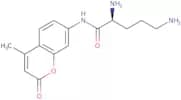
Fórmula:C39H60N10O8Pureza:Min. 95%Peso molecular:796.46 g/molH-Orn-AMC hydrochloride salt
CAS:H-Orn-AMC hydrochloride salt is a white solid with a melting point of about 150°C. It is used as a reactant in the manufacture of pharmaceuticals, research chemicals and other speciality chemicals. H-Orn-AMC hydrochloride salt is also an intermediate for the synthesis of complex compounds, useful as building blocks for chemical synthesis, and can be used as a reagent in analytical chemistry.Fórmula:C15H20ClN3O3Pureza:Min. 98 Area-%Cor e Forma:PowderPeso molecular:325.79 g/molInsulin A Chain (A12-21)
Type I diabetes is an autoimmune condition caused by the destruction of insulin-producing β cells. The initiation mechanism is unclear but involves activating autoreactive T cells against the β-cell-specific antigen, insulin.RIP-B7.1 mice express CD80 on pancreatic β cells and are a model for studying de novo induction of diabetogenic CD8 T cells. Immunization of RIP-B7.1 mice with preproinsulin (ppins)-encoding plasmid DNA induces experimental autoimmune diabetes (EAD). EAD is associated with significant induction of CD8 T cells specific for the (A12-21) restricted epitope leading to the destruction of β cells.The Insulin A Chain (A12-21) epitope is recognised by pancreas-infiltrating CD8 T cells isolated from immunized, diabetic RIP-B7.1 mice as shown by flow cytometry. The Insulin A Chain (A12-21) epitope can also be used to stimulate inducible IFN- expression of ppins-primed CD8 T cells ex vivo as determined by flow cytometry. GFP fusion has shown the expression of insulin A chain (A12-21) epitope in HeLa cells.Peso molecular:1,246.3 g/mol[5-FAM]-TAT (47-57) amide
[5-FAM]-TAT (47-57) is a cell penetrating cationic peptide derived from the N-terminus of the Tat protein, which is a trans-activator of the transcription protein present in the human immunodeficiency virus (HIV). Specifically TAT (47-57) is located within the arginine-rich basic domain 48-60 of the TAT peptide which as a whole has three domains which function to aid HIV through transactivation, DNA binding and nuclear transport. As a cell penetrating peptide (CPP) TAT aids in the cellular uptake of molecules and hence serves a valuable purpose in transduction methods. This property has been demonstrated through its ability of allowing toxins such as the neurotoxin Botulinum neurotoxin Type A, produced by the Clostridium botulinum type A bacteria to penetrate the skin barrier non-invasively. Additionally TAT (47-57) can be used to deliver proteins, fluorophores, chelators and DNA to target cells.It contains 5-carboxyfluorescein (5-FAM), a widely used green fluorescent tag.
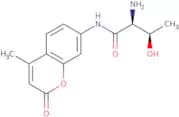
Peso molecular:1,917.14 g/molH-Thr-AMC
CAS:H-Thr-AMC is a small molecule that binds to the ubiquitin-proteasome system and inhibits the degradation of proteins. It has been shown to inhibit methionine aminopeptidase, which is an enzyme that degrades amino acids in the intestine. H-Thr-AMC also has a metal chelator effect, which prevents it from being degraded by proteases. The sequence of H-Thr-AMC was derived by sequencing cDNA from eukaryotes. H-Thr-AMC is not active against aminopeptidase A, but can inhibit aminopeptidase B and C. H-Thr-AMC has been shown to have inhibitory effects on both intestinal and physiological properties.br>br>
H-Thr-AMC is a substrate for the peptide:hydrolase (peptidase) family of enzymes known as aminopeptidFórmula:C14H16N2O4Cor e Forma:White PowderPeso molecular:276.29 g/molZ-Gly-Pro-AMC
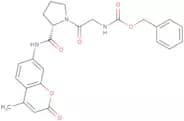
CAS:Z-Gly-Pro-AMC is a substrate molecule that mimics the natural substrate of dipeptidyl peptidase IV (DPP-IV) and is used in the study of plant physiology. It has been shown to inhibit DPP-IV activity by binding to the enzyme’s active site, preventing it from cleaving biologically active peptides. This drug also has an antidiabetic effect, which may be due to its ability to inhibit α-amylase activity. Z-Gly-Pro-AMC also has been shown to increase locomotor activity and reduce body weight in rats with metabolic disorders. Z-Gly-Pro-AMC inhibits serine proteases, such as trypsin, chymotrypsin, elastase, and cathepsin G, which are involved in tumor progression.
Fórmula:C25H25N3O6Pureza:Min. 98%Cor e Forma:White PowderPeso molecular:463.48 g/molAc-Lys-pNA hydrochloride
CAS:Ac-Lys-pNA hydrochloride is a protease that belongs to the endopeptidase class of proteolytic enzymes. It is used in research and recombinant expression to cleave proteins at specific sites. Ac-Lys-pNA hydrochloride is activated by ammonium sulfate, which binds to the active site of the enzyme. The enzyme also cleaves peptides with Lys or Arg at the C terminus. Ac-Lys-pNA hydrochloride has been shown to be effective against aeruginosa, but not escherichia coli, which are both gram negative bacteria.
Fórmula:C14H20N4O4•HClPureza:Min. 95%Cor e Forma:SolidPeso molecular:344.79 g/mol







































![H-Glu{Glu[Cyclo(Arg-Gly-Asp-D-Phe-Lys)]2}2](/_next/image/?url=https%3A%2Fstatic.cymitquimica.com%2Fproducts%2F3D%2Fthumb-webp%2FPCI-3975-PI.webp&w=3840&q=75)






![[5-FAM]-TAT (47-57) amide](/_next/image/?url=https%3A%2Fstatic.cymitquimica.com%2Fproducts%2F3D%2Fthumb-webp%2FCRB1100169.webp&w=3840&q=75)