Peptídeos
Os peptídeos são cadeias curtas de aminoácidos ligados por ligações peptídicas, desempenhando papéis importantes como moléculas biológicas em processos celulares. Eles funcionam como hormônios, neurotransmissores e moléculas de sinalização, sendo amplamente utilizados em aplicações terapêuticas e diagnósticas. Os peptídeos também são cruciais na pesquisa para estudar interações proteicas, atividades enzimáticas e vias de sinalização celular. Na CymitQuimica, oferecemos uma ampla seleção de peptídeos de alta qualidade para apoiar suas necessidades de pesquisa e desenvolvimento em biotecnologia e farmacêutica.
Subcategorias de "Peptídeos"
Foram encontrados 30311 produtos de "Peptídeos"
Ordenar por
Pureza (%)
0
100
|
0
|
50
|
90
|
95
|
100
Interleukin II (60-70)
<p>Catalogue peptide; min. 95% purity</p>Fórmula:C68H104N14O14SPeso molecular:1,373.74 g/molDoc-6 (130-145)
<p>Catalogue peptide; min. 95% purity</p>Fórmula:C86H134N26O26SPeso molecular:1,980.25 g/molδ1-MSH, amide
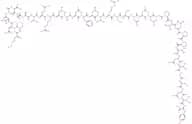
<p>Catalogue peptide; min. 95% purity</p>Fórmula:C72H97N21O14SPeso molecular:1,512.8 g/molPACAP(1-38)-Lys(Biotin), amide, human, ovine, rat
<p>Catalogue peptide; min. 95% purity</p>Fórmula:C219H357N67O56S2Peso molecular:4,888.83 g/molZ-Ala-Ser-OH
CAS:<p>Z-Ala-Ser-OH is a basic protein with a sequence of Z-Ala-Ser. It has a hydrophobic section and carboxylic acid group, which is why it is soluble in organic solvents. The dichroic spectra of this protein are characteristic for its secondary structure. This protein can be analyzed using the technique of dichroism, which allows one to determine its analogs as well as analyze its enzyme preparations. The amino acid residues found in this protein are Ala and Ser, which are basic and polar respectively.</p>Fórmula:C14H18N2O6Pureza:Min. 95%Cor e Forma:PowderPeso molecular:310.3 g/molBradykinin-Like Neuropeptide (3-11) (Aplysia californica)
<p>Catalogue peptide; min. 95% purity</p>Fórmula:C42H77N21O12Peso molecular:1,068.22 g/molOV-1, Sheep
<p>Catalogue peptide; min. 95% purity</p>Fórmula:C105H188N34O21Peso molecular:2,262.88 g/molγ-Bag Cell Peptide
<p>Catalogue peptide; min. 95% purity</p>Fórmula:C31H51N11O8Peso molecular:705.82 g/molSRC Kinase Substrate, amide
<p>Catalogue peptide; min. 95% purity</p>Fórmula:C64H108N23O23PPeso molecular:1,598.71 g/molMARCKS Protein (159-165)
<p>Catalogue peptide; min. 95% purity</p>Fórmula:C45H72N10O9Peso molecular:897.14 g/molCaspase 1 Substrate 1 (ICE), chromogenic
<p>Catalogue peptide; min. 95% purity</p>Fórmula:C217H322N58O60SPeso molecular:4,767.47 g/mol[Arg0] Met-Enkephalin
<p>Catalogue peptide; min. 95% purity</p>Fórmula:C33H47N9O8SPeso molecular:729.86 g/molProsaptide, wild type
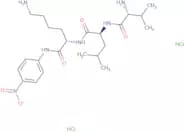
<p>Catalogue peptide; min. 95% purity</p>Fórmula:C72H127N19O25Peso molecular:1,658.93 g/molH-D-Val-Leu-Lys-pNA·2 HCl
CAS:D-Val-Leu-Lys-p-nitroanilide is a selective colorimetric substrate for plasmin used to determine plasmin formation from plasminogen in amidolytic activity assays and plasminogen activating assays. Plasmin is a plasma serine protease whose main role is to dissolve fibrin blood clots. After cleavage by plasmin, the protease activity is quantified by the release of p-nitroaniline (pNA) from the substrate.Fórmula:C23H38N6O5·2HClPureza:Min. 95%Peso molecular:551.51 g/molZ-Ala-Arg-Arg-AMC hydrochloride salt
CAS:<p>Z-Ala-Arg-Arg-AMC hydrochloride salt is a synthetic amino acid that inhibits aminopeptidase activity. It is used to study the enzyme's role in the degradation of muscle proteins, and as a pharmaceutical drug for treating inflammatory bowel disease. The target enzyme is inhibited by binding to its active site, thereby preventing the breakdown of peptides. Z-Ala-Arg-Arg-AMC hydrochloride salt can be used as an inhibitor in the laboratory because it prevents denaturation of protein samples during analysis using electrophoresis or chromatography. This product also has been shown to have inhibitory effects on ileal aminopeptidases and prostate aminopeptidases, which may be due to its ability to bind to these enzymes and block their active sites.</p>Fórmula:C33H44N10O7•(HCl)xPureza:Min. 95%Peso molecular:692.77 g/molAmylin (mouse, rat) trifluoroacetate
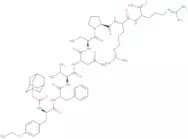
CAS:Amylin (mouse, rat) trifluoroacetate is a synthetic peptide, which is a derivative of the islet amyloid polypeptide (IAPP) found in rodent species. It is sourced from the pancreatic beta cells of mice and rats, where it is co-secreted with insulin. The mode of action involves regulation of glucose metabolism through its effects on gastric emptying, glucagon secretion, and satiety. These actions are crucial in managing postprandial blood glucose levels and provide insights into the pathophysiology of diabetes.Amylin (mouse, rat) trifluoroacetate is primarily used in research applications to study the mechanisms of amylin aggregation and its implications in type 2 diabetes. It also serves as a model for understanding the differences in amyloid fibril formation between human and rodent amylin, making it invaluable for the development of therapeutic strategies aimed at mitigating amyloid-related cellular toxicity. Researchers utilize this peptide to explore the potential compensatory roles of amylin analogs in diabetic models, advancing our understanding of diabetes progression and treatment options.Fórmula:C167H272N52O53S2•(C2HF3O2)xPureza:Min. 95%Peso molecular:3,920.4 g/mol(1-Adamantaneacetyl1,D-Tyr(Et)2,Val4, Abu 6, Arg8·9)-vasopressin
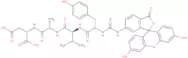
CAS:<p>(1-Adamantaneacetyl1,D-Tyr(Et)2,Val4, Abu 6, Arg8·9)-vasopressin is a vasopressor analog that has been shown to be an effective treatment for congestive heart failure by acting as an agonist at the V1 receptor. It has been shown to stimulate cyclase activity and increase levels of adenosine 3',5'-cyclic monophosphate (cAMP). This drug also stimulates the production of immunoglobulin A antibodies in mice and increases the expression of leucine aminopeptidase and immunofluorescence in rat kidney cells. Vasopressin analogs are used primarily for their vasoconstrictive properties.</p>Fórmula:C62H94N16O11Pureza:Min. 95%Cor e Forma:White Off-White PowderPeso molecular:1,239.51 g/molFITC-Tyr-Val-Ala-Asp-OH (Contains FITC isomer I)
CAS:<p>FITC-Tyr-Val-Ala-Asp-OH (Contains FITC isomer I) is a bioactive molecule that has been shown to inhibit the growth of filamentous fungi. This compound binds to the tyrosine kinase, which is an enzyme involved in the regulation of cell division and differentiation. It also inhibits neutrophil recruitment by dectin-1, a protein that recognizes fungal cell walls on neutrophils. The FITC isomer I has been shown to impair macrophages and fungus aspergillus fumigatus infiltration in tissues with impaired immune function.<br>FITC-Tyr-Val-Ala-Asp-OH (Contains FITC isomer I) has also been shown to decrease the production of caspase 1, which activates inflammatory responses and stimulates phagocytic cells.</p>Fórmula:C42H39N5O12SPureza:Min. 95%Peso molecular:837.85 g/molBpoc-Gly-OH·DCHA
CAS:Produto ControladoPlease enquire for more information about Bpoc-Gly-OH·DCHA including the price, delivery time and more detailed product information at the technical inquiry form on this pageFórmula:C18H19NO4·C12H23NPureza:Min. 95%Peso molecular:494.67 g/mol




![[Arg0] Met-Enkephalin](/_next/image/?url=https%3A%2Fstatic.cymitquimica.com%2Fproducts%2F3D%2Fthumb-webp%2FVAC-00699.webp&w=3840&q=75)