Substratos enzimáticos
Subcategorias de "Substratos enzimáticos"
Foram encontrados 1527 produtos de "Substratos enzimáticos"
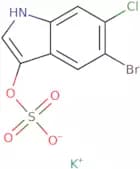
5-Bromo-6-chloro-3-indolyl sulfate potassium salt
CAS:5-Bromo-6-chloro-3-indolyl sulfate potassium salt is a fluorogenic substrate that can be used for food testing. It is a conjugate of 5-bromo-6-chloroindolylsulfate and potassium, which is dissolved in buffer solution. This product can also be used as a chromogenic substrate in environmental testing, an enzyme substrate in diagnostics, and a ligand for bioluminescence. It has high purity and quality, and can be used for chemiluminescence or bioluminescence. The CAS number for this product is 6581-24-4.Fórmula:C8H4BrClNO4S·KPureza:Min. 95%Cor e Forma:PowderPeso molecular:364.64 g/molAldol® 458 nonanoate, Biosynth Patent: EP 2427431 and US 8940909
CAS:Produto ControladoAldol 458 nonanoate is a fluorogenic substrate that can be used in the detection of enzyme activity particularly C8/C9-esterases, lipases activity producing a yellow/green-orange color. Aldol 458 nonanoate reacts with enzymes, such as oxidoreductases and hydrolases, to produce light. This product is a conjugate of aldol 458 nonanoate and an enzyme substrate for the detection of these enzymes. It has been shown to be useful in food testing, staining, fluorogenic substrate, environmental testing, chromogenic substrate, conjugate, high purity, enzyme substrate for diagnostics and ligand.
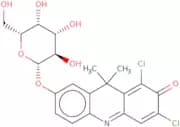
Fórmula:C25H29NO4Pureza:Min. 95%Peso molecular:407.5 g/molDDAO galactoside
CAS:The DDAO molecule [7-hydroxy-9H-(1, 3-dichloro-9, 9 dimethylacridin-2-one] is used as a stain and a dye in molecular biology, due to its ability to bind intracellular and extracellular DNA. DDAO galactoside is a fluorogenic substrate for galactosidase.
Pureza:Min. 95%Cor e Forma:PowderPeso molecular:470.3 g/mol1-Naphthyl β-D-glucuronide
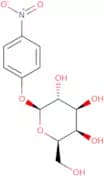
CAS:1-Naphthyl beta-D-glucuronide (NPG) is a chromogenic enzyme substrate used to detect the presence of β-glucuronidase activity. Upon hydrolysis by the enzyme, it produces a yellow product that can be detected by spectrophotometry or visually. It is commonly used in clinical assays to detect the presence of the enzyme in urine samples, as elevated levels can indicate liver or urinary tract diseases. It is also utilized in environmental testing, as some bacteria strains can produce the enzyme as a by-product, making NPG a useful tool for detecting these strains in contaminated water or food sources.Fórmula:C16H16O7Pureza:Min. 95%Cor e Forma:White PowderPeso molecular:320.29 g/mol4-Nitrophenyl-beta-D-galactopyranoside
CAS:Chromogenic β-galactosidase substrate yielding a yellow solution upon cleavage. Can be used for the detection of coliforms due to their β-galactosidase activity.Fórmula:C12H15NO8Pureza:Min. 98.0 Area-%Peso molecular:301.26 g/mol4-Methylumbelliferyl-beta-D-glucuronic acid dihydrate
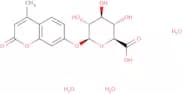
CAS:4-Methylumbelliferyl beta-D-glucuronide (MUG) is commonly used as a substrate for detecting beta-glucuronidase. MUG is used for identifying E. coli contamination in food, drinking water, clinical samples and for rapid bacterial identification in blood cultures. It is recommended in international normatives (ISO, DIN) as a fluorogenic substrate for detection of E. coli. MUG is also a tool assaying the glucuronidase gene in plants.Fórmula:C16H20O11Pureza:Min. 99 Area-%Peso molecular:388.33 g/mol5-Bromo-4-chloro-3-indolyl-D-thymidine-3'-phosphate cyclohexylammonium salt
CAS:5-Bromo-4-chloro-3-indolyl-D-thymidine-3'-phosphate cyclohexylammonium salt is a chromogenic substrate used to detect the specific enzymatic activity of alkaline phosphatase. After cleavage, 5-bromo-4-chloro-indoxyl is released, resulting in a blue to blue-green color change in bacterial colonies or media. 5-Bromo-4-chloro-3-indolyl-D-thymidine-3'-phosphate cyclohexylammonium salt is used in immunohistochemistry (IHC) and Western blot detection, immunoassays used to detect proteins.Fórmula:C18H17BrClN3O8P·C6H14NPureza:Min. 95%Cor e Forma:White PowderPeso molecular:649.86 g/mol4-Methylumbelliferyl b-D-glucuronide trihydrate
CAS:Fluorogenic substrate for beta-glucuronidase GUS
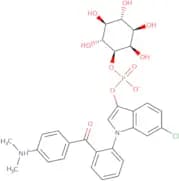
Fórmula:C16H22O12Pureza:Min. 98 Area-%Cor e Forma:White PowderPeso molecular:406.34 g/molAldol® 518 myo-inositol-1-phosphate - Biosynth Patent: EP 2427431 and US 8940909
CAS:Aldol® 518 myo-inositol-1-phosphate is a chromogenic and fluorogenic enzyme substrate used for detection of phosphatidyl-inositol specific phospholipase C activity (PI-PLC, EC 4.6.1.13). The colorless enzyme substrate is cleaved by PI-PLC or PI-PLC-positive microorganisms grown in liquid or solid media, yielding an intense red coloration. In combination with Aldol® 355 fluorescence enhancer, red fluorescence can also obtained. Aldol® 518 myo-inositol-1-phosphate is suitable for use in liquid and solid media, under aerobic as well as anaerobic conditions.Fórmula:C29H33ClN3O10PPureza:Min. 95 Area-%Cor e Forma:PowderPeso molecular:650.02 g/molFluorescein-dipalmitoylphosphatidylethanolamine triethylammonium salt
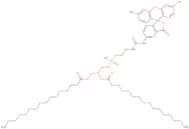
CAS:Fluorescein-dipalmitoylphosphatidylethanolamine triethylammonium salt is a fluorescent phospholipid derivative for phospholipase. This substrate consists of a fluorescein conjugated to DPPE (dipalmitoylphosphatidylethanolamine), a key component of biological membranes. This compound is frequently used in membrane dynamics studies and lipid metabolism research. The fluorescein moiety allows visualization of lipid interactions in model membranes, liposomes, or live-cell imaging applications. The triethylammonium salt form enhances solubility and stability, property that facilitates its use in aqueous and lipid-based environments.
Pureza:Min. 95%Cor e Forma:PowderPeso molecular:1,182.53 g/mol4-Nitrophenyl 2-acetamido-6-O-(2-acetamido-2-deoxy-b-D-glucopyranosyl)-3-O-(b-D-galactopyranosyl)-2-deoxy-a-D-galactopyranoside
CAS:4-Nitrophenyl 2-acetamido-6-O-(2-acetamido-2-deoxy-b-D-glucopyranosyl)-3-O-(b-D-galactopyranosyl)-2-deoxy-a-D-galactopyranoside is a specific chromogenic substrate designed for the highly sensitive and accurate detection of glycosidase enzyme activity. Glycosidases are responsible for the cleavage of glycosidic bonds between saccharide units in various carbohydrates. The hydrolysis of this substrate by glycosidase enzymes produces 4-nitrophenol, a yellow-colored compound that can be easily monitored through spectrophotometric measurements due to its strong absorbance at 405 nm. This chromogenic substrate is widely used in the analysis of glycosidase activity in various biological samples, including bacterial, fungal, and plant tissues, as well as in environmental samples and biotechnological applications.Fórmula:C28H41N3O18Pureza:Min. 95 Area-%Cor e Forma:White PowderPeso molecular:707.63 g/mol4-Nitrophenyl sulfate potassium salt
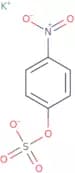
CAS:4-Nitrophenyl sulfate potassium salt is a chromogenic substrate for arylsulfatase. Upon hydrolysis, para-nitrophenol is released yielding a yellowish colour. 4-Nitrophenyl sulfate potassium salt is used in different applications such as the Metachromatic leukodystrophy diagnosis, sulfatase activity assaysFórmula:C6H4KNO6SPureza:Min. 95%Cor e Forma:PowderPeso molecular:257.26 g/mol5-Bromo-4-chloro-3-indoxyl phosphate, dilithium salt hydrate
5-Bromo-4-chloro-3-indoxyl phosphate, dilithium salt hydrate is a chromogenic substrate used to detect the specific enzymatic activity of alkaline phosphatase. After cleavage, 5-bromo-4-chloro-indoxyl is released, resulting in a blue to blue-green color change in bacterial colonies or media. 5-Bromo-4-chloro-3-indoxyl phosphate, dilithium salt hydrate is used in ELISA and molecular biology assays such as lacZ reporter systems.
Fórmula:C8H4BrClLi2NO4P(anhydrousbasis)Pureza:Min. 98 Area-%Cor e Forma:PowderPeso molecular:338.34 g/molIsopropyl-β-D-thiogalactopyranoside, <5ppm dioxane, plant origin (ex peach gum)
CAS:A non-metabolizable allolactose analogue, widely used in molecular biology for overexpression of recombinant proteins from inducible systems under the control of lac promoter. IPTG binds to the LacI repressor and causes its release from the lac operator, allowing gene expression to take place. Present in vectors of pGEX, pGEM-T, pET, pRSET, pMAL class and others.Fórmula:C9H18O5SPureza:Min. 99.0 Area-%Peso molecular:238.30 g/molRef: 3D-I-8070
-Unit-ggA consultar1kgA consultar50gA consultar100gA consultar250gA consultar500gA consultarD-Luciferin Firefly, sodium salt monohydrate
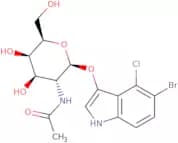
CAS:Water soluble substrate for firefly luciferase.Fórmula:C11H9N2NaO4S2Pureza:Min. 99.0 Area-%Peso molecular:320.32 g/mol5-Bromo-4-chloro-3-indoxyl-N-acetyl-beta-D-galactosaminide
CAS:5-Bromo-4-Chloro-3-Indoxyl-N-Acetyl-Beta-D-Galactosaminide is a chromogenic substrate for detecting beta-galactosidase and GalNAc-transferase enzymes. Upon hydrolysis by the enzyme, it produces a blue-green colored compound that can be detected visually or measured spectrophotometrically. This substrate is useful in characterizing the activity of Beta-Galactosidase and GalNAc-transferase enzymes involved in glycobiology research and diagnostic applications.Fórmula:C16H18BrClN2O6Pureza:Min. 98 Area-%Cor e Forma:Crystalline PowderPeso molecular:449.68 g/mol4-Chloro-3-Indoxyl-1,3-diacetate
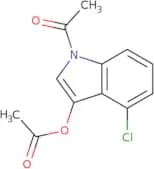
CAS:4-Chloro-3-indoxyl-1,3-diacetate is a fluorogenic or chromogenic substrate used in food testing. It is also an enzyme substrate that can be used to detect the presence of bioluminescence. 4-Chloro-3-indoxyl-1,3-diacetate has been shown to have high purity and high quality for use in diagnostic kits. 4-Chloro-3-indoxyl-1,3-diacetate is a ligand that is conjugated with other molecules to form complexes for use in fluorescence and chemiluminescence experiments.Pureza:Min. 95%Peso molecular:251.67 g/mol6-Chloro-4-(trifluoromethyl)umbelliferyl β-D-cellotrioside
6-Chloro-4-(trifluoromethyl)umbelliferyl b-D-cellotrioside is a fluorogenic substrate for cellulases and beta-glucosidases. After hydrolisis, the fluorophore TFMU is released generating a blue fluorescence.Fórmula:C28H34ClF3O18Pureza:Min. 95%Cor e Forma:White to off-white powder.Peso molecular:751.01 g/molCoelenterazine cp
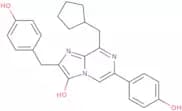
CAS:Coelenterazine cp is a coelenterazine analog for Renilla luciferase. In certain studies, it has been shown to be highly sensitive for the detection of human papilloma virus (HPV) and can be used in the diagnosis of cervical cancer.Fórmula:C25H25N3O3Pureza:Min. 95%Peso molecular:415.48 g/mol4-Methylumbelliferyl-beta-D-glucopyranoside
CAS:Fluorogenic substrate for beta-glucosidase yielding a blue fluorescent solution. Used for the detection of beta-glucosidase as an indicator of Enterococci.Fórmula:C16H18O8Pureza:Min. 99 Area-%Peso molecular:338.32 g/mol