Substratos enzimáticos
Subcategorias de "Substratos enzimáticos"
Foram encontrados 1527 produtos de "Substratos enzimáticos"
Resorufin b-D-xylobioside
Resorufin b-D-xylobioside is a fluorogenic substrate for xylanases useful for xylanase activity assays.Pureza:Min. 95%Cor e Forma:PowderPeso molecular:477.42 g/molAldol® 515 L-alanine amide, hydrochloride, Biosynth Patent: EP 2427431 and US 8940909
CAS:Aldol® 515 L-alanine amide is a chromogenic and fluorogenic enzyme substrate used for detection of L-alanine aminopeptidase activity. The colorless enzyme substrate is cleaved by L-alanine aminopeptidase produced by microorganisms, grown in liquid or solid media yielding red color. In addition, red fluorescence is generated when a fluorescence enhancer or a suitable matrix is present. Aldol® 515 L-alanine amide can be used under aerobic and anaerobic conditions.
Fórmula:C26H27ClN4O2Pureza:Min. 95.0 Area-%Peso molecular:462.97 g/molResorufin-7-O-phosphate
CAS:Resorufin-7-O-phosphate is a fluorogenic substrate for alkaline phosphatase that exhibits a red color after cleavage that can be measured at ~ 585nm.
Fórmula:C12H6NO6P·2H4NPureza:Min. 95%Peso molecular:327.23 g/mol4-Nitrophenyl phosphate mono(2-amino-2-ethyl-1,3-propanediol) salt monohydrate
CAS:4-Nitrophenyl phosphate mono(2-amino-2-ethyl-1,3-propanediol) salt monohydrate is a chromogenic substrate that can be used to detect the presence of alkaline phosphatase. It is also used in food testing and diagnostics. 4NPPMD is a substrate for the enzyme alkaline phosphatase, which has been shown to play a role in the inflammatory response. The production of 4NPPMD by bacteria in the environment can be detected with chemiluminescence or bioluminescence. This product has been shown to react with both horseradish peroxidase and alkaline phosphatase, as well as other enzymes that are involved in metabolic pathways. This substrate also has high purity and fluorescence properties.Fórmula:C11H21N2O9PPureza:Min. 95 Area-%Peso molecular:356.26 g/molAquaSpark® HRP probe
CAS:Please enquire for more information about AquaSpark® HRP probe including the price, delivery time and more detailed product information at the technical inquiry form on this pageFórmula:C38H38ClNO11Peso molecular:720.16 g/mol5-Bromo-4-chloro-3-indolyl a-D-mannopyranoside
CAS:5-Bromo-4-chloro-3-indolyl a-D-mannopyranoside is a chromogenic substrate used to detect the specific enzymatic activity of alpha-mannosidase. After cleavage, 5-bromo-4-chloro-indoxyl is released, resulting in a blue to blue-green color change in bacterial colonies or media. 5-Bromo-4-chloro-3-indolyl a-D-mannopyranoside is used in alpha-mannosidosis diagnosis and other lysosomal storage disorder.Fórmula:C14H15BrClNO6Pureza:Min. 95 Area-%Cor e Forma:PowderPeso molecular:408.63 g/molAc-Abu-Tle-Leu-Gln-AMC TFA salt
A fluorogenic substrate for detection of enzymatic activity of the SARS-CoV-2 Mpro protease. The fluorophore 7-Amino-4-methylcoumarin (AMC) is linked to the tetrapeptide via a peptide bond at the C-terminal of the glutamine residue. Following the hydrolytic activity of the Mpro protease, the fluorogenic AMC group get released from the substrate, generating a fluorescent signal (Ex 380 nm / Em 455 nm).Fórmula:C33H48N6O8(freebase)Pureza:Min. 95.0 Area-%Peso molecular:656.77 g/molAldol® 515 choline phosphate, Biosynth Patent: EP 2427431 and US 8940909
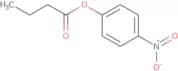
A useful substrate for the study of enzyme activitiesFórmula:C28H32N3O5PPureza:Min. 95 Area-%Peso molecular:521.55 g/mol4-Nitrophenyl butyrate
CAS:Chromogenic substrate for esterasesFórmula:C10H11NO4Pureza:Min. 98%Cor e Forma:Slightly Yellow Yellow Green Clear LiquidPeso molecular:209.2 g/molSTAADIUM™ PeptiZide L-Ala
STAADIUM(TM) PeptiZide L-Ala, Patent pending is a chemiluminescent substrate that reacts with hydrogen peroxide to produce light. It can be used in diagnostic applications such as the detection of blood or fecal stains and in tests for the presence of enzymes or antibodies. STAADIUM(TM) PeptiZide L-Ala, Patent pending is an excellent choice for use with bacterial culture media and food testing. This product has been shown to have high purity and quality.Fórmula:C15H18ClN3O2SPureza:Min. 95%Peso molecular:339.84 g/mol5-Bromo-4-chloro-3-indoxyl thymidine-3'-phosphate, cyclohexylammonium salt
CAS:5-Bromo-4-chloro-3-indoxyl thymidine (BCIT) is a chromogenic substrate that reacts with the enzyme β-galactosidase, which cleaves the BCIT to form a bromochloroindoxyl (BCI) and an indoxyl phosphate. The BCI is then detected by chemiluminescence or fluorescence. This product is used in food testing, diagnostics, environmental testing, and staining. It has been shown to be a good substrate for β-galactosidase from different sources such as calf thymus, bacteria, fungi, and plants.Fórmula:C24H31BrClN4O8PPureza:Min. 98 Area-%Peso molecular:649.87 g/molRef: 3D-B-7680
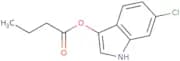
-Unit-mgmgA consultar1gA consultar50mgA consultar100mgA consultar250mgA consultar500mgA consultar6-Chloro-3-indoxyl butyrate
CAS:6-Chloro-3-indoxyl butyrate is a chemiluminescent substrate that is used in diagnostics and research. It has been shown to be an excellent ligand for the detection of DNA and protein. 6-Chloro-3-indoxyl butyrate can also be used as a chromogenic substrate for the detection of alkaline phosphatase, acid phosphatase, or beta-galactosidase. This product is also used in food testing, enzyme substrates, and fluorogenic substrates.Fórmula:C12H12ClNO2Pureza:Min. 99.0 Area-%Peso molecular:237.69 g/molAldol® 515 palmitate, Biosynth Patent: EP 2427431 and US 8940909
CAS:Aldol® 515 palmitate is a chromogenic substrate that is used in food testing, diagnostics, and other applications. It has a high purity and is conjugated to various ligands for specific applications. Aldol® 515 palmitate is an excellent chemiluminescent substrate for the detection of ATP and other nucleotides. It also has high bioluminescence activity for the detection of adenosine-5'-triphosphate (ATP) or luciferin as well as enzyme substrates to measure β-galactosidase or β-glucuronidase activity.Fórmula:C39H50N2O3Pureza:Min. 95.0 Area-%Peso molecular:594.83 g/molFLsharp™ - Phosphate, disodium salt
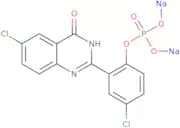
CAS:FLsharp™ - Phosphate, disodium salt is a fluorogenic water soluble substrate for phosphatase enzymes. After cleavage of the substrate by phosphatase activity an insoluble product is formed that is highly fluorescent in the solid state. Upon UV irradiation this very stable fluorophore emits green light in the 530 nm range for an extended period of time. FLsharp™ - Phosphate is a unique substrate - optimized for the detection of phosphatase activity in solid matrices such as agar media, tissuesections or microscopic preparations. FLsharp™ - Phosphate, disodium salt is used in microbiology as asubstrate for bacterial phosphatases. The substrate is suitable to detect the specific phosphatase activity of S. aureus or C. perfringensin food samples or clinical samples. Colonies growing on plating media supplemented with FLsharp™ emit green light upon UV light excitation(Excitation max: 365 nm; emission max: 530 nm). The enzyme product formed from FLsharp™ in agar plating media enables high precision for the localization of the relevant colonies on the plate. As a result small bacteria colonies of phosphatase-positive bacteria can be detected already after a short incubation time. In cytochemical and histochemical imaging FLsharp™ - Phosphate, disodiumsalt can be used as a substrate for Alkaline Phosphatase (AP)-coupled antibodies. The fluorophore that is released from FLsharp™ - Phosphateby phosphatase activity will precipitate. This insoluble fluorophoreen ables a precise localization of the antibody-bound epitope in cells or tissues under a fluorescence microscope or fluorescence imaging system. The green fluorescence of FLsharp™ can be clearly differentiated from autofluorescence or counterstainings such as (blue) DAPI or (red) Alexafluorophores.Fórmula:C14H7Cl2N2Na2O5PPureza:Min. 95.0 Area-%Peso molecular:431.08 g/molRef: 3D-C-3453
-Unit-ggA consultar1gA consultar5gA consultar5mgA consultar10gA consultar25mgA consultar4-Nitrophenyl 2,3,4,6-tetra-O-acetyl-b-D-thioglucopyranoside
CAS:4-Nitrophenyl 2,3,4,6-tetra-O-acetyl-b-D-thioglucopyranoside is a fluorescent dye that is used in recording and registration. It has been shown to be a very sensitive reporter of protein interactions in living cells. This dye binds to proteins via the hydroxyl groups on its sugar moiety, and has been shown to bind to a variety of proteins such as myosin light chain kinase and phosphatidylinositol 4-kinase. The fluorescent properties of this dye make it useful for tracking protein localization in the cell.Pureza:Min. 95%Peso molecular:485.46 g/mol4-Methylumbelliferyl β-D-cellohexaoside
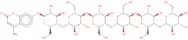
CAS:4-Methylumbelliferyl beta-D-cellohexaoside is a fluorogenic substrate for cellulase. After enzymatic cleaveage, free 4-methylumbelliferone (also known as hymecromone) is released, exhibiting blue fluorescence upon excitation with UV light. The strongest fluorescence of 4-methylumbelliferone requires deprotonation of the hydroxyl group (thus requires alkaline pH), with a maximal fluorescence intensity obtained with excitation at 350 to 370 nm and emission at 440 to 470 nm. The use of 4-methylumbelliferyl beta-D-cellohexaosideas a substrate for measuring the cellulase activity is used for detecting bacterial infection and gut microbiome analysis.Fórmula:C46H68O33Pureza:Min. 95%Cor e Forma:PowderPeso molecular:1,149.01 g/mol6-Chloro-3-indolyl 2-acetamido-2-deoxy-β-D-glucopyranoside
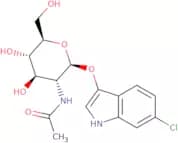
CAS:6-Chloro-3-indolyl 2-acetamido-2-deoxy-b-D-glucopyranoside is a pink enzyme substrate commonly used in biochemical research and diagnostic applications. This compound is a derivative of indolyl glucopyranoside, which is known for its ability to produce a colored product upon enzymatic hydrolysis. 6-Chloro-3-indolyl 2-acetamido-2-deoxy-b-D-glucopyranoside is particularly useful for studying glycosidases, enzymes that cleave glycosidic bonds in complex carbohydrates. Its pink coloration makes it an ideal choice for colorimetric assays, enabling researchers to monitor enzyme activity in real-time and facilitating the development of new diagnostic tools and therapeutic strategies.
Fórmula:C16H19ClN2O6Pureza:Min. 95%Cor e Forma:White to off-white solid.Peso molecular:370.78 g/molD-Luciferin Firefly
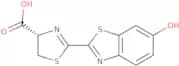
CAS:Luciferin (also in its salt form) is the substrate of luciferase, an enzyme that catalyzes a light-producing reaction. It is a bioluminescent substrate used to assay ATP availability. It also serves as a versatile scaffold to design other luminogenic enzyme substrates.Fórmula:C11H8N2O3S2Pureza:Min. 98 Area-%Cor e Forma:PowderPeso molecular:280.32 g/molAquaSpark® caprylate, 10 mM in DMSO, Ramot at Tel-Aviv University Ltd. Patent family WO 2017/130191
CAS:Chemiluminescent substrate for C8-esterase and lipase
Fórmula:C36H43ClO8Pureza:Min. 95%Cor e Forma:Clear LiquidPeso molecular:639.18 g/mol5-Bromo-3-indoxyl caprylate
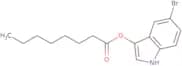
CAS:Also known as Lapis-caprylate; targeting esterase with C8 activity; Blue colorFórmula:C16H20BrNO2Pureza:Min. 98 Area-%Cor e Forma:PowderPeso molecular:338.24 g/mol