Substratos enzimáticos
Subcategorias de "Substratos enzimáticos"
Foram encontrados 1529 produtos de "Substratos enzimáticos"
D-Luciferin Potassium Salt ex. Firefly, 99%
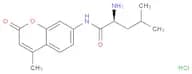
CAS:Fórmula:C11H7KN2O3S2Pureza:min. 99%Cor e Forma:Yellow, PowderPeso molecular:318.42L-Leucine 7-Amido-4-Methylcoumarin Hydrochloride Salt extrapure, 98%
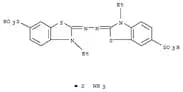
CAS:Fórmula:C16H21ClN2O3Pureza:min. 98%Cor e Forma:White to off-white, PowderPeso molecular:324.8ABTS extrapure (2,2-Azino-bis (3-ethylbenzothiazoline-6-sulfonic acid) Diammonium Salt), 98%
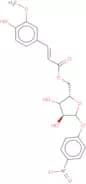
CAS:Fórmula:C18H24N6O6S4Pureza:min. 98%Cor e Forma:Pale green to green, Crystals or powderPeso molecular:548.684-Nitrophenyl 5-O-trans-feruloyl-a-L-arabinofuranoside
CAS:4-Nitrophenyl 5-O-trans-feruloyl-alpha-L-arabinofuranoside is a chromogenic substrate for alpha-L-arabinofuranosidase. Upon hydrolysis, para-nitrophenol is released yielding a yellowish colour. 4-Nitrophenyl 5-O-trans-feruloyl-alpha-L-arabinofuranoside is used in different applications such as the Plant cell wall degradation assays, bacterial enzyme profiling
Fórmula:C21H21NO10Pureza:Min. 95%Cor e Forma:PowderPeso molecular:447.4 g/molCrimson-Gal
Crimson-Gal (Crimson-beta-D-galactopyranoside) is a chromogenic indicator for beta-galactosidase activity. The colorless product is cleaved by lactose-utilizing bacteria in liquid media or on agar plates and yields a crimson colored precipitate. Crimson-Gal can also be used as detecting agent for beta-galactosidase activity in reporter gene assays or for identification of positive transformants on agar plates when using the α-complementation approach. Read more in the Application Notes.Peso molecular:360.96 g/mol4-Nitrophenyl caprylate
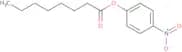
CAS:Chromogenic substrate targeting lipase, C8 esterase
Fórmula:C14H19NO4Pureza:Min. 95 Area-%Cor e Forma:Slightly Brown Yellow Clear LiquidPeso molecular:265.31 g/mol5-Bromo-4-chloro-3-indolyl 2-Acetamido-2-deoxy-α-D-galactopyranoside
CAS:Produto ControladoApplications A histochemical substrate for a-N-acetyl-galactosaminidase.
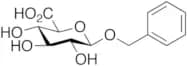
References Zhu, et al.: Gene, 137, 309 (1994)Fórmula:C16H18BrClN2O6Cor e Forma:NeatPeso molecular:449.68Benzyl β-D-Glucopyranosiduronic Acid
CAS:Produto ControladoStability Hygroscopic
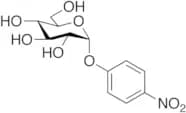
Applications Protected Glucopyranosiduronic Acid.Fórmula:C13H16O7Cor e Forma:NeatPeso molecular:284.26p-Nitrophenyl α-D-Glucopyranoside
CAS:Applications p-Nitrophenyl α-D-Glucopyranoside is a substrate for α-glucosidase inhibitor.
References O'Neill, R., et al.: J. Biol. Chem., 264, 20430 (1989), Carpita, N., et al.: Plant J., 3, 1 (1993), Henrissat, B., et al.: Biochem. J., 293, 781 (1993), Nakai, H., et al.: Biochimie, 89, 49 (2007) ,Fórmula:C12H15NO8Cor e Forma:White To Off-WhitePeso molecular:301.25Pseudopelletierine
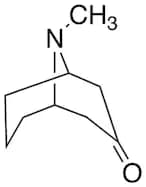
CAS:Produto ControladoApplications It was found in the root bark of Punica granatum L., Punicaceae. Used as a enzyme substrate.
References Hunt, R., et al.: J. Pharm. Pharmacol., 22, 29S (1970), Hashimoto, T., et al.: Plant Physiol., 100, 836 (1992), Boswell, H., et al.: Phytochemistry, 52, 855 (1999),Fórmula:C9H15NOCor e Forma:NeatPeso molecular:153.22(S)-Ethyl 2,6-Diisocyanatohexanoate
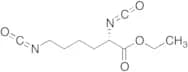
CAS:Produto ControladoApplications (S)-ETHYL 2,6-DIISOCYANATOHEXANOATE (cas# 45172-15-4) is a useful research chemical.
Not a dangerous good if item is equal to or less than 1g/ml and there is less than 100g/ml in the packageFórmula:C10H14N2O4Cor e Forma:NeatPeso molecular:226.22Thymidine 5′-monophosphate p-nitrophenyl ester sodium
CAS:Thymidine 5′-monophosphate p-nitrophenyl ester sodium is a fluorogenic substrate that is used in food testing and environmental testing. It is an important component of the Ligand Assay, a diagnostic test for the detection of antibodies to HIV. Thymidine 5′-monophosphate p-nitrophenyl ester sodium has been shown to be a good substrate for use in enzyme assays, such as DNA polymerase, DNA ligase, and RNA polymerase. This product is also used in bioluminescence and chemiluminescence reactions.Fórmula:C16H18N3O10P•NaPureza:Min. 95%Peso molecular:466.29 g/mol4-Methylumbelliferyl-a-D-mannopyranoside-2-phosphoethanolamine
4-Methylumbelliferyl-a-D-mannopyranoside-2-phosphoethanolamine is a fluorescent substrate used in enzyme assays. It is an analog of the natural substrate, 4-methylumbelliferyl-alpha-D-mannopyranoside, which is a phosphoethanolamine linked to alpha-D-mannose. This product can be used as a chromogenic or fluorogenic substrate for various enzymes, including beta glucosidase, beta galactosidase, and beta lactonase. 4MUMPE can also be used for bioluminescent studies and has been shown to have high purity and quality.Pureza:Min. 95%4-Nitrophenyl 4,6-benzylidene-2-O-(2,3,4,6-tetra-O-[4-methoxybenzyl]-a-D-glucopyranosyl)-a-D-glucopyranoside
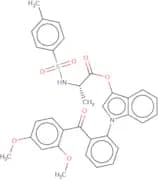
4-Nitrophenyl 4,6-benzylidene-2-O-(2,3,4,6-tetra-O-[4-methoxybenzyl]-a-D-glucopyranosyl)-a-D-glucopyranoside is a fluorogenic substrate that is used in diagnostic assays to measure the activity of enzymes such as β–galactosidase and β–glucuronidase. It is also an enzyme substrate for culture media and chemiluminescence. This product has a CAS number of 57316-92-8.Pureza:Min. 95%Peso molecular:1,088.02 g/molAldol® 470 N-tosyl-L-alanine ester, Biosynth Patent: EP 2427431 and US 8940909
CAS:Produto ControladoAldol® 470 N-tosyl-L-alanine ester is a fluorogenic substrate that is used in enzyme and chromogenic assays. It is a high purity, high quality, and highly soluble substrate for chemiluminescent reactions. Aldol® 470 N-tosyl-L-alanine ester can be used to detect the presence of bacteria in culture media and as an indicator of bacterial growth. It is also used to test for the presence of different types of enzymes that catalyze the oxidation of alcohols.
Fórmula:C33H30N2O7SPureza:Min. 90.0 Area-%Peso molecular:598.67 g/molAldol® 496 acetate, Biosynth Patent: EP 2427431 and US 8940909
CAS:Aldol 496 acetate is a chromogenic substrate for the enzyme Aldolase. It is also used as a ligand to detect the presence of Aldolase in biological fluids and tissues. This product is designed for Food testing, Diagnostics, Chromogenic substrate, Staining, Enzyme substrate, Bioluminescence, Fluorogenic substrate, Chemiluminescence, and Culture media. Aldol 496 acetate is an organic chemical with high purity and high quality.Fórmula:C27H24N2O4Pureza:Min. 95.0 Area-%Peso molecular:440.49 g/molAldol® 515 propionate, Biosynth Patent: EP 2427431 and US 8940909
CAS:Aldol® 515 propionate is a chromogenic substrate that is used as a reagent in food testing, diagnostics, and environmental testing. It reacts with an enzyme to form a fluorescent product that can be detected with a spectrophotometer. The substrate has been shown to have high purity and high quality.Fórmula:C26H24N2O3Pureza:Min. 95.0 Area-%Peso molecular:412.48 g/mol6-Amino-6-deoxyluciferin
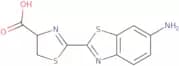
CAS:6-Amino-6-deoxyluciferin is a synthetic analog of luciferin. It is used as a substrate for bacterial luciferase and in immunoassays to detect neutrophils, infectious diseases, and various protease activities. 6-Amino-6-deoxyluciferin is synthesized by the condensation of an amide with a hydroxyl group from acetaldehyde. This reaction requires the use of a coupling agent such as dicyclohexylcarbodiimide or 1-(3-dimethylaminopropyl)-3-ethylcarbodiimide hydrochloride (EDC), which are often used to form amides from carboxylic acids and amines. The conjugation of 6-amino-6-deoxyluciferin with antibodies can be accomplished by chemical crosslinking methods, such as glutaraldehyde, which react thiol groups on the antibodyFórmula:C11H9N3O2S2Pureza:Min. 95%Cor e Forma:Yellow SolidPeso molecular:279.34 g/molAldol® 470 L-pyroglutamic acid amide, Biosynth Patent: EP 2427431 and US 8940909
CAS:Produto ControladoAldol® 470 L-pyroglutamic acid amide is a chromogenic and fluorogenic enzyme substrate used for detection of pyrrolidonyl peptidase (PYRase) activity. The colorless enzyme substrate is cleaved by PYRase-producing bacteria grown in liquid or solid media, yielding orange color. In addition, green fluorescence is generated when a suitable matrix is present, such as, the surface of cellulose acetate filters, polypropylene tubes or microplates, and polyethylene vials. Aldol® 470 L-pyroglutamic acid amide is suitable for use under aerobic and anaerobic conditions.Fórmula:C28H25N3O5Pureza:Min. 95%Cor e Forma:PowderPeso molecular:483.52 g/mol6,8-Difluoro-4-methylumbelliferyl b-D-cellotrioside
6,8-Difluoro-4-methylumbelliferyl b-D-cellotrioside is a ligand that binds to active sites of enzymes such as beta-glucuronidase and beta-glucosidase. It is used in diagnostics for the detection of bacteria in culture media and food testing where it can be used as a chromogenic or fluorogenic substrate. 6,8-Difluoro-4-methylumbelliferyl b-D-cellotrioside is also used to detect the presence of bacteria and fungi in environmental samples. It has a high purity and conjugate with other molecules for use in fluorescence microscopy.Pureza:Min. 95%Cor e Forma:White to off-white powder.Peso molecular:698.57 g/mol







![4-Nitrophenyl 4,6-benzylidene-2-O-(2,3,4,6-tetra-O-[4-methoxybenzyl]-a-D-glucopyranosyl)-a-D-gluco…](/_next/image/?url=https%3A%2Fstatic.cymitquimica.com%2Fproducts%2F3D%2Fthumb-webp%2FEN04828.webp&w=3840&q=75)