Substratos enzimáticos
Substratos enzimáticos são moléculas sobre as quais as enzimas atuam para catalisar reações químicas. O substrato liga-se ao sítio ativo da enzima, onde passa por uma transformação específica para formar o produto da reação. Os substratos enzimáticos são ferramentas essenciais na pesquisa para estudar a cinética enzimática, especificidade e mecanismo de ação. Eles também são usados em ensaios diagnósticos e estudos bioquímicos. Na CymitQuimica, oferecemos uma seleção diversificada de substratos enzimáticos de alta qualidade para apoiar suas pesquisas em enzimologia e bioquímica.
Subcategorias de "Substratos enzimáticos"
Foram encontrados 1529 produtos de "Substratos enzimáticos"
Ordenar por
Pureza (%)
0
100
|
0
|
50
|
90
|
95
|
100
Luc-phosphate Na enhanced
Luc-phosphate Na enhanced is a chemiluminescent substrate for enzyme-linked immunosorbent assay (ELISA) and other immunoassays. It has been shown to have high purity, high quality, and good stability. Luc-phosphate Na enhanced has not been tested for toxicity in animals or humans. Luc-phosphate Na enhanced is a conjugated substrate that can be used in ELISA, where the enzyme substrate will react with the antigen in a sample to produce light. This product can also be used in diagnostic tests and in food testing.Pureza:Min. 95%4-Methylumbelliferyl-phosphoethanolamine
<p>4-Methylumbelliferyl-phosphoethanolamine is a phosphorylated substrate that can be used in the detection of enzymes such as alkaline phosphatase, esterase, and lipase. This compound has been shown to be a fluorescent and chromogenic substrate for many diagnostic purposes. 4-Methylumbelliferyl-phosphoethanolamine is also used as a fluorogenic substrate for chemiluminescent reactions that are found in culture media and environmental testing.</p>Pureza:Min. 95%b-Naphthyl-b-maltotrioside
<p>b-Naphthyl-b-maltotrioside is a fluorogenic substrate that is used in enzymatic and chromogenic assays. It is a bifunctional substrate that reacts with enzymes to produce light. b-Naphthyl-b-maltotrioside can be used as a conjugate for immunoassays, such as ELISA. This substrate is also suitable for use in diagnostics, food testing, and environmental testing.</p>Pureza:Min. 95%Peso molecular:630.59 g/mol4-Nitrophenyl 2,3,4-tri-O-acetyl-6-O-(a-D-glucopyranosyl)-a-D-glucopyranoside
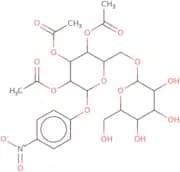
The 4-Nitrophenyl 2,3,4-tri-O-acetyl-6-O-(a-D-glucopyranosyl)-a-D-glucopyranoside is a fluorogenic substrate for β-galactosidase. This product has high purity and quality and is an enzyme substrate for β-galactosidase. The 4NPG2,3,4TRA can be used as a diagnostic tool in the diagnosis of bacterial infections. It is also used in the food testing industry and environmental testing industry. This product has CAS No.: 51743-71-1. This product is also a ligand that reacts with the enzyme β-galactosidase to produce light in chemiluminescence reactions. This product can be used for staining or bioluminescence applications.Pureza:Min. 95%Peso molecular:589.51 g/mol2-Chloro-4-nitrophenyl a-D-fucopyranoside
CAS:<p>2-Chloro-4-nitrophenyl a-D-fucopyranoside (CNPF) is a chromogenic enzyme substrate used primarily to detect fucosidase activity. CNPF is cleaved by the enzyme, which results in the release of a colored product that can be measured spectrophotometrically. Fucosidases are important enzymes that catalyze the hydrolysis of fucose-containing oligosaccharides, and CNPF is a commonly used substrate for the detection and quantification of these enzymes in various research studies.</p>Pureza:Min. 95%Peso molecular:319.69 g/mol4-Nitrophenyl 2,3-di-O-(2,3,4,6-tetra-O-acetyl-b-D-glucopyranosyl)-b-D-glucopyranoside
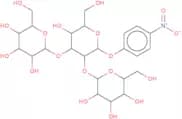
<p>4-Nitrophenyl 2,3-di-O-(2,3,4,6-tetra-O-acetyl-b-D-glucopyranosyl)-b-D-glucopyranoside is a fluorogenic substrate that is used in biochemistry as an enzyme substrate. It is a colorless solid that has high purity and high quality. This product is a ligand that binds to the enzyme beta glucosidase. The conjugate of this product with beta glucosidase can be used in diagnostics for the detection of glucose levels in culture media or food testing. This product also has chromogenic and chemiluminescent properties that are used in environmental testing and staining. CAS No.: 54323-05-8</p>Pureza:Min. 95%Peso molecular:961.82 g/mol4-Nitrophenyl 2-O-(a-D-mannopyranosyl)-a-D-mannopyranoside
CAS:<p>4-Nitrophenyl 2-O-(a-D-mannopyranosyl)-a-D-mannopyranoside is a chromogenic substrate for the enzyme, beta-glucosidase. It is used as a food additive to test for the presence of alpha and beta glucosidases in foods. This product is also commonly used as an enzyme substrate and conjugate in biochemical research and diagnostic applications.</p>Pureza:Min. 95%Cor e Forma:White To Off-White SolidPeso molecular:463.39 g/molPhosphoric acid, mono(4-nitrophenyl) ester
CAS:Phosphoric acid, mono(4-nitrophenyl) ester is an inhibitor that binds to the human serum albumin (HSA), thereby preventing it from binding to the transcriptional regulatory protein. This leads to a decrease in the activity of this protein and consequently less inhibition of gene expression. The structural analysis of this inhibitor has shown that it forms hydrogen bonding interactions with basic proteins, while its reactivity is mainly dependent on Michaelis–Menten kinetics. The inhibitor also inhibits enzyme activities by binding to their active sites, reducing the enzyme's ability to catalyze reactions.Fórmula:C6H6NO6PPeso molecular:219.09 g/molRef: 3D-P-6460
1kgA consultar50gA consultar100gA consultar250gA consultar500gA consultar-Unit-kgkgA consultar2-Nitrophenyl 2-acetamido-3,6-di-O-acetyl-4-O-[2-O-(2,3,4-tri-O-benzoyl-a-L-fucopyranosyl)]-2-deoxy-b-D-glucopyranoside
<p>2-Nitrophenyl 2-acetamido-3,6-di-O-acetyl-4-O-[2-O-(2,3,4-tri-O-benzoyl-a-L-fucopyranosyl)]--2-deoxy--bDglucopyranoside is an acylated glucopyranoside that is used as a substrate for the enzyme β -galactosidase. When hydrolyzed by β -galactosidase, it yields a blue product that has been widely used in chemiluminescence and bioluminescence assays. It also can be used for staining and ligand binding studies.</p>Pureza:Min. 95%Peso molecular:884.83 g/mol3-Nitrophenyl 2-acetamido-2-deoxy-b-D-glucopyranoside
CAS:3-Nitrophenyl 2-acetamido-2-deoxy-b-D-glucopyranoside is a chemiluminescent substrate that is used for the detection of glycosidases. It has been shown to be a good ligand for the study of nucleic acid hybridization, and it can also be used in enzyme assays. 3NPPAG is available in high purity and high quality. This product has been tested for use in culture media, environmental testing, bioluminescence, staining, fluorogenic substrate, CAS No. 61894-63-1, diagnostics, chromogenic substrate, enzyme substrate, food testing and conjugate applications.Pureza:Min. 95%4-Nitrophenyl 2,3-di-O-(b-D-glucopyranosyl)-b-D-glucopyranoside
4-Nitrophenyl 2,3-di-O-(b-D-glucopyranosyl)-b-D-glucopyranoside is a chromogenic substrate that can be used to detect the presence of β-glucuronidase in human and animal tissue. The compound is also a fluoroquinolone substrate for the detection of β-lactamase activity. 4NPBG is used in diagnostics as well as food testing, due to its ability to detect bacteria in both food and water samples. 4NPBG is a chemiluminescent substrate that emits light upon hydrolysis by β-glucuronidase or β-lactamase. The compound has been shown to be an excellent ligand for binding to protein A or protein G and can be used for immunoassays such as ELISA or Western blotting.Pureza:Min. 95%Peso molecular:625.53 g/molAquaSpark® α-D-glucoside, 10 mM in DMSO, Ramot at Tel-Aviv University Ltd. Patent family WO 2017/130191
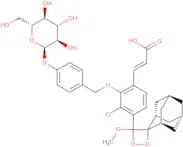
CAS:<p>AquaSpark alpha-D-glucoside is a chemiluminescent substrate for thealpha-glucosidase enzyme, based on the AquaSpark technology. Uponhydrolytic cleavage by alpha-glucosidase, AquaSpark alpha-D-glucosideemits green light that allows for sensitive detection ofalpha-glucosidase activity in a variety of biological samples.In microbiology alpha-glucosidase probes are used for the detection ofSaccharomyces cerevisiae, Cronobacter sakazakii, Staphylococcus aureus,Enterobacter spp., Bacillus stearothermophilus and other species.</p>Fórmula:C34H39ClO12Peso molecular:675.12 g/mol2-Chloro-4-nitrophenyl β-D-xylopyranoside
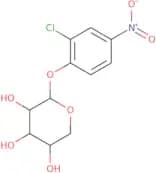
CAS:<p>2-Chloro-4-nitrophenyl β-D-xylopyranoside is a fluorogenic substrate that can be used for the detection of β-glucuronidase activity in food testing, environmental testing, and diagnostics. It has been shown to be an effective substrate for detecting β-glucuronidase activity with a high degree of sensitivity and specificity. 2CNPX can also be used as a chromogenic substrate for the detection of β-glucuronidase activity in food testing and environmental testing. The conjugate form of this substrate is useful for immunochemical assays, such as enzyme linked immunosorbent assay (ELISA) or radioimmunoassay (RIA). This product is also used as a ligand in fluorescence resonance energy transfer (FRET) assays.<br>2CNPX can be used to detect β-glucuronidase activity by chemiluminescence</p>Fórmula:C11H12ClNO7Pureza:Min. 95%Peso molecular:305.67 g/mol4-Nitrophenyl 2-acetamido-3-O-(2-acetamido-3,4,6-tri-O-acetyl-b-D-glucopyranosyl)-4,6-di-O-acetyl-2-deoxy-a-D-galactopyranoside
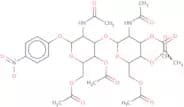
4-Nitrophenyl 2-acetamido-3-O-(2-acetamido-3,4,6-tri-O-acetyl-b-D-glucopyranosyl)-4,6-di-O-acetyl-2deoxy--aDgalactopyranoside is a substrate for enzymes such as beta galactosidase and alpha amylase. It can be used for the detection of these enzymes in biological samples, including culture media and body fluids. 4NPAG has also been used as a chromogenic substrate to measure the activity of NADH oxidase in neutrophils. 4NPAG is fluorescent in aqueous solution and can be used to detect bioluminescence reactions.Pureza:Min. 95%Peso molecular:755.68 g/mol4-Nitrophenyl 2-acetamido-3-O-[2-O-(2,3,4-tri-O-benzoyl-a-L-fucopyranosyl)-3,4,6-tri-O-acetyl-2-deoxy-D-galactopyranosyl]-b-D-glucop yranoside
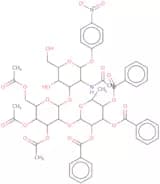
4-Nitrophenyl 2-acetamido-3-O-[2-O-(2,3,4-tri-O-benzoyl-a-L-fucopyranosyl)-3,4,6-tri-O-acetyl-2 deoxy -D-galactopyranosyl]-b D glucopyranoside is a fluorescent substrate for the enzyme β galactosidase. It can be used to test for β galactosidase activity in food products, environmental samples and diagnostics. 4NPFAPG is a conjugate of 4 nitrophenol and 2 acetamido 3 O-[2 O-(2,3,4 tri O benzoyl a L fucopyranosyl) 3,4 6 tri O acetyl 2 deoxy D galactopyranosyl] b D glucopyranose. 4NPFAPG is water soluble and hasPureza:Min. 95%Peso molecular:1,089.01 g/mol4-Nitrophenyl 2-acetamido-2-deoxy-4-O-(a-L-fucopyranosyl)-b-D-glucopyranoside
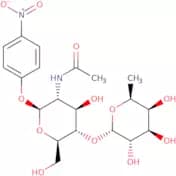
CAS:<p>4-Nitrophenyl 2-acetamido-2-deoxy-4-O-(a-L-fucopyranosyl)-b-D-glucopyranoside is a fluorescent substrate for beta-galactosidase that is used in diagnostics and research. The product has been shown to be an excellent substrate for beta-galactosidase and beta-glucuronidase, as well as other glycosidases. It can be used to detect the presence of these enzymes in any sample containing glycosides. This product is also used in food testing, environmental testing, and bioluminescence experiments. 4NPAFG is available in high purity with a conjugate group at the C4 position.</p>Pureza:Min. 95%Peso molecular:488.44 g/molBCIP disodium salt sesquihydrate
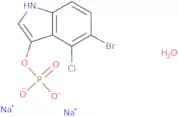
CAS:<p>BCIP is a dye that can be used as a substrate in a fluorometric assay to detect the presence of effector proteins. It is also used in analytical chemistry to detect phosphate, and as a reagent in diagnostic tests for mucin gene expression. BCIP has been shown to have transcriptional regulatory effects on genes encoding for proteins involved in antibody production. BCIP has been shown to act as an effector protein, which influences the amount of mRNA produced by the gene encoding for tissue culture cells. BCIP can also be used as a model system to study the regulation of transcription in vitro.<br>A hybridization technique using BCIP with DNA-dependent RNA polymerase II has been demonstrated and applied to analyze the mechanism of transcriptional control at the level of individual genes. The use of this technique allows for analysis at a single gene level and may allow for better understanding of transcriptional regulation.</p>Pureza:Min. 95%Peso molecular:388.45 g/mol4-Nitrophenyl 2,3,4-tri-O-acetyl-a-D-glucopyranoside
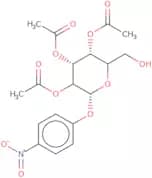
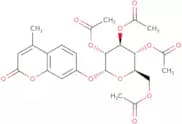
4-Nitrophenyl 2,3,4-tri-O-acetyl-a-D-glucopyranoside is a high quality chemical used in the development of various diagnostic and research applications. It is also used in the production of enzymatic substrates for enzyme activity assays. 4NPTAG is a chromogenic substrate that produces chemiluminescence when it reacts with an oxidizing agent and has been shown to be very effective as a fluorogenic substrate for protein kinases. This compound has been shown to bind to ligands and can be used as a bioluminescent reporter for molecular biology applications. The CAS number for this product is 54973-14-0.Pureza:Min. 95%Peso molecular:427.36 g/mol4-Methylumbelliferyl 2,3,4,6-tetra-O-acetyl-a-D-glucopyranoside
CAS:4-Methylumbelliferyl 2,3,4,6-tetra-O-acetyl-a-D-glucopyranoside is a fluorescent marker for nucleic acid molecules. It can be applied to identify the metabolic pathways of bacteria in an ecosystem by using fluorescence microscopy. 4-Methylumbelliferyl 2,3,4,6-tetra-O-acetyl-a-D-glucopyranoside is also used to measure the activity of some enzymes in vitro. This compound has been shown to be effective against spittlebugs and other pests that feed on plant sap. The toxic effect of this compound is due to its ability to inhibit acetate synthesis and disrupt membrane transport systems.Pureza:Min. 95%Peso molecular:506.46 g/mol4-Nitrophenyl 2-acetamido-6-O-(2-acetamido-3,4,6-tri-O-acetyl-2-deoxy-b-D-glucopyranosyl)-3-O-(2,3,4,6-tetra-O-acetyl-b-D-galactopyr anosyl)-2-deoxy-a-D-galactopyranoside
4-Nitrophenyl 2-acetamido-6-O-(2-acetamido-3,4,6-tri-O-acetyl-2-deoxy-b-D-glucopyranosyl)-3-O-(2,3,4,6-tetra -O acetyl -b D galactopyranosyl)-2 deoxy a D galactopyranoside is a high purity fluorogenic substrate for the enzyme β galactosidase. It can be used for the detection of β galactosidase in biological samples. 4NPAG can also be used as a ligand for various types of chromogenic substrates. This product is also commonly used in diagnostics and conjugates to detect β galactosidase activity or as a culture media supplement.Pureza:Min. 95%Peso molecular:1,001.89 g/mol





![2-Nitrophenyl 2-acetamido-3,6-di-O-acetyl-4-O-[2-O-(2,3,4-tri-O-benzoyl-a-L-fucopyranosyl)]-2-deox…](/_next/image/?url=https%3A%2Fstatic.cymitquimica.com%2Fproducts%2F3D%2Fthumb-webp%2FEN04919.webp&w=3840&q=75)