Substratos enzimáticos
Subcategorias de "Substratos enzimáticos"
Foram encontrados 1526 produtos de "Substratos enzimáticos"
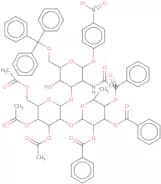
4-Nitrophenyl 2-acetamido-3-O-[2-O-(2,3,4-tri-O-benzoyl-a-L-fucopyranosyl)-3,4,6-tri-O-acetyl-D-galactopyranosyl]-2-deoxy-6-O-trityl -b-D-glucopyranoside
4-nitrophenyl 2-acetamido-3-O-[2-O-(2,3,4-tri-O-benzoyl-a-L-fucopyranosyl)-3,4,6-tri-O-acetyl -D -galactopyranosyl]-2 deoxy 6 O trityl b D glucopyranoside is a chemiluminescent substrate that can be used in biochemical assays. It reacts with oxygen to produce light when it is excited by a UV or blue light source. This product has been tested for purity and quality by HPLC analysis and spectroscopy.Pureza:Min. 95%Peso molecular:1,331.33 g/mol4-Nitrophenyl b-D-cellobioside heptacetate
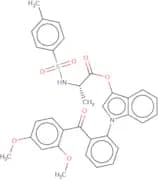
CAS:4-Nitrophenyl b-D-cellobioside heptacetate is a fluorogenic substrate that is used in food testing and environmental testing. The product is an enzyme substrate that can be used as a conjugate to produce chemiluminescence or bioluminescence. 4-Nitrophenyl b-D-cellobioside heptacetate has CAS number 69948-03-4 and is of high purity and quality. It has been shown to have good fluorescence properties, which makes it ideal for use in fluorescence microscopy applications.Pureza:Min. 95%Peso molecular:757.65 g/molAldol® 470 N-tosyl-L-alanine ester, Biosynth Patent: EP 2427431 and US 8940909
CAS:Produto ControladoAldol® 470 N-tosyl-L-alanine ester is a fluorogenic substrate that is used in enzyme and chromogenic assays. It is a high purity, high quality, and highly soluble substrate for chemiluminescent reactions. Aldol® 470 N-tosyl-L-alanine ester can be used to detect the presence of bacteria in culture media and as an indicator of bacterial growth. It is also used to test for the presence of different types of enzymes that catalyze the oxidation of alcohols.
Fórmula:C33H30N2O7SPureza:Min. 90.0 Area-%Peso molecular:598.67 g/molAldol® 496 acetate, Biosynth Patent: EP 2427431 and US 8940909
CAS:Aldol 496 acetate is a chromogenic substrate for the enzyme Aldolase. It is also used as a ligand to detect the presence of Aldolase in biological fluids and tissues. This product is designed for Food testing, Diagnostics, Chromogenic substrate, Staining, Enzyme substrate, Bioluminescence, Fluorogenic substrate, Chemiluminescence, and Culture media. Aldol 496 acetate is an organic chemical with high purity and high quality.Fórmula:C27H24N2O4Pureza:Min. 95.0 Area-%Peso molecular:440.49 g/molAldol® 515 propionate, Biosynth Patent: EP 2427431 and US 8940909
CAS:Aldol® 515 propionate is a chromogenic substrate that is used as a reagent in food testing, diagnostics, and environmental testing. It reacts with an enzyme to form a fluorescent product that can be detected with a spectrophotometer. The substrate has been shown to have high purity and high quality.Fórmula:C26H24N2O3Pureza:Min. 95.0 Area-%Peso molecular:412.48 g/molAldol® 450 acetate, Biosynth Patent: EP 2427431 and US 8940909
CAS:Aldol® 450 acetate is an enzyme substrate that is used in the detection of aldolase activity. Aldol® 450 acetate has been shown to be a useful alternative to the traditional bioluminescence and chemiluminescence methods for detecting aldolase activity. It has also been shown to be effective as a fluorogenic substrate for detecting aldolase activity in food products. Aldol® 450 acetate can be conjugated with other compounds, such as ligands and dyes, to enable it to detect different enzymes.
Aldol® 450 acetate has an absorption maximum at 450 nm and fluoresces blue-green under longwave UV light excitation. It is soluble in water and exhibits excellent stability at high temperatures (up to 50°C) and pH (1-14).Fórmula:C27H19NO3Pureza:Min. 95.0 Area-%Peso molecular:405.44 g/molBCM® Histamine-producing bacteria Broth
Histamine (Scombrotoxin) fish poisoning is the most frequent cause of fish poisoning incidents today. Cymit Quimica's BCM®; Histamine-producingbacteria Broth (C-0450) is a growth medium for the detection of histamine-producing bacteria in food and water samples. The medium contains an indicator that turns orange to red due to metabolites released by histidine decarboxylase.5-Bromo-4-chloro-3-indoxyl nonanoate
CAS:5-Bromo-4-chloro-3-indoxyl nonanoate (5BCNI) is a chromogenic substrate for the detection of alkaline phosphatase. It is soluble in most organic solvents and is stable at room temperature for up to 30 days. 5BCNI has been shown to be a high quality, sensitive and specific substrate for the detection of alkaline phosphatase in culture media, diagnostics, conjugates, environmental testing and chemiluminescence. It has also been used as an enzyme substrate in bioluminescence studies. The CAS number for 5BCNI is 133950-77-3.Fórmula:C17H21BrClNO2Peso molecular:386.72 g/molAldol® 484 β-D-galactopyranoside, Biosynth Patent: EP 2427431 and US 8940909
CAS:Aldol® 484 beta-D-galactopyranoside is a chromogenic enzyme substrate for beta-galactosidase activity. The colorless product is cleaved by lactose-utilizing bacteria in liquid or solid media, yielding intense red color. Aldol® 484 beta-D-galacto-pyranoside can also be used in beta-gal reporter gene assays or for identification of beta-gal positive transformants on agar. Aldol® 484 beta-D-galactopyranoside can be used under aerobic and anaerobic conditions.Fórmula:C26H24ClFN2O7Pureza:Min. 95.0 Area-%Peso molecular:530.93 g/molBoc-Val-Pro-Arg-AquaSpark®, Ramot at Tel-Aviv University Ltd. Patent family WO 2017/130191
CAS:Targets Factor C substrate and peptidaseFórmula:C49H66ClN7O11Pureza:Min. 85 Area-%Peso molecular:964.56 g/molAldol® 467 β-D-galactopyranoside, Biosynth Patent: EP 2427431 and US 8940909
CAS:Aldol® 467 beta-D-galactopyranoside is a chromogenic and fluorogenic enzyme substrate used for detection of beta-galactosidase activity. The colorless product is cleaved by lactose-utilizing bacteria grown in liquid or solid media, yielding yellow coloration and green fluorescence. Aldol® 467 beta-D-galactopyranoside can also be used in beta-galactosidase gene reporter assays or immunoassay applications (ELISA). Aldol® 467 beta-D-galactopyranoside can be used under aerobic and anaerobic conditions.
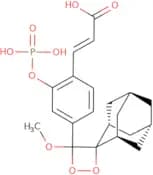
Fórmula:C29H28ClNO9Pureza:Min. 95.0 Area-%Peso molecular:570 g/molAquaSpark® Alkaline Phosphatase Substrate, Ramot at Tel-Aviv University Ltd. Patent family WO 2017/130191
AquaSpark® Alkaline Phosphatase Substrate is a stand-alone reagent - no additives such as enhancers or detergents are required to start a strong light reaction. AquaSpark® Alkaline Phosphatase Substrate is superior to other luminogenic alkaline phosphatase substrates as it shows significantly higher signal intensities and very low background.Application Examples:
Fórmula:C21H24NaO9PPureza:Min. 80.0 Area-%Peso molecular:474.38 g/mol6-Bromo-2-naphthyl-α-D-mannopyranoside
CAS:6-Bromo-2-naphthyl-alpha-D-mannopyranoside is a strong inhibitor of alpha-mannosidase. It has been shown to inhibit the growth of Mycobacterium tuberculosis and Streptococcus pneumoniae, which are both known to cause bacterial infections in humans. 6BNA inhibits the enzyme alpha-mannosidase, which hydrolyzes terminal α-(1,4)-linked mannose residues from oligosaccharides and glycoproteins. This drug has a high affinity for the active site of alpha-mannosidase and an IC50 value of 0.2 mM, making it an effective inhibitor.
Fórmula:C16H17BrO6Pureza:Min. 98.0 Area-%Peso molecular:385.22 g/molEspresso-Gal
Espresso-Gal (Espresso-beta-D-galactopyranoside) is a chromogenic indicator for beta-galactosidase activity. The colorless product is cleaved by lactose-utilizing bacteria in liquid media or on agar plates and yields an espresso brown colored precipitate. Espresso-Gal can also be used as detecting agent for beta-galactosidase activity in reporter gene assays or for identification of positive transformants on agar plates when using the α-complementation approach. Read more in the Application Notes.Peso molecular:495.6 g/molAldol® 458 phosphate, disodium salt, Biosynth Patent: EP 2427431 and US 8940909
CAS:Aldol® 458 phosphate is a chromogenic and fluorogenic enzyme substrate used for detection of phosphatase activity. The colorless enzyme substrate is cleaved by phosphatases secreted by bacteria grown in liquid media, yielding yellow color and green fluorescence. Aldol® 458 phosphate can also be used in assays involving phosphatase-coupled antibodies in immunoassay applications (ELISA). Aldol® 458 phosphate can be used under aerobic and anaerobic conditions.Fórmula:C16H12NNa2O6PPureza:Min. 95.0 Area-%Peso molecular:391.22 g/mol2-Chloro-4-nitrophenyl b-D-xylobioside
2-Chloro-4-nitrophenyl b-D-xylobioside is a chemiluminescent substrate that is used as a diagnostic agent. It has been used in the identification of gram positive and gram negative bacteria, which are differentiated by the color of the reaction. This substrate has also been used to detect the presence of certain enzymes produced by bacteria. 2-Chloro-4-nitrophenyl b-D-xylobioside has shown to be an effective enzyme substrate for detecting bacterial growth in culture media and is often used as a fluorogenic substrate in food testing.
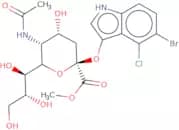
Pureza:Min. 95%5-Bromo-4-chloro-3-indolyl N-acetyl-a-D-neuraminic acid methyl ester
CAS:5-Bromo-4-chloro-3-indolyl N-acetyl-a-D-neuraminic acid methyl ester is a chromogenic substrate that reacts with enzymes to produce a colored product. It can be used in diagnostic tests for the detection of various bacteria, including Salmonella and Brucella, as well as for the determination of concentration in food testing or environmental testing. 5B4C3INA can also be conjugated to other substances, such as biotin or an antibody, which allows it to be used in immunoassays.Fórmula:C20H24BrClN2O9Pureza:Min. 95%Peso molecular:551.77 g/molrac-7-(3',4'-Dihydroxybutyloxy)coumarin-4'-phosphate disodium salt
CAS:This Clips-O substrate rac-7-(3',4'-Dihydroxybutyloxy)coumarin-4'-phosphate allows the detection of single and dual enzymatic activity (phosphatase and oxidation of 4-amino-3-hydroxybutyloxy spacer either enzymatically or by exposure to sodium periodate) with a single substrate resulting in a fluorescent signal. The main virtues of Clips-O substrates are an increased stability towards non-enzymatic hydrolysis that results in a reduced background and high sensitivity.Fórmula:C13H13Na2O8PPureza:Min. 95.0 Area-%Peso molecular:374.2 g/molAldol® 515 β-D-xylopyranoside, Biosynth Patent: EP 2427431 and US 8940909
CAS:Aldol® 515 beta-D-xylopyranoside is a chromogenic substrate that is used in food testing. It is an alternative to the more common glucose and sucrose, which are not suitable for some types of assays. Aldol® 515 beta-D-xylopyranoside is also used in diagnostics as a ligand for fluorescent antibody staining and chemiluminescence assays. It has been shown to increase the sensitivity of these tests by up to 10 times. The substrate has been tested extensively and is safe for use with a wide range of bacteria including E. coli, S. typhimurium, M. tuberculosis, and C. albicans at concentrations up to 100 mM without any inhibitory effects on growth or viability.
END>.Fórmula:C28H34N2O6Pureza:Min. 95.0 Area-%Peso molecular:494.59 g/molL-Glutamic acid γ-(4-nitroanilide) monohydrochloride
CAS:L-Glutamic acid gamma-(4-nitroanilide) monohydrochloride is a fluorescent substrate for various enzymes. It is used in the detection of aminopeptidase and dipeptidase activity, as well as in the determination of ATPase activity. L-Glutamic acid gamma-(4-nitroanilide) monohydrochloride is also used in fluorogenic assays for the detection of phosphate, pyruvate, pyrophosphate and sulfite. This product has been tested by both enzyme and cell culture methods to ensure high purity and quality. L-Glutamic acid gamma-(4-nitroanilide) monohydrochloride is not intended for use in diagnostics, food testing or bioluminescence reactions.Fórmula:C11H14ClN3O5Pureza:Min. 98 Area-%Peso molecular:303.70 g/mol