Substratos enzimáticos
Substratos enzimáticos são moléculas sobre as quais as enzimas atuam para catalisar reações químicas. O substrato liga-se ao sítio ativo da enzima, onde passa por uma transformação específica para formar o produto da reação. Os substratos enzimáticos são ferramentas essenciais na pesquisa para estudar a cinética enzimática, especificidade e mecanismo de ação. Eles também são usados em ensaios diagnósticos e estudos bioquímicos. Na CymitQuimica, oferecemos uma seleção diversificada de substratos enzimáticos de alta qualidade para apoiar suas pesquisas em enzimologia e bioquímica.
Subcategorias de "Substratos enzimáticos"
Foram encontrados 1529 produtos de "Substratos enzimáticos"
Ordenar por
Pureza (%)
0
100
|
0
|
50
|
90
|
95
|
100
4-Methylumbelliferyl-b-D-xylotrioside
CAS:<p>4-Methylumbelliferyl-b-D-xylotrioside is a fluorogenic substrate that reacts with an enzyme in the presence of oxygen to produce light. It is used in diagnostic applications, such as detecting the presence of a specific enzyme or protein. 4-Methylumbelliferyl-b-D-xylotrioside can also be used as a chromogenic substrate for the detection of DNA and RNA. This compound can be conjugated with other molecules for use in immunoassays and other diagnostic applications. 4-Methylumbelliferyl-b-D-xylotrioside has been shown to bind to bacterial cells and activate them, which leads to the production of light through bioluminescence.</p>Pureza:Min. 95%Peso molecular:572.51 g/mol2,4-Dinitrophenyl b-L-arabinofuranoside
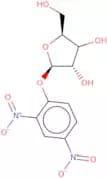
2,4-Dinitrophenyl b-L-arabinofuranoside is a high quality chromogenic substrate for dinitrophenylase. It is a ligand that reacts with an enzyme to form a product that can be detected by various methods, including colorimetry and fluorimetry. 2,4-Dinitrophenyl b-L-arabinofuranoside has shown to be useful for the detection of organic contaminants in water and air. 2,4-Dinitrophenyl b-L-arabinofuranoside is also used as a reagent for the preparation of conjugates for immunoassays.Pureza:Min. 95%Peso molecular:628.54 g/mol4-Nitrophenyl D-maltopentaoside
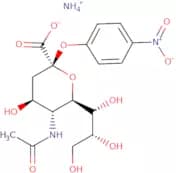
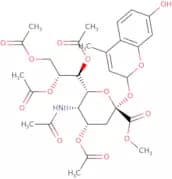
CAS:<p>Chromogenic substrate targeting amylase and maltase</p>Fórmula:C36H55NO28Pureza:Min. 95%Peso molecular:949.81 g/mol4-Methylumbelliferyl N-acetyl-4,7,8,9-tetra-O-acetyl-a-D-neuraminic acid methyl ester
CAS:<p>4-Methylumbelliferyl N-acetyl-4,7,8,9-tetra-O-acetyl-a-D-neuraminic acid methyl ester (4MU) is a chemiluminescence substrate. It is used in the detection of an enzyme involved in the synthesis of glycoproteins and glycolipids. The enzyme conjugates 4MU with a sugar molecule to form a fluorescent product. This product can be detected by its emission of light at 560 nm when illuminated with light at 450 nm.</p>Pureza:Min. 95%Peso molecular:649.6 g/mol[2-Methoxy-4-(2-nitrovinyl)phenyl] b-D-galactopyranoside
CAS:[2-Methoxy-4-(2-nitrovinyl)phenyl] b-D-galactopyranoside (MNVP-gal) is a chromogenic enzyme substrate that is commonly used to detect the activity of beta-galactosidase in biological samples. MNVP-gal produces a distinctive magenta color when hydrolyzed by beta-galactosidase, making it particularly useful for applications where visual detection is necessary. This substrate is also resistant to endogenous proteases, making it well-suited for use in cellular and tissue preparations.Pureza:Min. 95%Peso molecular:357.31 g/mol4-Nitrophenyl 2,4,6-tri-O-acetyl-3-O-(2,3,4,6-tetra-O-acetyl-b-D-glucopyranosyl)-b-D-glucopyranoside
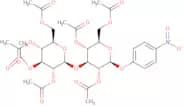
CAS:4-Nitrophenyl 2,4,6-tri-O-acetyl-3-O-(2,3,4,6-tetra-O-acetyl-β-D-glucopyranosyl)-β-D-glucopyranoside is an advanced bifunctional chromogenic pNP substrate specifically tailored for the simultaneous detection and quantification of multiple glycosidase enzymes. This dual-action substrate undergoes cleavage by two separate enzymatic reactions, which increases the range and sensitivity of detection. The resulting 4-Nitrophenol release can be easily measured spectrophotometrically, providing rapid and reliable enzyme analysis for advanced enzymology studies, enabling new discoveries in biochemistry and biotechnology.Pureza:Min. 95%Peso molecular:757.65 g/molFluorescein dibutyrate
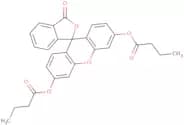
CAS:<p>Fluorogenic substrate targeting esterase and lipase</p>Pureza:Min. 95%Peso molecular:472.49 g/mol5-Bromo-3-indolyl decanoate
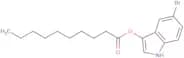
CAS:5-Bromo-3-indolyl decanoate (BID) is a chromogenic enzyme substrate often used for the detection of lipase activity. It is hydrolyzed by lipase to produce a blue-violet product, which can be detected visually or by spectrophotometry. BID is particularly useful for the detection of microbial lipases in food and environmental samples. It is commonly used in a wide range of biochemical, biological, and environmental testing applications that require precise lipase enzyme analysis.Fórmula:C18H24BrNO2Pureza:Min. 95%Cor e Forma:PowderPeso molecular:366.29 g/molN-(4-Nitrophenyl)-D-glucopyranosylamine
<p>N-(4-Nitrophenyl)-D-glucopyranosylamine is a conjugate that is used in food testing, environmental testing, and diagnostics. It is a fluorogenic substrate that reacts with the enzyme glucose oxidase to produce a yellow color. This product has high purity and quality and CAS No. 553-03-6. It also has bioluminescence properties.</p>Pureza:Min. 95%2-Naphthyl 2-acetamido-2-deoxy-β-D-glucopyranoside
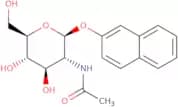
CAS:2-Naphthyl 2-acetamido-2-deoxy-b-D-glucopyranoside is a chromogenic substrate used for staining and diagnostic purposes. It is a ligand that has been shown to bind to certain enzymes and can be used for the detection of those enzymes. This product is also a chemiluminescence substrate, which can be used in bioluminescent reactions. This product has been shown to have high purity and quality, as well as being a conjugate.Fórmula:C18H21NO6Pureza:Min. 95%Peso molecular:347.36 g/mol4-Nitrophenyl trimethylacetate
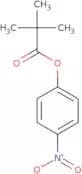
CAS:<p>4-Nitrophenyl trimethylacetate is a cytosolic proteinase inhibitor. It binds to the active site of trypsin and other enzymes that hydrolyze peptide bonds, thereby inhibiting the activity of these enzymes. 4-Nitrophenyl trimethylacetate has been shown to inhibit soybean trypsin, which has led to its use as a model system for studying enzyme inhibition. The binding site on 4-Nitrophenyl trimethylacetate is competitive with respect to substrate binding but not with respect to the enzyme's catalytic triad. This inhibitor also has a high buffer capacity and can be used in low pH systems.</p>Pureza:Min. 95%Peso molecular:223.23 g/mol6-Chloro-4-(trifluoromethyl)umbelliferyl b-D-cellotetraoside
<p>6-Chloro-4-(trifluoromethyl)umbelliferyl b-D-cellotetraoside is a fluorescent substrate that is used to measure the activity of the enzyme beta-glucuronidase. It is a chemiluminescent compound that emits light when hydrolyzed by an enzyme. 6-Chloro-4-(trifluoromethyl)umbelliferyl b-D-cellotetraoside has been shown to be a high quality and environmentally friendly product, as it does not cause any significant change in pH or turbidity in water samples. It has also been shown to be nontoxic and nonmutagenic at concentrations up to 400 ppm. This product can be used for a variety of purposes, including diagnostic tests for bacterial infections or food testing.</p>Pureza:Min. 95%Peso molecular:913.15 g/mol4-Nitrophenyl 3-O-(2,3,4,6-tetra-O-acetyl-a-D-mannopyranosyl)-4,6-O-cyclohexylidene-b-D-mannopyranoside
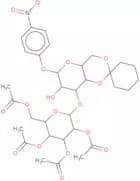
CAS:<p>4-Nitrophenyl 3-O-(2,3,4,6-tetra-O-acetyl-a-D-mannopyranosyl)-4,6-O-cyclohexylidene-b-D-mannopyranoside is a chromogenic pNP enzyme substrate, which features a cyclohexylidene-protected mannopyranosyl core. Upon enzymatic hydrolysis by glycosidases or other related enzymes, it releases a yellow-colored product, 4-nitrophenol, that can be easily detected spectrophotometrically. This substrate is useful for studying enzyme specificity, kinetics, and inhibition, as well as for the screening of enzyme inhibitors, the identification of glycosidase-producing organisms, and the development of new analytical methods.</p>Pureza:Min. 95%Peso molecular:711.66 g/molLuciferin-choline phosphate, sodium salt
<p>Luciferin-choline phosphate, sodium salt is a chemical compound used for the detection of phosphatases and esterases. This compound is also used for the detection of bacteria and fungi in food testing and environmental testing. Luciferin-choline phosphate, sodium salt is a chromogenic substrate that can be detected using bioluminescence or fluorogenic substrates. It has an absorbance maximum at around 420 nm.</p>Fórmula:C16H17N3NaO6PS2Pureza:Min. 95 Area-%Peso molecular:465.41 g/mol4-Nitrophenyl 2-acetamido-2-deoxy-4,6-O-benzylidene-b-D-glucopyranoside
CAS:<p>4-Nitrophenyl 2-acetamido-2-deoxy-4,6-O-benzylidene-b-D-glucopyranoside is a fluorescent substrate for beta amylase and other glycosidases. It has been used as a fluorogenic substrate for food testing and as a chromogenic substrate for environmental testing. 4NPB has also been used in diagnostic applications such as enzyme substrates, ligands, and chemiluminescent substrates. This product is of high purity and quality with a conjugate that can be used in biotechnology applications.</p>Pureza:Min. 95%Peso molecular:430.41 g/mol5-Bromo-4-chloro-3-indolyl 2-acetamido-2-deoxy-a-D-galactopyranoside
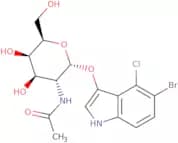
CAS:Substrate for a-N-acetyl-galactosaminidaseFórmula:C16H18BrClN2O6Pureza:Min. 95%Cor e Forma:White to off-white solid.Peso molecular:449.68 g/mol4-Nitrophenyl 3-O-(2,3,4,6-tetra-O-acetyl-a-D-mannopyranosyl)-2,4-di-O-benzoyl-b-D-mannopyranoside
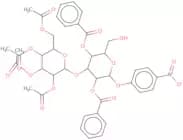
CAS:4-Nitrophenyl 3-O-(2,3,4,6-tetra-O-acetyl-a-D-mannopyranosyl)-2,4-di-O-benzoyl-b-D-mannopyranoside is a bioactive metabolite that can be found in the gene expression profile of a human genome. It has been shown to have an effect on gene expression levels and cellular function. This metabolite is found in the environment and has been shown to be mediated by environmental factors. The high level of gene expression has been shown to be due to its ability to bind to DNA.Pureza:Min. 95%Peso molecular:839.75 g/molAquaSpark® H2S probe, TFA salt, Ramot at Tel-Aviv University Ltd. Patent family WO 2017/130191
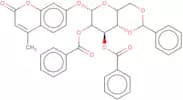
AquaSpark® H2S probe is a chemiluminescent probe for the detection of hydrogen sulfide (H2S), with excellent selectivity for sulfide over thiols. The AquaSpark® H2S probe is ~760-fold more selective for Na2S than to L-cysteine, and ~380-fold more selective for Na2S than for glutathione. AquaSpark® H2S probe was used in a study identifying antibiotic-resistant bacterial strains by detecting the beta-lactamase-driven hydrolysis of beta-lactam antibiotics, where hydrogen sulfide is a biodegradation metabolite (Popat Gholap et al, 2021).Fórmula:C35H31ClF3NO9SSePureza:Min. 95%Peso molecular:813.1 g/mol4-Methylumbelliferyl 2,3-di-O-benzoyl-4,6-O-benzylidene-b-D-galactopyranoside
<p>4-Methylumbelliferyl 2,3-di-O-benzoyl-4,6-O-benzylidene-b-D-galactopyranoside is a fluorogenic substrate that is used in the detection of β-galactosidase activity. This product is a white to off white powder that has a purity of 99.2%. It has been given CAS number 53654–95–1 and it can be found in the Diagnostics section of Acros Organics.</p>Pureza:Min. 95%Peso molecular:634.63 g/mol2-Nitrophenyl 2-acetamido-3,4,6-tri-O-acetyl-2-deoxy-a-D-glucopyranoside
CAS:2-Nitrophenyl 2-acetamido-3,4,6-tri-O-acetyl-2-deoxy-a-D-glucopyranoside is a chromogenic substrate commonly used in enzyme assays for the detection and quantification of enzyme activity. It is a colorless substrate that is enzymatically converted into a yellowish product, the intensity of which is directly proportional to the enzyme activity present in the sample.Pureza:Min. 95%Peso molecular:468.41 g/mol


![[2-Methoxy-4-(2-nitrovinyl)phenyl] b-D-galactopyranoside](/_next/image/?url=https%3A%2Fstatic.cymitquimica.com%2Fproducts%2F3D%2Fthumb-webp%2FEM06779.webp&w=3840&q=75)