Substratos enzimáticos
Subcategorias de "Substratos enzimáticos"
Foram encontrados 1527 produtos de "Substratos enzimáticos"
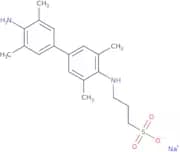
N-(3-Sulfopropyl)-3,3',5,5'-tetramethylbenzidine sodium
CAS:N-(3-Sulfopropyl)-3,3',5,5'-tetramethylbenzidine (TMB) sodium salt is a highly sensitive chromogenic substrate used for the detection and quantification of peroxidase enzyme activity. This water-soluble substrate undergoes a color change from colorless to blue upon oxidation by peroxidase enzymes in the presence of hydrogen peroxide. The reaction can be stopped by adding an acid, resulting in a yellow color that can be measured spectrophotometrically. TMB sodium salt is widely used in various applications, including enzyme-linked immunosorbent assays (ELISA), immunohistochemistry, and other diagnostic tests, due to its high sensitivity, low background signal, and excellent stability.
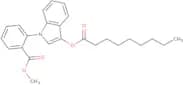
Pureza:Min. 95%Cor e Forma:PowderPeso molecular:384.47 g/molAldol® 458 nonanoate solution, 0.75 M in DMSO, Biosynth Patent: EP 2427431 and US 8940909
CAS:Produto ControladoAldol 458 nonanoate solution (0.75 M) is a substrate for enzymes and ligands, which is used in various applications such as food testing, staining, fluorogenic substrate, environmental testing, chromogenic substrate and conjugate. Aldol 458 nonanoate solution (0.75 M) has high purity and is highly stable at pH 2-12. This product can be used as a chemiluminescence or bioluminescence substrate. The CAS number for this product is 2484873-15-4.Fórmula:C25H29NO4Pureza:Min. 95%Cor e Forma:Clear LiquidPeso molecular:407.51 g/molAldol® 515 caprylate solution, 0.50 M in DMSO, Biosynth Patent: EP 2427431 and US 8940909
CAS:Aldol® 515 caprylate is a chromogenic and fluorogenic enzyme substrate used for detection of lipase activity. The colorless enzyme substrate is cleaved by C8 esterases, yielding development of red coloration. In addition, red fluorescence is generated when Aldol® 355 fluorescence enhancer or a suitable matrix is present. Aldol® 515 caprylate can be used in enzyme assays and live bacterial cultures. Aldol® 515 caprylate is suitable for use in liquid and solid media, under aerobic as well as anaerobic conditions.Fórmula:C31H34N2O3Pureza:Of Solute (Hplc) Min. 90.0 Area-%Peso molecular:482.62 g/mol4-Chloro-3-indoxyl-β-D-galactopyranoside
CAS:Chromogenic substrate for β-D-galactosidase yielding a precipitate. Mostly used in histochemistry.Fórmula:C14H16ClNO6Peso molecular:329.74 g/molRef: 3D-C-4990
1gA consultar5gA consultar10gA consultar25gA consultar2500mgA consultar-Unit-ggA consultarL-Pyroglutamic acid 7-amido-4-methylcoumarin
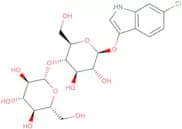
CAS:Fluorogenic substrate for proglutamyl peptidase 1 yielding a blue fluorescent solution upon cleavage. Used in identification of Enterococcus spp. and group A streptococci (Streptococcus pyogenes).Fórmula:C15H14N2O4Pureza:Min. 98 Area-%Peso molecular:286.29 g/mol6-Chloro-3-indolyl β-D-cellobioside
CAS:6-Chloro-3-indolyl b-D-cellobioside is a chromogenic substrate that produces a salmon-pink color after enzymatic cleavage. It is used for detecting the activity of beta-D-cellobiosidase in enzyme assays.
Pureza:Min. 95%Cor e Forma:White To Off-White SolidPeso molecular:491.87 g/molDL-Luciferin 1-(4,5-dimethoxy-2-nitrophenyl)ethyl ester
CAS:DL-Luciferin 1-(4,5-dimethoxy-2-nitrophenyl)ethyl ester is a fluorogenic substrate that is used to measure the activity of various enzymes. It can be used in food testing and diagnostics and as an indicator for chemiluminescence. DL-Luciferin 1-(4,5-dimethoxy-2-nitrophenyl)ethyl ester binds to the enzyme substrate and is then converted by the enzyme into a fluorescent product. This product can be measured using a fluorometer or luminometer.Fórmula:C21H19N3O7S2Peso molecular:489.53 g/mol4-Nitrophenyl a-D-thiomannopyranoside
CAS:4-Nitrophenyl a-D-thiomannopyranoside is a chemiluminescence substrate that can be used to measure the activity of β-galactosidase, an enzyme involved in the hydrolysis of lactose. This product is available as a white to yellowish powder and has been shown to have high purity and quality. It also displays strong fluorescence when reacted with hydrogen peroxide and has been used for diagnostics tests such as staining, food testing, and enzyme substrate reactions.Pureza:Min. 95%Peso molecular:317.32 g/mol4-Methylumbelliferyl-beta-D-galactopyranoside
CAS:Fluorogenic substrate for β-D-galactosidase yielding a blue fluorescent solution upon cleavage.Fórmula:C16H18O8Pureza:Min. 98.0 Area-%Peso molecular:338.32 g/mol2-(N-Hexadecanoylamino)-4-nitrophenylphosphocholine hydroxide
CAS:2-(N-Hexadecanoylamino)-4-nitrophenylphosphocholine hydroxide, often abbreviated as HDA-PC, is a chromogenic substrate for acid sphingomyelinase enzyme. HDA-PC is used as a key substrate for measuring the activity of this enzyme, responsible for catalyzing the hydrolysis of sphingomyelin to ceramide. The activity assay for this measuring this enzyme's acitivy is to detect a deficiency (or lack) of the enzyme which is directly related to the Niemann-Pick disease.Fórmula:C27H50N3O8PPureza:Min. 95%Cor e Forma:Off-White PowderPeso molecular:575.68 g/molLuc-S.aureus K
Luc-S.aureus K is a fluoro-ligand that is used as a diagnostic to detect and quantify the activity of S.aureus in any given sample. It is a detection substrate for the enzyme β-galactosidase, which catalyzes the hydrolysis of the luciferin. When luciferin is cleaved by β-galactosidase, it emits light that can be detected using a luminometer to measure the amount of light produced and calculate the quantity of bacteria present in the sample. Luc-S.aureus K has been approved for use as a detector for bioluminescence in food testing, environmental testing, and other diagnostic applications.Pureza:Min. 95%4-Nitrophenyl 2-acetamido-2-deoxy-β-D-glucopyranoside-6-sulfate potassium
CAS:4-Nitrophenyl 2-acetamido-2-deoxy-beta-D-glucopyranoside-6-sulfate potassium is a chromogenic substrate for N-acetylglucosamine-6-sulfatase. Upon hydrolysis, para-nitrophenol is released yielding a yellowish colour. 4-Nitrophenyl 2-acetamido-2-deoxy-beta-D-glucopyranoside-6-sulfate potassium is used in different applications such as the Mucopolysaccharidosis IIID (Sanfilippo D) screeningFórmula:C14H17N2O11S•KPureza:Min. 95%Cor e Forma:PowderPeso molecular:460.46 g/mol4-Nitrophenyl 2-O-(β-D-glucopyranosyl)-β-D-glucopyranoside
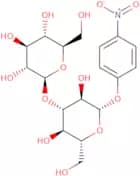
CAS:4-Nitrophenyl 2-O-(beta-D-glucopyranosyl)-beta-D-glucopyranoside is a chromogenic substrate for beta-glucosidase. Upon hydrolysis, para-nitrophenol is released yielding a yellowish colour. 4-Nitrophenyl 2-O-(beta-D-glucopyranosyl)-beta-D-glucopyranoside is used in different applications such as the Cellulose degradation studies, biofuel researchFórmula:C18H25NO13Pureza:Min. 95%Cor e Forma:White solid.Peso molecular:463.39 g/mol5-Bromo-4-chloro-3-indolyl b-D-galactofuranoside
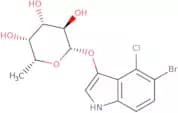
5-Bromo-4-chloro-3-indolyl b-D-galactofuranoside is a chromogenic substrate used to detect the specific enzymatic activity of beta-D-galactofuranosidase. After cleavage, 5-bromo-4-chloro-indoxyl is released, resulting in a blue to blue-green color change in bacterial colonies or media. 5-Bromo-4-chloro-3-indolyl b-D-galactofuranoside is used in assays for detecting bacterial pathogens (e.g., Mycobacterium tuberculosis).Fórmula:C14H15BrClNO6Pureza:Min. 95%Cor e Forma:PowderPeso molecular:408.63 g/mol5-Bromo-4-chloro-3-indolyl b-D-fucopyranoside
CAS:5-Bromo-4-chloro-3-indolyl b-D-fucopyranoside is a chromogenic substrate used is for the enzyme beta-fucosidase.
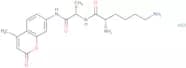
Fórmula:C14H15BrClNO5Pureza:Min. 98 Area-%Cor e Forma:PowderPeso molecular:392.63 g/molL-Lysyl-L-alanine 7-amido-4-methylcoumarin dihydrochloride
CAS:L-Lysyl-L-alanine 7-amido-4-methylcoumarin dihydrochloride is a fluorogenic peptide substrate for aminopeptidase. This AMC peptide substrate is normally used to rapidly profile the N-terminal specificity of proteases.Pureza:Min. 98.0 Area-%Cor e Forma:Powder5-Bromo-6-chloro-3-indolyl a-D-galactopyranoside
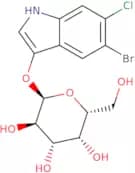
CAS:5-Bromo-6-chloro-3-indolyl a-D-galactopyranoside is a chromogenic substrate that yields a magenta-colored product after cleavage. The chromophore 5-bromo-6-chloro-indoxyl is released, generating the observable color. It is used in glycolipid metabolism studies.Fórmula:C14H15BrClNO6Cor e Forma:White to off-white solid.Peso molecular:408.63 g/mol3-(4,4-Difluoro-5,7-dimethyl-4-bora-3a,4a-diaza-s-indacene-3-propionamido)propyl b-D-lactoside
3-(4,4-Difluoro-5,7-dimethyl-4-bora-3a,4a-diaza-s-indacene-3-propionamido)propyl b -D -lactoside (FDPBP) is a substrate for alkaline phosphatase. It reacts with the enzyme to produce a blue color. FDPBP is used in diagnostic applications such as food testing and bioluminescence.Pureza:Min. 95%Cor e Forma:PowderPeso molecular:675.48 g/molResorufin b-D-xylobioside
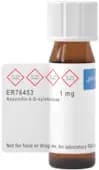
Resorufin b-D-xylobioside is a fluorogenic substrate for xylanases useful for xylanase activity assays.Pureza:Min. 95%Cor e Forma:PowderPeso molecular:477.42 g/mol2-Nitrophenyl b-D-galactopyranoside-6-phosphate cyclohexylammonium salt
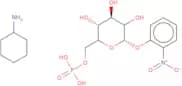
CAS:2-Nitrophenyl beta-D-galactopyranoside-6-phosphate cyclohexylammonium salt is a chromogenic substrate used to detect the enzymatic activity of beta-galactosidase-6-phosphatase. After cleavage, the nitrophenyl moiety is released exhibiting a light yellowish color. 2-Nitrophenyl beta-D-galactopyranoside-6-phosphate cyclohexylammonium salt is used in diagnostic assays such as lysosomal storage disorder.Pureza:Min. 95%Cor e Forma:PowderPeso molecular:480.4 g/molAldol® 535 myo-inositol-1-phosphate, ammonium salt, Biosynth Patent: EP 2427431 and US 8940909
CAS:Aldol® 535 myo-inositol-1-phosphate, ammonium salt is a chromogenic substrate for the enzyme, phosphoglucomutase. This product is used for the detection of phosphoglucomutase by its ability to react with this enzyme and produce a blue or green color. Aldol® 535 myo-inositol-1-phosphate, ammonium salt is also used as a ligand in fluorescence resonance energy transfer (FRET) experiments. It has an EC number of CAS No. 2484872-80-0 and a molecular weight of 345.05 g/mol.Fórmula:C29H32BrClN3O10PPureza:Min. 95.0 Area-%Peso molecular:728.91 g/molAc-Abu-Tle-Leu-Gln-AMC TFA salt
A fluorogenic substrate for detection of enzymatic activity of the SARS-CoV-2 Mpro protease. The fluorophore 7-Amino-4-methylcoumarin (AMC) is linked to the tetrapeptide via a peptide bond at the C-terminal of the glutamine residue. Following the hydrolytic activity of the Mpro protease, the fluorogenic AMC group get released from the substrate, generating a fluorescent signal (Ex 380 nm / Em 455 nm).Fórmula:C33H48N6O8(freebase)Pureza:Min. 95.0 Area-%Peso molecular:656.77 g/mol4-(Hydroxymethyl)phenyl-β-D-glucopyranoside tetraacetate
CAS:4-(Hydroxymethyl)phenyl-beta-D-glucopyranoside tetraacetate is a drug that has been shown to have antidiabetic effects in diabetic patients. It has been shown to inhibit tyrosinase activity and increase the production of gamma-aminobutyric acid (GABA) in brain cells. This compound also has a protective effect against glutamate toxicity, and is being studied as a potential treatment for epilepsy. 4-(Hydroxymethyl)phenyl-beta-D-glucopyranoside tetraacetate inhibits the production of tyrosinase, which is an enzyme responsible for the conversion of tyrosine to melanin. This process can be inhibited by inhibiting tyrosinase activity with 4-(hydroxymethyl)phenyl-beta-D-glucopyranoside tetraacetate.Fórmula:C21H26O11Peso molecular:454.43 g/mol4-Nitrophenyl phosphate mono(2-amino-2-ethyl-1,3-propanediol) salt monohydrate
CAS:4-Nitrophenyl phosphate mono(2-amino-2-ethyl-1,3-propanediol) salt monohydrate is a chromogenic substrate that can be used to detect the presence of alkaline phosphatase. It is also used in food testing and diagnostics. 4NPPMD is a substrate for the enzyme alkaline phosphatase, which has been shown to play a role in the inflammatory response. The production of 4NPPMD by bacteria in the environment can be detected with chemiluminescence or bioluminescence. This product has been shown to react with both horseradish peroxidase and alkaline phosphatase, as well as other enzymes that are involved in metabolic pathways. This substrate also has high purity and fluorescence properties.Fórmula:C11H21N2O9PPureza:Min. 95 Area-%Peso molecular:356.26 g/molAquaSpark® HRP probe
CAS:Please enquire for more information about AquaSpark® HRP probe including the price, delivery time and more detailed product information at the technical inquiry form on this pageFórmula:C38H38ClNO11Peso molecular:720.16 g/mol5-Bromo-4-chloro-3-indolyl a-D-mannopyranoside
CAS:5-Bromo-4-chloro-3-indolyl a-D-mannopyranoside is a chromogenic substrate used to detect the specific enzymatic activity of alpha-mannosidase. After cleavage, 5-bromo-4-chloro-indoxyl is released, resulting in a blue to blue-green color change in bacterial colonies or media. 5-Bromo-4-chloro-3-indolyl a-D-mannopyranoside is used in alpha-mannosidosis diagnosis and other lysosomal storage disorder.Fórmula:C14H15BrClNO6Pureza:Min. 95 Area-%Cor e Forma:PowderPeso molecular:408.63 g/mol4-Nitrophenyl 2,3,4,6-tetra-O-acetyl-b-D-thioglucopyranoside
CAS:4-Nitrophenyl 2,3,4,6-tetra-O-acetyl-b-D-thioglucopyranoside is a fluorescent dye that is used in recording and registration. It has been shown to be a very sensitive reporter of protein interactions in living cells. This dye binds to proteins via the hydroxyl groups on its sugar moiety, and has been shown to bind to a variety of proteins such as myosin light chain kinase and phosphatidylinositol 4-kinase. The fluorescent properties of this dye make it useful for tracking protein localization in the cell.Pureza:Min. 95%Peso molecular:485.46 g/molAldol® 515 choline phosphate, Biosynth Patent: EP 2427431 and US 8940909
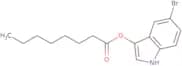
A useful substrate for the study of enzyme activitiesFórmula:C28H32N3O5PPureza:Min. 95 Area-%Peso molecular:521.55 g/mol5-Bromo-3-indoxyl caprylate
CAS:Also known as Lapis-caprylate; targeting esterase with C8 activity; Blue colorFórmula:C16H20BrNO2Pureza:Min. 98 Area-%Cor e Forma:PowderPeso molecular:338.24 g/molSTAADIUM™ PeptiZide L-Ala
STAADIUM(TM) PeptiZide L-Ala, Patent pending is a chemiluminescent substrate that reacts with hydrogen peroxide to produce light. It can be used in diagnostic applications such as the detection of blood or fecal stains and in tests for the presence of enzymes or antibodies. STAADIUM(TM) PeptiZide L-Ala, Patent pending is an excellent choice for use with bacterial culture media and food testing. This product has been shown to have high purity and quality.Fórmula:C15H18ClN3O2SPureza:Min. 95%Peso molecular:339.84 g/molAldol® 470 acetate, Biosynth Patent: EP 2427431 and US 8940909
CAS:Produto ControladoAldol 470 acetate is a chromogenic substrate for carboxylesterases yielding a yellow precipitate. Furthermore it shows some fluorescence(excitation at 320 nm to 490 nm). In contrast to classical indoxylsubstrates, Aldol substrates work not only under aerobic but also under anaerobic conditions.Fórmula:C25H21NO5Pureza:Min. 95.0 Area-%Peso molecular:415.44 g/mol4-Methylumbelliferyl-N-acetyl-beta-D-galactosaminide
CAS:Fluorogenic substrate for N-acetyl-β-D-galactosaminidase. Detection of Candida albicans.Fórmula:C18H21NO8Pureza:Min. 98.0 Area-%Peso molecular:379.37 g/molAldol® 515 palmitate, Biosynth Patent: EP 2427431 and US 8940909
CAS:Aldol® 515 palmitate is a chromogenic substrate that is used in food testing, diagnostics, and other applications. It has a high purity and is conjugated to various ligands for specific applications. Aldol® 515 palmitate is an excellent chemiluminescent substrate for the detection of ATP and other nucleotides. It also has high bioluminescence activity for the detection of adenosine-5'-triphosphate (ATP) or luciferin as well as enzyme substrates to measure β-galactosidase or β-glucuronidase activity.Fórmula:C39H50N2O3Pureza:Min. 95.0 Area-%Peso molecular:594.83 g/molAquaSpark® beta-D-galactoside, 10 mM in DMSO, Ramot at Tel-Aviv University Ltd. Patent family WO 2017/130191
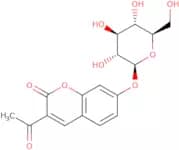
CAS:AquaSpark™ β-D-galactoside is a dioxetane-based luminogenic substrate for β-galactosidase activity. β-galactosidase assays are frequently used in molecular biology as reporter gene assays. AquaSpark™beta-D-galactoside can be used to replace X-gal (Cymit Quimica Cat. No.B-7150) that is frequently used in genetically modified bacteria, in the yeast two-hybrid system, or in mouse models to indicate lacZ gene activity. Furthermore, native β-galactosidase activity can be used to detect coliform bacteria, which is important in microbial diagnostics and hygiene monitoring.Fórmula:C34H39ClO12Peso molecular:675.12 g/mol3-Acetylumbelliferyl b-D-glucopyranoside
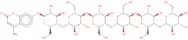
CAS:3-Acetylumbelliferyl beta-D-glucopyranoside is a fluorogenic enzyme substrate for beta-galactosidase-6-phosphatase. It is used in in diagnostic assays such as Gaucher disease.Fórmula:C17H18O9Pureza:Min. 95%Cor e Forma:PowderPeso molecular:366.32 g/mol4-Methylumbelliferyl β-D-cellohexaoside
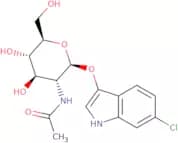
CAS:4-Methylumbelliferyl beta-D-cellohexaoside is a fluorogenic substrate for cellulase. After enzymatic cleaveage, free 4-methylumbelliferone (also known as hymecromone) is released, exhibiting blue fluorescence upon excitation with UV light. The strongest fluorescence of 4-methylumbelliferone requires deprotonation of the hydroxyl group (thus requires alkaline pH), with a maximal fluorescence intensity obtained with excitation at 350 to 370 nm and emission at 440 to 470 nm. The use of 4-methylumbelliferyl beta-D-cellohexaosideas a substrate for measuring the cellulase activity is used for detecting bacterial infection and gut microbiome analysis.Fórmula:C46H68O33Pureza:Min. 95%Cor e Forma:PowderPeso molecular:1,149.01 g/mol6-Chloro-3-indolyl 2-acetamido-2-deoxy-β-D-glucopyranoside
CAS:6-Chloro-3-indolyl 2-acetamido-2-deoxy-b-D-glucopyranoside is a pink enzyme substrate commonly used in biochemical research and diagnostic applications. This compound is a derivative of indolyl glucopyranoside, which is known for its ability to produce a colored product upon enzymatic hydrolysis. 6-Chloro-3-indolyl 2-acetamido-2-deoxy-b-D-glucopyranoside is particularly useful for studying glycosidases, enzymes that cleave glycosidic bonds in complex carbohydrates. Its pink coloration makes it an ideal choice for colorimetric assays, enabling researchers to monitor enzyme activity in real-time and facilitating the development of new diagnostic tools and therapeutic strategies.
Fórmula:C16H19ClN2O6Pureza:Min. 95%Cor e Forma:White to off-white solid.Peso molecular:370.78 g/molD-Luciferin Firefly
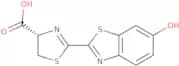
CAS:Luciferin (also in its salt form) is the substrate of luciferase, an enzyme that catalyzes a light-producing reaction. It is a bioluminescent substrate used to assay ATP availability. It also serves as a versatile scaffold to design other luminogenic enzyme substrates.Fórmula:C11H8N2O3S2Pureza:Min. 98 Area-%Cor e Forma:PowderPeso molecular:280.32 g/molAquaSpark® caprylate, 10 mM in DMSO, Ramot at Tel-Aviv University Ltd. Patent family WO 2017/130191
CAS:Chemiluminescent substrate for C8-esterase and lipase
Fórmula:C36H43ClO8Pureza:Min. 95%Cor e Forma:Clear LiquidPeso molecular:639.18 g/molAldol® 518 myo-inositol-1-phosphate - Biosynth Patent: EP 2427431 and US 8940909
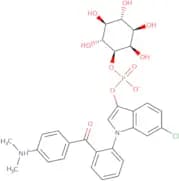
CAS:Aldol® 518 myo-inositol-1-phosphate is a chromogenic and fluorogenic enzyme substrate used for detection of phosphatidyl-inositol specific phospholipase C activity (PI-PLC, EC 4.6.1.13). The colorless enzyme substrate is cleaved by PI-PLC or PI-PLC-positive microorganisms grown in liquid or solid media, yielding an intense red coloration. In combination with Aldol® 355 fluorescence enhancer, red fluorescence can also obtained. Aldol® 518 myo-inositol-1-phosphate is suitable for use in liquid and solid media, under aerobic as well as anaerobic conditions.Fórmula:C29H33ClN3O10PPureza:Min. 95 Area-%Cor e Forma:PowderPeso molecular:650.02 g/molFluorescein-dipalmitoylphosphatidylethanolamine triethylammonium salt
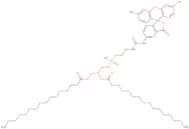
CAS:Fluorescein-dipalmitoylphosphatidylethanolamine triethylammonium salt is a fluorescent phospholipid derivative for phospholipase. This substrate consists of a fluorescein conjugated to DPPE (dipalmitoylphosphatidylethanolamine), a key component of biological membranes. This compound is frequently used in membrane dynamics studies and lipid metabolism research. The fluorescein moiety allows visualization of lipid interactions in model membranes, liposomes, or live-cell imaging applications. The triethylammonium salt form enhances solubility and stability, property that facilitates its use in aqueous and lipid-based environments.
Pureza:Min. 95%Cor e Forma:PowderPeso molecular:1,182.53 g/molβ-Alanine 7-amido-4-methylcoumarin trifluoroacetate
CAS:Beta-Alanine 7-amido-4-methylcoumarin trifluoroacetate is a fluorogenic substrate for aminopeptidase yielding a blue fluorescent solution.
Fórmula:C13H14N2O3•C2HF3O2Pureza:Min. 95%Cor e Forma:PowderPeso molecular:360.29 g/mol6-Chloro-3-indoxyl-β-D-glucuronic acid methyl ester, Biosynth Patent: EP 2718458 and US 9127303
6-Chloro-3-indoxyl-beta-D-glucuronic acid methyl ester is a chemiluminescent substrate that is used to measure the activity of enzymes in the beta-galactosidase family. This product is a white crystalline solid that dissolves in water and ethanol. 6-Chloro-3-indoxyl-beta-D-glucuronic acid methyl ester has been shown to be stable for at least two years when stored at -20°C. It can be used for diagnostic purposes, such as the detection of bacterial infections, or as an enzyme substrate in biochemistry studies.Pureza:Min. 95%Aldol® 458 acetate, Biosynth Patent: EP 2427431 and US 8940909
CAS:Produto ControladoAldol 458 acetate is a synthetic chemical that is used in the food industry as an enzyme substrate and in diagnostic tests to measure the level of enzymes. Aldol 458 acetate is a ligand that binds to proteins, such as horseradish peroxidase and alkaline phosphatase, which are commonly used for detection of antibodies or other proteins. This product can be used as a culture medium additive for bacteria, fungi, and yeast. It can also be used for diagnostics and chemiluminescence reactions. Aldol 458 acetate has high purity and quality.Fórmula:C18H15NO4Pureza:Min. 95.0 Area-%Peso molecular:309.32 g/mol4-Nitrophenyl 3-O-(β-D-glucopyranosyl)-β-D-glucopyranoside
CAS:Chromogenic substrate for beta-glucanaseFórmula:C18H25NO13Pureza:Min. 95 Area-%Cor e Forma:PowderPeso molecular:463.39 g/mol6-Bromo-2-naphthyl b-D-glucopyranoside
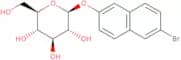
CAS:6-Bromo-2-naphthyl b-D-glucopyranoside is an enzyme substrate used in chromogenic assays with beta-glucosidases. It has been used in culture media for the identification of Legionella pneumophila.Fórmula:C16H17BrO6Pureza:Min. 98 Area-%Cor e Forma:PowderPeso molecular:385.21 g/molAldol® 484 beta-D-glucopyranoside, Biosynth Patent: EP 2427431 and US 8940909
CAS:Aldol® 484 beta-D-glucopyranoside is a chromogenic and fluorogenic enzyme substrate used for detection of beta-glucosidase activity. The colorless enzyme substrate is cleaved by bacteria producing beta-glucosidase in liquid or solid media, yielding intense red color and green fluorescent signal. Aldol® 484 beta-D-glucopyranoside can be used under aerobic and anaerobic conditions.Fórmula:C26H24ClFN2O7Pureza:Min. 95%Cor e Forma:PowderPeso molecular:530.93 g/mol4-Chloro-1-naphthol
CAS:Substrate for horseradish peroxidase
Fórmula:C10H7ClOPureza:Min. 96.0 Area-%Cor e Forma:Brown PowderPeso molecular:178.61 g/mol4-Methylumbelliferyl-beta-D-cellobioside
CAS:Fluorogenic substrate for β-D-Cellobiosidase yielding a blue fluorescent solution upon cleavage.Fórmula:C22H28O13Pureza:Min. 98.0 Area-%Peso molecular:500.46 g/mol4-Methylumbelliferyl 2-acetamido-2-deoxy-4-O-b-D-galactopyranosyl-b-D-glucopyranoside
CAS:4-Methylumbelliferyl 2-acetamido-2-deoxy-4-O-b-D-galactopyranosyl-b-D-glucopyranoside is a chemiluminescent substrate that is used in diagnostic tests. This compound has been approved by the FDA and EPA for use in food testing, as well as for the detection of certain bacteria, parasites, and fungi. It is also used to detect protein kinase activity in cells or tissue samples. 4MUG can be conjugated to an enzyme or antibody to produce a fluorescent signal when activated by light at 350 nm. The compound has been shown to be nonfluorescent when in the dark, but will emit fluorescence upon activation with light at 350 nm.Pureza:Min. 95%Peso molecular:541.5 g/mol