Substratos enzimáticos
Subcategorias de "Substratos enzimáticos"
Foram encontrados 1527 produtos de "Substratos enzimáticos"
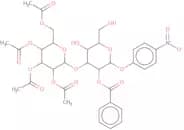
4-Nitrophenyl 3-O-(2,3,4,6-tetra-O-acetyl-a-D-mannopyranosyl)-2-O-benzoyl-a-D-mannopyranoside
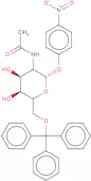
CAS:4-Nitrophenyl 2,3,4,6-tetra-O-acetyl-b-D-glucopyranoside enzyme substrate is a versatile and reliable reagent for measuring glucosidase activity. It is an ideal substrate for use in assays to detect β-glucosidase activity in a variety of applications, including for in vitro and in vivo studies, and it has been widely used in the pharmaceutical and biotechnology industries. This chromogenic pNP enzyme substrate is designed for effective and precise analysis with good sensitivity and low background signals.Pureza:Min. 95%Peso molecular:735.64 g/mol4-Nitrophenyl 2-acetamido-2-deoxy-6-O-trityl-b-D-glucopyranoside
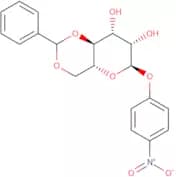
4-Nitrophenyl 2-acetamido-2-deoxy-6-O-trityl-b-D-glucopyranoside offers unmatched versatility as a chromogenic pNP substrate for detecting b-D-glucopyranosidase activity. The substrate is specifically designed to produce a yellow 4-nitrophenol product upon enzyme hydrolysis, which can be measured using absorbance spectroscopy. The unique tritylated glucopyranoside group ensures improved compound stability and selectivity while providing ease of handling. This versatile substrate is ideal for a broad range of biochemical, research, and diagnostic applications.Pureza:Min. 95%Peso molecular:584.62 g/mol4-Nitrophenyl 4,6-O-benzylidene-a-D-mannopyranoside
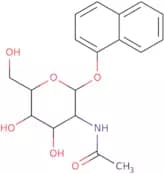
CAS:4-Nitrophenyl 4,6-O-benzylidene-a-D-mannopyranoside is a chromogenic substrate for alpha-mannosidase and beta-glucosidase. It is used as a diagnostic tool for identifying the presence of these enzymes in certain bacteria. This product is also used in food testing, environmental testing, and bioluminescence.Pureza:Min. 95%Peso molecular:389.36 g/mol1-Naphthyl 2-acetamido-2-deoxy-b-D-galactopyranoside
CAS:1-Naphthyl 2-acetamido-2-deoxy-b-D-galactopyranoside (1NADG) is a fluorogenic substrate that reacts with an enzyme to produce light. It is used in diagnostic tests for the detection of bacteria, and can be used as a chromogenic substrate in biochemical assays. 1NADG has also been shown to be useful in staining bacterial cells grown on agar plates. Additionally, this compound is used as a bioluminescent probe for detecting bacteria with luciferase activity. br>br>Pureza:Min. 95%Peso molecular:347.4 g/mol2-Nitrophenyl 2,2',3,3',4'-penta-O-acetyl-b-D-xylobioside
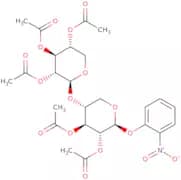
CAS:2-Nitrophenyl 2,2',3,3',4'-penta-O-acetyl-b-D-xylobioside is an oligosaccharide that is used as a substrate for the transport of nucleic acid molecules. It can be used to study the function of membrane transport proteins and their homologues. This compound has been shown to inhibit the growth of corynebacterium glutamicum and trisaccharide emissions.Pureza:Min. 95%Peso molecular:613.52 g/mol4-Nitrophenyl 2,3,4,6-tetra-O-acetyl-b-D-thiogalactopyranoside
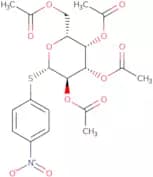
CAS:4-Nitrophenyl 2,3,4,6-tetra-O-acetyl-b-D-thiogalactopyranoside (NPG) is a fluorogenic substrate that can be used in the detection of beta-galactosidase activity. It reacts with 4-nitrophenol to form an orange product at pH 6.0. The fluorescence intensity increases with increasing concentrations of the substrate and enzyme. The reaction is inhibited by borax, which competes for the enzyme active site. This product has been used as a chromogenic substrate for beta-galactosidase and as an enzyme substrate for beta-galactosidase in diagnostic tests for galactosemia and other carbohydrate metabolism disorders. NPG has also been used in chemiluminescent assays to detect beta-galactosidase activity in culture media and as a bioluminescence substrate in the detection of bacterialPureza:Min. 95%Peso molecular:485.47 g/mol4-Chloromethyl-6,8-difluoroumbelliferyl b-D-galactopyranoside
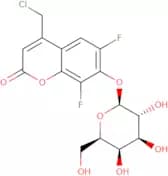
CAS:4-Chloromethyl-6,8-difluoroumbelliferyl b-D-galactopyranoside is a compound commonly used in biochemical research as a fluorescent substrate for the detection of sugar hydrolase enzymes. This compound can be cleaved by enzymes such as β-galactosidase, releasing a fluorescent molecule that can be easily detected using fluorescence spectroscopy. The compound is a member of the family of umbelliferyl glycosides, which have been widely used in the study of various biochemical pathways for many years. The advantage of using this particular substrate is that the fluorescent product has a high quantum yield, which means it produces a strong signal for detection. This substrate has been used in a wide variety of applications, including the study of microbial physiology and in the development of diagnostic assays for detecting bacterial and fungal infections.
Pureza:Min. 95%Peso molecular:408.74 g/mol4-Nitrophenyl 2-O-(a-L-fucopyranosyl)-a-D-galactopyranoside
CAS:4-Nitrophenyl 2-O-(a-L-fucopyranosyl)-a-D-galactopyranoside is a chromogenic pNP enzyme substrate consisting of a fucose and galactose moieties. Upon enzymatic hydrolysis by specific fucosidases or galactosidases, it releases the highly chromogenic molecule 4-nitrophenol, which exhibits a distinct yellow color that can be monitored spectrophotometrically. This substrate is frequently used to study enzyme specificity, kinetics, and inhibition, and it plays a critical role in the investigation of carbohydrate active enzymes (CAZymes), the screening of enzyme inhibitors, and the development of novel analytical methods for the detection and quantitation of enzyme activities.Pureza:Min. 95%Peso molecular:447.39 g/mol4-Nitrophenyl O-(N-acetyl-a-neuraminosyl)-(2-3)-b-D-galactopyranosyl-(1-4)-2-acetamido-2-deoxy-b-D-glucopyranoside
CAS:4-Nitrophenyl O-(N-acetyl-a-neuraminosyl)-(2-3)-b-D-galactopyranosyl-(1-4)-2-acetamido-2-deoxybDglucopyranoside is a fluorescent compound that has been used as a substrate in enzyme assays. It has been shown to be an effective ligand for the enzyme beta galactosidase, which hydrolyzes the substrate to produce 4nitrophenol and o-(Nacetyl)a-neuraminic acid. This product is CAS No. 501427-92-5 and can be used as a high purity, high quality reagent for conjugation.Pureza:Min. 95%Peso molecular:795.7 g/molN-(12-Aminododecyl)-1-deoxynojirimycin dihydrochloride
CAS:N-(12-Aminododecyl)-1-deoxynojirimycin dihydrochloride is a human 12-aminododecanoic acid derivative of the antibiotic najomycin. It has been shown to have an inhibitory effect on the growth of bacteria and fungi, but its exact mechanism of action is unknown. N-(12-Aminododecyl)-1-deoxynojirimycin dihydrochloride can be used as a reagent in the study of polypeptides and other biological molecules. This compound also has potential applications in the diagnosis, prevention, or treatment of human diseases such as cancer, bacterial infections, or fungal infections.Fórmula:C18H38N2O4·2HClPureza:Min. 95%Cor e Forma:Yellow SolidPeso molecular:419.43 g/mol4-Nitrophenyl 2,4,6-tri-O-acetyl-3-O-(2,3,4,6-tetra-O-acetyl-b-D-glucopyranosyl)-b-D-glucopyranoside
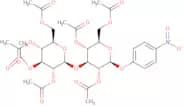
CAS:4-Nitrophenyl 2,4,6-tri-O-acetyl-3-O-(2,3,4,6-tetra-O-acetyl-β-D-glucopyranosyl)-β-D-glucopyranoside is an advanced bifunctional chromogenic pNP substrate specifically tailored for the simultaneous detection and quantification of multiple glycosidase enzymes. This dual-action substrate undergoes cleavage by two separate enzymatic reactions, which increases the range and sensitivity of detection. The resulting 4-Nitrophenol release can be easily measured spectrophotometrically, providing rapid and reliable enzyme analysis for advanced enzymology studies, enabling new discoveries in biochemistry and biotechnology.Pureza:Min. 95%Peso molecular:757.65 g/mol6-Chloro-4-(trifluoromethyl)umbelliferyl b-D-cellotetraoside
6-Chloro-4-(trifluoromethyl)umbelliferyl b-D-cellotetraoside is a fluorescent substrate that is used to measure the activity of the enzyme beta-glucuronidase. It is a chemiluminescent compound that emits light when hydrolyzed by an enzyme. 6-Chloro-4-(trifluoromethyl)umbelliferyl b-D-cellotetraoside has been shown to be a high quality and environmentally friendly product, as it does not cause any significant change in pH or turbidity in water samples. It has also been shown to be nontoxic and nonmutagenic at concentrations up to 400 ppm. This product can be used for a variety of purposes, including diagnostic tests for bacterial infections or food testing.
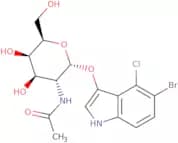
Pureza:Min. 95%Peso molecular:913.15 g/mol5-Bromo-4-chloro-3-indolyl 2-acetamido-2-deoxy-a-D-galactopyranoside
CAS:Substrate for a-N-acetyl-galactosaminidaseFórmula:C16H18BrClN2O6Pureza:Min. 95%Cor e Forma:White to off-white solid.Peso molecular:449.68 g/mol2-Nitrophenyl 2-acetamido-3,4,6-tri-O-acetyl-2-deoxy-a-D-glucopyranoside
CAS:2-Nitrophenyl 2-acetamido-3,4,6-tri-O-acetyl-2-deoxy-a-D-glucopyranoside is a chromogenic substrate commonly used in enzyme assays for the detection and quantification of enzyme activity. It is a colorless substrate that is enzymatically converted into a yellowish product, the intensity of which is directly proportional to the enzyme activity present in the sample.Pureza:Min. 95%Peso molecular:468.41 g/mol3-HTC
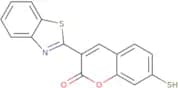
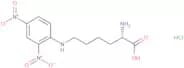
CAS:3-HTC reacts reversibly with thiols and disulfides, and can be used to measure dynamic GSH/GSSH ratios in vitro as well as to monitor the reversible redox status of whole cell lysates.(λmax: 448 nm in its reduced thiolate form, and a λmax 370-410 nm for the oxidized mixed disulfide).Fórmula:C16H9NO2S2Pureza:Min. 95%Peso molecular:311.38 g/mol2,4-Dinitrophenyl)-L-lysine hydrochloride monohydrate
CAS:2,4-Dinitrophenyl)-L-lysine hydrochloride monohydrate is a lysine derivative that has been modified with a 2,4-dinitrophenyl group. It could be used as an enzyme substrate to monitor enzymes that recognize and modify lysine residues, such as lysine methyltransferases and demethylases, lysine acylases and lysine oxidases.
Pureza:Min. 95%Cor e Forma:PowderPeso molecular:348.74 g/molNaphthol AS-OL acetate
CAS:Modified naphtol AS substrate used in histochemical and cytochemical stainingPureza:Min. 95%Peso molecular:335.35 g/mol4-Nitrophenyl 2-acetamido-2-deoxy-4-O-(β-D-galactopyranosyl)-α-D-glucopyranoside
CAS:4-Nitrophenyl 2-acetamido-2-deoxy-4-O-(β-D-galactopyranosyl)-α-D-glucopyranoside is a high-quality chromogenic pNP enzyme substrate specifically designed to enable effective and accurate detection of enzyme activity. By utilizing this advanced substrate, researchers and professionals can perform a range of applications, including activity assays, enzyme inhibition studies, and substrate specificity profiling. This substrate's unique properties result in exceptional sensitivity and throughput, ensuring effective results for a wide variety of enzyme assays.Fórmula:C20H28N2O13Pureza:Min. 90%Cor e Forma:White PowderPeso molecular:504.44 g/mol1,8,15,22-Tetrazacyclooctacosane-2,7,16,21-tetraone
CAS:1,8,15,22-Tetrazacyclooctacosane-2,7,16,21-tetraone is an inhibitor with potent anticancer properties. It induces apoptosis in cancer cells by inhibiting kinases that are critical for cell survival and proliferation. This compound has been shown to be effective against various types of cancer in both Chinese hamster ovary and human cancer cell lines. Additionally, it has been found to increase the excretion of the anti-allergic drug rupatadine in urine. The use of 1,8,15,22-Tetrazacyclooctacosane-2,7,16,21-tetraone as a tumor inhibitor has also been investigated in combination with other kinase inhibitors such as bendamustine analogs. This compound holds great potential for the development of new anticancer therapies.Fórmula:C24H44N4O4Pureza:Min. 95%Peso molecular:452.6 g/molSulindac sulphide
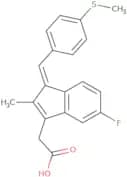
CAS:COX inhibitor; nonsteroidal anti-inflammatory drugFórmula:C20H17FO2SPureza:Min. 95%Cor e Forma:PowderPeso molecular:340.41 g/molFast blue BB salt
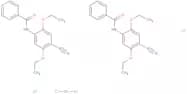
CAS:Fast Blue BB is commonly used for assaying beta-glycosidase activity and the chromogenic reaction between Fast Blue BB and beta-naphthol results in a reddish colored product and is at the basis of its application to different enzymatic activity assays. Produces a fluorescent, blue-green chromophore.Fórmula:C34H36Cl4N6O6ZnPureza:Min. 95%Peso molecular:831.9 g/mol6-Benzoyl-2-naphthylphosphate disodium salt
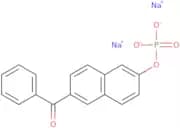
CAS:6-Benzoyl-2-naphthylphosphate disodium salt is a chromogenic substrate used to detect and quantify alkaline phosphatase activity. After enzymatic hydrolysis, 6-benzoyl-2-naphthol is released, which can be detect or even further react with other reagents (e.g. Fast Red) to increase the intensity of the colorimetric signal. It is used in common applications such as ELISA, immunohistochemistry and Western Blotting.
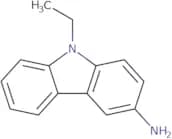
Pureza:Min. 95%Peso molecular:374.24 g/mol3-Amino-9-ethylcarbazole
CAS:3-Amino-9-ethylcarbazole is a peroxidase substrate suitable for use in immunoblotting and immunohistochemical staining procedures. This substrate produces an insoluble end product that is red in color and can be observed visually.
Fórmula:C14H14N2Pureza:Min. 95%Cor e Forma:Beige PowderPeso molecular:210.27 g/mol4-Aminoantipyrine
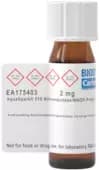
CAS:4-Aminoantipyrine has been used as an analgesic and anti-inflammatory agent. It can also target peroxidase enzymes to produce a red colorFórmula:C11H13N3OCor e Forma:Off-White To Yellow SolidPeso molecular:203.24 g/molAquaSpark® 510 Nitroreductase/NADH Probe, lyophilized, Ramot at Tel-Aviv University Ltd. Patent family WO 2017/130191
CAS:The AquaSpark® 510 Nitroreductase/NADH Probe (CL-NTR) is a water-soluble probe for the selective chemiluminescent detection of nitroreductase (NTR) activity. It is a versatile tool for monitoring a number of biological processes.Fórmula:C28H28ClNO8Cor e Forma:PowderPeso molecular:541.15 g/molRemazol brilliant blue R D-xylan
Remazol Brilliant Blue R D-xylan is a chromogenic substrate used for the detection and quantification of xylanase enzyme activity. This substrate consists of a xylan polymer backbone covalently linked to the Remazol Brilliant Blue R dye. Upon cleavage by xylanase enzymes, the dye is released, producing a vibrant blue color that can be easily measured spectrophotometrically. This substrate is widely used in various applications, including the study of xylanase-producing microorganisms, optimization of enzyme production, and evaluation of enzyme kinetics.
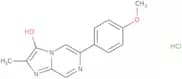
Pureza:Min. 95%Cor e Forma:Powder2-Methyl-6-(4-methoxyphenyl)-3,7-dihydroimidazo(1,2-a)pyrazin-3-one hydrochloride
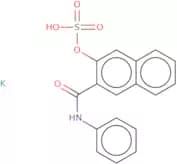
CAS:2-Methyl-6-(4-methoxyphenyl)-3,7-dihydroimidazo(1,2-a)pyrazin-3-one hydrochloride (ABI) is a potent and selective inhibitor of the enzyme toll-like receptor. The drug has been shown to decrease the metabolic rate in experimental models. ABI has also been used as an analog for other compounds to study their effects on redox potentials and reactive species. It is unclear how ABI inhibits protein synthesis by polymerase chain reaction (PCR). One possible mechanism is that it may inhibit the binding of primers to DNA. ABI also inhibits the production of chemokines which are small proteins that stimulate inflammatory responses. This drug can be used in autoimmune diseases such as rheumatoid arthritis and multiple sclerosis.Pureza:Min. 95%Peso molecular:290.72 g/molNaphthol AS sulphate potassium
CAS:Modified naphtol AS substrate used in histochemical and cytochemical stainingFórmula:C17H13NO5S•KPureza:Min. 95%Cor e Forma:PowderPeso molecular:382.45 g/mol4-Nitrophenyl b-D-cellopentaoside
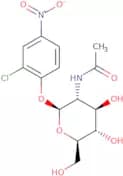
CAS:Substrates for endoglucanase and beta-cellobiohydrolase activity in the study of digestive system in Zygentoma as an insect model for high cellulase activityFórmula:C36H55NO28Pureza:Min. 95%Cor e Forma:PowderPeso molecular:949.81 g/mol2-Chloro-4-nitrophenyl 2-acetamido-2-deoxy-β-D-glucopyranoside
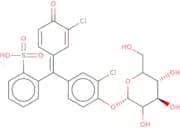
CAS:2-Chloro-4-nitrophenyl 2-acetamido-2-deoxy-β-D-glucopyranoside is a chromogenic substrate used for beta-N-acetylglucosaminidase assays. Upon enzymatic hydrolysis, 2-chloro-4-nitrophenol is released, which has a yellowish color. It is used in diagnostic applications such as lysosomal storage disorder diagnosis (for example, Tay-Sachs disease) and glycosidase inhibition studies.Fórmula:C14H17ClN2O8Pureza:Min. 98 Area-%Cor e Forma:White PowderPeso molecular:376.75 g/molChlorophenol red b-D-galactopyranoside
CAS:Used in biological studies as a chromogenic substrate for β-galactosidase; red color.Chlorophenol red indicates changes of pH in the range of 4.8 to 6.7 by turning the solution from yellow (at pH 4.8) to violet (at pH 6.7). Converted as signalogenic moiety of an enzyme substrate, chlorophenol red beta-D-galactopyranoside has a good proven sensitivity in the detection of beta-galactosidase activity in transfected mammalian cells, when compared to ONPG (o-nitrophenyl-beta-D-galactopyranoside) (Eustice, 1991)
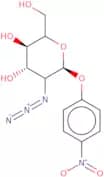
Fórmula:C25H22Cl2O10SPureza:Min. 95%Cor e Forma:Orange Red PowderPeso molecular:585.41 g/mol4-Nitrophenyl 2-azido-2-deoxy-b-D-galactopyranoside
4-Nitrophenyl 2-azido-2-deoxy-beta-D-galactopyranoside is a chromogenic substrate for beta-galactosidase. Upon hydrolysis, para-nitrophenol is released yielding a yellowish colour. 4-Nitrophenyl 2-azido-2-deoxy-beta-D-galactopyranoside is used in different applications such as the Bacterial enzyme assays (e.g., E. coli detection)Pureza:Min. 95%Cor e Forma:White To Off-White SolidPeso molecular:326.26 g/molAmine transaminases kit
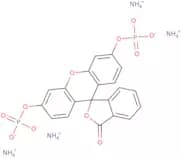
Used for synthesis of chiral amines from ketones and ketoacidsPureza:Min. 95%Fluorescein diphosphate tetraammonium salt
CAS:Fluorogenic substrate targeting phosphataseFórmula:C20H14O11P2•(NH3)4Pureza:Min. 90 Area-%Cor e Forma:Yellow PowderPeso molecular:560.39 g/mol1,2,4-trihydroxynaphthalene-2-O-b-D-glucopyranoside
CAS:Please enquire for more information about 1,2,4-trihydroxynaphthalene-2-O-b-D-glucopyranoside including the price, delivery time and more detailed product information at the technical inquiry form on this page
Fórmula:C16H18O8Peso molecular:338.31 g/mol1,2,4-trihydroxynaphthalene-4-O-b-D-glucopyranoside
CAS:Please enquire for more information about 1,2,4-trihydroxynaphthalene-4-O-b-D-glucopyranoside including the price, delivery time and more detailed product information at the technical inquiry form on this page
Fórmula:C16H18O8Peso molecular:338.31 g/molMethyl 4-nitrophenyl hexylphosphonate
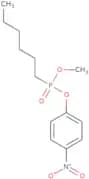
CAS:Methyl 4-nitrophenyl hexylphosphonate is a phosphonate inhibitor of the enzyme serine esterase. It has been shown to be more potent than other irreversible inhibitors such as ethyl 4-nitrophenyl hexylphosphonate and methyl 4-nitrophenoxybutyl phosphate. This compound is an immobilized form of the methyl 4-nitrophenyl hexylphosphonate that is immobilized on an inert surface, such as silica gel, via a covalent bonding process. The immobilization of the molecule ensures that it will not leach from the surface and is stable over time. The molecular weight of this substance is 411.5 Daltons and its molecular formula is C8H15NO4P. This substance has a diameter of 0.8 nm and can be found in crystalline form with a melting point of 143 degrees Celsius at atmospheric pressure. Methyl 4-nitrophenyl
Fórmula:C13H20NO5PPureza:Min. 95%Peso molecular:301.27 g/mol2-Nitrobenzyl 2-deoxy-2-fluoro-L-fucopyranoside
The photorelease of 2-deoxy-2-fluoro-L-fucose from 2-nitrobenzyl-2-deoxy-2-fluoro-L-fucopyranoside was performed under a 365 nm LED illumination. It has been shown in plant cells this liberated 2-deoxy-2-fluoro-L-fucose can be converted by the endogenous metabolic machinery into the corresponding nucleotide-sugar, which then efficiently inhibits Golgi-localized fucosyltransferases.Fórmula:C13H16FNO6Pureza:Min. 95%Cor e Forma:PowderPeso molecular:301.27 g/molH-Ala-Phe-Pro-pNA trifluoroacetate
CAS:Please enquire for more information about H-Ala-Phe-Pro-pNA trifluoroacetate including the price, delivery time and more detailed product information at the technical inquiry form on this pageFórmula:C23H27N5O5•C2HF3O2Pureza:Min. 95%Peso molecular:567.51 g/molLuc-E.coli K
Bioluminescent substrate for detection of E. coli.Fórmula:C17H14K2N2O9S2Pureza:Min. 94 Area-%Peso molecular:532.63 g/molResorufin a-D-mannopyranoside
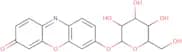
CAS:Resorufin alpha-D-glucopyranoside is a sensitive fluorogenic substrate that generates a red fluorescent product (resorufin) upon interaction with alpha-glucosidase.Pureza:Min. 95%Cor e Forma:Brown PowderPeso molecular:375.33 g/mol4-Nitrophenyl 2-acetamido-3,6-di-O-(2-acetamido-2-deoxy-b-D-glucopyranosyl)-2-deoxy-a-D-galactopyranoside
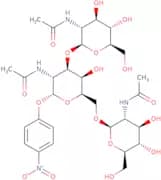
CAS:4-Nitrophenyl 2-acetamido-3,6-di-O-(2-acetamido-2-deoxy-b-D-glucopyranosyl)-2-deoxy-a-D-galactopyranoside is a fluorogenic substrate that is used in enzyme assays to detect the presence of an enzyme. The substrate reacts with the enzyme to produce a fluorescent product. 4NPAAG can be used for diagnostics, culture media, food testing and environmental testing.Fórmula:C30H44N4O18Pureza:Min. 95%Peso molecular:748.69 g/mol4-Nitrophenyl a-L-galactopyranoside
Chromogenic substrate targeting alpha-D-galactosidasePureza:Min. 95%Peso molecular:301.25 g/mol4-Methylumbelliferyl b-D-xylobioside
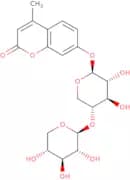
CAS:4-Methylumbelliferyl beta-D-xylobioside is a fluorogenic substrate for xylanase. After enzymatic cleaveage, free 4-methylumbelliferone (also known as hymecromone) is released, exhibiting blue fluorescence upon excitation with UV light. The strongest fluorescence of 4-methylumbelliferone requires deprotonation of the hydroxyl group (thus requires alkaline pH), with a maximal fluorescence intensity obtained with excitation at 350 to 370 nm and emission at 440 to 470 nm. The use of 4-methylumbelliferyl beta-D-xylobiosideas a substrate for measuring the xylanase activity is used for detecting bacterial infection and gut microbiome analysis.Fórmula:C20H24O11Pureza:Min. 95 Area-%Cor e Forma:White PowderPeso molecular:440.4 g/mol1,8,15,22,29,36-Hexaazacyclodotetracontane-2,7,16,21,30,35-hexone
CAS:Please enquire for more information about 1,8,15,22,29,36-Hexaazacyclodotetracontane-2,7,16,21,30,35-hexone including the price, delivery time and more detailed product information at the technical inquiry form on this pageFórmula:C36H66N6O6Pureza:Min. 95%Cor e Forma:PowderPeso molecular:678.9 g/molcis-6,7-Dimethyl-5,6,7,8-tetrahydropterin hydrochloride
CAS:Please enquire for more information about cis-6,7-Dimethyl-5,6,7,8-tetrahydropterin hydrochloride including the price, delivery time and more detailed product information at the technical inquiry form on this pageFórmula:C8H13N5O•HClPureza:Min. 95%Peso molecular:231.68 g/mol6,8-Difluoro-4-methylumbelliferyl β-D-galactopyranoside
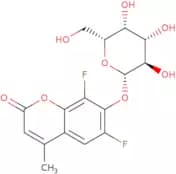
CAS:6,8-Difluoro-4-methylumbelliferyl b-D-galactopyranoside, commonly known as DiFMUG, is a fluorogenic substrate to detect beta-galactosidase. It has higher sensitivity than the common MUG (4-methylumbelliferyl beta-D-galactopyranoside) subtrate.Fórmula:C16H16F2O8Pureza:Min. 95%Cor e Forma:PowderPeso molecular:374.29 g/mol