Substratos enzimáticos
Substratos enzimáticos são moléculas sobre as quais as enzimas atuam para catalisar reações químicas. O substrato liga-se ao sítio ativo da enzima, onde passa por uma transformação específica para formar o produto da reação. Os substratos enzimáticos são ferramentas essenciais na pesquisa para estudar a cinética enzimática, especificidade e mecanismo de ação. Eles também são usados em ensaios diagnósticos e estudos bioquímicos. Na CymitQuimica, oferecemos uma seleção diversificada de substratos enzimáticos de alta qualidade para apoiar suas pesquisas em enzimologia e bioquímica.
Subcategorias de "Substratos enzimáticos"
Foram encontrados 1529 produtos de "Substratos enzimáticos"
Ordenar por
Pureza (%)
0
100
|
0
|
50
|
90
|
95
|
100
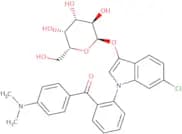
Aldol® 518 α-D-galactopyranoside, Biosynth Patent: EP 2427431 and US 8940909
CAS:Aldol® 518 alpha-D-galactopyranoside is a chromogenic and fluorogenic enzyme substrate used for detection of alpha-galactosidase activity. The enzyme substrate is cleaved by alpha-galactosidase positive bacteria and yeasts in liquid or solid media, yielding red color and red fluorescence signal. Aldol® 518 alpha-D-galactopyranoside can also be used to detect alpha-galactosidase (encoded by the Mel1 gene) in yeast gene reporter assays or for identification of alpha-gal positive transformants on agar plates. Aldol® 518 alpha-D-galactopyranoside can be used under aerobic and anaerobic conditions.Fórmula:C29H29ClN2O7Pureza:Min. 95.0 Area-%Peso molecular:553.01 g/mol5-Bromo-4-chloro-3-indolyl b-D-galactofuranoside
5-Bromo-4-chloro-3-indolyl b-D-galactofuranoside is a chromogenic substrate used to detect the specific enzymatic activity of beta-D-galactofuranosidase. After cleavage, 5-bromo-4-chloro-indoxyl is released, resulting in a blue to blue-green color change in bacterial colonies or media. 5-Bromo-4-chloro-3-indolyl b-D-galactofuranoside is used in assays for detecting bacterial pathogens (e.g., Mycobacterium tuberculosis).Fórmula:C14H15BrClNO6Pureza:Min. 95%Cor e Forma:PowderPeso molecular:408.63 g/molL-Lysine 7-amido-4-methylcoumarin, acetate salt
CAS:Produto ControladoL-Lysine 7-amido-4-methylcoumarin, acetate salt is a fluorogenic peptide substrate for aminopeptidase. This AMC peptide substrate is normally used to rapidly profile the N-terminal specificity of proteases.Fórmula:C18H25N3O5Peso molecular:363.42 g/mol3,4-Cyclohexenoesculetin β-D-glucuronide
<p>Chromogenic substrate for beta-glucuronidase</p>Pureza:Min. 95%8-Hydroxyquinoline-beta-D-glucuronic acid, sodium salt
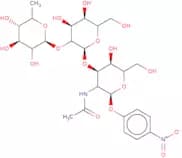
CAS:<p>8-Hydroxyquinoline-beta-D-glucuronic acid, sodium salt is a fluorogenic substrate that can be used for enzymatic detection of peroxidase. The substrate is available in a variety of forms, including powder and liquid. This product has been tested for environmental and bioluminescence activity, as well as food safety. It has also been shown to be a useful ligand in immunoassays.</p>Fórmula:C15H14NNaO7Pureza:Min. 98 Area-%Cor e Forma:White PowderPeso molecular:343.26 g/mol4-Nitrophenyl 2-acetamido-3-O-[2-O-a-L-fucopyranosyl-b-D-galactopyranosyl)-2-deoxy-b-D-galactopyranoside
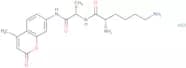
CAS:<p>4-Nitrophenyl 2-acetamido-3-O-[2-O-a-L-fucopyranosyl-b-D-galactopyranosyl)-2-deoxyb-D-galactopyranoside is a water soluble, fluorescent probe that can be used for detecting the presence of β-(1→4) -linked galactosaminoglycans. The dye is a substrate for enzymes such as α--mannosidase, β--glucuronidase and β--galactosidase. The dye is also an excellent ligand for lectins such as concanavalin A and wheat germ agglutinin. This product is a diagnostic reagent that has been shown to have high purity and quality. It has CAS No. 93496-53-8 and can be used in food testing, bioluminescence, environmental testing, or high purity applications.</p>Fórmula:C26H38N2O17Pureza:Min. 95%Peso molecular:650.58 g/molL-Lysyl-L-alanine 7-amido-4-methylcoumarin dihydrochloride
CAS:<p>L-Lysyl-L-alanine 7-amido-4-methylcoumarin dihydrochloride is a fluorogenic peptide substrate for aminopeptidase. This AMC peptide substrate is normally used to rapidly profile the N-terminal specificity of proteases.</p>Pureza:Min. 98.0 Area-%Cor e Forma:PowderHippurate hydrolase from Campylobacter jejuni, aqueous solution with glycerol
Hippurate hydrolase is an enzyme that catalyzes the hydrolysis of hippurate to glycine and taurine. It is a fluorogenic substrate with high purity, ligand, and high quality. Hippurate hydrolase is used as a diagnostic enzyme for detecting the presence of hippuric acid in urine. This enzyme can be conjugated to a variety of molecules, including fluorophores, biotin or haptens, for use in immunoassay or other applications.Fórmula:C1944H3000N516O573S18Pureza:Min. 95%Peso molecular:24,542 g/mol4-Methylumbelliferyl a-L-fucopyranoside
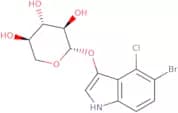
CAS:Fluorogenic substrate for fucosidaseFórmula:C16H18O7Pureza:Min. 95%Cor e Forma:White PowderPeso molecular:322.31 g/mol5-Bromo-4-chloro-3-indolyl β-D-xylopyranoside
CAS:<p>5-Bromo-4-chloro-3-indolyl b-D-xylopyranoside is an enzyme substrate. This chromogenic substrate is used for beta-D-xylosidase enzyme. In culture media, 5-Bromo-4-chloro-3-indolyl b-D-xylopyranoside is utilised for identification of bacteria such as Klebsiella and Enterobacter.</p>Fórmula:C13H13BrClNO5Pureza:Min. 95%Cor e Forma:PowderPeso molecular:378.6 g/molFluorescein di-beta-D-galactopyranoside
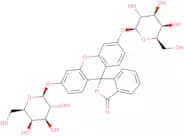
CAS:<p>Fluorogenic substrate for beta-galactosidase</p>Fórmula:C32H32O15Pureza:Min. 98 Area-%Cor e Forma:Slightly Yellow PowderPeso molecular:656.59 g/molAldol® 484 acetate, Biosynth Patent: EP 2427431 and US 8940909
CAS:Produto ControladoAldol® 484 acetate is a chromogenic substrate for carboxylesterases yielding a red precipitate. In contrast to classical indoxyl substrates, Aldol® substrates can be used under aerobic and anaerobic conditions.Fórmula:C22H16ClFN2O3Pureza:Min. 95%Cor e Forma:PowderPeso molecular:410.83 g/mol4-Nitrophenyl b-L-arabinofuranoside
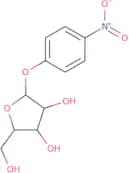
CAS:<p>Chromogenic substrate targeting alpha-L-arabinofuranosidase</p>Pureza:Min. 95%Cor e Forma:White/Off-White SolidPeso molecular:271.22 g/mol2-Chloro-4-nitrophenyl α-D-mannopyranoside
CAS:<p>2-Chloro-4-nitrophenyl alpha-D-mannopyranoside is a substrate used to measure the alpha-mannosidase activity. This enzyme plays a crucial role in the lysosomal degradation of asparagine-linked carbohydrate cores of glycoproteinsis. The use of 2-Chloro-4-nitrophenyl alpha-D-mannopyranoside in diagnostic assays is important as a deficiency in alpha-mannosidase leads to the accumulation of mannose-rich oligosaccharides in lysosomes, causing a range of health problems collectively known as alpha-mannosidosis.</p>Fórmula:C12H14ClNO8Pureza:Min. 98 Area-%Cor e Forma:White PowderPeso molecular:335.69 g/mol5-Bromo-6-chloro-3-indolyl a-D-galactopyranoside
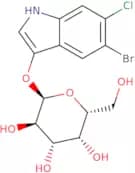
CAS:5-Bromo-6-chloro-3-indolyl a-D-galactopyranoside is a chromogenic substrate that yields a magenta-colored product after cleavage. The chromophore 5-bromo-6-chloro-indoxyl is released, generating the observable color. It is used in glycolipid metabolism studies.Fórmula:C14H15BrClNO6Cor e Forma:White to off-white solid.Peso molecular:408.63 g/molResorufin b-D-xylobioside
Resorufin b-D-xylobioside is a fluorogenic substrate for xylanases useful for xylanase activity assays.Pureza:Min. 95%Cor e Forma:PowderPeso molecular:477.42 g/molResorufin-β-D-glucuronic acid, sodium salt
CAS:Resorufin-beta-D-glucuronic acid, sodium salt is a fluorogenic substrate that can be used in diagnostic applications. It is a conjugate of resorufin and beta-D-glucuronic acid. The enzyme substrate reacts with the enzyme luciferase to produce light. The high purity and quality of this product make it ideal for use in the detection of the presence of glucose in urine, which can be used to diagnose diabetes mellitus.Fórmula:C18H14NNaO9Pureza:Min. 90.0 Area-%Peso molecular:411.30 g/molRef: 3D-R-2150
2mgA consultar5mgA consultar10mgA consultar25mgA consultar50mgA consultar-Unit-ggA consultar4-Nitrophenyl-α-D-maltopyranoside
CAS:Chromogenic α-maltosidase substrate yielding a yellow solution upon cleavage.Fórmula:C18H25NO13Pureza:Min. 98.0 Area-%Peso molecular:463.40 g/molGlutaryl-glycyl-L-arginine 7-amido-4-methylcoumarin hydrochloride
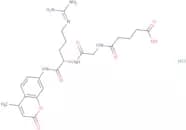
CAS:<p>Glutaryl-glycyl-L-arginine 7-amido-4-methylcoumarin hydrochloride is a synthetic peptide substrate used as a fluorogenic substrate for aminopeptidase.</p>Fórmula:C23H30N6O7·HClPureza:Min. 95%Cor e Forma:PowderPeso molecular:538.98 g/mol4-Nitrophenyl 2-acetamido-6-O-(2-acetamido-2-deoxy-b-D-glucopyranosyl)-3-O-(b-D-galactopyranosyl)-2-deoxy-a-D-galactopyranoside
CAS:4-Nitrophenyl 2-acetamido-6-O-(2-acetamido-2-deoxy-b-D-glucopyranosyl)-3-O-(b-D-galactopyranosyl)-2-deoxy-a-D-galactopyranoside is a specific chromogenic substrate designed for the highly sensitive and accurate detection of glycosidase enzyme activity. Glycosidases are responsible for the cleavage of glycosidic bonds between saccharide units in various carbohydrates. The hydrolysis of this substrate by glycosidase enzymes produces 4-nitrophenol, a yellow-colored compound that can be easily monitored through spectrophotometric measurements due to its strong absorbance at 405 nm. This chromogenic substrate is widely used in the analysis of glycosidase activity in various biological samples, including bacterial, fungal, and plant tissues, as well as in environmental samples and biotechnological applications.Fórmula:C28H41N3O18Pureza:Min. 95 Area-%Cor e Forma:White PowderPeso molecular:707.63 g/mol