AC-39093 - sodium-polyphosphate-pure | 50813-16-6
Lamentamos, não foi encontrado nenhum produto com a referência AC-39093, mas por favor, verifique os seguintes produtos semelhantes:
Ammonium polyphosphate
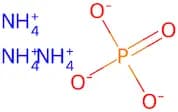
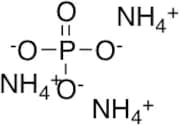
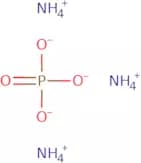
CAS:<p>Ammonium polyphosphate is a crystalline compound that contains phosphorus pentoxide and diammonium. It is used for wastewater treatment, as an additive to plastics, and in the production of paper. Ammonium polyphosphate can be synthesized from sodium citrate and crystalline cellulose. The synthesis process involves heating the mixture at temperatures between 300°C and 400°C. This process will produce a solid product with the desired reactants in the correct stoichiometric ratio. Ammonium polyphosphate has been found to have synergistic effects when combined with other chemicals, such as enzymes or water-soluble phosphates. Studies have shown that ammonium polyphosphate improves the ability of enzymes to break down organic matter in biological systems; this may be due to its high water permeability properties.</p>Fórmula:(NH4PO3)nPureza:Min. 95%Cor e Forma:PowderMelamine polyphosphate
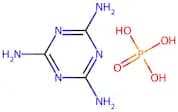
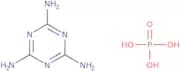
CAS:Produto Controlado<p>Melamine polyphosphate is a coordination compound that has been used as an antimicrobial agent and polymer retardant. It has been shown to have a Langmuir adsorption isotherm, which is indicative of the ability to form a monolayer on the surface of water droplets. Melamine polyphosphate also has an electrochemical impedance spectroscopy (EIS) that can be used for determining the rate constant of its reaction with water vapor. The rate constants are determined by measuring the change in impedance over time and plotting it against frequency. This analytical method is used for determining the concentration and stability of melamine polyphosphate in solution and can be applied to other similar compounds.</p>Fórmula:C3H9N6O4PPureza:Min. 95%Cor e Forma:White PowderPeso molecular:224.12 g/molPolyphosphate kinase Protein, E. coli, Recombinant (His & Myc)
Polyphosphate kinase Protein, E.Cor e Forma:Lyophilized PowderPeso molecular:87.7 kDa (predicted)Human INPP4A(Inositol Polyphosphate-4-Phosphatase Type I 107kDa) ELISA Kit
The test principle applied in this kit is Sandwich enzyme immunoassay. The microtiter plate provided in this kit has been pre-coated with an antibody specific to Human INPP4A. Standards or samples are added to the appropriate microtiter plate wells then with a biotin-conjugated antibody specific to Human INPP4A. Next, Avidin conjugated to Horseradish Peroxidase (HRP) is added to each microplate well and incubated. After TMB substrate solution is added, only those wells that contain Human INPP4A, biotin-conjugated antibody and enzyme-conjugated Avidin will exhibit a change in color. The enzyme-substrate reaction is terminated by the addition of sulphuric acid solution and the color change is measured spectrophotometrically at a wavelength of 450nm ± 10nm. The concentration of Human INPP4A in the samples is then determined by comparing the OD of the samples to the standard curve.Cor e Forma:Colourless TransparentliquidHuman INPP5D(Inositol Polyphosphate-5-Phosphatase 145kDa) ELISA Kit
The test principle applied in this kit is Sandwich enzyme immunoassay. The microtiter plate provided in this kit has been pre-coated with an antibody specific to Human INPP5D. Standards or samples are added to the appropriate microtiter plate wells then with a biotin-conjugated antibody specific to Human INPP5D. Next, Avidin conjugated to Horseradish Peroxidase (HRP) is added to each microplate well and incubated. After TMB substrate solution is added, only those wells that contain Human INPP5D, biotin-conjugated antibody and enzyme-conjugated Avidin will exhibit a change in color. The enzyme-substrate reaction is terminated by the addition of sulphuric acid solution and the color change is measured spectrophotometrically at a wavelength of 450nm ± 10nm. The concentration of Human INPP5D in the samples is then determined by comparing the OD of the samples to the standard curve.Cor e Forma:Colourless TransparentliquidHuman INPP4B(Inositol Polyphosphate-4-Phosphatase Type II 105kDa) ELISA Kit
The test principle applied in this kit is Sandwich enzyme immunoassay. The microtiter plate provided in this kit has been pre-coated with an antibody specific to Human INPP4B. Standards or samples are added to the appropriate microtiter plate wells then with a biotin-conjugated antibody specific to Human INPP4B. Next, Avidin conjugated to Horseradish Peroxidase (HRP) is added to each microplate well and incubated. After TMB substrate solution is added, only those wells that contain Human INPP4B, biotin-conjugated antibody and enzyme-conjugated Avidin will exhibit a change in color. The enzyme-substrate reaction is terminated by the addition of sulphuric acid solution and the color change is measured spectrophotometrically at a wavelength of 450nm ± 10nm. The concentration of Human INPP4B in the samples is then determined by comparing the OD of the samples to the standard curve.Cor e Forma:Colourless TransparentliquidMouse INPP4A(Inositol Polyphosphate-4-Phosphatase Type I 107kDa) ELISA Kit
The test principle applied in this kit is Sandwich enzyme immunoassay. The microtiter plate provided in this kit has been pre-coated with an antibody specific to Mouse INPP4A. Standards or samples are added to the appropriate microtiter plate wells then with a biotin-conjugated antibody specific to Mouse INPP4A. Next, Avidin conjugated to Horseradish Peroxidase (HRP) is added to each microplate well and incubated. After TMB substrate solution is added, only those wells that contain Mouse INPP4A, biotin-conjugated antibody and enzyme-conjugated Avidin will exhibit a change in color. The enzyme-substrate reaction is terminated by the addition of sulphuric acid solution and the color change is measured spectrophotometrically at a wavelength of 450nm ± 10nm. The concentration of Mouse INPP4A in the samples is then determined by comparing the OD of the samples to the standard curve.Cor e Forma:Colourless TransparentliquidSHIP2 (phospho-Tyr986/987) rabbit pAb
The protein encoded by this gene is an SH2-containing 5'-inositol phosphatase that is involved in the regulation of insulin function. The encoded protein also plays a role in the regulation of epidermal growth factor receptor turnover and actin remodelling. Additionally, this gene supports metastatic growth in breast cancer and is a valuable biomarker for breast cancer. [provided by RefSeq, Jan 2009],SHIP2 (phospho-Tyr1135) rabbit pAb
The protein encoded by this gene is an SH2-containing 5'-inositol phosphatase that is involved in the regulation of insulin function. The encoded protein also plays a role in the regulation of epidermal growth factor receptor turnover and actin remodelling. Additionally, this gene supports metastatic growth in breast cancer and is a valuable biomarker for breast cancer. [provided by RefSeq, Jan 2009],SHIP-1 (phospho Tyr1021) rabbit pAb
This gene is a member of the inositol polyphosphate-5-phosphatase (INPP5) family and encodes a protein with an N-terminal SH2 domain, an inositol phosphatase domain, and two C-terminal protein interaction domains. Expression of this protein is restricted to hematopoietic cells where its movement from the cytosol to the plasma membrane is mediated by tyrosine phosphorylation. At the plasma membrane, the protein hydrolyzes the 5' phosphate from phosphatidylinositol (3,4,5)-trisphosphate and inositol-1,3,4,5-tetrakisphosphate, thereby affecting multiple signaling pathways. The protein is also partly localized to the nucleus, where it may be involved in nuclear inositol phosphate signaling processes. Overall, the protein functions as a negative regulator of myeloid cell proliferation and survival. Mutations in this gene are associated with defects and cancers of the immune system. AIPMK rabbit pAb
This gene encodes a member of the inositol phosphokinase family. The encoded protein has 3-kinase, 5-kinase and 6-kinase activities on phosphorylated inositol substrates. The encoded protein plays an important role in the biosynthesis of inositol 1,3,4,5,6-pentakisphosphate, and has a preferred 5-kinase activity. This gene may play a role in nuclear mRNA export. Pseudogenes of this gene are located on the long arm of chromosome 13 and the short arm of chromosome 19. [provided by RefSeq, Dec 2010],MIPP rabbit pAb
This gene encodes multiple inositol polyphosphate phosphatase; an enzyme that removes 3-phosphate from inositol phosphate substrates. It is the only enzyme known to hydrolzye inositol pentakisphosphate and inositol hexakisphosphate. This enzyme also converts 2,3 bisphosphoglycerate (2,3-BPG) to 2-phosphoglycerate; an activity formerly thought to be exclusive to 2,3-BPG synthase/2-phosphatase (BPGM) in the Rapoport-Luebering shunt of the glycolytic pathway.[provided by RefSeq, Sep 2009],OCRL rabbit pAb
This gene encodes an inositol polyphosphate 5-phosphatase. This protein is involved in regulating membrane trafficking and is located in numerous subcellular locations including the trans-Golgi network, clathrin-coated vesicles and, endosomes and the plasma membrane. This protein may also play a role in primary cilium formation. Mutations in this gene cause oculocerebrorenal syndrome of Lowe and also Dent disease. Alternate splicing results in multiple transcript variants. [provided by RefSeq, Jan 2016],SHIP-1 rabbit pAb
This gene is a member of the inositol polyphosphate-5-phosphatase (INPP5) family and encodes a protein with an N-terminal SH2 domain, an inositol phosphatase domain, and two C-terminal protein interaction domains. Expression of this protein is restricted to hematopoietic cells where its movement from the cytosol to the plasma membrane is mediated by tyrosine phosphorylation. At the plasma membrane, the protein hydrolyzes the 5' phosphate from phosphatidylinositol (3,4,5)-trisphosphate and inositol-1,3,4,5-tetrakisphosphate, thereby affecting multiple signaling pathways. The protein is also partly localized to the nucleus, where it may be involved in nuclear inositol phosphate signaling processes. Overall, the protein functions as a negative regulator of myeloid cell proliferation and survival. Mutations in this gene are associated with defects and cancers of the immune system. A