Lonicera japonica Thunb.
Lonicera japonica, allgemein bekannt als Japanisches Geißblatt, ist in der traditionellen Medizin für seine antiviralen, antibakteriellen und entzündungshemmenden Eigenschaften bekannt. Die Pflanze ist reich an Flavonoiden, insbesondere Luteolin, und Chlorogensäure, die auf ihre therapeutischen Wirkungen hin untersucht werden. Bei CymitQuimica bieten wir Extrakte und reine Verbindungen aus Lonicera japonica an, um die Forschung im Bereich Infektionskrankheiten und Entzündungsmanagement zu unterstützen.
11 Produkte aus dem Bereich "Lonicera japonica Thunb." gefunden
Sortieren nach
Reinheit (%)
0
100
|
0
|
50
|
90
|
95
|
100
3,5-Dicaffeoylquinic acid
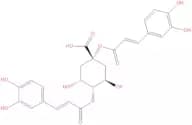
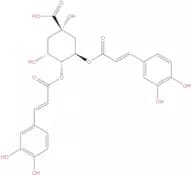
CAS:Isochlorogenic acid A possesses the potent anti-hepatitis B activity and anti-HBV activity, could be achieved by its antioxidative property and induction of HO-1.Formel:C25H24O12Reinheit:95%~99%Farbe und Form:White powderMolekulargewicht:516.455Cryptochlorogenic acid
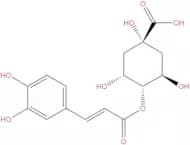
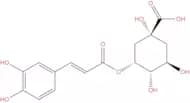
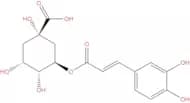
CAS:Chlorogenic acid has antioxidative activity, superoxide anion radicals, and radical scavenging activity.Formel:C16H18O9Reinheit:95%~99%Farbe und Form:White powderMolekulargewicht:354.311Isochlorogenic acid C
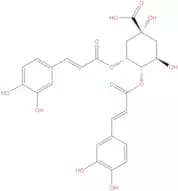
CAS:Isochlorogenic acid C possesses potent hepatoprotective and anti-HBV effects; the anti-apoptotic and anti-injury effects could be achieved by its anti-oxidative properties and interfering the caspase-3 and TGF-beta expressions.;the anti-HBV target may mainly be at the downstream links of HBV replication process and is probably associated with blocking translation step.Formel:C25H24O12Reinheit:95%~99%Farbe und Form:White powderMolekulargewicht:516.455Neochlorogenic acid
CAS:Neochlorogenic acid (NCA) is a natural polyphenolic compound found in dried fruits and other plants, has shown that phenolic acids including NCA have outstanding antioxidant, antibacterial, antiviral, and antipyretic activities, it also exerts neuroprotective effects through the inhibition of pro-inflammatory pathways in activated microglia.Formel:C16H18O9Reinheit:95%~99%Farbe und Form:PowderMolekulargewicht:354.311Luteolin
CAS:Luteolin, is a common flavonoid that exists in many types of plants including fruits, vegetables, and medicinal herbs, has anti-oxidant, anti-inflammation, anti-allergy and anticancer, has been used in Chinese traditional medicine for treating various diseases such as hypertension, inflammatory disorders, and cancer.Formel:C15H10O6Reinheit:95%~99%Farbe und Form:Yellow powderMolekulargewicht:286.239Luteoloside
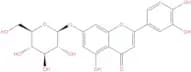
CAS:Luteolin-7-O-glucoside and luteolin at concentrations lower than 20 muM, significantly suppresses the productions of nitric oxide and prostaglandin E-2 (PGE(2)) in bacterial lipopolysaccharide activated-mouse macrophage RAW264.7 cells without introducing cytotoxicity; the inhibitory effects were further attributed to the suppression of both inducible nitric oxide synthase (iNOS) and cyclooxygenase-2 (COX-2) protein expression, and not reduced enzymatic activity.Formel:C21H20O11Reinheit:95%~99%Farbe und Form:Yellow powderMolekulargewicht:448.38Chlorogenic acid
CAS:Chlorogenic acid, a phenolic compound found ubiquitously in plants, is an in vitro antioxidant and metal chelator, some derivatives of chlorogenic acid are hypoglycemic agents and may affect lipid metabolism;in vivo, chlorogenic acid can improve glucose tolerance, decrease some plasma and liver lipids, and improve mineral pool distribution.Formel:C16H18O9Reinheit:95%~99%Farbe und Form:PowderMolekulargewicht:354.311