Oligosacáridos
Los oligosacáridos son carbohidratos compuestos por un pequeño número de unidades de monosacáridos unidas por enlaces glucosídicos. Estas moléculas juegan roles significativos en varios procesos biológicos, incluyendo el reconocimiento celular, la señalización y las respuestas inmunitarias. En esta sección, encontrará una amplia selección de oligosacáridos esenciales para la investigación en glicociencia, bioquímica y biología molecular. Estos compuestos son vitales para estudiar estructuras complejas de carbohidratos, sus funciones y sus interacciones con otras biomoléculas. En CymitQuimica, proporcionamos oligosacáridos de alta calidad para apoyar sus necesidades de investigación y desarrollo, asegurando resultados precisos y fiables en sus experimentos.
Subcategorías de "Oligosacáridos"
- Glicósidos de aminoetilo, glicósidos de aminopropilo(14 productos)
- Glicanos enlazantes de Asn(33 productos)
- Oligosacáridos biotinados(13 productos)
- Grupos sanguíneos y antígenos de Lewis(11 productos)
- Oligosacáridos de tipo sanguíneo(13 productos)
- Celooligosacáridos(1 productos)
- Ciclodextrinas(183 productos)
- Disacáridos(192 productos)
- Oligosacáridos de epítopo(19 productos)
- Fructooligosacáridos(2 productos)
- Oligosacáridos funcionales(554 productos)
- Oligosacáridos funcionalizados(1 productos)
- Galactosamina(41 productos)
- Galactosa(260 productos)
- Galb (1-3) GalNAc(21 productos)
- Serie Ganglio(11 productos)
- Serie Globo e Isoglobo(17 productos)
- Glucosamina(128 productos)
- Ácidos glucurónicos(51 productos)
- Glicoproteínas, Glicopéptidos(59 productos)
- Glicosaminoglicano(26 productos)
- Oligosacáridos de la leche materna(19 productos)
- O-glicanos marcados(9 productos)
- Oligosacáridos marcados(36 productos)
- LacNAc(53 productos)
- Series Lacto y Neolacto(14 productos)
- Lacto-N-biosa(10 productos)
- Lactooligosacáridos(7 productos)
- Oligosacáridos unidos al linker(19 productos)
- Maltooligosacáridos(6 productos)
- Oligosacáridos de leche(31 productos)
- N-glicanos(149 productos)
- Glucósidos naturales(177 productos)
- Oligosacáridos naturales(103 productos)
- O-glicano(18 productos)
- Building Blocks de Oligosacáridos(7 productos)
- Reemplazo de oligosacáridos(2 productos)
- Oligosacáridos por componente de azúcar(225 productos)
- Oligosis(24 productos)
- Otros Oligosacáridos(14 productos)
- Oligómeros de PEG(33 productos)
- Azúcares fosfatados(17 productos)
- Azúcares protegidos(526 productos)
- Reactivos para la síntesis de oligosacáridos(254 productos)
- Ser, Thr Glucanos de unión(9 productos)
- Oligosacáridos sialilados(3 productos)
- Esfingoglucolípidos(42 productos)
- Aminoácidos de azúcar, péptidos de azúcar(20 productos)
- Antígenos de azúcar(31 productos)
- Building Blocks de Azúcares por Oligosacáridos objetivo(225 productos)
- Conjugados de azúcar(100 productos)
- Azúcares sulfatados(16 productos)
- Tetrasacáridos(34 productos)
- Trisacáridos y superiores(95 productos)
- Xilooligosacáridos(5 productos)
Mostrar 47 subcategorías más
Se han encontrado 2278 productos de "Oligosacáridos"
Ordenar por
Pureza (%)
0
100
|
0
|
50
|
90
|
95
|
100
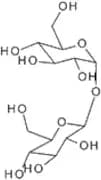
α,β-Trehalose
CAS:<p>α,β-Trehalose is a carbohydrate that is found in many organisms and has been shown to have biochemical properties such as energy metabolism, enzyme activities, and x-ray diffraction data. Trehalose has a phase transition temperature of around 98°C, which makes it an ideal sugar for food preservation. Trehalose can also be used as a sugar substitute with the same sweetness level as sucrose. The chemical stability of trehalose allows it to be used as a preservative in food and beverages. Trehalose has been shown to be nontoxic in animal studies with doses up to 2000 mg/kg body weight. It also has an optimum pH of 7 and is stable at high temperatures.</p>Fórmula:C12H22O11Pureza:Min. 95 Area-%Forma y color:White PowderPeso molecular:342.3 g/molNeu5Ac(a2-6)Gal(b1-4)GalNAc
CAS:<p>Neu5Ac(a2-6)Gal(b1-4)GalNAc is a synthetic, fluorinated monosaccharide. It is an oligosaccharide that has been custom synthesized and glycosylated. It is a complex carbohydrate that has been modified with methylation and click chemistry. Neu5Ac(a2-6)Gal(b1-4)GalNAc has CAS number 383365-43-3. This product is available in high purity and can be used in the synthesis of polysaccharides.</p>Fórmula:C25H42N2O19Pureza:Min. 95%Peso molecular:674.6 g/molb-D-Fructofuranosyl a-D-glucopyranoside 6-octanoate
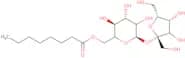
CAS:<p>b-D-Fructofuranosyl a-D-glucopyranoside 6-octanoate is a saccharide that is used as an intermediate for the synthesis of polysaccharides. This compound can be used to synthesize glycosylated oligosaccharides with high purity and good yields. It can also be used in the preparation of complex carbohydrates, including fluorinated sugar derivatives.</p>Pureza:Min. 95%a-D-Galactosyl-mannotriose
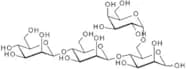
CAS:<p>a-D-Galactosyl-mannotriose is a complex oligosaccharide, which is derived from plant materials such as leguminous seeds. Its mode of action involves selectively promoting the growth of beneficial gut bacteria, particularly bifidobacteria and lactobacilli, through its structural composition that resists hydrolysis by human digestive enzymes. This non-digestibility allows it to reach the colon intact, where it can exert its prebiotic effects.</p>Fórmula:C24H42O21Pureza:Min. 95 Area-%Forma y color:White PowderPeso molecular:666.58 g/molXyloglucan heptasaccharide
CAS:<p>Xyloglucan is a heptasaccharide that is an important component of the plant cell wall. Xyloglucan heptasaccharides are found in the cell walls of many plants, including banana and potato. Xyloglucan heptasaccharides are composed of alternating glucose and xylose residues, with a glycosidic linkage between two xylose residues. This linkage can be hydrolyzed by α-amyrinase to yield two xylose monomers. The conformational properties of xyloglucan depend on its stereochemistry, which has been shown to affect its ability to inhibit inflammatory bowel disease (IBD). Xyloglucan heptasaccharides have also been shown to bind to bacterial cells, inhibiting their growth.</p>Fórmula:C39H66O33Pureza:Min. 95%Forma y color:PowderPeso molecular:1,062.92 g/molNeolactotetraosylceramide
CAS:<p>Neolactotetraosylceramide (NT4) is a glycoconjugate that is found in human serum. It has been shown to bind to the receptor site of monoclonal antibodies and inhibit the binding of tumor necrosis factor-α (TNF-α), which is involved in immune system regulation. NT4 has also been shown to block the activity of receptors on human neutrophils, which may be due to its structural similarity to lactotetraosylceramide. NT4 has been implicated as a potential cause for autoimmune diseases and cancer tissues, due to its structural similarity with glycoproteins that are found on cell surfaces. The optimum pH for NT4 is 7.5 and its glycan structure consists of two mannose residues linked by an alpha-1,6 linkage. This glycoconjugate binds well with blood group A and B antigens, but not with blood group O antigen. NT4 elicits antibody response</p>Fórmula:C62H114N2O23Pureza:Min. 95%Peso molecular:1,255.57 g/molDisialyllacto-N-hexaose I
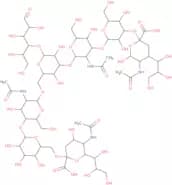
CAS:<p>Disialyllacto-N-hexaose I is a complex carbohydrate that belongs to a class of saccharides called polysaccharides. Disialyllacto-N-hexaose I is synthesized through the methylation and glycosylation of sucrose. It has been modified by Click chemistry with a maleimide group to create an amide bond between the terminal alpha position on the glucose residue and the terminal alpha position on the N-acetylglucosamine residue. This modification can be used for Polysaccharide analysis, such as MALDI TOF MS. Disialyllacto-N-hexaose I has a CAS number of 137636-98-7 and has been shown to have high purity without any impurities or contaminants.</p>Fórmula:C62H102N4O47Pureza:Min. 95%Peso molecular:1,655.47 g/molMaltohexaose spacer fluorescein
<p>Fluorescent diagnostic reagent used for tumor diagnosis</p>Pureza:Min. 95%Digalactosylceramide
CAS:<p>Digalactosylceramide is a bioactive glycosphingolipid, which is derived from the cellular membranes of certain bacteria and plants. This compound plays a significant role in modulating immune responses through its interaction with the immune system. Its mode of action involves binding to specific receptors on immune cells, influencing cell signaling pathways that are crucial for the regulation of the immune response, including the modulation of cytokine production and immune cell activation.</p>Fórmula:C46H87NO13Pureza:Min. 95%Forma y color:PowderPeso molecular:862.18 g/mol2-Acetamido-6-O-(2-acetamido-2-deoxy-b-D-galactopyranosyl)-2-deoxy-3-O-(b-D-galactopyranosyl)-D-glucopyranose
<p>A GalNAc trisaccharide</p>Pureza:Min. 95%β-D-Galactopyranosyl-(1-4)-β-D-galactopyranosyl-(1-4)-D-galactose
CAS:<p>b-D-Galactopyranosyl-(1-4)-b-D-galactopyranosyl-(1-4)-D-galactose is a fluorinated saccharide that contains three fluorine atoms. The chemical formula for this product is C8H12F3O11. It is a white powder and the molecular weight of the compound is 514.06 g/mol. b-D-Galactopyranosyl-(1-4)-b-D-galactopyranosyl-(1-4)-D-galactose can be custom synthesized to meet your desired specifications, such as modification, purity, and other criteria. This product has been shown to be useful in glycosylation reactions and click chemistry applications.</p>Fórmula:C18H32O16Pureza:Min. 95%Peso molecular:504.44 g/mol6-α-D-Glucopyranosyl maltotriose-13C6
CAS:<p>Please enquire for more information about 6-α-D-Glucopyranosyl maltotriose-13C6 including the price, delivery time and more detailed product information at the technical inquiry form on this page</p>Fórmula:C6C18H42O21Pureza:Min. 95%Peso molecular:672.53 g/molDifucosyllacto-N-hexaose (c)
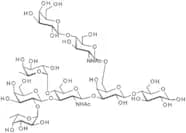
CAS:<p>Difucosyllacto-N-hexaose (c) is an oligosaccharide that can be found in human breast milk. It has been shown to have an anti-inflammatory effect on the ileum, which may be due to its ability to stimulate the production of short-chain fatty acids in the large intestine and inhibit the release of proinflammatory cytokines.</p>Fórmula:C52H88N2O39Pureza:Min. 95%Peso molecular:1,365.25 g/molChondroitin disaccharide di-UA2S disodium salt
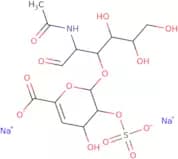
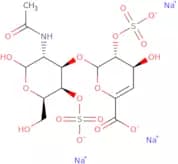
CAS:<p>Chondroitin disaccharide di-UA2S disodium salt is a high purity, custom synthesis, sugar, click modification, fluorination, glycosylation, synthetic oligosaccharide. It is a complex carbohydrate of the monosaccharide and saccharides which are composed of glucose and glucuronic acid. The molecular weight is 721.00 g/mol with a CAS number of 149368-04-7. This product has been modified to include methyl groups on N-6 and N-2 positions in the side chains of both uronic acids. Chondroitin disaccharide di-UA2S disodium salt is an oligosaccharide that has been synthesized from chondroitin sulfate with a molecular weight of 5400.00 g/mol.</p>Fórmula:C14H19NNa2O14SPureza:Min. 90 Area-%Forma y color:PowderPeso molecular:503.34 g/molBlood Group B trisaccharide, spacer-biotin conjugate
CAS:<p>Blood group B antigen conjugated to spacer arm and biotin</p>Fórmula:C37H64N4O18SPureza:Min. 95%Forma y color:PowderPeso molecular:884.99 g/mol2-Acetamido-6-O-(2-acetamido-2-deoxy-b-D-glucopyranosyl)-2-deoxy-D-galactopyranose
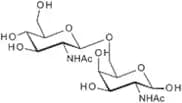
CAS:<p>2-Acetamido-6-O-(2-acetamido-2-deoxy-β-D-glucopyranosyl)-2,3,4,6-tetraacetamido-2,3,4,6,-tetra deoxygalactose is an acetylated disaccharide that is used in the synthesis of 6 fluoro 3 indoxyl beta D galactopyranoside. It is a residue of polysaccharides and proteins. 2 Acetamido 6 O 2 acetamido 2 deoxy β D glucopyranosyl 2 deoxy D galactopyranose is a disaccharide that can be found as a component of many polysaccharides and proteins.</p>Fórmula:C16H28N2O11Pureza:Min. 95%Peso molecular:424.4 g/molSodium alginate, viscosity 100 - 150 mPa.s
CAS:<p>Sodium alginate is a soluble fiber that is extracted from brown seaweed. It is a natural carbohydrate that can be modified to create a variety of sugar-based derivatives, such as Oligosaccharides, Monosaccharides, and Custom Synthesis. Sodium alginate has been modified with Fluorination, Methylation, Glycosylation, and Click Modification to create high-purity products for various applications.</p>Pureza:90.8 To 106.0%Forma y color:PowderChondroitin disaccharide di-diSB trisodium salt
CAS:<p>Chondroitin disaccharide di-diSB trisodium salt is a chondroitin sulfate binding agent that can be used in the diagnosis of subcutaneous tumors. It binds to the chondroitin sulfate component of proteoglycans and stains these proteins under light microscopy. This agent can also be used to detect monoclonal antibodies that bind to the chondroitin sulfate component of proteoglycans. The detection of this agent may be done by enzyme-linked immunosorbent assay or fluorescence microscopy.</p>Fórmula:C14H18NNa3O17S2Pureza:Min. 95%Forma y color:PowderPeso molecular:605.39 g/mol6'-α-Sialyl-N-acetyllactosamine-sp-biotin
CAS:<p>6'-a-Sialyl-N-acetyllactosamine-sp-biotin is a recombinant modified oligosaccharide. It is an Oligosaccharide that is synthesized by the methylation of 6'-sialyllactose with acetic anhydride and triethylamine in DMF. It has a molecular weight of 805.00 Da and a CAS number of 1038746-08-5. 6'-a-Sialyl-N-acetyllactosamine-sp-biotin may be used as a monomer for click chemistry, as well as for other applications in carbohydrate chemistry, such as the synthesis of polysaccharides and complex carbohydrates. This product has high purity and can be custom synthesized to order.</p>Fórmula:C44H74N6O22SPureza:Min. 95%Forma y color:White PowderPeso molecular:1,071.15 g/molCellooctaose
CAS:<p>Cellooctaose is a synthetic, water-soluble oligosaccharide with a molecular weight of 1,000 daltons. It is produced by the reaction of propionate and intramolecular hydrogen with a water molecule to form glycosidic bonds. Cellooctaose can be used as a coating for pharmaceutical tablets and capsules to prevent dissolution in gastric acid. Cellooctaose is homologous to cellulose and has been used in recombinant protein production for the purpose of modifying viscosity. Cellooctaose has also been shown to inhibit the growth of cancer cells via lysosomal membrane permeability enhancement. This may be due to its ability to bind to fatty acids on the surface of cancer cells, which then leads to increased cell death.</p>Fórmula:C48H82O41Pureza:Min. 95%Forma y color:PowderPeso molecular:1,315.14 g/mol