Oligosacáridos
Los oligosacáridos son carbohidratos compuestos por un pequeño número de unidades de monosacáridos unidas por enlaces glucosídicos. Estas moléculas juegan roles significativos en varios procesos biológicos, incluyendo el reconocimiento celular, la señalización y las respuestas inmunitarias. En esta sección, encontrará una amplia selección de oligosacáridos esenciales para la investigación en glicociencia, bioquímica y biología molecular. Estos compuestos son vitales para estudiar estructuras complejas de carbohidratos, sus funciones y sus interacciones con otras biomoléculas. En CymitQuimica, proporcionamos oligosacáridos de alta calidad para apoyar sus necesidades de investigación y desarrollo, asegurando resultados precisos y fiables en sus experimentos.
Subcategorías de "Oligosacáridos"
- Glicósidos de aminoetilo, glicósidos de aminopropilo(14 productos)
- Glicanos enlazantes de Asn(33 productos)
- Oligosacáridos biotinados(13 productos)
- Grupos sanguíneos y antígenos de Lewis(11 productos)
- Oligosacáridos de tipo sanguíneo(13 productos)
- Celooligosacáridos(1 productos)
- Ciclodextrinas(183 productos)
- Disacáridos(192 productos)
- Oligosacáridos de epítopo(19 productos)
- Fructooligosacáridos(2 productos)
- Oligosacáridos funcionales(554 productos)
- Oligosacáridos funcionalizados(1 productos)
- Galactosamina(41 productos)
- Galactosa(261 productos)
- Galb (1-3) GalNAc(21 productos)
- Serie Ganglio(11 productos)
- Serie Globo e Isoglobo(17 productos)
- Glucosamina(128 productos)
- Ácidos glucurónicos(51 productos)
- Glicoproteínas, Glicopéptidos(59 productos)
- Glicosaminoglicano(26 productos)
- Oligosacáridos de la leche materna(19 productos)
- O-glicanos marcados(9 productos)
- Oligosacáridos marcados(36 productos)
- LacNAc(53 productos)
- Series Lacto y Neolacto(14 productos)
- Lacto-N-biosa(10 productos)
- Lactooligosacáridos(7 productos)
- Oligosacáridos unidos al linker(19 productos)
- Maltooligosacáridos(6 productos)
- Oligosacáridos de leche(31 productos)
- N-glicanos(149 productos)
- Glucósidos naturales(177 productos)
- Oligosacáridos naturales(103 productos)
- O-glicano(18 productos)
- Building Blocks de Oligosacáridos(7 productos)
- Reemplazo de oligosacáridos(2 productos)
- Oligosacáridos por componente de azúcar(225 productos)
- Oligosis(24 productos)
- Otros Oligosacáridos(14 productos)
- Oligómeros de PEG(33 productos)
- Azúcares fosfatados(17 productos)
- Azúcares protegidos(526 productos)
- Reactivos para la síntesis de oligosacáridos(254 productos)
- Ser, Thr Glucanos de unión(9 productos)
- Oligosacáridos sialilados(3 productos)
- Esfingoglucolípidos(42 productos)
- Aminoácidos de azúcar, péptidos de azúcar(20 productos)
- Antígenos de azúcar(31 productos)
- Building Blocks de Azúcares por Oligosacáridos objetivo(225 productos)
- Conjugados de azúcar(100 productos)
- Azúcares sulfatados(16 productos)
- Tetrasacáridos(34 productos)
- Trisacáridos y superiores(95 productos)
- Xilooligosacáridos(5 productos)
Mostrar 47 subcategorías más
Se han encontrado 2278 productos de "Oligosacáridos"
Ordenar por
Pureza (%)
0
100
|
0
|
50
|
90
|
95
|
100
1,6-Anhydro-b-D-cellopentose
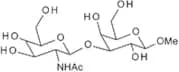
CAS:<p>1,6-Anhydro-b-D-cellopentose is a synthetic cello-oligomer</p>Fórmula:C30H50O25Pureza:Min. 95%Forma y color:PowderPeso molecular:810.7 g/molMethyl 3-O-(2-acetamido-2-deoxy-b-D-glucopyranosyl)-b-D-galactopyranoside
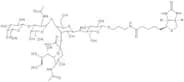
CAS:<p>Substrate for b-6-GlcNAc-transferase</p>Fórmula:C15H27NO11Pureza:Min. 97 Area-%Forma y color:White PowderPeso molecular:397.38 g/molGM1-Pentasaccharide labelled by biotin
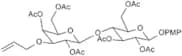
<p>GM1 pentasaccharide biotin (sodium salt) has a core tetrasaccharide structure (Galβ1,3GalNAcβ1,4Galβ1,4Glc) with sialic acid linked α2,3 to the inner galactose residue and biotin linked β to position 1 on the reducing glucose moiety (Ledeen, 2009). The parent ganglioside GM1 is abundant in all mammalian brains, where it covers 10%-20% of the total ganglioside mixture. It is found in epithelial membranes and is a key element for bacterial toxicity and viral infection as it is the intestinal receptor for cholera toxin the B-subunits of heat-labile toxin, rotavirus, and simian virus 40. GM1 ganglioside functions as a neurotrophic and neuroprotective compound and has been used therapeutically for diabetic and peripheral neuropathies. GM1 ganglioside also has the ability to bind amyloid-β proteins and is involved in Alzheimerâs pathogenesis (Chiricozzi, 2020).</p>Fórmula:C50H83N5O31SPureza:Min. 95%Forma y color:White PowderPeso molecular:1,282.28 g/mol4-Methoxyphenyl 2,3,6-tri-O-acetyl-4-O-(2,4,6-tri-O-acetyl-3-O-allyl-β-D-galactopyranosyl)-β-D-glucopyranoside
<p>4-Methoxyphenyl 2,3,6-tri-O-acetyl-4-O-(2,4,6-tri-O-acetyl-3-O-allyl bDgalactopyranosyl)-bDglucopyranoside is a modification of an oligosaccharide. It is a high purity and custom synthesis. This product can be found under CAS No. 807827-28-0.</p>Fórmula:C34H44O18Pureza:Min. 95%Peso molecular:740.7 g/molN-Acetyl-D-lactosamine
CAS:<p>N-Acetyl-D-lactosamine (LacNAc) is a natural structural element in a variety of glycoconjugates, found in milk, urine, meconium and glyciproteins. It’s a substrate for galactosidases, fucosyltransferases, and sialyltransferases. This LacNAc is also useful as a lectin inhibitory sugar and for characterizing lectins.</p>Fórmula:C14H25NO11Pureza:Min. 98 Area-%Forma y color:White PowderPeso molecular:383.35 g/mol1,4-β-D-Mannopentaose
CAS:<p>Isolated from ivory-nut mannan hydrolysates</p>Fórmula:C30O26H52Pureza:Min. 95%Forma y color:PowderPeso molecular:828.72 g/molBenzyl 4-O-(β-D-galactopyranosyl)-β-D-glucopyranoside
CAS:<p>Benzyl 4-O-(b-D-galactopyranosyl)-b-D-glucopyranoside is a Glycosylation product that is custom synthesized to order. It is an oligosaccharide, which is synthesized by the modification of monosaccharides with other saccharides. This product has been fluorinated and acetylated at its C4 position and methylated at its C6 position. This compound has CAS No. 18404-72-3 and can be used as a sugar in the synthesis of complex carbohydrates or as a component of polysaccharides.</p>Fórmula:C19H28O11Pureza:Min. 95%Forma y color:PowderPeso molecular:432.42 g/molD-Cellopentaose
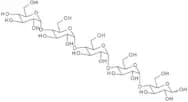
CAS:<p>Cellotriose is a bifunctional sugar that can be chemically converted to cellobiose and D-cellopentaose. Cellotriose is a component of cellulose, which is the most abundant biopolymer on Earth. Cellotriose is a source of chitin, which is a major component of the exoskeleton of insects and crustaceans. The molecule has been observed using atomic force microscopy to have an amphiphilic nature, in that it has both hydrophobic and hydrophilic regions. Cellotriose has been synthesized in the laboratory for use as an artificial sweetener, but it does not taste as good as sucrose because it lacks the sweetness profile. When heated, cellotriose undergoes a color change from yellow to blue-green due to its ability to form hydrogen bonds with oxygen molecules. This property can be used as a colorimetric test for cellulase activity in solutions.</p>Fórmula:C30H52O26Pureza:Min. 95%Forma y color:White Off-White PowderPeso molecular:828.72 g/mol6-a-D-Maltotriosyl-maltotriose
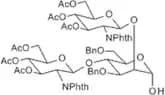
CAS:<p>Derived from pullulan using pullulanase</p>Fórmula:C36H62O31Pureza:Min. 95%Forma y color:PowderPeso molecular:990.86 g/mol4,6-Di-O-(3,4,6-tri-O-acetyl-2-deoxy-2-phthalimido β-D-glucopyranosyl)-3-6-di-O-benzyl-α-D-mannopyranose
<p>This is a custom synthesis of a complex carbohydrate. The CAS number is not available and the polysaccharide has been modified. It has been glycosylated, methylated, and fluorinated. It is high purity and the sugar sequence is a custom synthesis.</p>Fórmula:C60H62N2O24Pureza:Min. 95%Peso molecular:1,195.13 g/mol1,3,4,6-Tetra-O-benzyl-2-O-(2,3,4,6-tetra-O-benzyl-a-D-glucopyranosyl)-b-D-galactopyranoside
CAS:<p>Tetra-O-benzyl-2-O-(2,3,4,6-tetra-O-benzyl-a-D-glucopyranosyl)-b-D-galactopyranoside is a polysaccharide that is synthesized by the methylation of 1,3,4,6-tetra-O-benzyl -2,3,4,6 tetra - O - benzyl - a - D - glucopyranoside. It can be used to modify proteins and oligosaccharides. This product is custom synthesized and has high purity.</p>Fórmula:C68H70O11Pureza:Min. 95%Peso molecular:1,063.28 g/mol6-a-D-Glucopyranosyl maltotriose
CAS:<p>Substrate for glucoamylases; derived from pullulan using pullulanase</p>Fórmula:C24H42O21Pureza:Min. 97 Area-%Forma y color:PowderPeso molecular:666.58 g/molGlobopentaose
CAS:<p>Carbohydrate moiety of globopentaosylceramide</p>Fórmula:C32H55NO26Pureza:Min. 95%Forma y color:White PowderPeso molecular:869.77 g/molBlood group H type I tetrasaccharide
<p>The H type I tetrasaccharide is a glycosylated molecule that belongs to the class of complex carbohydrates. It is an oligosaccharide with a high purity and high degree of methylation. The H Type I Tetrasaccharide is an important component in immunoglobulin G and can be used in the modification of proteins and other compounds, such as oligosaccharides. The H Type I Tetrasaccharide has been shown to have anti-inflammatory properties due to its ability to inhibit the release of pro-inflammatory cytokines from mast cells.</p>Fórmula:C26H45NO20Pureza:Min. 95%Forma y color:PowderPeso molecular:691.63 g/molMaltopentaose
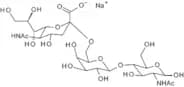
CAS:<p>Alpha-1,4-glucopentasaccharide derived from starch by hydrolysis and chromatography</p>Fórmula:C30H52O26Pureza:Min. 90 Area-%Forma y color:White PowderPeso molecular:828.72 g/mol6'-a-Sialyl-N-acetyllactosamine sodium salt
CAS:<p>Sialylated trisaccharide found in human urine</p>Fórmula:C25H41N2NaO19Pureza:Min. 95%Forma y color:PowderPeso molecular:696.6 g/molMan-9 N-Glycan
CAS:<p>Man-9 N-glycan is a glycoprotein that is found on the surface of many viruses. It has an oligosaccharide structure, which consists of a mannose and a glucose molecule linked by an alpha-1,3-glycosidic bond. The Man-9 N-glycan can be found in human serum and is involved in lectin binding to cells. It also has antiviral activity and may be used as a model system for studying glycosidic bonds. This glycan can be broken down into smaller components by methyl glycosides or titration calorimetry, which is a technique for determining the molecular weight of substances. The Man-9 N-Glycan binds to toll-like receptor 2 (TLR2) on the surface of human cells, which activates an antibody response.</p>Fórmula:C70H118N2O56Pureza:Min. 95%Forma y color:PowderPeso molecular:1,883.67 g/molTri-mannuronic acid sodium salt
CAS:<p>Tri-mannuronic acid sodium salt (b-1,4-linked sodium mannuronotriose) is one of a number of oligosaccharides obtained from alginate which is a polysaccharide in brown seaweeds containing: blocks of repeating mannuronic acid sequences (M-M-M-M etc), repeating guluronic acid sequences (G-G-G-G etc), and alternating M-G-M-G sequences.Oligosaccharides can be released using several methods (Lua, 2015; Yanga, 2004) and claims have been published that mannuronic acid oligosaccharides for example, can be effective in the prophylaxis and treatment of Alzheimer's disease, or for the prophylaxis and treatment of diabetes (USP 8835403B2, 2014).</p>Fórmula:C18H23O19Na3Pureza:Min. 98 Area-%Forma y color:White PowderPeso molecular:612.33 g/molLactodifucotetraose
CAS:<p>Human milk oligosaccharide; attenuates inflammatory cytokine release</p>Fórmula:C24H42O19Pureza:Min. 90%Forma y color:White PowderPeso molecular:634.58 g/molBenzyl 2-acetamido-2-deoxy-4-O-(b-D-galactopyranosyl)-b-D-glucopyranoside
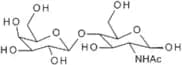
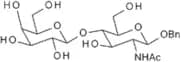
CAS:<p>Benzyl 2-acetamido-2-deoxy-4-O-(b-D-galactopyranosyl)-b-D-glucopyranoside is an oligosaccharide that is synthesized from D-(+)-galactose, D-(+)-glucose and benzyl alcohol. This product can be used for the modification of saccharides and has been shown to have a high purity. It has been fluorinated at the alpha position and glycosylated with acetamidobenzoyl group. The molecular weight of this product is 378.12 g/mol. CAS No.: 53167-38-7</p>Fórmula:C21H31NO11Pureza:Min. 95%Forma y color:White PowderPeso molecular:473.47 g/molBlood group A pentasaccharide type II
CAS:<p>A antigen pentasaccharide Type I I, possible use in antiviral development</p>Fórmula:C34H58N2O25Pureza:Min. 90 Area-%Forma y color:PowderPeso molecular:894.82 g/mol1-O-Aminohexyl 6'-sialyllactose hydrochloride
<p>Key synthetic precursor for the synthesis of lacto-oligosaccharides</p>Fórmula:C29H52N2O19•HClPureza:Min. 95 Area-%Forma y color:White PowderPeso molecular:769.23 g/molNeoagarodecaose
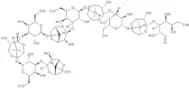
CAS:<p>Agarose is a polysaccharide found in red algae, typically Gelidium and Gracilaria. It is a strictly alternating polysaccharide of α-1,3 linked D-galactose and β-1,4 linked L-3,6 anhydrogalactose with occasional sulfation at position 6 of the anhydrogalactose residue. Agaro-oligosaccharides result from cleavage at galactose residues and neoagaro-oligosaccharides from cleavage at 3,6-anhydro residues. Neoagarodecaose is reported to have potential for novel cosmeceuticals.</p>Fórmula:C60H92O46Pureza:Min. 95%Forma y color:PowderPeso molecular:1,549.34 g/molBlood Group A pentasaccharide
CAS:<p>Core antigen fragment in ABO blood group system</p>Fórmula:C32H55NO24Pureza:Min. 95%Forma y color:White PowderPeso molecular:837.77 g/molLactose 3'-sulfate
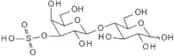
CAS:<p>Unusual lactose sulphate isolated from canine milk (beagle-Canis familiaris), which does not appear to have previously been isolated from milk or other natural sources. The structure was established by 2D NMR spectroscopy and mass spectrometry.</p>Fórmula:C12H22O14SPureza:Min. 95%Forma y color:Beige PowderPeso molecular:422.36 g/molNeoagarotetraose
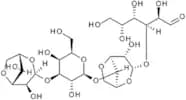
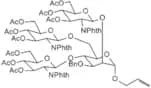
CAS:<p>Agarose is a polysaccharide found in red algae, typically Gelidium and Gracilaria. It is a strictly alternating polysaccharide of α-1,3 linked D-galactose and β-1,4 linked L-3,6 anhydrogalactose with occasional sulfation at position 6 of the anhydrogalactose residue. Agaro-oligosaccharides result from cleavage at galactose residues and neoagaro-oligosaccharides from cleavage at 3,6-anhydro residues. Neoagarotetraose is reported to have potential for novel cosmeceuticals.</p>Fórmula:C24H38O19Pureza:Min. 98 Area-%Forma y color:White PowderPeso molecular:630.55 g/molAllyl 2,4,6-tri-O-(3,4,6-tri-O-acetyl-2-deoxy-2-phthalimido-b-D-glucopyranosyl)-3-O-benzyl-a-D-mannopyranoside
<p>Allyl 2,4,6-tri-O-(3,4,6-tri-O-acetyl-2-deoxy-2-phthalimido-b-D-glucopyranosyl)-3-O-benzyl a -D -mannopyranoside is a glycosylated oligosaccharide. It is synthesized from 3,4,6 tri O acetyl 2 deoxy 2 phthalimido b D glucopyranosyl chloride and allyl alcohol by the click reaction with sodium azide in the presence of palladium catalysis. This product has been fluorinated at the 6 position of allose. The purity of this product is high and it has been modified on the saccharide chain with methyl groups at the C1 and C2 positions of glucose. Allyl 2,4,6 tri O (3 4 6 tri O acetyl 2 deoxy 2 phthalimido b D gluc</p>Fórmula:C76H79N3O33Pureza:Min. 95%Peso molecular:1,562.44 g/molD-Cellopentose heptadecaacetate
CAS:<p>D-Cellopentose heptadecaacetate is a fluorinated, monosaccharide that is synthesized from the sugar cellobiose. It is an oligosaccharide and a complex carbohydrate with one of its glycosidic bonds modified by methylation. D-Cellopentose heptadecaacetate has been shown to be effective in inhibiting glycosylation reactions and can be used as a sugar substitute or for custom synthesis. This product has been shown to have high purity and is available at CAS No. 83058-38-2.</p>Fórmula:C64H86O43Pureza:Min. 95%Forma y color:White to off-white solid.Peso molecular:1,543.34 g/molLewis X trisaccharide
CAS:<p>Milk oligosaccharide; antigen; expressed on gastric mucosa and cancer cells</p>Fórmula:C20H35NO15Pureza:Min. 90 Area-%Forma y color:PowderPeso molecular:529.49 g/mol4-O-Methyl-α-D-glucurono-β-D-xylan
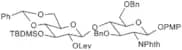
CAS:<p>4-O-Methyl-alpha-D-glucurono-beta-D-xylan is produced by the hydrolysis of xylan. It can be used in studies to find new soluble chromogenic substrates for the assay of xylanases and glucanases.</p>Forma y color:Powder4-Methoxyphenyl 4-O-(4,6-O-benzylidene-3-O-tert-butyldimethylsilyl-2-O-levulinoyl-β-D-glucopyranosyl)-3,6-di-O-benzyl-2-deoxy-2-phth alimido-β-D-glucopyranoside
<p>4-Methoxyphenyl 4-O-(4,6-O-benzylidene-3-O-tert-butyldimethylsilyl-2-O-levulinoyl-b-D-glucopyranosyl)-3,6-di-O-benzyl -2,6'-dideoxygalactopyranoside is a modification of the natural carbohydrate galactose. The sugar moiety has been methylated and glycosylated with a levulinate ester and then fluorinated. This compound is highly pure and can be synthesized on custom order.</p>Fórmula:C59H67NO15SiPureza:Min. 95%Peso molecular:1,058.24 g/molGT1b-Ganglioside sodium
CAS:<p>GT1b (sodium salt) has a core tetrasaccharide structure (Galβ1,3GalNAcβ1,4Galβ1,4Glc) with two sialic acids (NeuAc) linked α2,3/α2,8 to the inner galactose residue, sialic acid (NeuAc) linked α2,3 to the terminal galactose residue and ceramide linked β to position 1 on the reducing terminal glucose residue (Ledeen, 2009). GT1b is one of the major gangliosides in neuronal and glial membranes, it interacts with the myelin-associated glycoprotein (MAG) and is essential for long-term axon-myelin stability. GT1b ganglioside also acts as a receptor for bacterial toxins, such as, tetanus and botulinum toxins (Nishik,i 1996), as well as for viruses, a few examples include: Merkel cell polyomavirus, JC virus, BK virus, norovirus, and others (Low, 2006).</p>Fórmula:C95H165N5O48·xNaForma y color:White PowderPeso molecular:2,145.33 g/molLewis A trisaccharide methyl glycoside
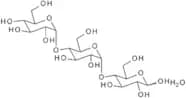
CAS:<p>Lewis A trisaccharide methyl glycoside is a sugar that is synthesized by the chemical modification of an oligosaccharide. The methyl glycoside is then fluorinated and reacted with a complex carbohydrate to produce Lewis A trisaccharide methyl glycoside. It has CAS No. 186315-40-2, which identifies it as a synthetic compound. This product has high purity, and can be custom synthesized to meet your needs. It is also available in both a glycosylated and non-glycosylated form.</p>Fórmula:C21H37NO15Pureza:Min. 95%Forma y color:PowderPeso molecular:543.52 g/molMaltotriose monohydrate
CAS:<p>Shortest chain oligosaccharide that can be classified as a maltodextrin. A component of liquid glucose (a commercial sweetener composed of glucose, maltose, maltotriose and maltotetrose).</p>Fórmula:C18H32O16·H2OPureza:Min. 90 Area-%Forma y color:White Off-White PowderPeso molecular:522.45 g/mol3-O-(a-D-Mannopyranosyl)-D-mannopyranose
CAS:<p>Isolated from the products of the acid reversion of D-mannose</p>Fórmula:C12H22O11Pureza:Min. 95 Area-%Forma y color:White PowderPeso molecular:342.3 g/mol1,2,3,6-Tetra-O-acetyl-4-O-[2,4,6-tri-O-acetyl-3-O-(3,4,6-tri-O-acetyl-2-deoxy-2-phthalimido-b-D-glucopyranosyl)-b-D-galactopyranosy l]-b-D-glucopyranose
<p>The modification of this product has been completed with a high level of purity and the CAS number is 57-49-6. It is an oligosaccharide that is a complex carbohydrate. This product can be synthesized through custom synthesis and it is a synthetic product. It is classified as a monosaccharide, methylation, glycosylation, and polysaccharide. The chemical formula for this compound is C12H14O11. This compound has been fluorinated to increase its solubility in water.</p>Fórmula:C46H55NO27Pureza:Min. 95%Peso molecular:1,053.92 g/molKojibiose
CAS:<p>A rare sugar, prebiotic fibre and inhibitor of α-glucosidases. It inhibits animal-, plant- and microorganism-derived α-glucosidases I. In rodent models for diabetes, it ameliorates arachidic acid-induced liver injury and reduces hepatic inflammatory markers.</p>Fórmula:C12H22O11Pureza:Min. 99 Area-%Forma y color:White PowderPeso molecular:342.3 g/mol2'-Fucosyllactose - min 90%
CAS:<p>Substrate for fucosidase; used in infant formula; improves health in infants</p>Fórmula:C18H32O15Pureza:Min. 90%Forma y color:White PowderPeso molecular:488.44 g/mol3'-Sialyl Lewis X, sodium salt
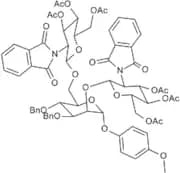
CAS:<p>Sialyl Lewis X (SLeX) is a carbohydrate antigen, related to cell adhesion and it has been shown that inhibition of SLeX synthesis leads to decreased adhesion of trophoblast cells to endometrial epithelial cells (Collins, 2006). Sialyl Lewis X is displayed on the terminus of glycolipids that are present on the surface of white blood cells and it has been shown that SLeX has an important role in inflamation processes. The inital adhesion of white blood cells to a site of injury is mediated by E-selectins which are specific for SLeX. Cell-cell recognition between leukocytes and endothelial cells in blood is believed to occur in part through interactions between lectins and oligosaccharide ligands. SLeX is frequently expressed in human cancer cells and primary tumors. It has been demonstrated that SLeX was involved in the adhesion of tumor cells to vascular endothelium. The potential role of SLeX in the tumor metastatic process has been supported by several clinical studies (Liang, 2016).</p>Fórmula:C31H51N2NaO23Pureza:Min. 95%Forma y color:White PowderPeso molecular:842.73 g/mol4-Methoxyphenyl 3,4-di-O-benzyl-2,6-di-O-(3,4,6-tri-O-acetyl-2-deoxy-2-phthalimido-β-D-glucopyranosyl)-α-D-mannopyranoside
<p>4-Methoxyphenyl 3,4-di-O-benzyl-2,6-di-O-(3,4,6-tri-O-acetyl-2-deoxy-2-phthalimido-b-D-glucopyranosyl)-a-D -mannopyranoside is a synthetic glycoside that can be custom synthesized to order. It is considered to be of high purity with a CAS number 58314−10−1. This product has been fluorinated and glycosylated and is synthetically produced. 4MPBP has the following modifications: methylation, modification, and glycosylation. 4MPBP is an oligosaccharide that is composed of saccharides and a complex carbohydrate.</p>Fórmula:C67H68N2O25Pureza:Min. 95%Peso molecular:1,301.26 g/molLewis X tetrasaccharide
CAS:<p>Lewis X tetrasaccharide (LX4) is a glycan that is found on the surface of human cells. It is an important diagnostic marker for microbial infections and has been shown to be present on the surfaces of both normal skin cells and malignant cells. The presence of LX4 can be detected using a monoclonal antibody in vitro. This glycan can also be used as a model system to study ischemia–reperfusion injury, since it has been shown to be sensitive to oxidative changes caused by reactive oxygen species generated during reperfusion. Studies have also shown that LX4 binds to enzymes such as malonic acid oxydoreductase, which are involved in the metabolism of lysine, arginine, and proline.</p>Fórmula:C26H45NO20Pureza:Min. 90%Forma y color:White PowderPeso molecular:691.64 g/mol4-Methoxyphenyl 4-O-{4-O-[[2-O-Ac-3-O-[2,4-di-O-(3,4 ,6-tri-O-Ac-2-PhthN-β-D-Glc)-3,6-di-O-Bn-α-D-Man]-6-O-[3,4-di-O-Ac-2 ,6-di-O-(3,4 ,6-tri-O-Ac-2-PhthN-β-D-Glc)-α-D-Man]-β-D-Man]]-3,6-di-O-Bn -2-PhthN-β-D-Glc}-3-O-Bn-6-O-(tri-O-Bn-α-L-Fuc)-2-PhthN-β-D-
CAS:<p>This compound is a synthetic glycosylation reagent that is used for the modification of proteins and polysaccharides. It can be used to introduce various sugars and oligosaccharides to proteins, such as Methylation, Click modification, Polysaccharide, Fluorination, saccharide, Modification, sugar, Oligosaccharide. The compound has a CAS No. 946164-26-7 and is available for custom synthesis with high purity.</p>Fórmula:C201H204N6O72Pureza:Min. 95%Peso molecular:3,855.77 g/mol2-O-(b-D-Mannopyranosyl)-D-mannopyranose
CAS:<p>β-(1→2)-Oligomannoside constituents of the Candida albicans cell wall have been shown to possess immunostimulatory properties, as evidenced by induction of cytokine production, including tumor necrosis factor (TNF) production, in humans and mice. In particular, oligosaccharide fractions, isolated and fractionated from the C. albicans cell wall, have been shown to induce TNF production in mouse macrophages. Therefore, biological studies employing well-defined synthetic β-(1→2)-linked oligomannoside compounds are of interest for verifying and studying in detail the proposed immunostimulatory properties of such constructs.</p>Fórmula:C12H22O11Pureza:Min. 90 Area-%Forma y color:PowderPeso molecular:342.3 g/molSucrose
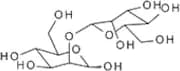
CAS:<p>Consumed in large amounts around the world as a food ingredient. Other applications of sucrose include its use in surfactants (esters), polyurethanes (polyols), plastics (alkyds) to produce dextrans (Leuconostoc mesenteroides fermentation) and ethanol (Saccharomyces cerevisiae fermentation).</p>Fórmula:C12H22O11Pureza:Min. 98 Area-%Forma y color:White PowderPeso molecular:342.3 g/molCellulase inhibitor PG 7145185
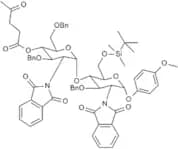
<p>Inhibitor that targets cellulase enzymes engaged in the degradation of cellulose.</p>Fórmula:C13H21O11F3Pureza:Min. 95%Forma y color:White/Off-White SolidPeso molecular:410.29 g/mol4-Methoxyphenyl 4-O-(3,6-di-O-benzyl-2-deoxy-4-O-levulinoyl-2-phthalimido-β-D-glucopyranosyl)-6-O-tert-butyldimethylsilyl-3-O-benzyl -2-deoxy-2-phthalimido-β-D-glucopyranoside
<p>4-Methoxyphenyl 4-O-(3,6-di-O-benzyl-2-deoxy-4-O-levulinoyl-2-phthalimido-b-D-glucopyranosyl)-6-O-tert butyldimethylsilyl 3,O benzyl 2 deoxy 2 phthalimido b D glucopyranoside is a custom synthesis of a synthetic oligosaccharide. This glycosylation product is soluble in water and has CAS No. of 81238.</p>Fórmula:C67H72N2O16SiPureza:Min. 95%Peso molecular:1,189.38 g/mol2,3,6-Tri-O-acetyl-γ-cyclodextrin
CAS:<p>2,3,6-Tri-O-acetyl-gamma-cyclodextrin is a custom synthesis of a cyclodextrin. This compound is fluorinated with trifluoromethanesulfonic acid to give the desired product. The methylation of the saccharide is accomplished by reacting it with methyl iodide and sodium hydroxide in an alcoholic solution. The sugar molecule is then glycosylated by reacting it with glycosylation reagent, such as cyanuric chloride or thionyl chloride. Click modification is achieved through the reaction of a glycosylated sugar molecule with azides. Polysaccharides are synthesized by combining glycosylated sugars and polymers into one molecule.BR> CAS No: 30786-38-0BR> Modification: Fluorination, Methylation, Monosaccharide, Synthetic, Click modificationBR> Oligosacchar</p>Fórmula:C96H128O64Pureza:Min. 95%Forma y color:PowderPeso molecular:2,306.01 g/molN-Glycolylneuraminic acid-OVA
<p>N-Glycolylneuraminic acid-OVA is a custom synthesis that is an Oligosaccharide. It is Polysaccharide and Modification, saccharide, Methylation, Glycosylation, Click modification, Carbohydrate, sugar. The product has a CAS No., has a purity of ≥ 95%, and is Fluorination, Synthetic.</p>Forma y color:PowderLacto-N-difucohexaose II
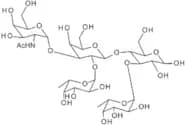
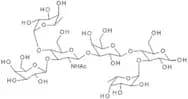
CAS:<p>Neutral difuco hexasasaccharide naturally present in human breast milk</p>Fórmula:C38H65NO29Pureza:Min. 90%Forma y color:PowderPeso molecular:999.91 g/molIsomalt
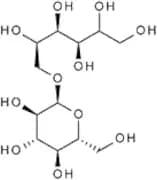
CAS:<p>Used as a sugar replacer in sugar-free confectionery and beverages</p>Fórmula:C12H24O11Pureza:Min. 98 Area-%Forma y color:White PowderPeso molecular:344.31 g/mol