Cumarinas
Las cumarinas son una clase de compuestos aromáticos policíclicos que consisten en un anillo de benceno fusionado con un anillo de pirona. Estos compuestos son ampliamente utilizados como fragancias, agentes saborizantes y en la síntesis de productos farmacéuticos y agroquímicos. Las cumarinas exhiben varias actividades biológicas, incluidas propiedades anticoagulantes, antiinflamatorias y antimicrobianas. En CymitQuimica, ofrecemos una amplia selección de cumarinas de alta calidad para apoyar sus investigaciones y aplicaciones industriales.
Se han encontrado 1122 productos de "Cumarinas"
Ordenar por
Pureza (%)
0
100
|
0
|
50
|
90
|
95
|
100
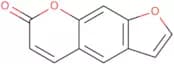
Psoralen
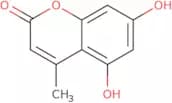
CAS:<p>Psoralen is a naturally occurring furocoumarin compound, which is derived from various plants, including those in the Apiaceae family, such as parsley and celery. Its mode of action involves intercalating into DNA and forming covalent cross-links when activated by ultraviolet A (UVA) light. This photoreactivity enables it to modify the biological activity of nucleic acids, making it a valuable tool in both therapeutic and experimental settings.</p>Fórmula:C11H6O3Pureza:Min. 98 Area-%Forma y color:White PowderPeso molecular:186.16 g/mol5,7-Dihydroxy-4-methylcoumarin monohydrate
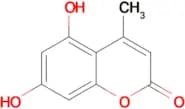
CAS:<p>5,7-Dihydroxy-4-methylcoumarin monohydrate is an organic chemical compound, specifically a type of coumarin derivative. Coumarins are a class of naturally occurring aromatic compounds that are found in various plant sources, such as tonka beans, sweet clover, and other botanicals. This particular compound, with its distinct hydroxyl and methyl groups, falls under the broader category of hydroxycoumarins, which are of significant interest in biochemical research due to their various functional properties.</p>Fórmula:C10H8O4·H2OPureza:Min. 95%Forma y color:Off-White Yellow PowderPeso molecular:210.18 g/molFraxin
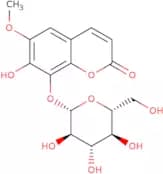
CAS:<p>Fraxin is a naturally occurring anticoagulant, which is derived from the bark of certain species of the Fraxinus tree. It functions by inhibiting thrombin and other key enzymes in the coagulation cascade, thus preventing the formation of blood clots. This mode of action makes it particularly valuable in research settings focused on cardiovascular diseases, as well as in the development of therapeutic agents targeting coagulopathies.</p>Fórmula:C16H18O10Pureza:Min. 95%Forma y color:PowderPeso molecular:370.31 g/molMeranzin
CAS:<p>Meranzin is a bioactive compound, which is a naturally occurring coumarin derivative found in various citrus fruits. Its source lies primarily in the peels and seeds of specific citrus species, notably within the Rutaceae family. The mode of action of Meranzin involves the inhibition of acetylcholinesterase, thereby influencing neurotransmitter activity, specifically in the modulation of acetylcholine levels. This action can have significant implications in research focused on neurodegenerative disorders.</p>Fórmula:C15H16O4Pureza:Min. 98 Area-%Forma y color:PowderPeso molecular:260.29 g/molColumbianadin
CAS:<p>Columbianadin is a coumarin derivative, which is a natural compound primarily extracted from plants in the Apiaceae family, such as Angelica species. This natural product possesses a unique molecular structure characterized by the presence of a coumarin skeleton, which is responsible for its diverse biological activities.</p>Fórmula:C19H20O5Pureza:Min. 98 Area-%Forma y color:PowderPeso molecular:328.36 g/mol7-Methoxy-4-methylcoumarin
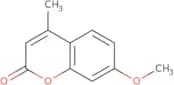
CAS:<p>7-Methoxy-4-methylcoumarin is a synthetic organic compound, which is a derivative of coumarins—a class of compounds widely found in plants. This compound is primarily synthesized through organic chemical reactions rather than extracted directly from natural sources. Its mode of action involves exhibiting fluorescence, which makes it a valuable probe in various scientific studies.</p>Fórmula:C11H10O3Pureza:Min. 95%Forma y color:PowderPeso molecular:190.2 g/molIsopteryxin
CAS:<p>Isopteryxin is a natural compound classified as a furanocoumarin, which is primarily derived from plants in the Apiaceae family, such as various species of Angelica. It is synthetically produced or extracted from these botanical sources using advanced chromatographic techniques. The mode of action of Isopteryxin involves interactions with cellular and molecular targets through its capability to intercalate with DNA and modulate enzyme activity. This confers notable biological activities, including antimicrobial, antifungal, and potentially anticancer effects. It may inhibit certain cell signaling pathways, thus influencing cellular processes such as apoptosis and proliferation.</p>Fórmula:C21H22O7Pureza:Min. 95%Forma y color:PowderPeso molecular:386.4 g/molScoparone
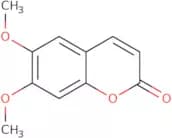
CAS:<p>Scoparone is a bioactive natural compound, which is primarily derived from plants in the Rutaceae family, such as Artemisia species. It is a coumarin derivative, known for its therapeutic properties due to its diverse biological activities. The mode of action of scoparone is multifaceted, involving the modulation of various enzymes and signaling pathways. It acts as an inhibitor of cytochrome P450 enzymes and influences pathways involving nitric oxide and reactive oxygen species, contributing to its anti-inflammatory and hepatoprotective effects.</p>Fórmula:C11H10O4Pureza:Min. 95%Forma y color:PowderPeso molecular:206.19 g/molCalycanthoside
CAS:<p>Calycanthoside is a phenolic glycoside, which is a type of natural compound characterized by a glycosidic bond linking a phenolic moiety. It is derived from the plant Calycanthus chinensis, known for its rich array of bioactive compounds. The extraction and isolation processes of Calycanthoside involve sophisticated chromatographic techniques to ensure its purity and activity.</p>Fórmula:C17H20O10Pureza:Min. 95%Forma y color:PowderPeso molecular:384.33 g/mol8-Geranyloxypsoralen
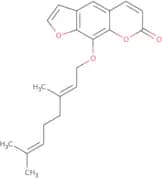
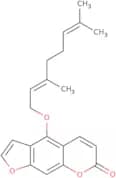
CAS:<p>8-Geranyloxypsoralen is a natural furanocoumarin, which is a secondary metabolite typically derived from plants, particularly those in the Rutaceae family. Its source lies predominantly in certain fruits and herbs, where it functions as a natural defense compound.</p>Fórmula:C21H22O4Pureza:Min. 95 Area-%Forma y color:Off-White PowderPeso molecular:338.4 g/molIsoscopoletin
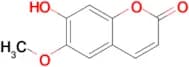
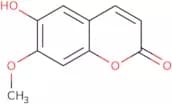
CAS:<p>Isoscopoletin is a naturally occurring coumarin derivative, which is typically sourced from various plants, including some medicinal herbs. This compound is found in a variety of plant species, where it plays a role in the plant's defense mechanisms against pathogens. It is known for its characteristic chemical structure that belongs to the coumarin family, which is widespread in the plant kingdom.</p>Fórmula:C10H8O4Pureza:Min. 95%Forma y color:PowderPeso molecular:192.17 g/molScopolin
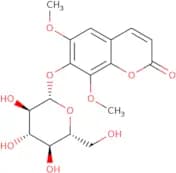
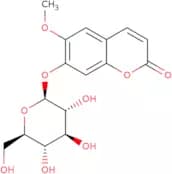
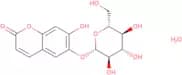
CAS:<p>Scopolin is a coumarin glucoside, which is derived from the plant secondary metabolism. It originates predominantly from species within the Solanaceae family, including tobacco and potato plants. Its biosynthesis involves the conversion of scopoline, a precursor molecule, through glucosylation. This process is catalyzed by glucosyltransferases, which facilitate the attachment of a glucose moiety.</p>Fórmula:C16H18O9Pureza:Min. 98 Area-%Forma y color:White PowderPeso molecular:354.31 g/molBergamottin
CAS:<p>Bergamottin is a furanocoumarin compound, which is primarily found in grapefruit juice and other citrus fruits. It is derived from natural sources, specifically within the fruit and peel of grapefruits. The mode of action of Bergamottin involves the inhibition of the cytochrome P450 enzymes, particularly CYP3A4, which play a significant role in the metabolism of various drugs. This inhibitory effect can alter the pharmacokinetics of certain medications by increasing their bioavailability.</p>Fórmula:C21H22O4Pureza:Min. 98 Area-%Forma y color:White PowderPeso molecular:338.4 g/molAngelicin
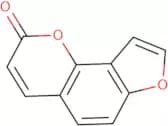
CAS:<p>Angelicin is a furanocoumarin compound, which is derived from various plant sources, particularly within the Apiaceae family. The source of angelicin is often linked to traditional medicinal plants, where it is extracted and subsequently isolated for scientific investigation. Angelicin's mode of action involves intercalating within DNA strands, thereby affecting transcription and replication processes. This action is understood to be primarily photoactivated, leading to the formation of covalent bonds with DNA upon exposure to ultraviolet light, which can result in cross-linking.</p>Fórmula:C11H6O3Pureza:Min. 95%Forma y color:PowderPeso molecular:186.16 g/molOroselol
CAS:<p>Oroselol is an innovative beta-adrenergic blocker, which is a synthetic derivative with unique cardiovascular targeting properties. It is sourced from engineered chemical synthesis, utilizing advanced molecular design to enhance selectivity for beta-adrenergic receptors. The mode of action of Oroselol involves competitive antagonism of beta-1 and beta-2 adrenergic receptors, leading to a decrease in heart rate and myocardial contractility. This blockade of adrenergic stimulation results in reduced cardiac output and lower blood pressure.</p>Fórmula:C14H12O4Pureza:Min. 95%Forma y color:PowderPeso molecular:244.24 g/molImperatorin
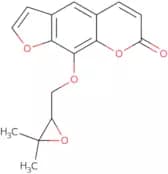
CAS:<p>Imperatorin is a furanocoumarin compound, which is a natural product primarily isolated from plants in the Apiaceae family, such as Angelica dahurica and Citrus species. This compound is characterized by its unique chemical structure that includes a furan ring fused to a coumarin backbone. Imperatorin exerts its biological activities through multiple modes of action, including the modulation of enzymatic activity, interference with cellular signaling pathways, and binding to specific biological targets.</p>Fórmula:C16H14O4Pureza:Min. 98 Area-%Forma y color:White PowderPeso molecular:270.28 g/mol(+/-)-Heraclenin
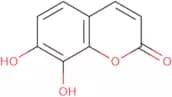
CAS:<p>(+/-)-Heraclenin is a naturally occurring coumarin, which is a class of organic compounds notable for diverse biological activities. This compound is primarily sourced from various plant species belonging to the family Apiaceae, such as Heracleum species. Coumarins like (+/-)-heraclenin are known for their ability to modify biological responses due to their chemical structure.</p>Fórmula:C16H14O5Pureza:Min. 98 Area-%Forma y color:PowderPeso molecular:286.28 g/mol7,8-Dihydroxycoumarin
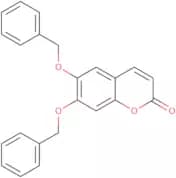
CAS:<p>7,8-Dihydroxycoumarin is a naturally occurring coumarin, which is derived from plants and certain fungi. It possesses a distinct chemical structure characterized by a benzopyrone core with hydroxyl groups at the 7th and 8th positions, contributing to its distinct biochemical properties. The mode of action of 7,8-Dihydroxycoumarin is largely attributed to its ability to act as a potent antioxidant, scavenging free radicals and chelating metal ions, thus mitigating oxidative stress at the cellular level.</p>Fórmula:C9H6O4Pureza:Min. 95%Forma y color:PowderPeso molecular:178.14 g/molEsculetin dibenzyl ether
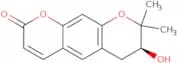
CAS:<p>Esculetin dibenzyl ether is a chemical compound, which is a derivative of esculetin, a natural coumarin obtained chiefly from plant sources such as the bark of horse chestnut and other similar species. The source of esculetin dibenzyl ether is typically synthesized from natural precursors through chemical modifications, allowing for the exploration of its structural analogs.</p>Fórmula:C23H18O4Pureza:Min. 95%Peso molecular:358.39 g/molDecursinol
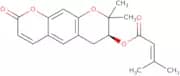
CAS:<p>Decursinol is a coumarin derivative, which is sourced from the roots of the plant Angelica gigas, commonly found in East Asia. The compound is recognized for its biochemical properties, specifically as a secondary metabolite in the umbelliferous family. Its mode of action involves the inhibition of key inflammatory pathways, notably through the suppression of pro-inflammatory cytokines and enzymes such as COX-2 and NF-κB. This molecular interaction effectively reduces inflammatory responses at the cellular level.</p>Fórmula:C14H14O4Pureza:Min. 98 Area-%Forma y color:White Off-White PowderPeso molecular:246.26 g/molEsculin sesquihydrate
CAS:<p>Fluorescent dye used in diagnostic culture media</p>Fórmula:C15H16O9•(H2O)1Pureza:(Uv) Min. 97.5%Forma y color:White Off-White PowderPeso molecular:367.31 g/molDecursin
CAS:<p>MAO inhibitor; neuro-protective and cognitive enhancement effects</p>Fórmula:C19H20O5Pureza:Min. 98 Area-%Forma y color:White PowderPeso molecular:328.36 g/mol(7-Amino-2-oxo-2H-chromen-4-yl)acetic acid
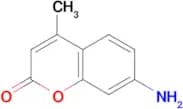
CAS:Fórmula:C11H9NO4Pureza:95%Forma y color:SolidPeso molecular:219.1967-Amino-4-methylcoumarin
CAS:Fórmula:C10H9NO2Pureza:96%Forma y color:Solid, Crystalline PowderPeso molecular:175.187Ref: 10-F017134
1g13,00€5g25,00€10g32,00€25g74,00€50g134,00€100g256,00€250g574,00€500g1.129,00€250mg9,00€Ethyl 7-hydroxy-2-oxo-2H-chromene-3-carboxylate
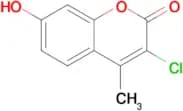
CAS:Fórmula:C12H10O5Pureza:98%Forma y color:SolidPeso molecular:234.2073-Chloro-7-hydroxy-4-methyl-2H-chromen-2-one
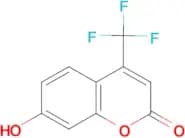
CAS:Fórmula:C10H7ClO3Pureza:98%Forma y color:Liquid, No data available.Peso molecular:210.617-Hydroxy-4-(trifluoromethyl)coumarin
CAS:Fórmula:C10H5F3O3Pureza:95%Forma y color:Solid, Light pink solidPeso molecular:230.1424-Chloro-3-nitro-2H-chromen-2-one
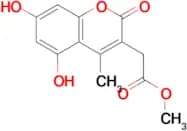
CAS:Fórmula:C9H4ClNO4Pureza:98%Forma y color:Liquid, No data available.Peso molecular:225.58methyl (5,7-dihydroxy-4-methyl-2-oxo-2H-chromen-3-yl)acetate
CAS:Fórmula:C13H12O6Pureza:97%Peso molecular:264.2337-(Diethylamino)-3-(1-methyl-1H-benzo[d]imidazol-2-yl)-2H-chromen-2-one
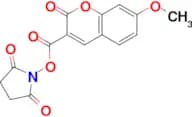
CAS:Fórmula:C21H21N3O2Pureza:98%Peso molecular:347.418Succinimidyl 7-methoxycoumarin-3-carboxylate
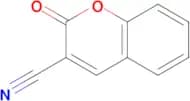
CAS:Fórmula:C15H11NO7Pureza:98%Forma y color:Solid, White to almost white powderPeso molecular:317.2532-oxo-2H-chromene-3-carbonitrile
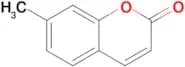
CAS:Fórmula:C10H5NO2Pureza:98%Forma y color:SolidPeso molecular:171.1557-Methyl-2H-chromen-2-one
CAS:Fórmula:C10H8O2Pureza:98%Forma y color:Solid, White to slightly pale yellow powderPeso molecular:160.172









![7-(Diethylamino)-3-(1-methyl-1H-benzo[d]imidazol-2-yl)-2H-chromen-2-one](/_next/image/?url=https%3A%2Fstatic.cymitquimica.com%2Fproducts%2F10%2Fthumb-webp%2FF339986.webp&w=3840&q=75)