Building Blocks
Subcategorías de "Building Blocks"
- Ácidos borónicos y derivados del ácido borónico(5.780 productos)
- Building Blocks quirales(1.241 productos)
- Building Blocks de hidrocarburos(6.100 productos)
- Building Blocks orgánicos(61.023 productos)
Se han encontrado 205289 productos de "Building Blocks"
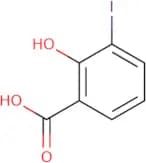
2-Hydroxy-3-iodobenzoic acid
CAS:2-Hydroxy-3-iodobenzoic acid is a carboxyl compound that has a radioactive form. It is stable in air and water, but can be oxidized by light or alkali. 2-Hydroxy-3-iodobenzoic acid can be used to synthesize the antiinflammatory drug salicylic acid. This drug is excreted in urine and feces as salicyluric acid. The metabolic pathway of 2-hydroxy-3-iodobenzoic acid includes oxidation and conjugation with glucuronic acid, which are the major routes of metabolism for salicylic acid.Fórmula:C7H5IO3Pureza:Min. 95%Peso molecular:264.02 g/molMebhydrolin
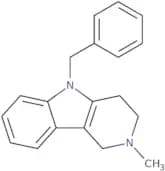
CAS:Mebhydrolin is a drug used to treat metabolic disorders and symptoms such as hyperglycemia, hyperlipidemia, and hyperuricemia. It is also used for the treatment of autoimmune diseases, such as rheumatoid arthritis. Mebhydrolin inhibits potassium dichromate-induced dopamine release in rat brain synaptosomes. The clinical relevance of this effect is not clear. Mebhydrolin has been shown to have no toxicological effects on the bowel and may be beneficial in bowel disease because it stimulates sodium citrate absorption. In addition, mebhydrolin has been shown to inhibit inflammatory bowel disease by blocking the 5HT3 receptor activity in animal studies.Fórmula:C19H20N2Pureza:Min. 95%Peso molecular:276.38 g/mol1-Methyl-3H,4H,9H-pyrido[3,4-b]indole
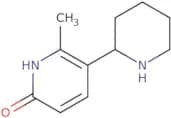
CAS:1-Methyl-3H,4H,9H-pyrido[3,4-b]indole (1MP) is a drug that belongs to the class of quinoline derivatives. It binds to the protein receptor in the cell membrane and has been shown to have high cytotoxicity. 1MP has been used in the treatment of cancer and inflammatory diseases. In addition, 1MP inhibits autophagy and lowers lipid levels, which may be due to its ability to inhibit the enzyme HMG-CoA reductase. This drug is also effective against Pseudomonas aeruginosa bacteria by binding to their cell membranes.
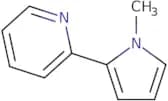
Fórmula:C12H12N2Pureza:Min. 95%Peso molecular:184.24 g/mol2-(1-Methyl-1H-pyrrol-2-yl)pyridine
CAS:2-(1-Methyl-1H-pyrrol-2-yl)pyridine is an acidic, pharmacokinetic, and reactive chemical. It is a postulated carcinogen that may also have neurotoxic effects. 2-(1-Methyl-1H-pyrrol-2-yl)pyridine has been shown to inhibit the synthesis of prostaglandin E2 in animals. The biochemical mechanism of inhibition is not yet known, but it may be due to the formation of reactive radicals such as pyrrole. This chemical can be metabolized into 2-(1-methylpyrrolidinium) sulfamate by microsomes in animals. The sulfamate form can also undergo diode reactions with other compounds.Fórmula:C10H10N2Pureza:Min. 95%Peso molecular:158.2 g/mol2,3-Dibromosuccinic acid
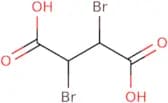
CAS:Triethyl orthoformate, or TEAO, is a chemical compound that is used in the synthesis of 2,3-dibromosuccinic acid. It is prepared by the reaction of ethyl bromoacetate and sodium hydroxide in an aqueous solution. The yield of the reaction depends on the reaction time and the concentration of sodium hydroxide in the solution. The product can be purified by distillation or recrystallization. Triethyl orthoformate may be used as an industrial solvent to dissolve epoxy resins. It is also commonly used as a reagent for organic synthesis reactions such as esterification and etherification reactions. In addition, it has been shown to have antibacterial properties against Staphylococcus aureus and Bacillus subtilis. Triethyl orthoformate is also involved in another chemical process: propiolic acid esterification with maleic anhydride in order toFórmula:HOOCCHBrCHBrCOOHPureza:Min. 95%Peso molecular:275.88 g/molD(-)-Tartaric acid
CAS:2,3-Dihydroxybutanedioic acid is a metabolite of pantothenic acid and is produced by the action of β-alanine dioxygenase on 2,3-dihydroxybutyric acid. It has been suggested that 2,3-dihydroxybutanedioic acid may be an important link in the biochemical pathway for calcium uptake and metabolism. This compound is structurally similar to tartrate, which is also used as a pH buffer and may be involved in the regulation of energy metabolism. There are no known inhibitors or activators of 2,3-dihydroxybutanedioic acid.Fórmula:C4H6O6Pureza:Min. 95%Peso molecular:150.09 g/molDecahydronaphthalen-1-ol
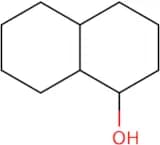
CAS:Decahydronaphthalen-1-ol is an organic solvent that is used to extract compounds from samples. It has a linear calibration curve and can be used on-line. Decahydronaphthalen-1-ol reacts with nitrogen atoms in the reaction intermediates, halogen compounds and supercritical carbon dioxide. Decahydronaphthalen-1-ol also has carboxylate, sulphonate, alicyclic and solid phase microextraction properties. Decahydronaphthalen-1-ol has functional groups such as chromatographic and viscosity. Decahydronaphthalen-1-ol is a liquid at room temperature with a boiling point of 68°C. The chemical formula for decahydronaphthalen-1-ol is C10H14O.Fórmula:C10H18OPureza:Min. 95%Peso molecular:154.25 g/molTroger’S
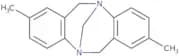
CAS:Troger’s is a fluorescent probe that can be used to measure the hydrogen bond in amines. It is synthesized by reacting trifluoroacetic acid with coumarin derivatives and an amine. Troger’s has been shown to have high fluorescence intensity and a wide spectral range (250-400 nm). The fluorescence intensity of Troger’s was found to be proportional to the concentration of amines. This probe has also been used as a skeleton for polymeric matrices, which are activated by nitrogen atoms. Activation energies for these polymer matrices have been found to be between 1-3 kcal/mol.
Fórmula:C17H18N2Pureza:Min. 95%Peso molecular:250.34 g/mol1,2,3,4-Tetrahydronaphthalen-2-ol
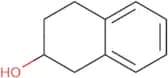
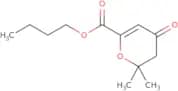
CAS:Tetrahydronaphthalen-2-ol is an electrochemical substance that is used in pharmaceutical dosage formulations. It has shown to have a significant effect on degenerative diseases such as Parkinson's disease and polycystic ovarian syndrome, and also possesses activity against pancreatic lipase. Tetrahydronaphthalen-2-ol is synthesized from 1,2,3,4-tetrahydronaphthalene by the reaction of hydroxyl group with the aromatic hydrocarbon. The synthesis reaction requires light exposure. This substance is also made up of a hydroxy group and an alkynyl group.Fórmula:C10H12OPureza:Min. 95%Peso molecular:148.21 g/molButopyronoxyl
CAS:Butopyronoxyl is a trifluoroacetate salt of butyronoxyl. Butyronoxyl is a growth factor that has been shown to be clinically relevant in the treatment of HIV infection and cancer. It also has potent anti-cancer activities, with the ability to inhibit tumor growth and induce apoptosis in cancer cells. The asymmetric synthesis of butyronoxyl is achieved through a one-pot reaction involving the condensation of 2-bromobutanoic acid with maleic anhydride followed by potassium carbonate-promoted hydrolysis. This compound can be obtained from natural sources such as fatty acids or plant extracts.Fórmula:C12H18O4Pureza:Min. 95%Peso molecular:226.27 g/mol[2-(1,3-Dioxaindan-5-yl)ethyl](methyl)amine hydrochloride
CAS:Producto controladoVersatile small molecule scaffold
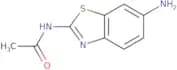
Fórmula:C10H14ClNO2Pureza:Min. 95%Peso molecular:215.67 g/molN-(6-Aminobenzothiazol-2-yl)acetamide
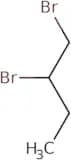
CAS:N-(6-Aminobenzothiazol-2-yl)acetamide is a cyclic molecule that has both optical and electron transfer properties. It is an efficient inhibitor of the enzyme, benzene, which catalyzes the oxidation of benzene to benzoquinone. This compound can be synthesized using a number of techniques, including cyclization by reaction with acetamide. The molecule is a semiconductor with potentiodynamic polarization properties in the region of visible light. This property is useful for optical absorption spectroscopy and voltammetry experiments. Inhibition efficiency can be determined spectroscopically or by kinetic experiments such as measuring the rate of electron transfer between the inhibitor and substrate. The morphology of N-(6-aminobenzothiazol-2-yl)acetamide crystals can be studied using techniques such as X-ray diffraction or scanning electron microscopy.Fórmula:C9H9N3OSPureza:Min. 95%Peso molecular:207.26 g/mol1,2-Dibromobutane
CAS:1,2-Dibromobutane is an organic compound. It has a molecular weight of 104.19 and chemical formula of C4H8Br2. The dibromide ion is a bidentate ligand that binds metal ions by two oxygen atoms to form coordination complexes. 1,2-Dibromobutane has been shown to have antiviral activity against the hepatitis virus, including the NS3 protease enzyme. In addition, it inhibits the human serine protease trypsin in its activated state, which may be due to its ability to bind to the reactive site on the serine protease molecule. 1,2-Dibromobutane also possesses radiation energy and has been used as a radiopharmaceutical for diagnosing liver cancer.Fórmula:C4H8Br2Pureza:Min. 95%Peso molecular:215.92 g/mol2-[4-Fluoro-3-(trifluoromethyl)phenyl]propan-2-ol
CAS:Versatile small molecule scaffoldFórmula:C10H10F4OPureza:Min. 95%Peso molecular:222.18 g/molDNOC
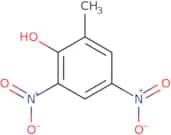
CAS:Producto controladoDNOC is a chemical compound that inhibits photosynthesis in plants. It is used as an analytical chemistry reagent for determining the total chlorophyll content and for determining the amino acid composition of proteins. DNOC has been shown to be genotoxic in testicular cells, but not in other cell types. It also has tryptophan fluorescence properties that indicate it can be taken up by plant roots. DNOC reacts with malonic acid to produce reactive oxygen species (ROS), which are the likely cause of its genotoxic activity. The reaction mechanism is not well understood, but it is thought to involve oxidation of DNOC to form a dinitroso-DNOC radical cation, which reacts with malonic acid to form ROS.Fórmula:C7H6N2O5Pureza:Min. 95%Peso molecular:198.13 g/mol5-Amino-1,3-thiazole-2-carbothioamide
CAS:5-Amino-1,3-thiazole-2-carbothioamide (5ATC) is a liquid that is soluble in organic solvents. It has been used as a starting material for the synthesis of other compounds. 5ATC can be prepared by the reaction of ethyl acetoacetate with an acid chloride and a base such as pyridine. The reaction is heated to reflux for about 2 hours in an organic solvent, such as chloroform or benzene, followed by cooling to room temperature. It can also be prepared from an amide and hydrogen chloride gas in the presence of pyridine. This synthesis requires manual stirring at room temperature for 12 hours. 5ATC can be purified by recrystallization from water or ether.
Fórmula:C4H5N3S2Pureza:Min. 95%Peso molecular:159.2 g/mol4-Isopropylbenzyl Alcohol
CAS:4-Isopropylbenzyl Alcohol is a hydroxyl compound that is an intermediate in the synthesis of glycol ethers. It has been shown to inhibit the growth of some microbes, such as methicillin-resistant Staphylococcus aureus (MRSA), and also to have anti-inflammatory properties. 4-Isopropylbenzyl Alcohol has been used as an additive in skin creams, where it acts as an antimicrobial agent. It has also been found to be effective against infectious diseases caused by virus and bacteria, including HIV, herpes simplex virus, and influenza virus. 4-Isopropylbenzyl Alcohol is not active against fungi or protozoa.Fórmula:C10H14OPureza:Min. 95%Peso molecular:150.22 g/mol2,2,2-Trifluoroethyl N-(4-methoxyphenyl)carbamate
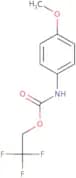
CAS:Versatile small molecule scaffoldFórmula:C10H10F3NO3Pureza:Min. 95%Peso molecular:249.19 g/mol4,4™-Azodianiline
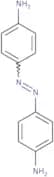
CAS:4,4′-Azodianiline is a chemical compound that belongs to the group of azobenzenes. It is synthesized by reacting 4,4′-diaminodiphenylmethane with hydrochloric acid. This reaction produces a mixture of products. The main product is 4,4′-azodianiline and it also contains a small amount of 2,2′-azobenzene and 4,4′-diaminodiphenylmethane. The azobenzenes have optical properties that make them suitable for use in dyes or as photochromic agents. They absorb light in the ultraviolet range and convert it into visible light. Azobenzenes are used in some prescription eye drops to control inflammation and reduce pain caused by ocular allergies or injuries. These compounds are also used as photographic developers to produce color images on film.Fórmula:C12H12N4Pureza:Min. 95%Peso molecular:212.25 g/mol1-Pentylbenzene
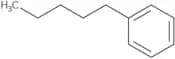
CAS:1-Pentylbenzene is a nonpolar solvent that is used in the production of polymers and plastics. It can also be used as an intermediate in the synthesis of other compounds. 1-Pentylbenzene has been shown to have a hydrophilic interaction chromatography (HILIC) retention time of 18 minutes, which means it is soluble in water. This chemical is toxic to humans and causes liver damage when ingested or inhaled. 1-Pentylbenzene may also react with hydrochloric acid under certain conditions to produce cyclohexane ring, a metabolite that reacts with hydroxyl group to form phenols and chlorohydrins, which are toxic substances. 1-Pentylbenzene has been shown to inhibit cell growth in human lung cancer cells HL-60 by inhibiting protein synthesis through the inhibition of peptide hormones such as insulin and glucagon. The mechanism for this inhibition may be due to itsFórmula:C11H16Pureza:Min. 95%Peso molecular:148.24 g/mol

![1-Methyl-3H,4H,9H-pyrido[3,4-b]indole](/_next/image/?url=https%3A%2Fstatic.cymitquimica.com%2Fproducts%2F3D%2Fthumb-webp%2FAAA52541.webp&w=3840&q=75)
amine hydrochloride](/_next/image/?url=https%3A%2Fstatic.cymitquimica.com%2Fproducts%2F3D%2Fthumb-webp%2FAAA53310.webp&w=3840&q=75)
![2-[4-Fluoro-3-(trifluoromethyl)phenyl]propan-2-ol](/_next/image/?url=https%3A%2Fstatic.cymitquimica.com%2Fproducts%2F3D%2Fthumb-webp%2FAAA53439.webp&w=3840&q=75)