Alcoholes
Subcategorías de "Alcoholes"
Se han encontrado 5818 productos de "Alcoholes"
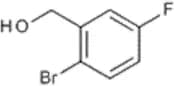
2-Bromo-5-fluorobenzyl alcohol
CAS:2-Bromo-5-fluorobenzyl alcohol is a synthetic organoboron compound that can be used in the synthesis of other compounds. It has been shown to have a thermal expansion coefficient of 0.038 x 10^-6 K, which is an intermediate value for organic materials. The two polymorphic forms are monoclinic (space group P2/c) and hexagonal (P63). When 2-bromo-5-fluorobenzyl alcohol is irradiated with microwaves and magnetic fields, it undergoes anisotropic expansion, which suggests that intermolecular interactions are important in this phenomenon. This material has been shown to exhibit antifungal properties.
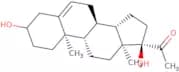
Fórmula:C7H6BrFOPureza:Min. 95%Forma y color:PowderPeso molecular:205.02 g/mol17alpha-Hydroxypregnenolone
CAS:Producto controlado17alpha-Hydroxypregnenolone is a steroid hormone that has been shown to have effects on the metabolism of lipids, glucose and protein. This compound is synthesized from progesterone by the enzyme 17alpha-hydroxylase and is converted to 17beta-hydroxyprogesterone by the enzyme 17,20 lyase. It has been shown to have an effect on body mass index in humans and model organisms such as mice. The tissue culture studies showed that 17alpha-Hydroxypregnenolone led to an increase in serum bile acids. In adrenocortical carcinoma cell lines, this compound was found to inhibit the growth of cancer cells through inhibition of DNA synthesis and protein synthesis through inhibition of RNA polymerase II activity. It also inhibits infectious diseases by decreasing virus production and increasing the production of interferon alpha. When synthesized for use in experimental models, this compound can be used as a marker for metabolic disorders or cation
Fórmula:C21H32O3Pureza:Min. 95%Forma y color:White PowderPeso molecular:332.48 g/mol4-(Hydroxymethyl)cyclohexanol
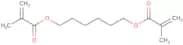
CAS:4-(Hydroxymethyl)cyclohexanol is a versatile building block that can be used in the synthesis of complex compounds. This chemical has been shown to have a high degree of purity and is a useful intermediate or reaction component for many different reactions. It is also an excellent scaffold for synthesizing other organic molecules.Fórmula:C7H14O2Pureza:Min. 95%Forma y color:Clear To White To Off-White SolidPeso molecular:130.18 g/mol1,6-Hexanediol dimethacrylate - stabilized with MEHQ
CAS:1,6-Hexanediol dimethacrylate - stabilized with MEHQ is a reactive chemical that is used to generate light-sensitive particles. The light exposure of these particles causes them to react and form new bonds, which can be exploited for various applications. 1,6-Hexanediol dimethacrylate - stabilized with MEHQ has been shown to cause genotoxic effects in primary cells and cell nuclei, as well as radiation-induced DNA damage in human fibroblast cells. It has also been shown to interfere with the replication of DNA in human cancer cells. This agent is chemically similar to other known carcinogens such as allyl carbonate and benzene.Fórmula:C14H22O4Pureza:Min. 95%Forma y color:Clear LiquidPeso molecular:254.32 g/mol[4-(Aminomethyl)cyclohexyl]methanol
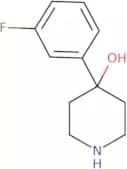
CAS:4-(Aminomethyl)cyclohexyl]methanol is a dicarboxylic acid and ester with the chemical formula CH2=C(CH3)(CO2H). It is used to synthesize polycarbonates, which are polyesters that contain carbonate groups. 4-(Aminomethyl)cyclohexyl]methanol has two carboxyl groups and one hydroxyl group that can react with trimellitic anhydride to form polycarbonates. Polycarbonate is a polymer that contains bisphenol A, which is the building block of many plastics and resins. 4-(Aminomethyl)cyclohexyl]methanol can be used as a monomer in the synthesis of polyesters and copolymers.Fórmula:C8H17NOPureza:Min. 95%Forma y color:Beige PowderPeso molecular:143.23 g/mol4-(3-Fluorophenyl)-4-piperidinol
CAS:4-(3-Fluorophenyl)-4-piperidinol is a useful chemical intermediate that can be used as a versatile building block in organic synthesis. It can be used as a reaction component and can serve as a speciality chemical, complex compound, or reagent. 4-(3-Fluorophenyl)-4-piperidinol has been identified by the Chemical Abstracts Service (CAS) number 80119-54-6. This product is of high quality and is not harmful to humans.Fórmula:C11H14FNOPureza:Min. 95%Forma y color:Orange PowderPeso molecular:195.23 g/mol2-(2-Chlorophenyl)ethanol
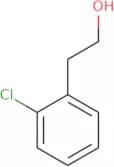
CAS:2-(2-Chlorophenyl)ethanol is a chemical used to synthesize aldehydes and fatty acids. It is also used to validate the purity of products, such as bulk drugs. 2-(2-Chlorophenyl)ethanol can be found in solvents, impurities, and chlorobenzene. It is not recommended for use at temperatures above 50°C or below -10°C. This chemical should not be left in contact with plastic or rubber tubing for extended periods of time because it may cause discoloration or cracking. 2-(2-Chlorophenyl)ethanol is not radioactive, but it may become so after irradiation.
2-(2-Chlorophenyl)ethanol can be found in solvents, impurities, and chlorobenzene. It is not recommended for use at temperatures above 50°C or below -10°C. This chemical should not be left in contact with plastic orFórmula:C8H9ClOPureza:Min. 95%Peso molecular:156.61 g/molDeoxynivalenol
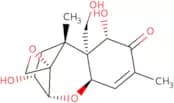
CAS:Deoxynivalenol is a mycotoxin that is produced by the fungi Fusarium graminearum and F. culmorum. It produces toxic effects in humans and animals, including human immunoglobulin E (IgE) production, acute toxicities, and cytotoxic effects on cultured human leukocytes. The analytical method for deoxynivalenol detection includes a variety of in vitro methods such as enzyme-linked immunosorbent assays (ELISA), competitive ELISA, fluorescent antibody staining assay, fluorescence polarization immunoassay (FPIA), competitive FPIA, and high performance liquid chromatography (HPLC). Deoxynivalenol binds to dna with high affinity and has been shown to have fusarial activity. The toxicity of deoxynivalenol can be confirmed by the mitochondrial membrane potential assay or by the assessment of vomitoxin levels. Colloidal gold can be used for identification of deox
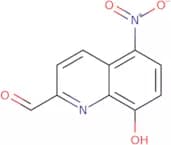
Fórmula:C15H20O6Pureza:Min. 95%Forma y color:White PowderPeso molecular:296.32 g/mol8-Hydroxy-5-nitroquinoline-2-carbaldehyde
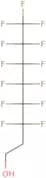
CAS:8-Hydroxy-5-nitroquinoline-2-carbaldehyde is a high quality, versatile building block that can be used as a reaction intermediate or to synthesize heterocycles. It is also a useful scaffold for the synthesis of complex compounds. The CAS number of this chemical is 884497-63-6.Fórmula:C10H6N2O4Pureza:Min. 95%Forma y color:PowderPeso molecular:218.17 g/mol1H,1H,2H,2H-Tridecafluoro-1-n-octanol
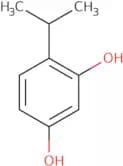
CAS:1H,1H,2H,2H-Tridecafluoro-1-n-octanol is a potent and selective halogenated hydrocarbon. It binds to DNA at the dinucleotide phosphate site, which is an important site for polymerase chain reaction (PCR) activation. 1HFN has been shown to be more effective than other halogenated hydrocarbons in vitro assays on rat liver microsomes. It has been used as an additive in wastewater treatment to remove organic contaminants and metal ions. In vivo studies have been carried out in CD-1 mice to determine the effects of 1HFN on the liver and kidneys; these studies showed no toxicological effects on these organs. 1HFN also has been shown to inhibit enzymes such as cytochrome P450 and monoamine oxidase B that are involved in drug metabolism and may lead to adverse reactions with drugs metabolized by these enzymes.Fórmula:C8H5F13OPureza:Min. 95%Peso molecular:364.1 g/mol4-Isopropylresorcinol
CAS:4-Isopropylresorcinol or 4-Isopropylbenzene-1,3-diol belongs to the family of alkylresorcinol. It is a synthetic molecule that has been shown to reduce tumor size and inhibit cancer cell growth in vitro and in vivo. It also inhibits the expression of heat shock protein (Hsp90), which is highly expressed in most tumor cells. A study done on human lung cancer cell lines showed that 4-isopropylresorcinol inhibited the growth of xenograft tumors with no side effects, by enhancing the sensitivity of lung cancer cells to photodynamic therapy, and arrests non-small cell lung cancer cells in the G1 phase with an associated increase in apoptosis. It also induces efflux transporters in tumor cells, which leads to a time-dependent pharmacokinetics.
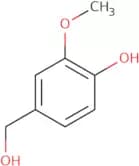
Fórmula:C9H12O2Pureza:Min. 98 Area-%Forma y color:White Off-White PowderPeso molecular:152.19 g/molVanillyl alcohol
CAS:Vanillyl alcohol is a vanillin derivative that exhibits strong antibacterial activity. It can be used in the food industry as a natural preservative, and it has synergic effects with eugenol. Vanillyl alcohol shows antimicrobial properties against Gram-positive and Gram-negative bacteria, including Staphylococcus aureus, Pseudomonas aeruginosa, Escherichia coli, and Enterococcus faecalis. Vanillyl alcohol exhibits synergic effects with eugenol. In vivo models show that vanillyl alcohol is not toxic to humans, but it may be toxic to wild-type strains of bacteria.Fórmula:C8H10O3Pureza:Min. 98 Area-%Forma y color:White PowderPeso molecular:154.16 g/mol3-Methyl-2-hydroxy-3H-imidazo[4,5-f]quinoline
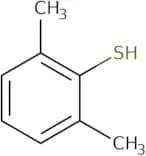
CAS:3-Methyl-2-hydroxy-3H-imidazo[4,5-f]quinoline is a high quality reagent that can be used as an intermediate or building block in the synthesis of other compounds. It is a fine chemical with CAS No. 144486-08-8 and can be used as a speciality chemical in research. This compound has versatile building blocks that are useful in reactions and have been shown to be a reaction component in the synthesis of various compounds.Fórmula:C11H9N3OPureza:Min. 95%Forma y color:Yellow PowderPeso molecular:199.21 g/mol2,6-Dimethylthiophenol
CAS:2,6-Dimethylthiophenol is a structural analog of the natural product sumatrana. It has been shown to be an effective catalyst for the cleavage of carbon-carbon bonds in organic molecules and fatty acids. 2,6-Dimethylthiophenol is unique because it contains two sulfur atoms that are part of a thiolate group, which can easily be oxidized to a sulfoxide or sulfone. This property makes 2,6-dimethylthiophenol an excellent reductant in reactions that require a metallacycle intermediate. The reactivity of this molecule is also influenced by its redox potential and the presence of nitrogen atoms. 2,6-Dimethylthiophenol was synthesized and studied using model compounds, yielding reaction yields as high as 98%.
Fórmula:C8H10SPureza:Min. 95 Area-%Forma y color:Clear LiquidPeso molecular:138.23 g/molPiperonyl alcohol
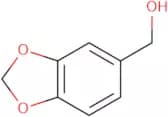
CAS:Producto controladoPiperonyl alcohol is an enzyme inhibitor that blocks the oxidation of piperonal, a chemical found in many plants and fruits. It has been used as a pharmaceutical preparation to treat skin conditions such as acne and psoriasis. Piperonyl alcohol can be used in food composition as a preservative and antioxidant. This compound is also used in the production of polymers for paints, plastics, and rubber. Piperonyl alcohol inhibits melanogenesis by inhibiting tyrosinase activity and interrupting the synthesis of melanin. The use of this compound to inhibit melanin synthesis has been approved for cosmetic use in Europe. Piperonyl alcohol was first synthesized by Ludwig Knorr in 1885 from piperonal, an aromatic organic compound found in many plants and fruits. The reaction solution obtained from the hydrolysis of piperonyl acetate with hydrochloric acid is reacted with cationic polymerization using sodium carbonate (NaCO) as a catalyst to produceFórmula:C8H8O3Pureza:Min. 95%Forma y color:PowderPeso molecular:152.15 g/mol2-Chlorobenzyl alcohol
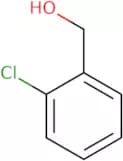
CAS:2-Chlorobenzyl alcohol is a chemical compound that is used to synthesize other compounds. It is produced by the reaction of ethyl formate and hydrogen chloride in a reaction vessel. It reacts with benzoates to produce 2-chlorobenzoates, which are used as intermediates in the synthesis of pharmaceuticals. Hydroxyl groups can react with hydrogen fluoride to produce hydrofluoric acid, which is used as an industrial solvent. 2-Chlorobenzyl alcohol also reacts with hydroxide ions to produce ethylene glycol, which is used in making polyester fibers and plastics. This chemical compound has structural studies that show it has a proton and two hydroxyl groups that can react with hydrogen bond. Hydrogen bonds are important for the stability of DNA structures. The molecular structures of velvetleaf plants contain 2-chlorobenzyl alcohol, which may be due to its role in transferring oxygen from leaves to roots for respiration during
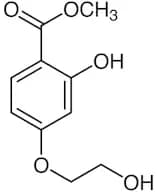
Fórmula:C7H7ClOPureza:Min. 95%Forma y color:PowderPeso molecular:142.58 g/molMethyl 4-(2-Hydroxyethoxy)salicylate
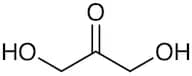
Fórmula:C10H12O5Pureza:>98.0%(GC)Forma y color:White to Light yellow to Light orange powder to crystalPeso molecular:212.201,3-Dihydroxyacetone
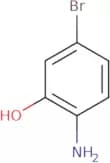
CAS:Fórmula:C3H6O3Pureza:>97.0%(GC)Forma y color:White to Almost white powder to crystalPeso molecular:90.082-Amino-5-bromophenol
CAS:2-Amino-5-bromophenol is a chemical that is used as a substrate in the study of intracellular Ca2+ levels. 2-Amino-5-bromophenol can also be used to study the activity of microperoxidases, enzymes that are involved in the metabolism of hydrogen peroxide and organic hydroperoxides. 2-Amino-5-bromophenol has been shown to have anticancer activity against MCF7 cells, an estrogen receptor positive cell line. The anticancer activity may be due to the inhibition of protein synthesis by 2-amino-5-bromophenol binding to DNA. This binding prevents transcription and translation of genes that code for proteins involved in cancer cell proliferation and survival.Fórmula:C6H6BrNOPureza:Min. 95%Forma y color:Off-White To Brown SolidPeso molecular:188.02 g/mol3-Aminoquinoline
CAS:3-Aminoquinoline is a chemical compound that inhibits the activity of the epidermal growth factor receptor (EGFR). It is a potent inhibitor of cell proliferation and has been shown to have antitumour activity. 3-Aminoquinoline has been shown to inhibit the proliferation of carcinoma cell lines. This drug binds to the EGFR receptor, preventing it from activating downstream signalling pathways that control cell growth. 3-Aminoquinoline also has biological properties, including matrix-assisted laser desorption/ionization time-of-flight mass spectrometry, analytical chemistry, sample preparation, and Suzuki coupling reaction. The molecule is structurally analyzed using chemical structures and structural analysis techniques such as thermodynamic data or proton NMR spectroscopy. 3-Aminoquinoline also interacts with sugars through hydrogen bonding and oligosaccharides. These interactions are found to be high in value in some cases.
Fórmula:C9H8N2Pureza:Min. 95%Forma y color:White PowderPeso molecular:144.17 g/mol3-Benzyloxy-1-propanol
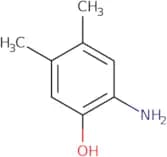
CAS:3-Benzyloxy-1-propanol is a desymmetrization agent that catalyzes the conversion of esters to ketones and amides to alcohols. It is also an asymmetric synthesis reagent that converts (S)-2,3-diaminopropionic acid into (R)-2,3-diaminopropionic acid. 3-Benzyloxy-1-propanol has been shown to be a useful tool in the synthesis of amines with functional groups such as carbonyl or hydroxyl. Furthermore, 3-benzyloxy-1-propanol can be used to form bonds between two different molecules by cleaving one bond and forming two new ones. It is also capable of mediating bond cleavage, which can lead to the formation of free radicals.Fórmula:C10H14O2Pureza:Min. 95%Forma y color:LiquidPeso molecular:166.22 g/mol2-Amino-4,5-dimethylphenol
CAS:2-Amino-4,5-dimethylphenol is a compound that exhibits anticancer activity. It is an arylimine that has been shown to inhibit the proliferation of cancer cells in vitro and in vivo. The mechanism of action is not fully understood, but it is believed that 2-amino-4,5-dimethylphenol may act as a nucleophile in reverse Michael addition reactions with electrophiles. This compound also has been shown to be potent against some cancer cell lines and to induce apoptosis through caspase activation. 2-Amino-4,5-dimethylphenol interacts with aminophenols in vitro, forming supramolecular complexes that are cytotoxic to cancer cells.
Fórmula:C8H11NOPureza:Min. 95%Forma y color:Brown SolidPeso molecular:137.18 g/mol4-Mercaptobenzyl alcohol, 90%
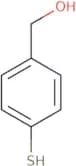
CAS:4-Mercaptobenzyl alcohol (MBBA) is a bifunctional molecule that can act as an electron donor and electron acceptor. It has been shown to have proapoptotic activity, which may be due to its ability to interact with cellular components and induce DNA damage. MBBA has also been shown to inhibit the growth of bacteria by attacking their cell walls and inhibiting their ability to synthesize proteins. The antibacterial activity of MBBA was found to be enhanced on metal surfaces, such as aluminum and copper, which are commonly used in cancer therapy equipment or for antimicrobial resistance. MBBA also has diagnostic properties, which can be used for the detection of cancer cells or bacterial infections.
MBBA is absorbed into cells through the carboxylate groups on the surface of the cell membrane. Electrons are then transferred from the molecule to the cell's electron transport chain, thereby increasing ATP production and inducing apoptosis in cancer cells.Fórmula:C7H8OSPureza:Min. 90%Forma y color:Off-White PowderPeso molecular:140.2 g/mol3-Methoxyphenylmethylcarbinol
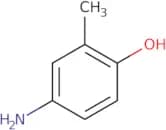
CAS:3-Methoxyphenylmethylcarbinol is a hydrogen tartrate that can be used as an intermediate in the Friedel-Crafts reaction. It is also an imine, which is formed when a nitrogen atom of an amine reacts with a carbon atom of formaldehyde. 3-Methoxyphenylmethylcarbinol has been shown to have stereoselective properties in the Friedel-Crafts reaction, which means that only one product is produced from two reactants. In this case, the hydrogen tartrate and phosphorus oxychloride are reacted to produce oxone and chloride compounds. The selectivity of 3-methoxyphenylmethylcarbinol can be increased by adding triphosgene or dimethylamine to the reaction mixture. This compound dissociates easily into its component parts and can be regenerated by adding ethyl formate or ferrocene.Fórmula:C9H12O2Pureza:Min. 95%Forma y color:PowderPeso molecular:152.19 g/mol4-Amino-2-methylphenol
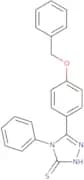
CAS:4-Amino-2-methylphenol is a chemical substance that is used in the production of dyes, cationic surfactants, and basic dyes. It can be produced through oxidation of phenol or by dehydration of aniline. 4-Amino-2-methylphenol has been shown to have potential use as a surface enhancer for Raman spectroscopy. This compound has also been used to extract amines and ethers from organic solvents.Fórmula:C7H9NOPureza:Min. 95%Forma y color:SolidPeso molecular:123.15 g/mol4-phenyl-5-(4-(benzyloxy)phenyl)-1,2,4-triazole-3-thiol
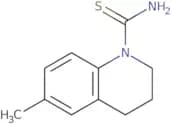
CAS:Please enquire for more information about 4-phenyl-5-(4-(benzyloxy)phenyl)-1,2,4-triazole-3-thiol including the price, delivery time and more detailed product information at the technical inquiry form on this pageFórmula:C21H17N3OSPureza:Min. 95%Forma y color:PowderPeso molecular:359.44 g/molAmino(6-methyl(1,2,3,4-tetrahydroquinol-1-yl))methane-1-thione
CAS:Please enquire for more information about Amino(6-methyl(1,2,3,4-tetrahydroquinol-1-yl))methane-1-thione including the price, delivery time and more detailed product information at the technical inquiry form on this pagePureza:Min. 95%2-[(3-Phenoxyphenyl)methylene]-2H-1,4-benzothiazin-3(4H)-one
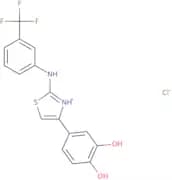
CAS:Please enquire for more information about 2-[(3-Phenoxyphenyl)methylene]-2H-1,4-benzothiazin-3(4H)-one including the price, delivery time and more detailed product information at the technical inquiry form on this pageFórmula:C21H15NO2SPureza:Min. 95%Forma y color:Powder4-(4-((3-(trifluoromethyl)phenyl)amino)-3,5-thiazolyl)benzene-1,2-diol, hydrochloride
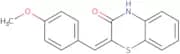
CAS:Please enquire for more information about 4-(4-((3-(trifluoromethyl)phenyl)amino)-3,5-thiazolyl)benzene-1,2-diol, hydrochloride including the price, delivery time and more detailed product information at the technical inquiry form on this pageFórmula:C16H11F3N2O2S·ClHPureza:Min. 95%Forma y color:PowderPeso molecular:388.79 g/mol3-((4-Methoxyphenyl)methylene)-1,4-dihydro-4-thiaquinolin-2-one
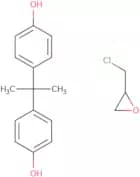
CAS:Please enquire for more information about 3-((4-Methoxyphenyl)methylene)-1,4-dihydro-4-thiaquinolin-2-one including the price, delivery time and more detailed product information at the technical inquiry form on this pageFórmula:C16H13NO2SPureza:Min. 95%Forma y color:PowderPeso molecular:283.35 g/molPoly(bisphenol-A-co-epichlorohydrin)
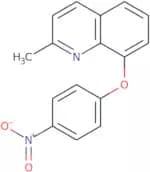
CAS:Poly(bisphenol-A-co-epichlorohydrin) is an epoxy polymer that reacts with a fatty acid to form a cationic polymer. It has a high resistance to thermal expansion and inorganic acids, making it a good sealant. In addition, poly(bisphenol-A-co-epichlorohydrin) is insoluble and not reactive, which makes it resistant to structural analysis. Poly(bisphenol-A-co-epichlorohydrin)'s thermal stability also makes it suitable for use as a boron nitride coating on zirconium oxide.Pureza:(%) Min. 60%Forma y color:Clear LiquidPeso molecular:1.15 g/mol4-(2-methyl(8-quinolyloxy))-1-nitrobenzene
CAS:Please enquire for more information about 4-(2-methyl(8-quinolyloxy))-1-nitrobenzene including the price, delivery time and more detailed product information at the technical inquiry form on this page
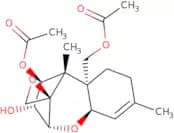
Pureza:Min. 95%Diacetoxyscirpenol
CAS:Producto controladoDiacetoxyscirpenol is a mycotoxin that is found in wastewater and has been shown to have the ability to inhibit certain enzyme activities. It is a glucuronide conjugate that is excreted by humans, and can be detected in urine samples. The metabolite of Diacetoxyscirpenol, 4-hydroxy-2,3-dihydroxymethyl-5-(2H)-furanone (4OH-DMF), has been shown to induce antibody response in mice. The LC-MS/MS method for detecting Diacetoxyscirpenol uses a monoclonal antibody that recognizes the toxin. This antibody binds to the toxin and activates an enzyme cascade that leads to the production of a fluorescent dye. The intensity of fluorescence can be quantified using fluorometry or spectrophotometry. /nowiki>/pre>Fórmula:C19H26O7Pureza:Min. 95%Peso molecular:366.41 g/molEthyl 4-oxo-7-(benzyloxy)hydroquinoline-3-carboxylate
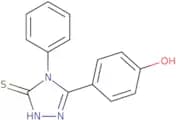
CAS:Please enquire for more information about Ethyl 4-oxo-7-(benzyloxy)hydroquinoline-3-carboxylate including the price, delivery time and more detailed product information at the technical inquiry form on this pagePureza:Min. 95%4-(5-Phenyl-4-thioxo-2,3,5-triazolinyl)phenol
CAS:Please enquire for more information about 4-(5-Phenyl-4-thioxo-2,3,5-triazolinyl)phenol including the price, delivery time and more detailed product information at the technical inquiry form on this pageFórmula:C14H11N3OSPureza:Min. 95%Forma y color:PowderPeso molecular:269.32 g/mol2-Chloro-1-(6-methyl(1,2,3,4-tetrahydroquinolyl))propan-1-one
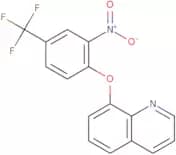
Please enquire for more information about 2-Chloro-1-(6-methyl(1,2,3,4-tetrahydroquinolyl))propan-1-one including the price, delivery time and more detailed product information at the technical inquiry form on this pagePureza:Min. 95%2-Nitro-1-(8-quinolyloxy)-4-(trifluoromethyl)benzene
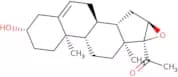
CAS:Please enquire for more information about 2-Nitro-1-(8-quinolyloxy)-4-(trifluoromethyl)benzene including the price, delivery time and more detailed product information at the technical inquiry form on this pageFórmula:C16H9F3N2O3Pureza:Min. 95%Forma y color:PowderPeso molecular:334.25 g/mol16α,17α-Epoxypregnenolone
CAS:16alpha,17alpha-Epoxypregnenolone is a synthetic insect odorant that binds to the odorant binding protein (OBP) and has been used in research to investigate the relationship between odorant binding and olfaction. The OBPs are thought to play an important role in the detection of odors by binding to specific odorants, which then initiate a sensory response. 16alpha,17alpha-Epoxypregnenolone has also been shown to bind with recombinant OBP and have fluorescence properties, making it useful for biosensors. This compound may be useful as an experimental or research tool for investigating olfactory receptors in insects or other organisms.
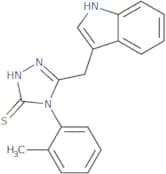
Fórmula:C21H30O3Pureza:Min. 95%Peso molecular:330.47 g/mol5-(indol-3-ylmethyl)-4-(2-methylphenyl)-1,2,4-triazole-3-thiol
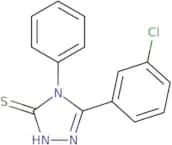
CAS:Please enquire for more information about 5-(indol-3-ylmethyl)-4-(2-methylphenyl)-1,2,4-triazole-3-thiol including the price, delivery time and more detailed product information at the technical inquiry form on this pageFórmula:C18H16N4SPureza:Min. 95%Forma y color:PowderPeso molecular:320.41 g/mol5-(3-Chlorophenyl)-4-phenyl-4H-1,2,4-triazole-3-thiol
CAS:Please enquire for more information about 5-(3-Chlorophenyl)-4-phenyl-4H-1,2,4-triazole-3-thiol including the price, delivery time and more detailed product information at the technical inquiry form on this pageFórmula:C14H10ClN3SPureza:Min. 95%Forma y color:PowderPeso molecular:287.77 g/mol1-(2-Methyl(8-quinolyloxy))-2-nitro-4-(trifluoromethyl)benzene
CAS:Please enquire for more information about 1-(2-Methyl(8-quinolyloxy))-2-nitro-4-(trifluoromethyl)benzene including the price, delivery time and more detailed product information at the technical inquiry form on this pagePureza:Min. 95%3-(4-Bromophenyl)-5-(hydroxyimino)-7,7-dimethyl-6,7,8-trihydrocinnoline
CAS:Please enquire for more information about 3-(4-Bromophenyl)-5-(hydroxyimino)-7,7-dimethyl-6,7,8-trihydrocinnoline including the price, delivery time and more detailed product information at the technical inquiry form on this page
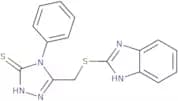
Fórmula:C16H16BrN3OPureza:Min. 95%Forma y color:PowderPeso molecular:346.22 g/mol5-(Benzimidazol-2-ylthiomethyl)-4-phenyl-1,2,4-triazole-3-thiol
CAS:Please enquire for more information about 5-(Benzimidazol-2-ylthiomethyl)-4-phenyl-1,2,4-triazole-3-thiol including the price, delivery time and more detailed product information at the technical inquiry form on this pageFórmula:C16H13N5S2Pureza:Min. 95%Forma y color:PowderPeso molecular:339.44 g/mol4-Phenyl-5-(2-thienyl)-4H-1,2,4-triazole-3-thiol
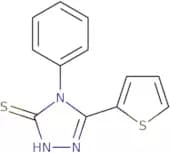
CAS:Please enquire for more information about 4-Phenyl-5-(2-thienyl)-4H-1,2,4-triazole-3-thiol including the price, delivery time and more detailed product information at the technical inquiry form on this pageFórmula:C12H9N3S2Pureza:Min. 95%Forma y color:PowderPeso molecular:259.35 g/mol((4-Chlorophenyl)sulfonyl)-8-quinolylamine
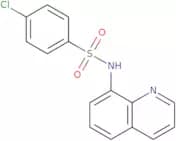
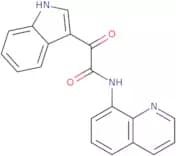
CAS:Please enquire for more information about ((4-Chlorophenyl)sulfonyl)-8-quinolylamine including the price, delivery time and more detailed product information at the technical inquiry form on this pageFórmula:C15H11ClN2O2SPureza:Min. 95%Forma y color:PowderPeso molecular:318.78 g/mol2-Indol-3-yl-2-oxo-N-(8-quinolyl)ethanamide
CAS:Please enquire for more information about 2-Indol-3-yl-2-oxo-N-(8-quinolyl)ethanamide including the price, delivery time and more detailed product information at the technical inquiry form on this page
Fórmula:C19H13N3O2Pureza:Min. 95%Forma y color:PowderPeso molecular:315.33 g/mol[1-(4-Bromophenyl)cyclopropyl]methanol
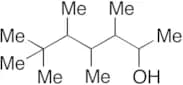
CAS:Producto controladoFórmula:C10H11BrOForma y color:NeatPeso molecular:227.0983,4,5,6,6-Pentamethyl-2-heptanol
CAS:Producto controladoFórmula:C12H26OForma y color:NeatPeso molecular:186.334(R,R)-trans-3-Amino-1-indanol
CAS:Producto controladoFórmula:C9H11NOForma y color:NeatPeso molecular:149.19(3aS,4R,6S,6aR)-rel-6-Aminotetrahydro-2,2-dimethyl-4H-cyclopenta-1,3-dioxol-4-ol
CAS:Producto controladoFórmula:C8H15NO3Forma y color:NeatPeso molecular:173.21


![[4-(Aminomethyl)cyclohexyl]methanol](/_next/image/?url=https%3A%2Fstatic.cymitquimica.com%2Fproducts%2F3D%2Fthumb-webp%2FFA123010.webp&w=3840&q=75)
![3-Methyl-2-hydroxy-3H-imidazo[4,5-f]quinoline](/_next/image/?url=https%3A%2Fstatic.cymitquimica.com%2Fproducts%2F3D%2Fthumb-webp%2FFM25639.webp&w=3840&q=75)




![2-[(3-Phenoxyphenyl)methylene]-2H-1,4-benzothiazin-3(4H)-one](/_next/image/?url=https%3A%2Fstatic.cymitquimica.com%2Fproducts%2F3D%2Fthumb-webp%2FFP169832.webp&w=3840&q=75)



![[1-(4-Bromophenyl)cyclopropyl]methanol](/_next/image/?url=https%3A%2Fstatic.cymitquimica.com%2Fproducts%2FTR%2Fthumb-webp%2FB686480.webp&w=3840&q=75)