Lactonas
Las lactonas son una clase de ésteres caracterizados por una estructura cíclica formada a través de la esterificación intramolecular de ácidos hidroxílicos. Estos compuestos son conocidos por sus estructuras anulares distintivas, que pueden variar de tres a siete o más miembros. Las lactonas se utilizan ampliamente en la industria de sabores y fragancias debido a sus agradables aromas, así como en farmacéuticos y agroquímicos por sus diversas actividades biológicas. En CymitQuimica, ofrecemos una selección completa de lactonas de alta calidad para apoyar sus aplicaciones de investigación e industriales, asegurando un rendimiento confiable y efectivo en sus proyectos.
Se han encontrado 490 productos de "Lactonas"
Ordenar por
Pureza (%)
0
100
|
0
|
50
|
90
|
95
|
100
6-Methylcoumarin
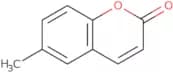
CAS:<p>The 6-methylcoumarin is a benzalkonium chloride that can be used as a stabilizer for biological samples. It has been shown to inhibit the activity of coumarin derivatives, which are receptors that are involved in the transmission of pain signals in the brain. The 6-methylcoumarin is also able to inhibit signal peptide, which is a protein that is secreted by cells and functions as a messenger between cells. This compound was found to have hypoglycemic effects due to its ability to stimulate glucose uptake in the body.</p>Fórmula:C10H8O2Pureza:Min. 95%Forma y color:PowderPeso molecular:160.17 g/molAlloisoimperatorin
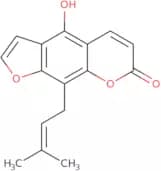
CAS:<p>Alloisoimperatorin is a naturally occurring furanocoumarin compound, which is extracted from certain plant species, primarily those belonging to the Apiaceae family. As a type of coumarin derivative, it is synthesized through intricate plant metabolic pathways involving the precursors umbelliferone and isopentenyl pyrophosphate, among others.</p>Fórmula:C16H14O4Pureza:Min. 95%Peso molecular:270.28 g/molSuberosin
CAS:<p>Suberosin is a naturally occurring sesquiterpene lactone, which is isolated from members of the Rutaceae family, such as the plant Feronia limonia. The compound exhibits diverse biological activities, primarily attributed to its complex structure that facilitates interaction with various biological targets. Suberosin's mode of action involves disrupting microbial cell membranes and interfering with critical biochemical pathways, effectively inhibiting microbial growth and propagation.</p>Fórmula:C15H16O3Pureza:Min. 95%Peso molecular:244.29 g/molXanthotoxol
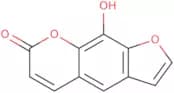
CAS:<p>Xanthotoxol is a naturally occurring furanocoumarin, which is derived from various plant species, primarily within the Apiaceae family. This compound exhibits its biological activity through several mechanisms, including the inhibition of enzyme pathways, modulation of signaling pathways, and interaction with cellular proteins, impacting various physiological processes.</p>Fórmula:C11H6O4Pureza:Min. 95%Forma y color:Brown PowderPeso molecular:202.16 g/molEllagic Acid
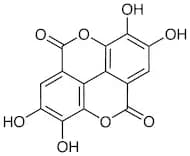
CAS:Fórmula:C14H6O8Pureza:>95.0%(T)(HPLC)Forma y color:White to Light yellow powder to crystalPeso molecular:302.196'-Dehydromarmin
CAS:<p>6'-Dehydromarmin is a natural product, classified as a coumarin derivative, which is primarily sourced from certain plant species, notably within the Rutaceae family. This compound arises through the biochemical transformation of secondary metabolites in plants, typically involving oxidation processes that occur under specific enzymatic conditions.</p>Fórmula:C19H22O5Pureza:Min. 95%Peso molecular:330.37 g/mol5,7-Dihydroxy-4-methyl-2H-chromen-2-one Monohydrate
CAS:Producto controlado<p>Applications 5,7-dihydroxy-4-methyl-2H-chromen-2-one (cas# 2107-76-8) is a useful research chemical.<br></p>Fórmula:C10H8O4•H2OForma y color:NeatPeso molecular:210.181802Praeruptorin E
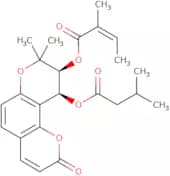
CAS:<p>Praeruptorin E is a natural furanocoumarin, which is derived from the roots of Peucedanum praeruptorum, a plant commonly used in traditional Chinese medicine. As a bioactive compound, Praeruptorin E exhibits significant pharmacological activities, particularly in cardiovascular, anti-inflammatory, and cytoprotective domains.</p>Pureza:Min. 95%7-methoxy-8-hydroxy-4-phenylcoumarin
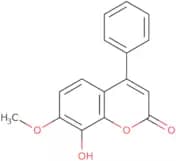
CAS:<p>7-Methoxy-8-hydroxy-4-phenylcoumarin is a coumarin derivative, a type of organic compound characterized by a benzopyrone structure. This compound is typically derived from natural plant sources or synthesized in laboratory settings. Its structural features, such as the methoxy and hydroxy groups, are integral to its potential biological activity.</p>Fórmula:C16H12O4Pureza:Min. 95%Peso molecular:268.26 g/molArnottinin
CAS:<p>Arnottinin is a bioactive compound, which is derived from natural plant sources. It functions primarily through modulation of specific cellular pathways, targeting key receptors that regulate physiological responses. This compound exhibits its mode of action by influencing signal transduction pathways, effectively altering cellular activities at the molecular level.</p>Fórmula:C14H14O4Pureza:Min. 95%Peso molecular:246.26 g/molFraxetin
CAS:<p>Fraxetin is a chemical compound known as a coumarin derivative, which is a natural product primarily sourced from various plant species. As a member of the coumarin family, fraxetin is often extracted from the roots, bark, and leaves of plant sources like Fraxinus species and other related flora. The compound operates through an array of biochemical pathways, prominently exhibiting antioxidant and anti-inflammatory properties. It acts by scavenging free radicals and modulating oxidative stress-related pathways, while also influencing the expression of various inflammatory cytokines.</p>Fórmula:C10H8O5Peso molecular:208.17 g/molRef: 3D-Q-100662
1gA consultar5gA consultar10gA consultar500mgA consultar2500mgA consultar-Unit-ggA consultarDaphnetin-8-methyl ether
CAS:<p>Daphnetin-8-methyl ether is a naturally derived coumarin compound, which is predominantly sourced from the Daphne genus of plants, among other botanical species known for their therapeutic potential. This compound is recognized for its biochemical interaction with key cellular pathways, particularly through the modulation of enzymes and receptors associated with inflammatory and oxidative stress responses.</p>Fórmula:C10H8O4Pureza:Min. 95%Peso molecular:192.17 g/molScopoletin-2',3'-epoxy-3'-methylbutyl ether
<p>Scopoletin-2',3'-epoxy-3'-methylbutyl ether is a synthetic derivative of scopoletin, which is a coumarin compound. This ether derivative is primarily obtained from chemical synthesis processes designed to modify the parent compound, scopoletin, which is naturally found in various plants, such as those in the Asteraceae and Rubiaceae families. The mode of action typically involves the modulation of biochemical pathways, primarily through interacting with enzymes or receptors that regulate oxidative stress or inflammation.</p>Pureza:Min. 95%7-Amino-4-(methoxymethyl)coumarin
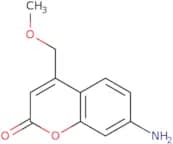
CAS:<p>7-Amino-4-(methoxymethyl)coumarin is a fluorogenic compound, which is synthesized chemically for bioanalytical applications. This compound serves as a substrate in enzyme assays and is particularly valuable in studying enzymatic activity due to its fluorescent properties.</p>Fórmula:C11H11NO3Pureza:Min. 95%Peso molecular:205.21 g/moltrans-Khellactone
CAS:Trans-Khellactone is a naturally occurring lactone derivative, which is isolated from plants of the Apiaceae family. This compound exhibits a variety of biological functions due to its unique chemical structure, which includes a dihydropyran ring. Trans-Khellactone's mode of action involves interacting with various cellular pathways, potentially modulating enzyme activity, receptor binding, and influencing signal transduction processes.Fórmula:C14H14O5Pureza:Min. 95%Peso molecular:262.26 g/molAnomelin
<p>Anomelin is a synthetic anticancer compound, which is derived from complex organic synthesis methodologies. This compound is typically produced through careful laboratory processes due to its intricate chemical structure, which is crafted to target specific molecular pathways involved in cancer cell proliferation.</p>Pureza:Min. 95%7-Prenyloxyumbelliferone
<p>7-Prenyloxyumbelliferone is a natural coumarin derivative, which is primarily sourced from plants belonging to the Rutaceae and Apiaceae families. This compound exhibits a range of biological activities, including anti-inflammatory, antioxidant, and antimicrobial properties. The mode of action of 7-Prenyloxyumbelliferone involves the modulation of specific enzymes and signaling pathways, such as the inhibition of cyclooxygenase and lipoxygenase, and the scavenging of free radicals, which collectively contribute to its pharmacological effects.</p>Pureza:Min. 95%Fraxinol
CAS:<p>Fraxinol is a natural lignan, which is a small class of polyphenols, derived from the inner bark of the Ash tree (Fraxinus species). Its primary action is believed to involve antioxidant and anti-inflammatory pathways, where it scavenages reactive oxygen species and modulates cytokine production. This activity suggests potential modulation of cellular oxidative stress responses, contributing to its therapeutic interest.</p>Pureza:Min. 95%Tomenin
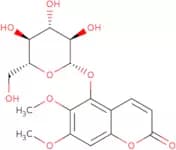
CAS:<p>Tomenin is a systemic insecticidal compound, which is synthetically derived with a unique dual mode of action. This product is designed to efficiently target nematodes, plant-parasitic organisms that cause significant agricultural damage. The molecular formulation of Tomenin involves binding to specific nematode receptors, disrupting their neuromuscular functions and metabolic pathways. This dual action results in paralysis and eventual death of the nematodes, ensuring effective control over populations that threaten crop yield and quality.</p>Fórmula:C17H20O10Pureza:Min. 95%Peso molecular:384.33 g/molByakangelicol methanolate
<p>Byakangelicol methanolate is a bioactive compound, which is a derivative of furanocoumarins, typically found in various plant species. It is naturally sourced from Angelica plants, known for their rich profile of therapeutic compounds. The mode of action of Byakangelicol methanolate involves the inhibition of specific enzymes related to inflammatory pathways, potentially modulating immune responses and reducing inflammation. This compound is of significant interest due to its potential applications in developing treatments for inflammatory-related conditions and possibly other therapeutic areas. Research into Byakangelicol methanolate focuses on understanding its pharmacological properties and exploring its benefits within pharmaceuticals for treating a range of inflammatory disorders. Its ability to act on specific biological pathways might provide insights into new therapeutic mechanisms, making it a subject of interest for scientists investigating novel anti-inflammatory agents.</p>Fórmula:C19H22O7Pureza:Min. 95%Peso molecular:362.37 g/mol