Estándares farmacéuticos
Subcategorías de "Estándares farmacéuticos"
- APIs para investigación e impurezas(275.014 productos)
- Activadores e inhibidores de enzimas(2.827 productos)
- Nitrosaminas(2.605 productos)
- Compuestos y metabolitos farmacéuticos y veterinarios(2.884 productos)
- Toxicología(13.652 productos)
Se han encontrado 7836 productos de "Estándares farmacéuticos"
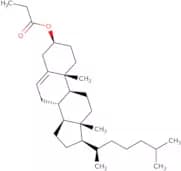
Cholesterol propionate
CAS:Producto controladoCholesterol Propionate is a monolayer film-forming polymer that forms a polymeric matrix when combined with water. The thermal expansion of this material is dependent on the concentration of cholesterol propionate and can be used as a target tissue for multi-walled carbon nanotubes (MWCNTs). In addition, Cholesterol Propionate has been shown to have light emission properties due to its hydroxyl group and fatty acid content. The phase transition temperature of the material is dependent on the concentration of benzoate in the formulation. When it reaches the phase transition temperature, cholesteryl benzoate undergoes a phase change from crystalline to liquid at room temperature. This property can be used to activate MWCNTs within Cholesterol Propionate films, which then emit light.
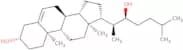
Fórmula:C30H50O2Pureza:Min. 95%Peso molecular:442.7 g/mol22β-Hydroxy cholesterol
CAS:Producto controlado22-Hydroxycholesterol is a product of cholesterol synthesis, which is formed by the side-chain cleavage of cholesterol. This compound has been shown to inhibit cholesterol acyltransferase and to be cytotoxic in vitro. 22-Hydroxycholesterol has also been shown to have an inhibitory effect on protein synthesis and on the activity of forskolin, an activator of adenylate cyclase that is involved in the regulation of cellular levels of cAMP. The antioxidant properties of 22-hydoxycholesterol may be due to its chemical structure, which includes a hydroxyl group. This compound also shows an insulin-sensitizing effect in mice fed a high fat diet.Fórmula:C27H46O2Pureza:Min. 95%Peso molecular:402.65 g/molDelta9,11-Dehydro-17b-estradiol 17-valerate
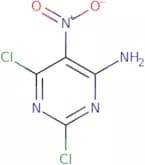
CAS:Producto controladoPlease enquire for more information about Delta9,11-Dehydro-17b-estradiol 17-valerate including the price, delivery time and more detailed product information at the technical inquiry form on this pageFórmula:C23H30O3Pureza:Min. 96 Area-%Peso molecular:354.48 g/mol2,6-Dichloro-5-nitropyrimidin-4-amine
CAS:2,6-Dichloro-5-nitropyrimidin-4-amine is a chlorinating agent that reacts with aliphatic and aromatic amines to form substituted pyrimidines. The substitution pattern of the product depends on the regioselectivity of the reaction. 2,6-Dichloro-5-nitropyrimidin-4-amine is one of the few chlorinating agents that react with propylamine. Substitution at position 2 of the purine ring has been found to be more selective than substitution at position 6. The 2,6-dichloropyrimidine can also be used as a nitro group source in chemical synthesis or as an intermediate in production of other compounds.
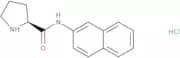
Fórmula:C4H2Cl2N4O2Pureza:Min. 95%Forma y color:SolidPeso molecular:208.99 g/molL-Proline-β-naphthylamide hydrochloride
CAS:L-proline analogueFórmula:C15H16N2O·HClPureza:Min. 95%Peso molecular:276.76 g/molall-trans-Retro retinol
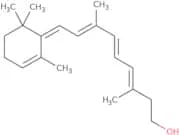
CAS:All-trans-retinol is a form of vitamin A that is found in many animal tissues and some plant oils. It acts as a hormone, binding to the retinoic acid receptors (RARs) in the nucleus and activating gene transcription. All-trans-retinol has been shown to be effective against hyperproliferative diseases such as cancer, both by inducing apoptosis and by inhibiting cell growth. All-trans-retinol may also have therapeutic potential for other diseases, such as intestinal cancers and prostatic hypertrophy. This compound has been shown to induce messenger RNA (mRNA) production in cells that express RARs.
Fórmula:C20H30OPureza:Min. 95%Peso molecular:286.45 g/mol4'-Hydroxy atomoxetine
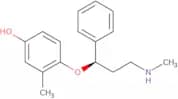
CAS:4'-Hydroxyatomoxetine is a metabolite of atomoxetine, which is a drug that is used to treat attention deficit hyperactivity disorder and narcolepsy. 4'-Hydroxyatomoxetine has been shown to have pharmacological properties similar to those of atomoxetine. However, it does not bind to the κ-opioid receptors, unlike its parent drug. The analytical method for this metabolite has been developed using liquid chromatography with tandem mass spectrometry. The major limitation with the analytical method is that it can be affected by matrix effects and hepatic impairment. This metabolite is glucuronidated and then conjugated with trifluoroacetic acid (TFA) before excretion in urine or bile. It also binds to kappa-opioid receptors, but at a lower affinity than its parent compound.Fórmula:C17H21NO2Pureza:Min. 95%Forma y color:PowderPeso molecular:271.35 g/molThymosin beta10 (human, rat)
CAS:Please enquire for more information about Thymosin beta10 (human, rat) including the price, delivery time and more detailed product information at the technical inquiry form on this page
Fórmula:C211H353N57O76SPureza:Min. 95%Peso molecular:4,936.47 g/molall-trans 5,6-Epoxy retinoic acid
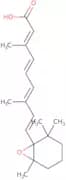
CAS:5,6-Epoxy retinoic acid is a synthetic retinoid that has been shown to have biological properties in tissue culture and rat liver microsomes. It is an agonist of the retinoic acid receptor (RAR) and binds to DNA at the same site as all-trans retinoic acid. 5,6-Epoxyretinoic acid also has effects on gene expression in human serum and inhibits the proliferation of cancer cells by inducing apoptosis. The synthetic retinoid can be used as a novel chemotherapeutic agent for breast cancer or leukemia.Fórmula:C20H28O3Pureza:Min. 95 Area-%Forma y color:Yellow PowderPeso molecular:316.43 g/molChloro[2-(di-tert-butylphosphino)-2',4',6'-triisopropyl-1,1'-biphenyl][2-(2-aminoethyl)phenyl)]palladium(II)
CAS:Producto controladoChloro[2-(di-tert-butylphosphino)-2',4',6'-triisopropyl-1,1'-biphenyl][2-(2-aminoethyl)phenyl)]palladium(II) is a molecule that inhibits the adenosine receptor in autoimmune diseases and cancer. It also has an inhibitory effect on the membrane transport of glucose, glucosan, and aziridine. This drug can be used to treat inflammatory diseases such as diabetes, asthma, and inflammatory bowel disease. The geometric isomers of this molecule are not identical in shape or size and can have different effects on the body.
Fórmula:C37H55ClNPPdPureza:Min. 95%Peso molecular:686.69 g/mol3-Caffeoyl-1,5-quinolactone(3-Caffeoyl-gamma-quinide)
CAS:3-Caffeoyl-1,5-quinolactone (3-Caffeoyl-gamma-quinide) is a coffee-derived compound, identified as a phytochemical present in roasted coffee beans. It is primarily formed during the roasting process through the complex transformation of caffeoylquinic acids, which are abundant in green coffee beans. This compound is gaining attention for its notable biological properties, particularly its antioxidant and enzyme inhibitory activities.
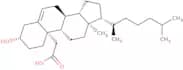
Fórmula:C16H16O8Pureza:Min. 95%Forma y color:PowderPeso molecular:336.29 g/mol19-Carboxy cholesterol
CAS:Producto controladoPlease enquire for more information about 19-Carboxy cholesterol including the price, delivery time and more detailed product information at the technical inquiry form on this pageFórmula:C27H44O3Pureza:Min. 95%Peso molecular:416.64 g/mol(-)-cis-Pentazocine
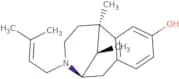
CAS:Producto controlado(-)-cis-Pentazocine is a kappa-opioid receptor agonist that has been used for the treatment of pain, cough, and diarrhea. It is also used to treat withdrawal symptoms in those who are addicted to other narcotic drugs. The drug binds to the κ-opioid receptors and activates G protein coupled receptors. When this occurs, it inhibits the release of neurotransmitters from nerve cells in the brain, which reduces pain and causes sedation. Pentazocine can cause side effects such as dizziness, constipation, nausea, vomiting, headache, blurred vision, anxiety and depression. These side effects are more common with high doses or when pentazocine is taken with other drugs that have similar effects.
Fórmula:C19H27NOPureza:Min. 95%Peso molecular:285.42 g/molNonafluorovaleric acid
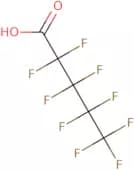
CAS:Nonafluorovaleric acid is a glycol ether that is used as a solvent and in the manufacture of fluoropolymers. Nonafluorovaleric acid is considered to be a potential biomarker for perfluoroalkyl substances, which are toxic chemicals found in many household products. It has been shown to inhibit matrix metalloproteinase activity and can be used to study autoimmune diseases. Nonafluorovaleric acid can also be used as a synchronous fluorescent probe for enzyme-linked immunosorbent assays. The toxicity of this chemical has been studied extensively and it is well known that nonafluorovaleric acid can induce enzyme induction, leading to increased production of enzymes such as cytochrome P450.
Fórmula:C5HF9O2Pureza:Min. 95%Forma y color:Clear LiquidPeso molecular:264.05 g/molAtorvastatin acetonide
CAS:Atorvastatin acetonide is a statin drug that inhibits the synthesis of cholesterol by the liver. It is used to lower high cholesterol and triglycerides, as well as to reduce the risk of cardiovascular disease. Atorvastatin acetonide is a prodrug that is hydrolyzed in vivo to atorvastatin. Atorvastatin acetonide can be analyzed by HPLC with UV detection or by reversed-phase HPLC with fluorescence detection. The flow rate for this analysis is 0.5 mL/min and it takes about 20 min for analysis time. In order to monitor reaction progress, a calibration curve should be used for calibration and reaction monitoring. This product has linearity with recoveries of greater than 75%.
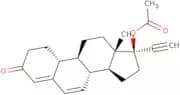
Fórmula:C36H39FN2O5Pureza:Min. 95%Peso molecular:598.7 g/mol17-Hydroxy-19-nor-17alpha-pregna-4,6-dien-20-yn-3-one acetate
CAS:Please enquire for more information about 17-Hydroxy-19-nor-17alpha-pregna-4,6-dien-20-yn-3-one acetate including the price, delivery time and more detailed product information at the technical inquiry form on this page
Fórmula:C22H26O3Pureza:Min. 95%Forma y color:Off-white to pale yellowsolid.Peso molecular:338.44 g/molHydrocortisone Acetate Impurity G
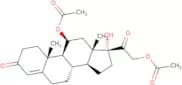
CAS:Producto controladoHydrocortisone is a corticosteroid that is used to treat inflammation, allergies and skin diseases. It is also used to treat adrenal gland disorders. Hydrocortisone Acetate Impurity G (HA) is a drug that has anti-inflammatory properties, which may be due to its inhibition of prostaglandin synthesis. HA was the first hydrocortisone impurity found in prednisolone tablets. This discovery led to the development of corticosteroids and their use in medicine for the treatment of inflammation and allergies.Fórmula:C25H34O7Pureza:Min. 95%Peso molecular:446.53 g/molDecapreno-b-carotene
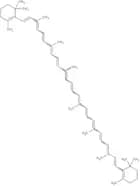
CAS:Decapreno-b-carotene is a carotenoid extracted from the oil of the seeds of the plant, Schizochytrium limacinum. This product has been shown to be an effective antioxidant that can protect cells against oxidative damage. The high-performance liquid chromatography technique was used for quantification and separation. The extract was then injected onto a high performance liquid chromatograph, which separates it according to its chemical properties. Decapreno-b-carotene is found in almost all organisms and is a precursor for vitamin A production in animals.Fórmula:C50H68Pureza:Min. 95%Forma y color:SolidPeso molecular:669.07 g/mol21-Amino-17-hydroxypregna-1,4-diene-3,11,20-trioneHydrochloride
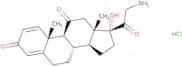
CAS:Producto controladoPlease enquire for more information about 21-Amino-17-hydroxypregna-1,4-diene-3,11,20-trioneHydrochloride including the price, delivery time and more detailed product information at the technical inquiry form on this pageFórmula:C21H28ClNO4Pureza:Min. 95%Peso molecular:393.9 g/mol5a-Pregnane-3a,20a-diol
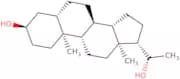
CAS:Producto controlado5a-Pregnane-3a,20a-diol is a gamma-aminobutyric acid (GABA) analogue that is used in the treatment of women with variegated hyperpigmentation. It has inhibitory properties on mutant enzymes such as disulfate reductase and other enzymes involved in the synthesis of prostaglandins. The drug binds to the enzyme GABA transaminase and this binding prevents the formation of GABA from glutamate. 5a-Pregnane-3a,20a-diol also inhibits the synthesis of prostaglandin E2 by binding to cyclooxygenase 2, leading to decreased inflammation and pain. 5a-Pregnane-3a,20a-diol is metabolized by glucuronidation or sulfation and excreted into bile or urine. This drug can also be hydrolyzed by dehydrogenases or other enzymes such as esterases.Fórmula:C21H36O2Pureza:Min. 95%Peso molecular:320.51 g/mol


![Chloro[2-(di-tert-butylphosphino)-2',4',6'-triisopropyl-1,1'-biphenyl][2-(2-aminoethyl)phenyl)]pal…](/_next/image/?url=https%3A%2Fstatic.cymitquimica.com%2Fproducts%2F3D%2Fthumb-webp%2FFC156938.webp&w=3840&q=75)