Estándares farmacéuticos
Los estándares farmacéuticos son un conjunto integral de materiales de referencia esenciales para garantizar la seguridad, eficacia y calidad de los productos farmacéuticos. Esta categoría incluye estándares para ingredientes farmacéuticos activos (APIs), que son los componentes centrales responsables de los efectos terapéuticos. Además, abarca compuestos y metabolitos relevantes tanto para las industrias farmacéutica como veterinaria, proporcionando puntos de referencia para la medición y análisis precisos de estas sustancias. Los estándares de control de nitrosaminas son cruciales para detectar y mitigar las nitrosaminas potencialmente dañinas en las formulaciones de medicamentos. Los estándares de toxicología ayudan a evaluar la seguridad y los posibles efectos adversos de los compuestos farmacéuticos. Además, los estándares de activadores e inhibidores enzimáticos son vitales para la investigación y el desarrollo, permitiendo estudios precisos de las vías bioquímicas y los mecanismos de acción de los medicamentos. Estos estándares farmacéuticos son herramientas indispensables para el cumplimiento normativo, el control de calidad y la investigación, asegurando que los productos farmacéuticos cumplan con estrictos criterios de seguridad y eficacia.
Subcategorías de "Estándares farmacéuticos"
- APIs para investigación e impurezas(274.914 productos)
- Activadores e inhibidores de enzimas(2.827 productos)
- Nitrosaminas(2.605 productos)
- Compuestos y metabolitos farmacéuticos y veterinarios(2.871 productos)
- Toxicología(13.652 productos)
Se han encontrado 7836 productos de "Estándares farmacéuticos"
Ordenar por
Pureza (%)
0
100
|
0
|
50
|
90
|
95
|
100
2-(Morophlin-4-yl)-1,2,3,4-tetrahydronaphthalene
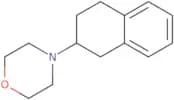
CAS:Producto controlado<p>Please enquire for more information about 2-(Morophlin-4-yl)-1,2,3,4-tetrahydronaphthalene including the price, delivery time and more detailed product information at the technical inquiry form on this page</p>Fórmula:C14H19NOPureza:Min. 95%Peso molecular:217.31 g/mol1-Nitronaphthalene
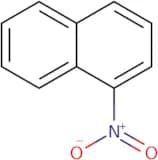
CAS:<p>1-Nitronaphthalene is a nitrobenzene derivative that has been used as an intermediate in the synthesis of pharmaceuticals, dyes, and other organic compounds. 1-Nitronaphthalene is classified as a hazardous substance due to its carcinogenicity and toxicity. In particular, it can cause irritation and burns on skin contact and may be fatal if swallowed. The toxicity profile of 1-nitronaphthalene has been studied in rats, mice, guinea pigs, rabbits, hamsters, and dogs. It was found to have moderate acute oral toxicity in rats but no significant acute toxicity in mice or dogs. 1-Nitronaphthalene also had little effect on p450 activity or enzyme activities in rats.</p>Fórmula:C10H7NO2Pureza:Min. 95%Forma y color:Yellow Clear LiquidPeso molecular:173.17 g/mol1,2,3,4-Tetrahydronaphthalen-2-amine hydrobromide
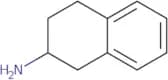
CAS:Producto controlado<p>1,2,3,4-Tetrahydronaphthalen-2-amine hydrobromide (THNA) is an amine that inhibits the enzyme tyrosine hydroxylase. This inhibition leads to a decrease in the synthesis of dopamine and norepinephrine. THNA has been shown to have inhibitory properties on locomotor activity, acid complex formation, and aminotransferases. It also exhibits receptor binding and agonist binding site activity. One study found that THNA had no effect on rat striatal tissue. The drug has been shown to be effective in metabolic disorders such as obesity.</p>Fórmula:C10H13NPureza:Min. 95%Peso molecular:147.22 g/molFormaldehyde-2,4-dinitrophenylhydrazone
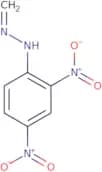
CAS:<p>Formaldehyde-2,4-dinitrophenylhydrazone (FDNH) is a chemical compound that inhibits the production of galacturonic acid. It is used as an analytical method to measure the concentration of galacturonic acid in biological samples. FDNH reacts with galacturonic acid to form a diazonium salt and a hydrazone derivative. The diazonium salt can be measured by liquid chromatography, while the hydrazone derivative can be measured by gas chromatography. This test has been used to measure the concentration of galacturonic acid in plants, pharmaceutical drugs, and reaction products.</p>Fórmula:C7H6N4O4Pureza:Min. 95%Peso molecular:210.15 g/mol7-Dehydro desmosterol
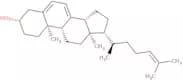
CAS:Producto controlado<p>7-Dehydro Desmosterol is a hydroxylated sterol found in the liver. It is an intermediate in cholesterol synthesis and participates in the regulation of glucose metabolism. The enzyme responsible for its synthesis (7-dehydrocholesterol reductase) is inhibited by radiation, which leads to its accumulation in the liver. 7-Dehydro desmosterol has been shown to have beneficial effects on experimental models of diabetes and metabolic disorders. In these studies, it was found that 7-dehydro desmosterol can inhibit glucose absorption from the intestine and stimulate insulin secretion from pancreatic beta cells.</p>Fórmula:C27H42OPureza:Min. 95%Forma y color:PowderPeso molecular:382.62 g/mol6-Bromo-1,2,3,4-tetrahydronaphthalen-2-ylamine hydrochloride
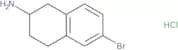
CAS:Producto controlado<p>Please enquire for more information about 6-Bromo-1,2,3,4-tetrahydronaphthalen-2-ylamine hydrochloride including the price, delivery time and more detailed product information at the technical inquiry form on this page</p>Fórmula:C10H12BrN·HClPureza:Min. 95%Peso molecular:262.57 g/molDelta6-Testosterone
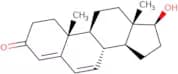
CAS:Producto controlado<p>Delta6-Testosterone is a natural steroid hormone that belongs to the group of steroid drugs. It is a potent androgen, or male sex hormone, which stimulates the development and maintenance of male sexual characteristics, including the growth of prostate gland and seminal vesicles. The effects of Delta6-testosterone are mediated by binding to and activating the Androgen Receptor (AR). The effects may also be increased when Delta6-testosterone binds to AR in combination with other hormones such as estradiol.<br>Delta6-Testosterone is metabolized by the liver into testosterone through the cytochrome p450 enzyme system. This process begins with conversion of Delta6-testosterone into 6alpha-dihydrotestosterone (DHT) by 5a-reductase. DHT can then be converted into testosterone by 3beta-hydroxysteroid dehydrogenase/3alpha-hydroxysteroid dehydrogenase (3betaHSD) or 17beta hyd</p>Fórmula:C19H26O2Pureza:Min. 95%Peso molecular:286.41 g/mol1-(2-Hydroxyethyl)-3,3-dimethylindolino-6'-nitrobenzopyrylospiran
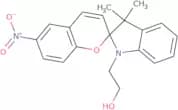
CAS:<p>Please enquire for more information about 1-(2-Hydroxyethyl)-3,3-dimethylindolino-6'-nitrobenzopyrylospiran including the price, delivery time and more detailed product information at the technical inquiry form on this page</p>Pureza:Min. 95%(aR)-a-[[[2-(4-Nitrophenyl)ethyl]amino]methyl]benzenemethanol
CAS:<p>(aR)-a-[[[2-(4-Nitrophenyl)ethyl]amino]methyl]benzenemethanol is a chiral, carbonyl compound that has been used in the synthesis of mirabegron. It is synthesized by reacting an amide with a hydrochloric acid salt. The product yield of (aR)-a-[[[2-(4-Nitrophenyl)ethyl]amino]methyl]benzenemethanol is high and it does not react with aluminium or amide impurities. This compound can be used for the industrial synthesis of mirabegron, which is a drug for the treatment of urinary incontinence. The reduction reaction and hydrolysis reactions are both important to this process.</p>Pureza:Min. 95%1,2,3,4-Tetrahydro-1-naphthoic acid
CAS:<p>Tetrahydro-1-naphthoic acid is a toxic chemical that is used in the synthesis of various organic compounds. It is an organic acid that has a pungent odor and can cause irritation of the nose and throat. When heated, it evolves toxic fumes of hydrogen chloride gas and phosgene. Tetrahydro-1-naphthoic acid reacts with metal hydroxides to form metal tetrahydro-1-naphthoates, which have useful properties as catalysts in organic reactions. Tetrahydro-1-naphthoic acid has been used as a growth regulator in plants and animals. It binds to DNA at the C–H site, preventing protein synthesis and cell division by inhibiting RNA synthesis.</p>Fórmula:C11H12O2Pureza:Min. 95%Peso molecular:176.21 g/mol3-Cyanopropionic acid methyl ester
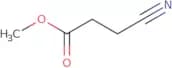
CAS:3-Cyanopropionic acid methyl ester is a compound that belongs to the class of aliphatic carboxylic acids. It is an intermediate in the production of adiponitrile and acrylonitrile. This compound is used as a feedstock for the manufacture of vinylene, which can be used to produce c1-6 alkyl. 3-Cyanopropionic acid methyl ester can be produced from propylene and hydrogen cyanide in a high salt, activated reaction system. It has been shown that this compound may have metabolic disorders due to its ability to inhibit fatty acid oxidation and increase viscosity. 3-Cyanopropionic acid methyl ester is a colorless liquid at room temperature with a boiling point of 154°C and a molecular weight of 98.14 g/mol.Fórmula:C5H7NO2Pureza:Min. 95%Forma y color:Clear LiquidPeso molecular:113.11 g/molD,L-Threo-b-hydroxy aspartic acid
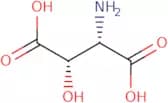
CAS:<p>D,L-Threo-b-hydroxy aspartic acid is a stereoselective synthetic amino acid that has been used to study the uptake and hydrolysis of D,L-threo-b-hydroxy aspartic acid by rat brain synaptosomes. It has also been used in the synthesis of an L-alanine analogue with the same stereochemistry at the chiral center. The stereoselective synthesis of this compound is achieved by epimerization reaction using d-alanine as a starting material. Threo bhda has been shown to inhibit glutamate release from neurons and stimulate GABA release in synaptosomes, which may be due to its ability to bind to ion channels. Threo bhda has also been found to inhibit the binding of radioactive thymidine to calf thymus DNA with a high degree of stereoselectivity.</p>Fórmula:C4H7NO5Pureza:Min. 95%Peso molecular:149.1 g/molSodium naphthenate
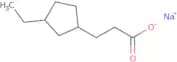
CAS:Sodium naphthenate is a sodium salt that is used as an intermediate in the production of polyvinyl chloride. It can be obtained by reacting ethylene diamine with sodium hydroxide and carbon dioxide. The reaction takes place at high temperatures and pressure, forming a solution of sodium carbonate, which is then hydrolyzed to form sodium naphthenate. This compound has been shown to have a low solubility in water and it can be purified by recrystallization or distillation. Sodium naphthenate is soluble in organic solvents such as acetone or chloroform. It has also been shown to be useful as a model system for studying transfer reactions between polycarboxylic acids and fatty acids, which are important processes in the manufacture of polyester resins.Fórmula:C10H17NaO2Forma y color:Off-White PowderPeso molecular:192.23 g/molCefdinir related compound B
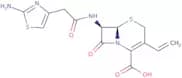
CAS:Please enquire for more information about Cefdinir related compound B including the price, delivery time and more detailed product information at the technical inquiry form on this pageFórmula:C14H14N4O4S2Pureza:Min. 95%Peso molecular:366.42 g/molNelfinavir hydroxy-tert-butylamide
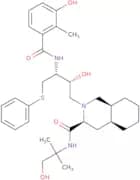
CAS:<p>Nelfinavir is an antiviral agent that is used to treat HIV/AIDS. It is a protease inhibitor that inhibits the action of the virus in cells by binding to specific enzymes, thus preventing the destruction of human cells by the virus. Nelfinavir also prevents cancer cell growth and has shown anticancer activity in animal models and humans. This drug binds to fatty acids, making it more difficult for the body to eliminate this substance. The half-life of nelfinavir is prolonged in patients with hepatic failure or renal failure. Nelfinavir can be used as a chemotherapeutic agent in infants because it does not cross the blood-brain barrier.</p>Fórmula:C32H45N3O5SPureza:Min. 95%Peso molecular:583.78 g/molCholesterol Hexyl Carbonate
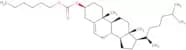
CAS:Producto controladoCholesterol Hexyl Carbonate (C6HC) is a chiral organic compound with a unique conformation that enhances its adsorbing properties. C6HC is synthesized by reacting cholesterol with hexanoyl chloride in the presence of strong base and an inert solvent. The structural formula of this compound is shown in Figure 1.Pureza:Min. 95%2,4,4’-Trichlorobiphenyl
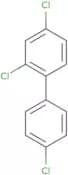
CAS:Producto controlado<p>2,4,4’-Trichlorobiphenyl is a polychlorinated biphenyl congener. It has been shown to have an adverse effect on the central nervous system, causing neurotoxicity. 2,4,4’-Trichlorobiphenyl has been used as a model system for the study of the effects of environmental toxins on mitochondrial membrane potential and lipid peroxidation. 2,4,4’-Trichlorobiphenyl binds to fatty acids in mitochondria and inhibits fatty acid β-oxidation. The inhibition of fatty acid oxidation leads to increased levels of protocatechuic acid in the serum and liver tissue. 2,4,4’-Trichlorobiphenyl has also been found to be toxic to aquatic organisms such as fish and shrimp at low concentrations.</p>Fórmula:C12H7Cl3Pureza:Min. 95%Peso molecular:257.54 g/molCitronellal hydrate
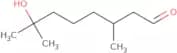
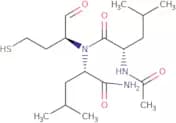
CAS:Citronellal hydrate is a chemical substance that is found in many essential oils, such as citronella, lemon grass, and citronella. It has been shown to have significant effects on the human metabolism and urine samples. Citronellal hydrate can be used as a preservative due to its ability to inhibit bacterial growth, including bacteria that are resistant to benzalkonium chloride. Citronellal hydrate also has been shown to have an effect on cell maturation, which may be predictive for the development of cancer cells. Citronellal hydrate is present in many natural products that are used in cosmetics and personal care products. It is a good analytical method for identifying the presence of other chemicals in a sample because it has been shown to react with molecules such as alcohols, amines, ketones, esters, and ethers. Citronellal hydrate reacts with these molecules by altering their mass through an electron-transfer process called triple-Fórmula:C10H20O2Pureza:Min. 95%Peso molecular:172.26 g/molN-Acetyl-L-leucyl-L-leucyl-L-methioninal
CAS:Inhibitor of cathepsinFórmula:C19H35N3O4SPureza:Min. 95%Peso molecular:401.57 g/molEltrombopag olamine
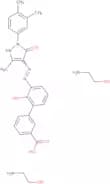
CAS:Eltrombopag olamine is an orally active drug that belongs to the class of thiazolidinones. It has been used for the treatment of thrombocytopenia in patients with chronic liver disease and myelodysplastic syndrome. Eltrombopag olamine inhibits platelet aggregation by binding to glycoprotein IIb/IIIa receptors on the surface of platelets. The drug is a prodrug that is metabolized in vivo to its active form, eltrombopag. This conversion is catalysed by CYP3A4 and CYP2D6 enzymes and can be inhibited by drugs that inhibit these enzymes, such as trifluoroacetic acid and hydroxyl group-containing compounds. Eltrombopag olamine binds to erythrocytes, which may be due to its ability to form intramolecular hydrogen bonds with nitrogen atoms. The synthesis of eltFórmula:C25H22N4O4•(C2H7NO)2Pureza:Min. 95%Forma y color:PowderPeso molecular:564.63 g/mol

![(aR)-a-[[[2-(4-Nitrophenyl)ethyl]amino]methyl]benzenemethanol](/_next/image/?url=https%3A%2Fstatic.cymitquimica.com%2Fproducts%2F3D%2Fthumb-webp%2FFN75044.webp&w=3840&q=75)