Estándares farmacéuticos
Los estándares farmacéuticos son un conjunto integral de materiales de referencia esenciales para garantizar la seguridad, eficacia y calidad de los productos farmacéuticos. Esta categoría incluye estándares para ingredientes farmacéuticos activos (APIs), que son los componentes centrales responsables de los efectos terapéuticos. Además, abarca compuestos y metabolitos relevantes tanto para las industrias farmacéutica como veterinaria, proporcionando puntos de referencia para la medición y análisis precisos de estas sustancias. Los estándares de control de nitrosaminas son cruciales para detectar y mitigar las nitrosaminas potencialmente dañinas en las formulaciones de medicamentos. Los estándares de toxicología ayudan a evaluar la seguridad y los posibles efectos adversos de los compuestos farmacéuticos. Además, los estándares de activadores e inhibidores enzimáticos son vitales para la investigación y el desarrollo, permitiendo estudios precisos de las vías bioquímicas y los mecanismos de acción de los medicamentos. Estos estándares farmacéuticos son herramientas indispensables para el cumplimiento normativo, el control de calidad y la investigación, asegurando que los productos farmacéuticos cumplan con estrictos criterios de seguridad y eficacia.
Subcategorías de "Estándares farmacéuticos"
- APIs para investigación e impurezas(274.845 productos)
- Activadores e inhibidores de enzimas(2.827 productos)
- Nitrosaminas(2.605 productos)
- Compuestos y metabolitos farmacéuticos y veterinarios(2.869 productos)
- Toxicología(13.652 productos)
Se han encontrado 7836 productos de "Estándares farmacéuticos"
Ordenar por
Pureza (%)
0
100
|
0
|
50
|
90
|
95
|
100
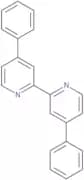
4,4'-Diphenyl-2,2'-bipyridine
CAS:4,4'-Diphenyl-2,2'-bipyridine is a ligand that can be used to produce more efficient magnesium peroxide catalysts. The efficiency of the catalyst was found to increase with increasing concentrations of the ligand. 4,4'-Diphenyl-2,2'-bipyridine has been shown to bind strongly to chloride ions and may have potential applications in animal health as a supplement. This compound is also useful in electrochemical data studies because it has a relatively high oxidation potential and electrochemical stability. It can also be used for photophysical studies due to its strong fluorescence. 4,4'-Diphenyl-2,2'-bipyridine can be synthesized by reacting carbon tetrachloride with an animal or vegetable oil or fat.Fórmula:C22H16N2Pureza:Min. 95 Area-%Forma y color:PowderPeso molecular:308.38 g/mol5-Deazariboflavin
CAS:<p>5-Deazariboflavin is a proton carrier that is found in the mitochondrial cytochrome b. It has been shown to bind covalently to the protein, forming 5-deazariboflavin-protein adducts. These adducts are formed by reacting with amines and other amino acids present in the protein. In vitro studies have shown that 5-deazariboflavin inhibits Mycobacterium avium growth and acid production by binding to the enzyme pyruvate kinase, which is involved in glycolysis. 5-Deazariboflavin can also be used as an indicator of pH because it is reduced at low pH levels and oxidized at high pH levels. The second order rate constant for this reaction can be determined using kinetic data, such as absorbance or fluorescence properties.</p>Fórmula:C18H21N3O6Pureza:Min. 95%Forma y color:Yellow PowderPeso molecular:375.38 g/molAmtolmetin guacil
CAS:<p>Amtolmetin guacil is a nonsteroidal anti-inflammatory drug that belongs to the group of gsh-px activities. It is used to treat pain and inflammation in patients with inflammatory diseases. Amtolmetin guacil has shown efficacy in treatment trials for rheumatoid arthritis, osteoarthritis, and other inflammatory diseases. Amtolmetin guacil inhibits the activity of P-glycoprotein (Pgp), which is an important protein that transports drugs out of cells, thus increasing its bioavailability. Amtolmetin guacil also has low bioavailability due to its fast metabolism by liver enzymes and rapid excretion by the kidney. This drug can be administered as a nanoparticulate composition to increase its absorption into cells.</p>Fórmula:C24H24N2O5Pureza:Min. 95%Peso molecular:420.46 g/molAcenaphthylene
CAS:<p>Acenaphthylene is a hydroxylated aromatic compound with the chemical formula C10H8. Acenaphthylene is a natural compound that can be found in coal tar and petroleum. It is used as a solid catalyst for cationic polymerization and as a photochemical reagent in analytical chemistry. Acenaphthylene also has been shown to have antimicrobial properties against bacterial strains, including Escherichia coli and Staphylococcus aureus, with sublethal doses. This compound has been shown to be effective for wastewater treatment and for sample preparation for polymers, due to its insoluble nature. The mechanism of acenaphthylene's antimicrobial activity is not well understood. It may inhibit bacterial growth by inhibiting DNA synthesis or by forming an adduct with bacterial DNA that inhibits replication.</p>Fórmula:C12H8Pureza:Min. 95%Forma y color:Yellow SolidPeso molecular:152.19 g/molSaposin C (15-32) (rat)
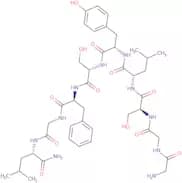
CAS:<p>Please enquire for more information about Saposin C (15-32) (rat) including the price, delivery time and more detailed product information at the technical inquiry form on this page</p>Fórmula:C89H155N21O29Pureza:Min. 95%Peso molecular:1,983.31 g/molBiotinyl-alpha-CGRP (mouse, rat)
CAS:<p>Please enquire for more information about Biotinyl-alpha-CGRP (mouse, rat) including the price, delivery time and more detailed product information at the technical inquiry form on this page</p>Fórmula:C172H276N52O54S3Pureza:Min. 95%Peso molecular:4,032.55 g/molEdoxaban impurity G
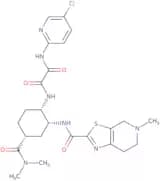
CAS:<p>Please enquire for more information about Edoxaban impurity G including the price, delivery time and more detailed product information at the technical inquiry form on this page</p>Fórmula:C24H30ClN7O4SPureza:Min. 95%Peso molecular:548.06 g/molNeuronostatin-19 (mouse, rat) trifluoroacetate salt
Please enquire for more information about Neuronostatin-19 (mouse, rat) trifluoroacetate salt including the price, delivery time and more detailed product information at the technical inquiry form on this pageFórmula:C91H153N29O26Pureza:Min. 95%Peso molecular:2,069.37 g/molType A Allatostatin III
CAS:<p>Please enquire for more information about Type A Allatostatin III including the price, delivery time and more detailed product information at the technical inquiry form on this page</p>Fórmula:C42H62N10O12Pureza:Min. 95%Peso molecular:899 g/mol2,6-Dimethylaniline hydrochloride
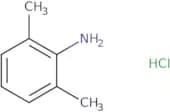
CAS:<p>Ropivacaine Related Compound A is a chemical compound that has not been fully characterized. It is an inhibitor of the enzyme P-hydroxybenzoic acid, which is involved in the synthesis of tyrosine and phenylalanine. Ropivacaine Related Compound A has shown to be potent inducers of the enzyme polymerase chain reaction (PCR) when combined with other chemicals such as potassium peroxydisulfate. The optimum concentration for this chemical compound to inhibit PCR reactions is 50 mM. Ropivacaine Related Compound A may have carcinogenic potential due to its ability to form p-hydroxybenzoic acid and other carcinogenic compounds. This chemical compound has been found to be a good candidate for wastewater treatment due to its low potency and high solubility in water.</p>Fórmula:C8H12ClNPureza:Min. 95%Forma y color:PowderPeso molecular:157.64 g/molN-[2-[(2-Bromo-4,6-dinitrophenyl)azo]-5-(diethylamino)phenyl]acetamide
CAS:N-2-[(2-bromo-4,6-dinitrophenyl)azo]-5-(diethylamino)phenyl]acetamide (NBDPA) is a yellowish solid that is soluble in water. It has a molecular weight of 308.3 and chemical formula C14H21BrN2O4. NBDPA is used as an analytical reagent for the kinetic data of liver cells and in wastewater treatment. This compound has been shown to exhibit carcinogenic potential in rats, causing genetic damage to the DNA of liver cells and kidney tissue. NBDPA has also been shown to be toxic to fish embryos and larvae, with significant effects on the development of larvae at high concentrations.Fórmula:C18H19BrN6O5Pureza:90%MinPeso molecular:479.28 g/molL-Tyrosine dipotassium
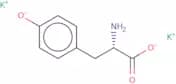
CAS:<p>L-Tyrosine dipotassium salt is a high quality, reagent, complex compound, useful intermediate and fine chemical. It is a useful scaffold that can be used in the synthesis of various important natural products. L-Tyrosine dipotassium salt is a versatile building block that has been widely applied in research on the development of new drugs, such as antiviral agents and antibiotics. L-Tyrosine dipotassium salt can act as a reaction component for many organic reactions. It also has applications in many areas such as medicine, food production, and environmental protection.</p>Fórmula:C9H11NO3•K2Pureza:Min. 95%Peso molecular:259.39 g/mol2-[3-(S)-[3-(2-(7-Chloro-2-quinolinyl)ethenyl)phenyl]-3-hydroxypropyl]benzoic acid methyl ester
CAS:<p>2-[3-(S)-[3-(2-(7-Chloro-2-quinolinyl)ethenyl)phenyl]-3-hydroxypropyl]benzoic acid methyl ester is a synthetic compound that can be used as a reagent in the synthesis of polynucleotides and polypeptides. It can also be used as an inhibitor of ketoreductase, which is an enzyme involved in the synthesis of fatty acids and ketones. 2-[3-(S)-[3-(2-(7-Chloro-2-quinolinyl)ethenyl)phenyl]-3-hydroxypropyl]benzoic acid methyl ester has been shown to inhibit the growth of wild type and mutant strains of E. coli. The molecular weight of this compound is 439.</p>Fórmula:C28H24ClNO3Pureza:Min. 95%Peso molecular:457.95 g/molα-Ketoglutaric acid potassium
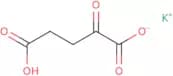
CAS:<p>Intermediate in the Krebs cycle; nitrogen transporter</p>Fórmula:C5H5O5KPureza:Min. 98 Area-%Forma y color:PowderPeso molecular:184.19 g/mol3-Hydroxy-2-nitropyridine
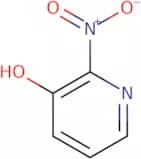
CAS:<p>3-Hydroxy-2-nitropyridine is a chemical compound that has been shown to be an inhibitor of nicotinic acetylcholine receptor. The compound has been found to have luminescence properties and can be used as a fluorescent probe in the study of molecular recognition processes. 3-Hydroxy-2-nitropyridine is also an effective antimicrobial agent and has been shown to have clinical potential for the treatment of neurodegenerative diseases such as Parkinson's disease, Alzheimer's disease, and Huntington's disease. It binds to the nicotinic acetylcholine receptor by forming hydrogen bonds with functional groups on the receptor surface. This binding prevents the agonist from binding and activating the ion channel that leads to depolarization of nerve cells. 3-Hydroxy-2-nitropyridine also reacts with chloride ions in order to form hydrochloric acid, which then inhibits microbial growth by altering their cell membrane permeability. The reaction yield is determined</p>Fórmula:C5H4N2O3Pureza:Min. 95%Peso molecular:140.1 g/molCholesterol butyrate
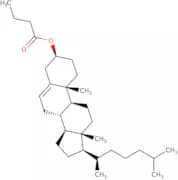
CAS:Producto controladoCholesterol butyrate is a fatty acid that has been shown to have antimicrobial activity against Lactobacillus acidophilus. It is also used as a treatment for trigeminal neuralgia and bowel disease. Cholesterol butyrate has been shown to inhibit the growth of cancer cells in vitro by inducing apoptosis. This compound may be effective in the treatment of cancer due to its photostability and ability to bind with lipoproteins and other compounds, which leads to an increased concentration of cholesterol butyrate at the site of inflammation. Cholesterol butyrate has also been shown to be effective in preventing inflammatory bowel disease by inhibiting prostaglandin synthesis.Fórmula:C31H52O2Pureza:Min. 95%Forma y color:PowderPeso molecular:456.74 g/molGLP-1 (7-36)-Lys(biotinyl) amide (human, bovine, guinea pig, mouse, rat) trifluoroacetate
CAS:<p>Please enquire for more information about GLP-1 (7-36)-Lys(biotinyl) amide (human, bovine, guinea pig, mouse, rat) trifluoroacetate including the price, delivery time and more detailed product information at the technical inquiry form on this page</p>Fórmula:C165H252N44O48S•(C2HF3O2)xPureza:Min. 95%Peso molecular:3,652.1 g/mol3,3'-Dichlorodiphenylacetylene
CAS:<p>3,3'-Dichlorodiphenylacetylene is a versatile building block that is used in the synthesis of complex compounds. It has been used as a reagent and as a speciality chemical for research purposes. This chemical can be used as a useful building block for the synthesis of other compounds, or it can be reacted with other compounds to form new compounds. 3,3'-Dichlorodiphenylacetylene is also an intermediate in organic syntheses and has been shown to react with many different types of molecules.</p>Fórmula:C14H8Cl2Pureza:Min. 95%Forma y color:PowderPeso molecular:247.12 g/molAdipokinetic Hormone (Apis mellifera ligustica) TFA salt
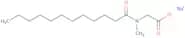
CAS:<p>Adipokinetic hormone is a peptide hormone that has been shown to stimulate the metabolism of fat cells in laboratory animals. This peptide is produced by the gland cells of honeybees and is used to regulate the energy metabolism of honeybees and other insects. Adipokinetic hormone has been shown to increase locomotor activity, inhibit the growth of human pathogens, activate transfer reactions, and inhibit receptor activity. The biological properties of this hormone have not yet been fully elucidated.</p>Fórmula:C47H65N11O14•C2HF3O2Pureza:Min. 95 Area-%Forma y color:PowderPeso molecular:1,122.10 g/molSodium N-Lauroylsarcosinate - 30% solution
CAS:<p>Sodium N-lauroylsarcosinate is a chemical compound that is used in the production of sodium salts. It has high resistance to biological samples and is soluble in water, organic solvents, and other chemicals. It can be used to measure biochemical properties, such as reaction solution polymerase chain reaction (PCR) or electrochemical impedance spectroscopy (EIS). Sodium N-lauroylsarcosinate can also be used for wastewater treatment and water permeability. It has been used as an analytical method for proteins, peptides, amino acids, and carbohydrates. It has been shown to have biological properties on human serum.</p>Fórmula:C15H28NNaO3Forma y color:Clear LiquidPeso molecular:293.38 g/mol




![N-[2-[(2-Bromo-4,6-dinitrophenyl)azo]-5-(diethylamino)phenyl]acetamide](/_next/image/?url=https%3A%2Fstatic.cymitquimica.com%2Fproducts%2F3D%2Fthumb-webp%2FFB151321.webp&w=3840&q=75)
![2-[3-(S)-[3-(2-(7-Chloro-2-quinolinyl)ethenyl)phenyl]-3-hydroxypropyl]benzoic acid methyl ester](/_next/image/?url=https%3A%2Fstatic.cymitquimica.com%2Fproducts%2F3D%2Fthumb-webp%2FFC20038.webp&w=3840&q=75)