Estándares farmacéuticos
Los estándares farmacéuticos son un conjunto integral de materiales de referencia esenciales para garantizar la seguridad, eficacia y calidad de los productos farmacéuticos. Esta categoría incluye estándares para ingredientes farmacéuticos activos (APIs), que son los componentes centrales responsables de los efectos terapéuticos. Además, abarca compuestos y metabolitos relevantes tanto para las industrias farmacéutica como veterinaria, proporcionando puntos de referencia para la medición y análisis precisos de estas sustancias. Los estándares de control de nitrosaminas son cruciales para detectar y mitigar las nitrosaminas potencialmente dañinas en las formulaciones de medicamentos. Los estándares de toxicología ayudan a evaluar la seguridad y los posibles efectos adversos de los compuestos farmacéuticos. Además, los estándares de activadores e inhibidores enzimáticos son vitales para la investigación y el desarrollo, permitiendo estudios precisos de las vías bioquímicas y los mecanismos de acción de los medicamentos. Estos estándares farmacéuticos son herramientas indispensables para el cumplimiento normativo, el control de calidad y la investigación, asegurando que los productos farmacéuticos cumplan con estrictos criterios de seguridad y eficacia.
Subcategorías de "Estándares farmacéuticos"
- APIs para investigación e impurezas(273.463 productos)
- Activadores e inhibidores de enzimas(2.827 productos)
- Nitrosaminas(2.605 productos)
- Compuestos y metabolitos farmacéuticos y veterinarios(2.577 productos)
- Toxicología(13.652 productos)
Se han encontrado 7836 productos de "Estándares farmacéuticos"
Ordenar por
Pureza (%)
0
100
|
0
|
50
|
90
|
95
|
100
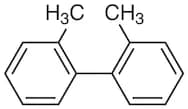
2,2'-Dimethylbiphenyl
CAS:Fórmula:C14H14Pureza:>95.0%(GC)Forma y color:Colorless to Light yellow to Light red clear liquidPeso molecular:182.27DL-Methionine Methylsulfonium Chloride
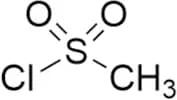
CAS:Producto controlado<p>Applications DL-Methionine methylsulfonium chloride (cas# 3493-12-07) is a useful research chemical.<br></p>Fórmula:C6H14ClNO2SForma y color:NeatPeso molecular:199.7Methanesulfonyl Chloride
CAS:Fórmula:CH3ClO2SForma y color:Colourless to Pale Yellow OilPeso molecular:114.55Vanillin-13C6
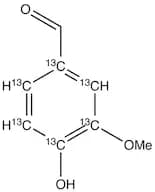
CAS:<p>Applications Labelled Vanillin. Occurs naturally in a wide variety of foods and plants such as orchids; major commercial source of natural vanillin is from vanilla bean extract. Synthetically produced in-bulk from lignin-based byproduct of paper processes or from guaicol.<br>References Jenner, P.M., et al.: Food Cosmet. Toxicol., 2, 327 (1964), Clark, G.S., et al.: Perfum. Flavor., 15, 45 (1990),<br></p>Fórmula:C6C2H8O3Forma y color:NeatPeso molecular:158.10Dihydro Artemisinin Dimer
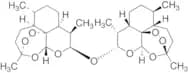
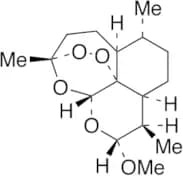
CAS:<p>Applications Dihydro Artemisinin (D448360) dimer with anticancer and antiprotozoal activity.<br>References Galal, A. et al.: Bioorg. Med. Chem., 17, 741 (2009); Beekman, A. et al.: Phytother. Res., 10, 140 (1996)<br></p>Fórmula:C30H46O9Forma y color:White to Off-White SolidPeso molecular:550.68Artemether
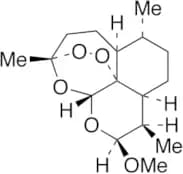
CAS:<p>Applications Derivative of Artemisinin (A777500). Antimalarial, used to treat strains of malaria which are multi-drug resistant.<br>References Hombhanje, F., et al.: Pharma., 3, 3581 (2010), Michael, O., et al.: Malaria J., 9, 335 (2010), Cesar, I., et al.: J. Pharm. Biomed. Anal., 54, 114 (2011),<br></p>Fórmula:C16H26O5Forma y color:White to Off-White SolidPeso molecular:298.37Chloroacetyl Chloride-13C2
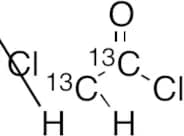
CAS:Fórmula:C2H2Cl2OForma y color:Clear Colourless OilPeso molecular:114.93α-Artemether
CAS:<p>Impurity Artemether USP Related Compound B<br>Applications Derivative of Artemisinin (A777500). Shows antimalarial and antifungal activity.<br>References Michael, O., et al.: Malaria J., 9, 335 (2010), Cesar, I., et al.: J. Pharm. Biomed. Anal., 54, 114 (2011), Galal, A. et al.: J. Nat. Prod. 68, 1274 (2005)<br></p>Fórmula:C16H26O5Forma y color:Off-WhitePeso molecular:298.37L-Methionine
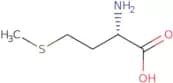
CAS:<p>L-Methionine is a non-essential amino acid that belongs to the group of essential amino acids. It is a major constituent of proteins and is used in the metabolism of lipids, carbohydrates, and nucleic acids. Methionine is also involved in the synthesis of cysteine, which is an important antioxidant. L-Methionine can be found in many foods such as eggs, dairy products, fish, poultry, soybean products, peanuts, beans and seeds. Studies have shown that L-methionine has effects on liver function and may be useful for prevention or treatment of liver disorders such as primary sclerosing cholangitis (PSC). This compound also plays a role in the formation of body tissues and cells. L-Methionine has been shown to increase glutathione levels which are important for detoxification reactions and protection against oxidative stress. It also helps regulate calcium metabolism by reducing calcium absorption from food and increasing excretion via</p>Fórmula:C5H11NO2SPureza:(Titration) 98.5 To 101.5%Forma y color:White PowderPeso molecular:149.21 g/molRef: 3D-FM10873
Producto descatalogado1-(3,4-Methylenedioxyphenyl) 2-nitropropene
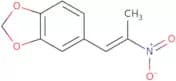
CAS:<p>1-(3,4-Methylenedioxyphenyl) 2-nitropropene (1-MPNP) is a phosphatase inhibitor that is active against gram-negative bacteria by inhibiting enterotoxins and chlamydia. 1-MPNP inhibits the activity of tyrosine phosphatases, which are enzymes that play a major role in bacterial virulence. 1-MPNP competitively inhibits the activity of tyrosine phosphatases and prevents them from catalyzing the hydrolysis of polyphosphate substrates. This inhibition leads to an accumulation of polyphosphates in the bacterial cell membrane, which disrupts its permeability and leads to cell death.</p>Fórmula:C10H9NO4Pureza:Min. 97.5 Area-%Forma y color:Yellow PowderPeso molecular:207.18 g/molRef: 3D-FM67977
Producto descatalogado3,3',4',5,5',8-Hexahydroxyflavone
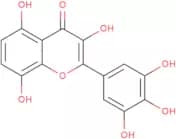
CAS:<p>3,3',4',5,5',8-Hexahydroxyflavone is a naturally occurring flavonoid, which is a type of polyphenolic compound. It is derived from various plant sources, including fruits, vegetables, and certain medicinal herbs. The compound is characterized by its chemical structure, which includes multiple hydroxyl groups, contributing to its biological activity.<br><br>The mode of action of 3,3',4',5,5',8-Hexahydroxyflavone involves its interaction with various cellular pathways and enzymes. Primarily, it is known for its antioxidant properties, where it scavenges free radicals and reactive oxygen species, thereby reducing oxidative stress. Additionally, it may exhibit anti-inflammatory effects by modulating signaling pathways involved in inflammation.<br><br>In terms of uses and applications, 3,3',4',5,5',8-Hexahydroxyflavone is primarily explored in scientific research focusing on its potential health benefits. Studies investigate its role in disease prevention, particularly conditions associated with oxidative stress and inflammation, such as cardiovascular diseases and neurodegenerative disorders. While it holds promise in these areas, further research is necessary to fully understand its mechanisms and therapeutic potential.</p>Fórmula:C15H10O8Pureza:Min. 95%Peso molecular:318.24 g/molGuanosine-5'-triphosphate Disodium Salt (~85%)
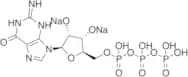
CAS:Producto controlado<p>Applications Guanosine-5'-triphosphate disodium salt (CAS# 56001-37-7) is a nucleotide used in the preparation of photoreactive GTP affinity probes, and in inhibitors of eukaryotic initiation factor eIF-4E.<br>References George Cisar, E. A.; J. Am. Chem. Soc., 135, 4676 (2013); Ghosh, P.; et al.: Bioorg. Med. Chem. Lett., 16, 750 (2006).<br></p>Fórmula:C10H14N5O14P3Na2Pureza:~85%Forma y color:NeatPeso molecular:567.14Triethylborane (1.0 M in THF)
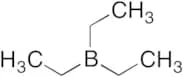
CAS:Producto controlado<p>Applications Triethylborane reacted with 8-hydroxyquinoline to synthesize three 8--hydroxyquinolato (q) boron compounds B(C2H5)2q (1), BPh2q (2), and B(2-naph)2q (3).<br>References Wu, Q., et al.: Chem. Mater., 12, 79 (2000).<br></p>Fórmula:C6H15BForma y color:Single SolutionPeso molecular:97.99N-Acetylethylene Urea-d4
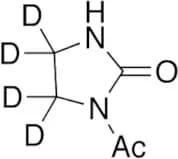
CAS:Producto controlado<p>Applications N-Acetylethylene Urea-d4 (cas# 1189701-94-7) is a compound useful in organic synthesis.<br></p>Fórmula:C5H4H4N2O2Forma y color:NeatPeso molecular:132.15Ethyl Dichlorophosphate
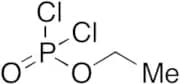
CAS:Producto controladoFórmula:C2H5Cl2O2PForma y color:White to Off-White SolidPeso molecular:162.94