Estándares farmacéuticos
Subcategorías de "Estándares farmacéuticos"
- APIs para investigación e impurezas(277.208 productos)
- Activadores e inhibidores de enzimas(2.829 productos)
- Nitrosaminas(2.649 productos)
- Compuestos y metabolitos farmacéuticos y veterinarios(2.894 productos)
- Toxicología(13.378 productos)
Se han encontrado 8108 productos de "Estándares farmacéuticos"
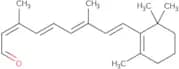
13-cis-Retinal - 95%
CAS:13-cis-Retinal is a natural compound that is a derivative of retinol. It is biologically active, and a precursor to retinoic acid. Retinal is synthesized from dietary vitamin A, and is converted to retinoic acid in the liver. Retinal binds to the receptor protein opsin, which initiates the photochemical conversion of light into nerve impulses. 13-cis-Retinal has been shown to be effective for restoring vision in people with retinitis pigmentosa and other degenerative diseases of the retina. This molecule also has anticancer properties that are due to its ability to inhibit cell division and induce apoptosis.
Fórmula:C20H28OPureza:(%) Min. 95%Forma y color:Yellow PowderPeso molecular:284.44 g/molRef: 3D-FR27712
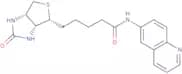
Producto descatalogadoBiotinyl-6-aminoquinoline
CAS:Biotinyl-6-aminoquinoline is a synthetic chemical that has been shown to inhibit the growth of cancer cells in laboratory mice. It was synthesized to be a substrate for the enzyme quinolinate synthase, which is involved in the synthesis of nicotinic acid. Biotinyl-6-aminoquinoline is an analytical method that has been used in urinary samples from patients with bladder cancer as well as healthy individuals. The sequences of each individual were determined and analyzed using an algorithm that performs logistic regression, which can predict whether or not the patient has bladder cancer.
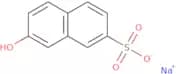
Fórmula:C19H22N4O2SPureza:Min. 95 Area-%Forma y color:PowderPeso molecular:370.47 g/mol7-Hydroxy-2-naphthalene sulfonic acid sodium
CAS:7-Hydroxy-2-naphthalene sulfonic acid sodium (7HNS) is a fluorescent probe that can be used for the detection of cross-links in collagen and elastin. The sensitivity of this compound is very high, with a detection limit of 1 pmol/ml. 7HNS binds to the lysine residues in collagen and elastin, forming covalent bonds that are detectable by fluorescence. It has been used in the analysis of tissues such as cartilage, bone, skin, and blood vessels.Fórmula:C10H7NaO4SPureza:Min. 93 Area-%Forma y color:PowderPeso molecular:246.22 g/mol1,8-Naphthalic anhydride
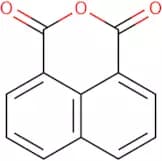
CAS:1,8-Naphthalic anhydride is a potent inducer of dinucleotide phosphate (NADPH), which is important for the biosynthesis of fatty acids, proteins and carbohydrates. It also inhibits the enzyme activities of both antimicrobial agents and infectious diseases. 1,8-Naphthalic anhydride has been shown to be effective against solid tumours in treatment trials. This drug may lead to neuronal death by inhibiting ATP production in the mitochondria. The x-ray crystal structure shows that this drug binds to NADPH and water molecules in the active site of the enzyme, forming a covalent bond with NADPH. 1,8-Naphthalic anhydride has also been shown to have anti-inflammatory properties due to its ability to inhibit toll-like receptor 4 signaling pathways.
Fórmula:C12H6O3Pureza:Min. 98 Area-%Forma y color:Off-White PowderPeso molecular:198.17 g/molRef: 3D-FN00567
Producto descatalogado22,23-Dihydrobrassicasterol
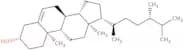
CAS:Producto controlado22,23-Dihydrobrassicasterol is a sterol present in rhizoma gastrodiae that has been shown to inhibit the growth of oral pathogens. It also has been found to have cholesterol-lowering effects and can be used as an antimicrobial agent to treat gastrointestinal diseases. 22,23-Dihydrobrassicasterol has been found to have inhibitory effects on human serum processes such as the process of producing fibroblasts and on physiological functions such as the inhibition of hepatic steatosis. The pharmacokinetic properties of this drug are not well understood, but it appears to be absorbed from the gut and excreted in urine.
Fórmula:C28H48OPureza:Min. 95%Peso molecular:400.68 g/molBromocresol green, sodium salt
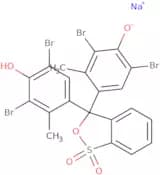
CAS:Bromocresol green is a dye that is used in biological assays to measure the kinetics of fluorescence. It is a type of tryptophan-releasing compound that releases a yellowish-green light when it absorbs light at wavelengths between 350 and 450 nm. Bromocresol green has been quantified by measuring the intensity of the fluorescence emission as a function of time. This can be done visually or using an instrument called a fluorometer, which detects changes in light intensity over time. Bromocresol green can be used to detect the presence of amino acid residues in proteins through protonation reactions with their tryptophan residues and subsequent quenching with acetonitrile. The bromocresol green dye is also used in lithographic printing, where it serves as an acceptor for electrons from an arene (aromatic hydrocarbon). This process generates energy for lithography and also provides contrast between regions with different electron densities.
Fórmula:C21H14Br4O5SNaForma y color:PowderPeso molecular:721 g/molRef: 3D-FB01465
Producto descatalogado3,5,3',5'-Tetraiodothyroacetic acid
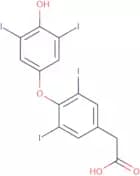
CAS:3,5,3',5'-Tetraiodothyroacetic acid (T4) is a thyroid hormone that can be found in the blood and has been shown to have angiogenic properties. T4 has been shown to bind to integrin receptors on endothelial cells and stimulate the proliferation of these cells. This hormone also has pro-apoptotic activity, inducing programmed cell death in cancer cells. T4 is used as a model system for studying the molecular pathogenesis of thyroid cancer. T4 is also able to inhibit DNA polymerase activity, which may be responsible for its ability to inhibit tumor growth.
Fórmula:C14H8I4O4Pureza:Min. 95%Forma y color:White PowderPeso molecular:747.83 g/mol2-Benzyloxy-6-methoxyacetophenone
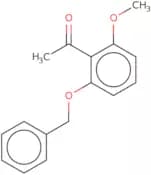
CAS:2-Benzyloxy-6-methoxyacetophenone is a high quality and versatile chemical that can be used as a reagent or building block in organic synthesis. It is an important intermediate in the synthesis of fine chemicals, pharmaceuticals, and other complex compounds. 2-Benzyloxy-6-methoxyacetophenone has been shown to be useful as a scaffold for the synthesis of novel complex molecules, such as speciality chemicals. The compound also has potential applications in research and development of new drugs.
Fórmula:C16H16O3Pureza:Min. 95%Forma y color:PowderPeso molecular:256.3 g/molFmoc-3-chloro-L-tyrosine
CAS:Fmoc-3-chloro-L-tyrosine is a fine chemical that belongs to the class of versatile building blocks. It is a reagent and speciality chemical that is used in the synthesis of complex compounds. Fmoc-3-chloro-L-tyrosine can be used as a useful scaffold to produce high quality and versatile building blocks, which are useful for research purposes. Fmoc-3-chloro-L-tyrosine has CAS No. 478183-58-3, which shows its high quality and usefulness.
Fórmula:C24H20ClNO5Pureza:Min. 95%Forma y color:White PowderPeso molecular:437.87 g/molRef: 3D-FF50056
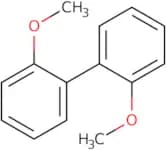
Producto descatalogado2,2'-Dimethoxybiphenyl
CAS:2,2'-Dimethoxybiphenyl is a thermoplastic that is exothermic, making it useful in the production of polyketones. It can be used as a linker to form covalent bonds with monomers and polymers. 2,2'-Dimethoxybiphenyl has been used as a monomer to produce polyethers and polyesters. This compound has many chemical stability properties, which makes it suitable for use in polymer synthesis. It also can react with nucleophiles such as amines to form ether linkages. 2,2'-Dimethoxybiphenyl has kinetic properties that are faster than those of other ketones but slower than those of other ether-linked compounds. The activation energy for its reaction is low, making it an effective monomer for polymerization reactions.
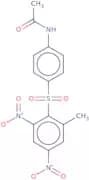
Fórmula:C14H14O2Pureza:Min. 95%Forma y color:PowderPeso molecular:214.26 g/mol4-Acetamido-2',4'-dinitro-5'-methyldiphenyl sulphone
CAS:4-Acetamido-2',4'-dinitro-5'-methyldiphenyl sulphone is a high quality, versatile building block that is used as a reagent and complex intermediate. It can be used in the production of speciality chemicals, research chemicals and fine chemicals. 4-Acetamido-2',4'-dinitro-5'-methyldiphenyl sulphone is also a useful scaffold for the construction of new chemical compounds. This compound has been shown to be a reaction component in organic synthesis reactions.Fórmula:C15H13N3O7SPureza:Min. 95%Forma y color:Solid.Peso molecular:379.35 g/molRef: 3D-FA66900
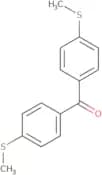
Producto descatalogado4,4’-Bis-(methylthio)-benzophenone
CAS:4,4’-Bis-(methylthio)-benzophenone is a versatile building block that is used in the synthesis of complex compounds. It has a CAS number of 63084-99-1 and can be used as a reagent for research purposes. 4,4’-Bis-(methylthio)-benzophenone is also useful as an intermediate for the synthesis of other compounds or as a component in reactions. This compound is high quality and can be used as an intermediate in the synthesis of many other substances.
Fórmula:C15H14OS2Pureza:Min. 95%Forma y color:PowderPeso molecular:274.4 g/molRef: 3D-FB168327
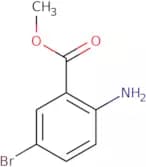
Producto descatalogado2-Amino-5-bromobenzoic acid methyl ester
CAS:2-Amino-5-bromobenzoic acid methyl ester is a small molecule with antiviral potency. It has a dipole moment and can form hydrogen bonds. 2-Amino-5-bromobenzoic acid methyl ester inhibits the PDE5 enzyme, which is an enzyme that breaks down cGMP. This inhibition of PDE5 leads to the increase in cGMP, which causes blood vessels to relax and widen. As a result, 2-amino-5-bromobenzoic acid methyl ester has been shown to decrease high blood pressure and improve heart function.Fórmula:C8H8BrNO2Pureza:Min. 95%Forma y color:PowderPeso molecular:230.06 g/molRef: 3D-FA70737
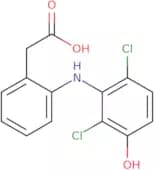
Producto descatalogado3'-Hydroxydiclofenac
CAS:3'-Hydroxydiclofenac is a dichlorinated derivative of the nonsteroidal anti-inflammatory drug diclofenac. 3'-Hydroxydiclofenac inhibits the production of cytokines that are responsible for inflammation, and it has been shown to be effective in reducing pain and inflammation in patients with chronic hepatitis. In vitro tests have shown that 3'-hydroxydiclofenac does not have carcinogenic potential, but its safety profile has not been determined. 3'-Hydroxydiclofenac is metabolized by humans into monohydroxylated metabolites, which can be detected in urine samples. The metabolism of 3'-hydroxydiclofenac is similar to that of other drugs that are metabolized by humans into monohydroxylated metabolites.
Fórmula:C14H11Cl2NO3Pureza:Min. 95%Forma y color:PowderPeso molecular:312.15 g/molRef: 3D-FH71816
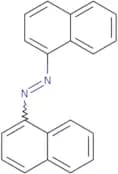
Producto descatalogado1,1'-Azonaphthalene - 80%
CAS:1,1'-Azonaphthalene is a quinoid that produces an azobenzene with a 1,3-dipolar cycloaddition reaction. This azobenzene is used as a model system for the study of enzyme inducers. It acts as an inhibitor of vascular endothelial growth factor (VEGF) and has been shown to inhibit tumor growth in murine hepatoma models. 1,1'-Azonaphthalene also reacts with dimethyl fumarate to form the dichroic compound with high optical activity. The asymmetric synthesis of 1,1'-azonaphthalene is achieved by using catalytic asymmetric hydrogenation with rhodium on carbon as a catalyst. Reaction mechanism studies have revealed that 1,1'-azonaphthalene can be converted into aromatic hydrocarbons by reacting with aliphatic hydrocarbons.
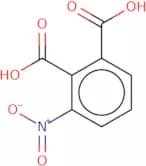
Fórmula:C20H14N2Pureza:Min. 80%Forma y color:PowderPeso molecular:282.34 g/mol3-Nitrophthalic acid
CAS:3-Nitrophthalic acid is an organic compound that has been used in biological studies. It has been shown to bind to DNA and RNA, which may be due to hydrogen bonding interactions with the nitrogen atoms. 3-Nitrophthalic acid is synthesized by reacting sodium carbonate with trifluoroacetic acid, resulting in a carboxylate group. This compound has photochemical properties and can be used as a photosensitizer for the treatment of certain forms of cancer. 3-Nitrophthalic acid reacts with oxygen and generates singlet oxygen, which results in cellular damage.
Fórmula:C8H5NO6Pureza:Min. 95%Forma y color:PowderPeso molecular:211.13 g/molRef: 3D-FN32321
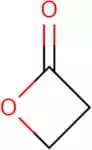
Producto descatalogadob-Propiolactone
CAS:Producto controladob-Propiolactone is a plant extract that is found in soybeans. It has been shown to have antiviral properties and can inhibit the growth of certain viruses. b-Propiolactone binds to the active site of an enzyme called RNA polymerase, which blocks RNA synthesis and inhibits viral replication. This compound has also been shown to inhibit virus replication in vitro assays as well as antibody response against hepatitis B. The biological effects of b-propiolactone are thought to be due to its ability to bind with group p2 protein monoclonal antibodies, which may have implications for the prevention of pandemic influenza.
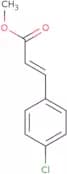
Fórmula:C3H4O2Pureza:Min. 95%Forma y color:Clear LiquidPeso molecular:72.06 g/molMethyl 4-chlorocinnamate
CAS:Methyl 4-chlorocinnamate is an aryl chloride that is synthesized by the reaction of methoxyethyl chloride with cinnamic acid derivatives. It has bacteriostatic activity against a variety of bacteria species, including staphylococcus and candida glabrata. Methyl 4-chlorocinnamate reacts with amine groups in proteins to form amides, which are strong inhibitors of protein synthesis. This compound also inhibits the growth of Candida glabrata by inhibiting phosphonates, which are essential for cell division.
Fórmula:C10H9ClO2Pureza:Min. 95%Peso molecular:196.63 g/molRef: 3D-FM71222
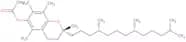
Producto descatalogadoDL-a-Tocopherol acetate - powder
CAS:DL-a-Tocopherol acetate is a synthetic vitamin E compound that is used in the treatment of eye disorders and other conditions. It is an antioxidant that inhibits lipid peroxidation by scavenging free radicals. DL-a-Tocopherol acetate has been shown to inhibit the activity of protein kinase C, which plays a role in cancer, inflammation and apoptosis. This compound also inhibits the activity of toll-like receptor 4, which may be useful in treating infectious diseases, and scavenges anion radicals.
Fórmula:C31H52O3Pureza:Min. 50 Area-%Forma y color:Clear LiquidPeso molecular:472.74 g/molRef: 3D-FT146270
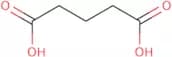
Producto descatalogadoGlutaric acid
CAS:Glutaric acid is a dinucleotide phosphate that exists in two forms: the alpha form, which has a high phase transition temperature and is insoluble in water; and the beta form, which has a low phase transition temperature and is soluble in water. Glutaric acid can be used as an analytical reagent to identify the type of nucleotides present in samples. It can also be used as an experimental solvent for other compounds that are not soluble in water. The toxicity of glutaric acid has been studied extensively and found to be low. This compound does not appear to have any adverse effects on human health or animals at doses up to 1g/kg body weight. Glutaric acid has been shown to have anti-infectious properties by inhibiting the growth of bacteria, fungi, and viruses. The effectiveness of glutaric acid against infectious diseases appears to depend on its ability to block protein synthesis by inhibiting enzymes such as glutathione reductase
Fórmula:C5H8O4Pureza:Min. 99 Area-%Forma y color:White PowderPeso molecular:132.11 g/molRef: 3D-FG02567
Producto descatalogado