Estándares farmacéuticos
Subcategorías de "Estándares farmacéuticos"
- APIs para investigación e impurezas(277.583 productos)
- Activadores e inhibidores de enzimas(2.828 productos)
- Nitrosaminas(2.678 productos)
- Compuestos y metabolitos farmacéuticos y veterinarios(2.892 productos)
- Toxicología(13.294 productos)
Se han encontrado 8194 productos de "Estándares farmacéuticos"
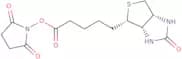
Biotin succinimidyl ester
CAS:Biotinylation reagent for labeling nucleic acids or proteins.
Fórmula:C14H19N3O5SPureza:Min. 98 Area-%Forma y color:White Off-White PowderPeso molecular:341.38 g/molRef: 3D-FB10303
Producto descatalogadoDiazolidinyl urea
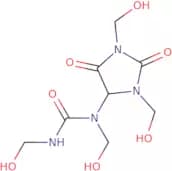
CAS:Diazolidinyl urea is a preservative used in cosmetics and pharmaceuticals. It is an antimicrobial agent that causes cell lysis by inhibiting the respiratory synthesis of bacteria. Diazolidinyl urea has been shown to be effective against Gram-positive and Gram-negative bacteria, yeast, and mold. The analytical method for diazolidinyl urea is well established, with detection limits of 0.1 ppm. Diazolidinyl urea is stable under normal conditions, but can be degraded by heat or pH changes. This preservative also inhibits microbial growth by reducing the availability of p-hydroxybenzoic acid (pHBA) and formaldehyde as substrates for bacterial metabolism. Diazolidinyl urea also prevents the formation of biofilms on wet surfaces and exhibits some anti-inflammatory effects.
Fórmula:C8H14N4O7Forma y color:PowderPeso molecular:278.22 g/mol5,6,7,8-Tetrahydro-[1,8]naphthyridine-2-carboxylic acid
CAS:5,6,7,8-Tetrahydro-[1,8]naphthyridine-2-carboxylic acid is a chemical compound with CAS No. 885278-22-8. It is a high quality reagent that can be used as a building block for the synthesis of complex compounds. 5,6,7,8-Tetrahydro-[1,8]naphthyridine-2-carboxylic acid can also be used as a reaction component in chemical synthesis and as an intermediate in the production of various fine chemicals and speciality chemicals.
Fórmula:C9H10N2O2Pureza:Min. 98 Area-%Forma y color:PowderPeso molecular:178.19 g/molRef: 3D-FT56542
Producto descatalogado2,6-Dichlorocinnamic acid
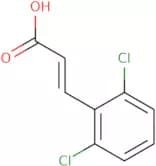
CAS:2,6-Dichlorocinnamic acid is an organic compound that is used as a reagent in the synthesis of other chemicals. 2,6-Dichlorocinnamic acid has been used as a component in the synthesis of various kinds of fine chemicals and useful building blocks. This chemical is also used as a speciality chemical and research chemical. 2,6-Dichlorocinnamic acid can be used as a versatile building block for the preparation of various compounds. It can be synthesized by heating cinnamic acid with chlorine gas and then reacting it with sodium hydroxide.
Fórmula:C9H6Cl2O2Pureza:Min. 95%Forma y color:PowderPeso molecular:217.05 g/molRef: 3D-FD63543
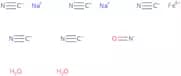
Producto descatalogadoSodium nitroprusside dihydrate
CAS:Producto controladoSodium nitroprusside dihydrate is an oxygen transport agent that works by inhibiting the enzyme cyclase. This inhibits the production of tnf-α and other inflammatory mediators, which reduces inflammation and pain. Sodium nitroprusside dihydrate is used to lower blood pressure in emergency situations, such as shock. It has been shown to be effective for treating pulmonary hypertension, chronic obstructive pulmonary disease, and other conditions related to oxygen transport. Sodium nitroprusside dihydrate is a metastable molecule that can be converted into a stable form (sodium nitroprusside) by ester hydrochloride or fatty acid esters.
Fórmula:C5FeN6O•(H2O)2•Na2Pureza:Min. 98.0%Forma y color:Red PowderPeso molecular:297.95 g/molRef: 3D-FS55880
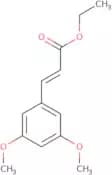
Producto descatalogado3,5-Dimethoxycinnamic acid methyl ester
CAS:Please enquire for more information about 3,5-Dimethoxycinnamic acid methyl ester including the price, delivery time and more detailed product information at the technical inquiry form on this pageFórmula:C12H14O4Pureza:Min. 95%Peso molecular:222.24 g/molRef: 3D-FD67492
Producto descatalogado(+)-Biotin-(PEO)3-amine
CAS:(+)-Biotin-(PEO)3-amine is a PEG compound with two different functional groups (also known as heterobifunctional). Unlike homobifunctional PEG compounds (same functional group on both ends), this type of compounds are more versatile as have two different anchor points. (+)-Biotin-(PEO)3-amine is used as a linker and spacer to add a PEG moiety, via pegylation (a bioconjugation technique) to proteins, peptides, oligonucleotides, small molecules and nanoparticles.
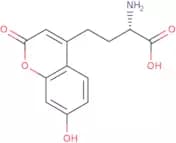
Fórmula:C16H30N4SO4Pureza:Min. 95 Area-%Forma y color:White Off-White PowderPeso molecular:374.5 g/molL-(7-Hydroxycoumarin-4-yl) ethylglycine
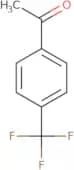
CAS:L-(7-Hydroxycoumarin-4-yl) ethylglycine is a molecule that has been used as a model system to study the binding of inhibitors to enzymes. L-(7-Hydroxycoumarin-4-yl) ethylglycine binds to the enzyme synthetase and inhibits its activity. The inhibition of this enzyme prevents the formation of ATP, which is necessary for the synthesis of proteins. L-(7-Hydroxycoumarin-4-yl) ethylglycine also blocks transcription and translation by binding to DNA binding proteins and inhibiting ribosome function respectively. This agent is an antimicrobial agent that has shown activity against gram positive bacteria such as Staphylococcus aureus, Enterococcus faecalis, and Bacillus cereus, as well as gram negative bacteria such as Escherichia coli, Salmonella typhimurium, Pseudomonas aeruginFórmula:C13H13NO5Pureza:Min. 98 Area-%Forma y color:Red PowderPeso molecular:263.25 g/mol4'-(Trifluoromethyl)acetophenone
CAS:4'-(Trifluoromethyl)acetophenone is a phosphatase inhibitor that has been shown to have inhibitory activity against chemokines. Chemokines are a type of cytokine that are secreted by immune cells and play an important role in inflammation. 4'-(Trifluoromethyl)acetophenone has also been shown to have an effect on the cell membrane permeability of amines and 2-aminobenzyl alcohol, which are substrates for the enzyme. 4'-(Trifluoromethyl)acetophenone reacts with imidazole derivatives, such as trifluoride, forming hydrogen bonds between the two molecules. Kinetic studies have demonstrated that this reaction is reversible in solution at room temperature.
Fórmula:C9H7F3OPureza:Min. 95%Forma y color:PowderPeso molecular:188.15 g/molRef: 3D-FT28471
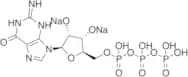
Producto descatalogadoGuanosine-5'-triphosphate Disodium Salt (~85%)
CAS:Producto controladoApplications Guanosine-5'-triphosphate disodium salt (CAS# 56001-37-7) is a nucleotide used in the preparation of photoreactive GTP affinity probes, and in inhibitors of eukaryotic initiation factor eIF-4E.
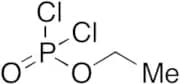
References George Cisar, E. A.; J. Am. Chem. Soc., 135, 4676 (2013); Ghosh, P.; et al.: Bioorg. Med. Chem. Lett., 16, 750 (2006).Fórmula:C10H14N5O14P3Na2Pureza:~85%Forma y color:NeatPeso molecular:567.14Ethyl Dichlorophosphate
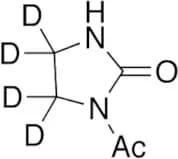
CAS:Producto controladoFórmula:C2H5Cl2O2PForma y color:White to Off-White SolidPeso molecular:162.94N-Acetylethylene Urea-d4
CAS:Producto controladoApplications N-Acetylethylene Urea-d4 (cas# 1189701-94-7) is a compound useful in organic synthesis.
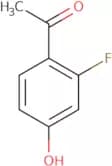
Fórmula:C5H4H4N2O2Forma y color:NeatPeso molecular:132.152'-Fluoro-4'-hydroxyacetophenone
CAS:2'-Fluoro-4'-hydroxyacetophenone is a glycosylated molecule that is used in phase transfer catalysis. It is a glycoside that can undergo the glycosylation reaction and can be used as a phase transfer reagent. 2'-Fluoro-4'-hydroxyacetophenone has been studied for its potential use in the synthesis of xylosides and selenadiazoles. In addition, it has shown anti-inflammatory properties, which may be due to its inhibition of prostaglandin synthesis.
Fórmula:C8H7FO2Pureza:Min. 95%Peso molecular:154.14 g/molRef: 3D-FF64528
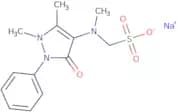
Producto descatalogadoDipyrone
CAS:Dipyrone is an anti-inflammatory and analgesic drug that belongs to the group of non-steroidal anti-inflammatory drugs. It has been shown to inhibit the production of prostaglandins, which are involved in inflammation, by inhibiting cyclooxygenase. The polymerase chain reaction (PCR) method is a biochemical technique used to amplify a segment of DNA, typically for use as a genetic marker or for cloning a particular gene. A PCR assay can be used to detect the presence of bacterial DNA in a sample. Dipyrone has been shown to possess chemiluminescence activity, which is indicative of its ability to bind with DNA. This binding inhibits transcription and replication and may be responsible for the toxic effects on epidermal cells observed in animal studies. Dipyrone also has been shown to have anti-inflammatory activities through its inhibition of cyclooxygenase and its ability to inhibit neutrophil migration and function.
Fórmula:C13H16N3NaO4SPureza:Min. 95%Forma y color:White SolidPeso molecular:333.34 g/molRef: 3D-FD22539
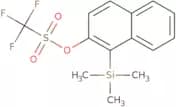
Producto descatalogado1-(Trimethylsilyl)-2-naphthyl Trifluoromethanesulfonate
CAS:1-(Trimethylsilyl)-2-naphthyl Trifluoromethanesulfonate is a solvent that has been used for the synthesis of oxygen heterocycles. It is also used as a reagent to cleave bonds in organic molecules, such as alkene, solvents, aldehydes and activated esters. This compound is an unsymmetrical nucleophile that reacts with electron-poor alkenes to generate an unsaturated bond between two carbons. Mechanistic studies have shown that the reaction proceeds through a concerted mechanism involving the formation of a covalent phosphine intermediate.
Fórmula:C14H15F3O3SSiPureza:Min. 95%Forma y color:PowderPeso molecular:348.41 g/molRef: 3D-FT60048
Producto descatalogado5-Methyl-2-nitropyridine
CAS:Please enquire for more information about 5-Methyl-2-nitropyridine including the price, delivery time and more detailed product information at the technical inquiry form on this page
Fórmula:C6H6N2O2Pureza:Min. 95%Forma y color:PowderPeso molecular:138.12 g/molRef: 3D-FM32781
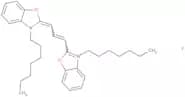
Producto descatalogado3,3'-Diheptyloxacarbocyanine iodide
CAS:3,3'-Diheptyloxacarbocyanineiodide (DHCI) is a fluorescent probe that is used in the treatment of solid tumours. It is taken up by tumor cells and causes them to fluoresce, which can be seen under a microscope. DHCI has been shown to be effective against hypoxic tumours and tumors with low oxygen levels due to its ability to penetrate tumor cells and deliver oxygen. The uptake of DHCI by cancer cells is also dependent on the permeability of the blood vessels present in the tumor. This drug has been shown to have a large therapeutic window for treatment of solid tumours.
Fórmula:C31H41N2O2•IPureza:Min. 95%Forma y color:PowderPeso molecular:600.57 g/molRef: 3D-FD148550
Producto descatalogadoSulfosuccinimidyl 3-[[2-(biotinamido)ethyl] dithio]propionate sodium salt
CAS:Sulfosuccinimidyl 3-[[2-(biotinamido)ethyl] dithio]propionate sodium salt (BSP) is a biotin-avidin binding molecule that forms a covalent linkage with the antigen and antibody. It is used in immunoassays to detect specific antigens or antibodies in biological samples. BSP is manufactured by reacting carbodiimide hydrochloride with sulfosuccinic acid. The product can be used for a variety of immunoassays such as enzyme-linked immunosorbent assays, real-time polymerase chain reaction, and immunohistochemistry. The sensitivity of this product has been shown to be greater than those of other detection methods such as Western blotting.Fórmula:C19H27N4NaO9S4Pureza:Min. 95%Forma y color:White Off-White PowderPeso molecular:606.69 g/molN-a-t-Boc-N-g-trityl-L-asparagine
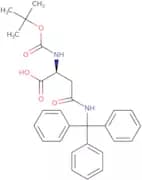
CAS:N-a-t-Boc-N-g-trityl-L-asparagine is a recombinant human protein that has been synthesized in E. coli. It is a peptide with 17β-estradiol at its C terminus, and it binds to the oestrogen receptor α (ERα) via hydrogen bonding interactions. The linker between the asparagine and estradiol is a Boc group that can be removed by protease activity, revealing the active form of 17β-estradiol. ERα ligates to N-a-t-Boc-N-g-trityl L asparagine with high affinity, and this interaction is reversible. The linker also contains a functional group for surface attachment, which may be used to attach this peptide to a solid support or tissue culture substrate for use in cell cultures.
br>Fórmula:C28H30N2O5Pureza:Min. 95%Forma y color:White PowderPeso molecular:474.55 g/molRef: 3D-FB39381
Producto descatalogado5-Amino-o-cresol
CAS:5-Amino-o-cresol is a chemical compound that is used in analytical chemistry as an aminophenol. It reacts with ethylene diamine to form a red dye called 5-aminonaphthalene-2,7-disulphonic acid (5ANDS). The reaction solution can be used to identify the presence of bacterial DNA. 5-Amino-o-cresol has been shown to have genotoxic effects, which may lead to skin cancer or skin damage. This chemical also has toxicological properties and can cause skin irritation at high concentrations.
Fórmula:C7H9NOPureza:Min. 95%Forma y color:PowderPeso molecular:123.15 g/mol

![5,6,7,8-Tetrahydro-[1,8]naphthyridine-2-carboxylic acid](/_next/image/?url=https%3A%2Fstatic.cymitquimica.com%2Fproducts%2F3D%2Fthumb-webp%2FFT56542.webp&w=3840&q=75)



![Sulfosuccinimidyl 3-[[2-(biotinamido)ethyl] dithio]propionate sodium salt](/_next/image/?url=https%3A%2Fstatic.cymitquimica.com%2Fproducts%2F3D%2Fthumb-webp%2FFS27965.webp&w=3840&q=75)