Standard farmaceutici
Subcategorías de "Standard farmaceutici"
- APIs per la ricerca e le impurità(277.583 productos)
- Attivatori e inibitori enzimatici(2.828 productos)
- Nitrosamine(2.678 productos)
- Composti e metaboliti farmaceutici e veterinari(2.892 productos)
- Tossicologia(13.294 productos)
Se han encontrado 8194 productos de "Standard farmaceutici"
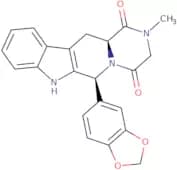
Tadalafil impurity B
CAS:Please enquire for more information about Tadalafil impurity B including the price, delivery time and more detailed product information at the technical inquiry form on this page
Fórmula:C20H19N3O3Pureza:Min. 95%Peso molecular:349.38 g/molRef: 3D-FT63834
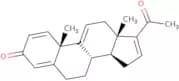
Producto descatalogadoPregna-1,4,9(11),16-tetraene-3,20-dione
CAS:Producto controladoPregna-1,4,9(11),16-tetraene-3,20-dione is a controlled product that is widely used in the industrial sector. It is a phosphoric compound that has various applications. This chemical compound acts as a chemokine and contains active agents such as tryptamine and aldehyde monophosphate. Pregna-1,4,9(11),16-tetraene-3,20-dione is also known to be a mouse metabolite and has been found to have properties similar to naphthalene and phenylethylamine. With its acidic nature and oxygen-containing structure, this compound can be easily purified through recrystallization. It exists in different tautomeric forms, making it highly versatile for various applications in different industries.
Fórmula:C21H24O2Pureza:Min. 95%Peso molecular:308.41 g/molRef: 3D-FP27146
Producto descatalogado7-Amino-4-(trifluoromethyl)coumarin
CAS:7-Amino-4-(trifluoromethyl)coumarin is a coumarin derivative that has been used as a fluorescence probe for the study of enzyme activities. It can be used as a potential biomarker for autoimmune diseases, and has also been shown to have tyrosine kinase domain binding activity. 7-Amino-4-(trifluoromethyl)coumarin can bind to the hydroxyl group in tyrosine residues with high affinity, and binds to the nitrogen atoms in protein kinases with low affinity. This compound is able to form intermolecular hydrogen bonds and steric interactions with peptide hormones.
Fórmula:C10H6F3NO2Pureza:Min. 95%Peso molecular:229.16 g/molRef: 3D-FA74300
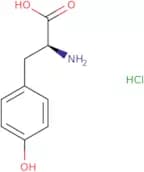
Producto descatalogadoL-Tyrosine hydrochloride
CAS:L-Tyrosine hydrochloride is a pharmaceutical preparation that has been used clinically in the treatment of infectious diseases, cancer, and autoimmune diseases. Tyrosine is an amino acid with a hydroxyl group on its side chain. Tyrosine can be synthesized from phenylalanine by hydroxylation of the phenolic group and decarboxylation of the carboxylic acid group. It is also a precursor to catecholamines and other important biological molecules. L-Tyrosine hydrochloride is used as an intermediate in the production of monoclonal antibodies for use in cancer research. In addition, it has been shown to be an effective inhibitor of virus replication when combined with ester hydrochloride, which prevents the release of progeny virus particles from infected cells.
Fórmula:C9H11NO3·HClPureza:Min. 95%Peso molecular:217.65 g/molRef: 3D-FT46951
Producto descatalogado2,2’,3,3’,4,4’,5,5’,6-Nonabromobiphenyl
CAS:Producto controladoPlease enquire for more information about 2,2’,3,3’,4,4’,5,5’,6-Nonabromobiphenyl including the price, delivery time and more detailed product information at the technical inquiry form on this page
Fórmula:C12HBr9Pureza:Min. 95%Peso molecular:864.27 g/molRef: 3D-FN165606
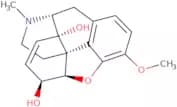
Producto descatalogadoCodeine Impurity F
CAS:Producto controladoCodeine Impurity F is a biochemical that is an impurity of codeine. Codeine Impurity F is a byproduct of the enzymatic reaction with morphine and the bacterial strain Pseudomonas putida. Codeine Impurity F has been shown to inhibit the growth of gram-negative bacteria, including Escherichia coli and Salmonella enterica, by binding to cellular membranes and inhibiting their function. It also binds to RNA in vitro and prevents translation of mRNA from its ribosome complex. The hydroxyl group on Codeine Impurity F binds to aluminium ions, which may interfere with the absorption of other drugs such as ampicillin or tetracycline. This impurity has been shown to have an effect on biological products such as immunoglobulins and albumin.
Fórmula:C18H21NO4Pureza:Min. 95%Peso molecular:315.36 g/molRef: 3D-FC161072
Producto descatalogado(NZ)-4-chloro-N-[1-[2-(4-nitrophenyl)ethyl]piperidin-2-ylidene]benzenesulfonamide
CAS:Producto controladoPlease enquire for more information about (NZ)-4-chloro-N-[1-[2-(4-nitrophenyl)ethyl]piperidin-2-ylidene]benzenesulfonamide including the price, delivery time and more detailed product information at the technical inquiry form on this page
Fórmula:C19H20ClN3O4SPureza:Min. 95%Peso molecular:421.9 g/molRef: 3D-FN154024
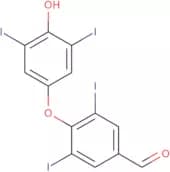
Producto descatalogado3,5,3',5'-Tetraiodo thyroaldehyde
CAS:Please enquire for more information about 3,5,3',5'-Tetraiodo thyroaldehyde including the price, delivery time and more detailed product information at the technical inquiry form on this page
Fórmula:C13H6I4O3Pureza:Min. 95%Forma y color:PowderPeso molecular:717.8 g/molRef: 3D-FT28151
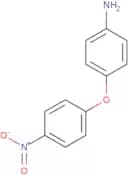
Producto descatalogado4-(4-Nitrophenoxy)aniline
CAS:4-(4-Nitrophenoxy)aniline is a synthetic drug that is used as a substrate for the cytochrome P450 system. It has been shown to be metabolized by the liver in two steps, forming reduction products and interacting with thiourea. This drug also has functional groups which are active in the group p2 of the periodic table, such as diphenyl ethers and aminophenols. 4-(4-Nitrophenoxy)aniline can be used to probe the interaction between an enzyme and its substrate.
Fórmula:C12H10N2O3Pureza:Min. 95%Peso molecular:230.22 g/molRef: 3D-FN147043
Producto descatalogado3,4'-Dihexyl-2,2'-bithiophene
CAS:Please enquire for more information about 3,4'-Dihexyl-2,2'-bithiophene including the price, delivery time and more detailed product information at the technical inquiry form on this page
Pureza:Min. 95%Ref: 3D-FD44193
Producto descatalogadoNaphthalen-2-ethanol
CAS:Naphthalen-2-ethanol is a primary alcohol that has been synthesized and immobilized onto boron nitride. It can be used as a synthetic reaction rate indicator. Naphthalen-2-ethanol is soluble in organic solvents such as methanol, which can be used to determine the concentration of methanol in solution by observing the change in absorbance at 230 nm. This compound has functional groups such as carbinols, which are characterized by their high reactivity and ability to form esters, ethers, amides, or nitriles. Naphthalen-2-ethanol also reacts with lipases to produce polyamines and with chromatography to produce substitutive nomenclature.
Fórmula:C12H12OPureza:Min. 95%Peso molecular:172.22 g/molRef: 3D-FN146293
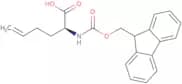
Producto descatalogado(S)-N-Fmoc-2-(3'-butenyl)glycine
CAS:Please enquire for more information about (S)-N-Fmoc-2-(3'-butenyl)glycine including the price, delivery time and more detailed product information at the technical inquiry form on this page
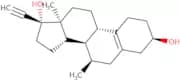
Fórmula:C21H21NO4Pureza:Min. 95%Forma y color:White PowderPeso molecular:351.4 g/mol3a-Hydroxy tibolone
CAS:Producto controladoTibolone is a synthetic hormone that is used in the treatment of menopausal symptoms and breast cancer. Tibolone has been shown to be an effective treatment for menopausal symptoms, such as hot flashes and vaginal dryness, by providing relief from these symptoms. Tibolone has also been shown to have anti-cancer effects. This drug may be useful for treating breast cancer because it can inhibit the growth of cancer cells by binding to estrogen receptors and blocking estrogen-induced cell proliferation. Tibolone also stimulates angiogenesis, which is the formation of new blood vessels in order to provide nutrients and oxygen to growing tissue. It has been shown that this drug inhibits the synthesis of hepg2 cells in vitro, which are involved in the production of angiogenic factors. Tibolone may also have clinical relevance as a chemopreventive agent against prostate cancer.BR> Tibolone has also been shown to stimulate sulphatase activity in vitro, which may contribute to
Fórmula:C21H30O2Pureza:Min. 95%Peso molecular:314.46 g/molRef: 3D-FH24140
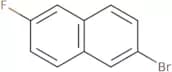
Producto descatalogado2-bromo-6-fluoronaphthalene
CAS:2-bromo-6-fluoronaphthalene is a molecule that has been shown to be a good electron donor in organic solar cells. It is also an analgesic and antinociceptive agent. 2-Bromo-6-fluoronaphthalene has shown to have antiinflammatory effects and inhibit the production of prostaglandins, which are chemical messengers that induce inflammation. The molecular structure of 2-bromo-6-fluoronaphthalene consists of two bromine atoms attached to two naphthalene rings. The bromine atoms provide strong electron donating properties and the naphthalene rings provide stability for the molecule.
Fórmula:C10H6BrFPureza:Min. 95%Peso molecular:225.06 g/molRef: 3D-FB105673
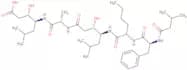
Producto descatalogadoIsovaleryl-Phe-Nle-Sta-Ala-Sta-OH
CAS:Isovaleryl-Phe-Nle-Sta-Ala-Sta-OH (IVAS) is a small molecule that has been shown to be an angiotensin system inhibitor. IVAS blocks the binding site of the angiotensin receptor and prevents the activation of this system. This effect is dose dependent and can be used to treat high blood pressure in humans. IVAS is a long-acting drug and has been shown to be effective in primates as well as humans. The drug is rapidly absorbed from the gastrointestinal tract and eliminated by metabolism, mainly through hydrolysis by esterases or glucuronidases, oxidation by cytochrome P450 enzymes, reduction by glutathione reductase, or conjugation with glucuronic acid. IVAS also specifically binds to markers expressed at high levels in Mycobacterium tuberculosis strains (e.g., ESX-1 secretion system protein) and inhibits cell growth in culture.
Fórmula:C39H65N5O9Pureza:Min. 95%Peso molecular:747.96 g/molRef: 3D-FI49358
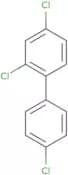
Producto descatalogado2,4,4’-Trichlorobiphenyl
CAS:Producto controlado2,4,4’-Trichlorobiphenyl is a polychlorinated biphenyl congener. It has been shown to have an adverse effect on the central nervous system, causing neurotoxicity. 2,4,4’-Trichlorobiphenyl has been used as a model system for the study of the effects of environmental toxins on mitochondrial membrane potential and lipid peroxidation. 2,4,4’-Trichlorobiphenyl binds to fatty acids in mitochondria and inhibits fatty acid β-oxidation. The inhibition of fatty acid oxidation leads to increased levels of protocatechuic acid in the serum and liver tissue. 2,4,4’-Trichlorobiphenyl has also been found to be toxic to aquatic organisms such as fish and shrimp at low concentrations.
Fórmula:C12H7Cl3Pureza:Min. 95%Peso molecular:257.54 g/molRef: 3D-FT170755
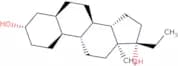
Producto descatalogado(3β,5β,17α)-19-Norpregnane-3,17-diol
CAS:Producto controladoPlease enquire for more information about (3β,5β,17α)-19-Norpregnane-3,17-diol including the price, delivery time and more detailed product information at the technical inquiry form on this page
Fórmula:C20H34O2Pureza:Min. 95%Forma y color:PowderPeso molecular:306.48 g/molRef: 3D-FN26473
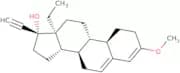
Producto descatalogado(17a)-13-Ethyl-3-methoxy-18,19-dinorpregna-3,5-dien-20-yn-17-ol
CAS:Producto controladoPlease enquire for more information about (17a)-13-Ethyl-3-methoxy-18,19-dinorpregna-3,5-dien-20-yn-17-ol including the price, delivery time and more detailed product information at the technical inquiry form on this pageFórmula:C22H30O2Pureza:Min. 95%Peso molecular:326.47 g/molRef: 3D-FE23118
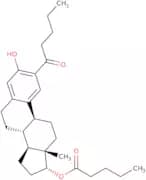
Producto descatalogado2-Valeryl-17'-estradiol 17-valerate
CAS:Producto controladoPlease enquire for more information about 2-Valeryl-17'-estradiol 17-valerate including the price, delivery time and more detailed product information at the technical inquiry form on this page
Fórmula:CHOPureza:Min. 95%Ref: 3D-FV165157
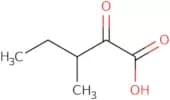
Producto descatalogado(±)-3-Methyl-2-oxovaleric acid
CAS:(±)-3-Methyl-2-oxovaleric acid is a fatty acid that is found in the mitochondria of liver cells and other tissues. It is an intermediate in the citric acid cycle and can be converted into acetyl-CoA, which is used for energy production. (±)-3-Methyl-2-oxovaleric acid has been shown to cause necrotic cell death when it binds to the mitochondrial membrane potential and causes a loss of ATP production. This results in a lack of energy for the cell, leading to cell death. (±)-3-Methyl-2-oxovaleric acid has also been shown to inhibit protein synthesis by decreasing uptake and increasing creatine kinase activity. This inhibition leads to decreased body formation and tissue culture growth in vitro. In vivo, (±)-3-Methyl-2-oxovaleric acid causes primary sclerosing cholangitis, a disease characterized by inflammation of bile ducts that
Fórmula:C6H10O3Pureza:Min. 95%Forma y color:White PowderPeso molecular:130.14 g/mol



![(NZ)-4-chloro-N-[1-[2-(4-nitrophenyl)ethyl]piperidin-2-ylidene]benzenesulfonamide](/_next/image/?url=https%3A%2Fstatic.cymitquimica.com%2Fproducts%2F3D%2Fthumb-webp%2FFN154024.webp&w=3840&q=75)