


Glycoscience
La glicociencia es el estudio de los carbohidratos y sus derivados, así como de las interacciones y funciones biológicas en las que participan. Este campo de investigación es crucial para comprender una amplia variedad de procesos biológicos, incluyendo el reconocimiento celular, la señalización, la respuesta inmune y el desarrollo de enfermedades. La glicociencia tiene aplicaciones importantes en la biotecnología, la medicina, y el desarrollo de nuevos fármacos y terapias. En CymitQuimica, ofrecemos una amplia selección de productos de alta calidad y pureza para la investigación en glicociencia. Nuestro catálogo incluye monosacáridos, oligosacáridos, polisacáridos, glicoconjugados, y reactivos específicos, diseñados para apoyar a los investigadores en sus estudios sobre la estructura, función y aplicaciones de los carbohidratos en sistemas biológicos. Estos recursos están destinados a facilitar descubrimientos científicos y aplicaciones prácticas en diversas áreas de la biociencia y la medicina.
Subcategorías de "Glycoscience"
- Aminoazúcares(108 productos)
- Anticuerpos relacionados con azúcares(282 productos)
- Glicolípidos(46 productos)
- Glicosaminoglicanos (GAGs)(55 productos)
- Glucósidos(419 productos)
- Monosacáridos(6.624 productos)
- Oligosacáridos(3.682 productos)
- Polisacáridos(503 productos)
Se han encontrado 11046 productos de "Glycoscience"
Ordenar por
Pureza (%)
0
100
|
0
|
50
|
90
|
95
|
100
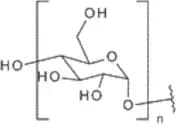
Maltodextrin - dextrose equivalent 16.5-19.5
CAS:Produced from starch by partial hydrolysis. White hygroscopic spray-dried powder, easily digestible, either moderately sweet or almost flavorless (depending on the degree of polymerisation).Forma y color:White Powder2-Azido-2-deoxy-3,4-O-isopropylidene-6-O-toluenesulfonyl-L-idonic acid methyl ester
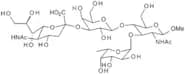
<p>2-Azido-2-deoxy-3,4-O-isopropylidene-6-O-toluenesulfonyl-L-idonic acid methyl ester is a synthetic sugar that has the CAS number of 2147690. It is a modified saccharide that can be used for glycosylation and click chemistry. This product is also available in custom synthesis, high purity, and fluorination.</p>Pureza:Min. 95%Sialyl Lewis X methyl glycoside sodium salt
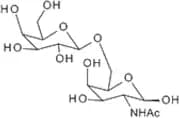
CAS:<p>Glycoside of Sialyl Lewis X</p>Fórmula:C32H54N2O23Pureza:Min. 95%Forma y color:White PowderPeso molecular:834.77 g/mol2-Acetamido-2-deoxy-6-O-(b-D-galactopyranosyl)-D-galactopyranose
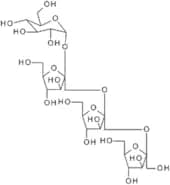
CAS:<p>2-Acetamido-2-deoxy-6-O-(b-D-galactopyranosyl)-D-galactopyranose is a model organism that is used in the study of virus replication. It is a substrate for viral glycosylation and has been shown to be involved in mammalian cell growth. 2-Acetamido-2-deoxy-6-O-(b-D-galactopyranosyl)-D-galactopyranose is an iron oxide and it can be used as a contrast agent for magnetic resonance imaging (MRI) or computed tomography (CT). The gene product has not yet been identified, but it has been shown to be involved in fatty acid metabolism and cancer. This molecule also plays a role in the life cycle of some infectious diseases, such as influenza A virus.</p>Fórmula:C14H25NO11Pureza:Min. 95%Forma y color:White PowderPeso molecular:383.35 g/molNystose
CAS:<p>A short chain isomer of inulin</p>Fórmula:C24H42O21Pureza:Min. 98 Area-%Forma y color:White Off-White PowderPeso molecular:666.58 g/mol(3S, 4S, 5R) -Dihydro- 4, 5- bis(phenylmethoxy) -2(3H) - furanone
<p>This product is a modification of the natural compound (3S, 4S, 5R) -Dihydro-4,5-bis(phenylmethoxy)-2(3H)-furanone. It is an oligosaccharide that is composed of three monosaccharides. This product has been synthesized and modified to have high purity and no detectable contaminants. The CAS number for this product is 120548-06-1.<br>This product can be used in the synthesis of complex carbohydrates. It also can be methylated, glycosylated, or polysaccharided with other sugars such as galactose, glucose, or maltose. This product has been fluorinated to increase its solubility in organic solvents. It is a saccharide that contains one carbon atom and five hydrogen atoms per molecule.</p>Pureza:Min. 95%Methyl b-D-glucopyranoside
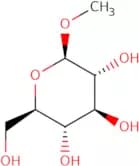
CAS:<p>Inhibitor of Man/Glc-dependent lectin binding; used for synthesis of glucoses</p>Fórmula:C7H14O6Pureza:Min. 99.0 Area-%Forma y color:White Off-White PowderPeso molecular:194.18 g/molN-(Benzyloxycarbonyl)-2,3-5,6-di-O-isopropylidene-L-gulofuranosylamine
<p>N-(Benzyloxycarbonyl)-2,3-5,6-di-O-isopropylidene-L-gulofuranosylamine is a glycosylation reagent that was custom synthesized for the synthesis of oligosaccharides and polysaccharides. It has been fluorinated at the 2 position of the benzyloxycarbonyl group to provide protection against oxidation. The methyl group in this compound is used for Click chemistry, which is a modification that adds a reactive vinyl or allyl moiety to an organic molecule. This compound can be used for the synthesis of complex carbohydrates with high purity.</p>Pureza:Min. 95%4-Methylphenyl 2-O-acetyl-3-O-benzyl-4-O-Fmoc-b-D-glucopyranuronic acid methyl ester
<p>4-Methylphenyl 2-O-acetyl-3-O-benzyl-4-O-Fmoc-b-D-glucopyranuronic acid methyl ester (4MPBA) is a custom synthesis of a sugar that belongs to the group of polysaccharides. It is a complex carbohydrate, which is an important component in living organisms. The modification of this sugar includes methylation and glycosylation. This product is available in high purity and has been fluorinated to increase its stability.</p>Pureza:Min. 95%D-Maltose 1-phosphate dipotassium salt
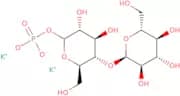
CAS:D-Maltose 1-phosphate dipotassium salt is a disaccharide that can be used in the synthesis of oligosaccharides and polysaccharides. It is also an excellent candidate for further modification.Fórmula:C12H21O14PK2Pureza:Min. 95%Peso molecular:498.46 g/molL-Iduronic acid
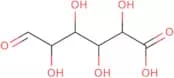
CAS:<p>L-Iduronic acid is a monosaccharide that is a component of the glycosaminoglycans. It is a sodium ion salt, which can be found in the extracellular matrix as part of the glycosaminoglycan heparan sulfate. Iduronic acid has been shown to have hypoglycemic effects in rats and mice and inhibitory properties against human osteosarcoma cells. L-Iduronic acid inhibits the synthesis of methyl glycosides by inhibiting the enzyme glucosyltransferase, which catalyzes the formation of glucuronoxylorxylan from glucose and xylose. The oligosaccharides are composed of iduronic acid units linked by α-1,4 linkages with β-1,4 linkages between adjacent iduronic acid units. The conformational properties of iduronic acid have been analyzed using X-ray crystallography and nuclear magnetic resonance spectroscopy (NMR</p>Fórmula:C6H10O7Pureza:Min. 98 Area-%Forma y color:White PowderPeso molecular:194.14 g/mol2-Azido-2-deoxy-(S)-3,4-O-phenylmethylene-D-Arabinonic acid 1,5-lactone
<p>2-Azido-2-deoxy-(S)-3,4-O-phenylmethylene-D-arabinonic acid 1,5-lactone is a custom synthesis. It is a modification of the natural sugar arabinose. The chemical structure has been modified by fluorination and methylation. This product can be used in the synthesis of monosaccharide and saccharide oligosaccharides. 2-Azido-2-deoxy-(S)-3,4-O-phenylmethylene-D-arabinonic acid 1,5 -lactone is an organic compound that belongs to the group of carbohydrates and polysaccharides.</p>Pureza:Min. 95%Methyl 2,3-di-O-benzyl-4,6-O-benzylidene-a-D-galactopyranoside
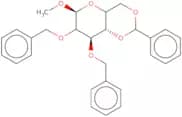
CAS:<p>Methyl 2,3-di-O-benzyl-4,6-O-benzylidene-a-D-galactopyranoside is a synthetic monosaccharide that is a glycosylation product of the natural galactose. This compound is used in the synthesis of complex carbohydrates and saccharides. It can be modified with methyl groups, fluorine, or click modification to produce various derivatives. Methyl 2,3-di-O-benzyl-4,6-O-benzylidene-a-D-galactopyranoside has been shown to be an effective candidate for the synthesis of polysaccharides as it can be modified with different reactive groups to produce desired structures. The high purity and custom synthesis make this compound suitable for use in pharmaceuticals, biotechnology, and other research studies.</p>Fórmula:C28H30O6Pureza:Min. 95%Peso molecular:462.55 g/molPoly-D-galacturonic acid methyl ester
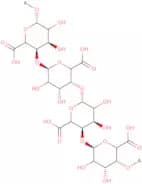
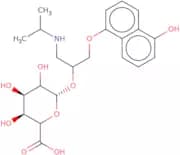
CAS:<p>Poly-D-galacturonic acid methyl ester (PDGME) is a natural compound that has been shown to possess anti-inflammatory and anti-diabetic properties. PDGME has been shown to increase the expression of pro-apoptotic proteins in mouse macrophages, as well as inhibit the activity of toll-like receptor 4, which may be due to its ability to induce caspase-independent cell death. PDGME also inhibits the growth of Clostridium difficile and other bacteria by inhibiting their enzyme activities. PDGME is water soluble and can be used as a reagent for biochemical studies.</p>Pureza:Min. 98 Area-%Forma y color:White Off-White Powder5'-Hydroxypropranolol-b-D-glucuronoside
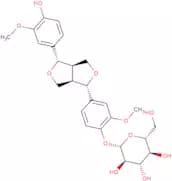
<p>5'-Hydroxypropranolol-b-D-glucuronoside is a synthetic glycosylate of 5'-hydroxypropranolol. It can be modified with fluorine, methyl or click chemistry. The chemical name is O-(2,3,4,5-tetrafluorobenzoyl)glycine and the CAS number is 878183-10-6. This compound has a molecular weight of 471.8 g/mol and an empirical formula of C14H9F5NO5. It can be used in the synthesis of oligosaccharides and polysaccharides.</p>Fórmula:C22H29NO9Pureza:Min. 95%Peso molecular:451.47 g/mol(+)-pinoresinol-b-D-glucoside
CAS:<p>(+)-Pinoresinol-b-D-glucoside is a fluorinated, monosaccharide that is synthetically produced by glycosylation. It can also be modified using methylation and click chemistry. The chemical formula for (+)-pinoresinol-b-D-glucoside is C10H14O8. It has a molecular weight of 288.24 g/mol and an empirical formula of (C10H14O8)2. The CAS number for this compound is 69251-963. This product is in the Carbohydrate family and has a purity level of >99%.</p>Fórmula:C26H32O11Pureza:Min. 95%Forma y color:PowderPeso molecular:520.53 g/mol7-(2-(2-((N-2-Deoxy-acetamido-β-D-glucopyranosyl)-(N-methyl)-aminooxy)ethoxy)ethoxy)-naphthalene-1,3-disulfonate
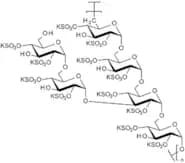
CAS:<p>7-(2-(2-((N-2-Deoxy-acetamido-beta-D-glucopyranosyl)-(N-methyl)-aminooxy)ethoxy)ethoxy)-naphthalene-1,3-disulfonate is a synthetic compound that can be custom synthesized. It has been specifically designed for the modification of complex carbohydrates by click chemistry. The binding site of 7-(2-(2-((N-2-Deoxy-acetamido-beta-D-glucopyranosyl)-(N-methyl)-aminooxy)ethoxy)ethoxy)-naphthalene 1,3 disulfonate is the anomeric carbon of the sugar moiety. This compound has a CAS number of 2365081–65–6 and can be used in many different applications including glycosylation, oligosaccharide synthesis, and methylation.</p>Fórmula:C23H32N2O14S2Pureza:Min. 95%Forma y color:PowderPeso molecular:624.64 g/molDextran sulfate potassium salt
CAS:<p>Dextran sulphate is a dextran derivative whose ulcer (colitis) -causing properties were first reported in hamsters and extrapolated a few years later to mice and rats. The exact mechanisms through which dextran sulphate induces intestinal inflammation are unclear but may be the result of direct damage of the monolayer of epithelial cells in the colon, leading to the crossing of intestinal contents (for e.g. commensal bacteria and their products) into underlying tissue and therefore induction of inflammation. The dextran sulphate sodium-induced ulceration model in laboratory animals has some advantages when compared to other animal models of colitis due to its simplicity and similarities to human inflammatory bowel disease. <br>MW is in the range of 40,000Da</p>Pureza:Min. 95%Forma y color:White Powder1,4-Anhydro-D-glucitol
CAS:<p>Intermediate in the synthesis of prostaglandins</p>Fórmula:C6H12O5Pureza:Min. 97 Area-%Forma y color:White Off-White PowderPeso molecular:164.16 g/mol3,4-Di-O-acetyl-D-arabinal
CAS:<p>3,4-Di-O-acetyl-D-arabinal is a spiroketal monofluoride that is known to be an efficient method for the synthesis of β-unsaturated aldehydes. It can be prepared by the hydration of enantiopure allyl chloroformate followed by reductive elimination with triflic acid and acidic hydrolysis. 3,4-Di-O-acetyl-D-arabinal has been used in the synthesis of biologically active molecules such as polyketides, peptides and natural products.</p>Fórmula:C9H12O5Pureza:Min. 97 Area-%Forma y color:Colorless Clear LiquidPeso molecular:200.19 g/molN-(Succinyl)-O-b-D-lactosylhydroxylamine
<p>N-(Succinyl)-O-b-D-lactosylhydroxylamine is a methylation product of b-D-lactosylhydroxylamine. It has a CAS number and can be modified with Click chemistry, which is a method of chemical modification using copper (II) ions. N-(Succinyl)-O-b-D-lactosylhydroxylamine can also be modified with other chemicals, such as an amine or carboxylic acid, to create an oligosaccharide. This product is synthesized in high purity and has a high glycosylation yield. It is used for research purposes and can be custom synthesized for any desired sugar.</p>Pureza:Min. 95%5-Azido-5-deoxy-2,3-O-isopropylidene-L-lyxono-1.4-lactone
<p>5-Azido-5-deoxy-2,3-O-isopropylidene-L-lyxono-1.4-lactone is a carbohydrate that is a modification of the saccharide, oligosaccharide, sugar, and fluorinated complex carbohydrate group. It is synthesized from 5-(azidomethyl)-5'-deoxyfuranose by methylation and glycosylation followed by click modification. 5-(Azidomethyl)-5'-deoxyfuranose can be synthesized from L-(+)-glyceraldehyde and methyl azide in the presence of sodium hydride via a sequence of reactions involving hydrolysis, reduction, and hydrogenation.</p>Pureza:Min. 95%N-Amyl β-D-glucopyranoside
CAS:N-Amyl b-D-glucopyranoside is a monosaccharide with a glucose residue at the 1 position and an amyl group at the 2 position. It is a synthetic sugar that can be used as a starting material in glycosylation reactions to modify oligosaccharides, saccharides, and complex carbohydrates. N-Amyl b-D-glucopyranoside can also be fluorinated, methylated, or modified by click chemistry to produce novel compounds. N-Amyl b-D-glucopyranoside is typically obtained by the glycosylation of amylamine with dibenzoyl glucose in the presence of an acid catalyst. This reaction produces a mixture of mono-, di-, tri-, tetra-, penta-, hexa-, hepta-, octa-, nona-, deca-, undeca-, dodeca-, and tetradecasaccharides, whichFórmula:C11H22O6Pureza:Min. 95%Forma y color:White to off-white solid.Peso molecular:250.29 g/mol6-Phosphogluconic acid, trisodium salt dihydrate
CAS:6-Phosphogluconic acid, trisodium salt dihydrate is a custom synthesis that has been made to order. It is a complex carbohydrate that can be modified with methylation, glycosylation and other modifications. 6-Phosphogluconic acid, trisodium salt dihydrate is an Oligosaccharide and Polysaccharide of Modification saccharides. It can be made as an Methylated Glycosylated Carbohydrate or a Click Modified Sugar. It can be Fluorinated or Synthetically made for high purity.Fórmula:C6H14Na3O12PPeso molecular:378.11 g/molDulcitol
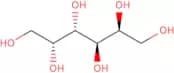
CAS:<p>A metabotoxin, a neurotoxin, and a hepatotoxin at high levels</p>Fórmula:C6H14O6Pureza:Min. 98 Area-%Forma y color:White PowderPeso molecular:182.17 g/mol[2R- (2a, 3a, 4b, 5a) ] -3,4,5-Trihydroxy-2- piperidinecarboxylic acid methyl ester
CAS:2R-(2a, 3a, 4b, 5a) -3,4,5-Trihydroxy-2-piperidinecarboxylic acid methyl ester is a custom synthesis that is available only in high purity. It has the CAS No. 116366-70-2 and can be used as an artificial sweetener. The chemical structure contains a sugar that is modified by fluorination and methylation. This product is also glycosylated and saccharide substituted with click chemistry. 2R-(2a, 3a, 4b, 5a) -3,4,5-Trihydroxy-2-piperidinecarboxylic acid methyl ester can be used as both a monosaccharide or polysaccharide in complex carbohydrates.Fórmula:C7H13NO5Pureza:Min. 95%Peso molecular:191.18 g/molSimvastatin acyl-b-D-glucuronide
CAS:<p>Simvastatin acyl-b-D-glucuronide is a modification of simvastatin that has been synthesized and modified to provide high purity. It is a white, crystalline solid with a melting point of about 200°C. This compound can be used as an intermediate in the synthesis of oligosaccharides, polysaccharides, or other carbohydrate derivatives.</p>Fórmula:C31H48O12Pureza:Min. 97 Area-%Forma y color:White Off-White PowderPeso molecular:612.71 g/molPhenyl 4,6-O-benzylidene-3-O-(2-naphthylmethyl)-b-D-thioglucopyranoside
<p>Phenyl 4,6-O-benzylidene-3-O-(2-naphthylmethyl)-b-D-thioglucopyranoside is a synthetic sugar that has been modified by the addition of two fluorine atoms. This molecule is used in research as a model for the synthesis of complex carbohydrates. Phenyl 4,6-O-benzylidene-3-O-(2-naphthylmethyl)-b-D-thioglucopyranoside is also a major component of polysaccharides. It is available for custom synthesis and can be ordered in high purity.</p>Pureza:Min. 95%3,5-((R)-Benzylidene)-6-deoxy-L-glucono-1,4-lactone
<p>3,5-((R)-Benzylidene)-6-deoxy-L-glucono-1,4-lactone is a synthesized sugar that can be modified to include fluorination, glycosylation, methylation and other modifications. It is an oligosaccharide with a saccharide backbone made up of glucose units. The monosaccharides are galactose and glucuronic acid. 3,5-(R) Benzylidene)-6-deoxy-L-glucono-1,4-lactone is used in the synthesis of complex carbohydrates for research purposes.</p>Pureza:Min. 95%D-Cello-oligosaccharides
This mixture contains all the members of the series up to DP9Pureza:Min. 90 Area-%Forma y color:White Powder2-Azido- 2- deoxy- 2- C- methyl- 3, 4- O- isopropylidene - D- ribono-1,5- lactone
<p>2-Azido-2-deoxy-2-C-methyl-3,4-O-isopropylideneD-ribono1,5-lactone is a monosaccharide that can be used in the synthesis of oligosaccharides and polysaccharides. It is also used for modification of saccharides by fluorination, methylation, and click chemistry. 2A2DMRL has been shown to have a CAS number of 53869-09-6.</p>Pureza:Min. 95%Trehalose octaacetate
CAS:Trehalose octaacetate is a carbohydrate that can be synthesized from trehalose and acetyl coenzyme A. It has been shown to act as an enzymatic substrate and a carbon source in the production of microparticles. Trehalose octaacetate is an antigenic molecule that can be used as a vaccine adjuvant to enhance the immune response to antigens. It also exhibits anti-inflammatory properties, which may be due to its ability to inhibit prostaglandin synthesis. Trehalose octaacetate is highly viscous, which makes it useful for the formulation of medications such as eye drops.Fórmula:C28H38O19Pureza:Min. 95%Peso molecular:678.59 g/mol7-Deoxy-3,4:5,6-di-O-isopropylidene-D-glycero-L-ido-heptitol
7-Deoxy-3,4:5,6-di-O-isopropylidene-D-glycero-L-ido-heptitol is an oligosaccharide that can be custom synthesized. It has a number of applications in the chemical and pharmaceutical industries. 7DGILH is a modified sugar used as a building block for complex carbohydrate synthesis. This sugar can be fluorinated to form a variety of products with different properties. 7DGILH can also be used as a monomer to produce saccharides with modifications such as methylation or click modification.Pureza:Min. 95%NA3 Glycan, 2-AB labelled
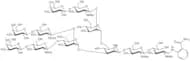
NA3 Glycan is a custom-synthesized Oligosaccharide that has been modified by the addition of 2AB labelled. This glycan contains an N-acetylglucosamine residue at its reducing end. The NA3 Glycan can be used for a wide range of applications, including glycosylation reactions, click reactions, and carbohydrate chemistry. It is also available in high purity and with fluorination on the sugar moiety.Pureza:Min. 95%3'-(N-Glycolyl-a-neuraminosyl)lactose
CAS:3'-(N-Glycolyl-a-neuraminosyl)lactose is a carbohydrate that is synthesized from lactose, which is a disaccharide composed of glucose and galactose. It is synthesized by the modification of the terminal hydroxyl group on the galactose moiety with glycolyl chloride. 3'-(N-Glycolyl-a-neuraminosyl)lactose has been shown to inhibit the growth of bacteria and fungi. It also has the potential to be used as an anti-cancer drug candidate due to its ability to inhibit protein synthesis in cells. This carbohydrate can also be modified by methylation, glycosylation, or click chemistry.Fórmula:C23H39NO20Pureza:Min. 95%Peso molecular:649.55 g/mol4-Aminophenyl b-D-cellobioside
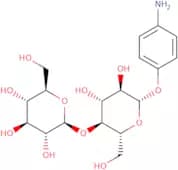
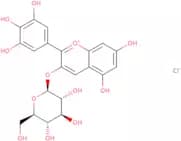
CAS:<p>4-Aminophenyl b-D-cellobioside is a cyclopentadienyl cellobioside. The ocean and the timings of polymerization, as well as the use of catalysts, are crucial for the production of this compound. 4-Aminophenyl b-D-cellobioside is an important chemical intermediate used in the production of pharmaceuticals and other products with applications in various industries such as textiles, plastics, coatings, dyes and pigments. Metal complexes are widely used catalysts for olefin polymerization reactions. Indian chemists have developed a new catalyst that has shown high activity in olefin polymerization. The indian scientists have also found a new way to recycle cyclopentadiene.</p>Fórmula:C18H27NO11Pureza:Min. 95%Forma y color:Off-White PowderPeso molecular:433.41 g/molDelphinidin 3-glucoside chloride
CAS:<p>Delphinidin 3-glucoside chloride is a natural, water-soluble compound that exhibits antimicrobial activity against Staphylococcus aureus. It has been shown to inhibit the growth of this bacteria by inhibiting detoxification enzymes and intracellular cGMP production. Delphinidin 3-glucoside chloride also inhibits uptake of this bacterium by human cells, which may be due to its synergistic interaction with other compounds such as cinnamic acid derivatives. This compound has been shown to have cardiac effects in animals and is being studied for its potential use in treating heart disease.</p>Fórmula:C21H21O12ClPureza:Min. 95%Forma y color:PowderPeso molecular:500.84 g/molCyanomethyl 2,3,4,6-tetra-O-acetyl-b-D-thiogalactopyranoside
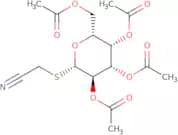
CAS:Cyanomethyl 2,3,4,6-tetra-O-acetyl-b-D-thiogalactopyranoside is an important reagent for the synthesis of glycosides and oligosaccharides. This substance has been used to synthesize a variety of modified saccharides, such as methylated sugars and fluorinated saccharides. It also has been applied to the synthesis of complex carbohydrates with the click modification.Fórmula:C16H21NO9SPureza:Min. 98 Area-%Forma y color:White Off-White PowderPeso molecular:403.41 g/molMethyl 3,6-di-O-benzyl-2-deoxy-a-D-glucopyranoside
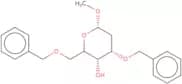
<p>Methyl 3,6-di-O-benzyl-2-deoxy-a-D-glucopyranoside is a sugar derived from the natural carbohydrate sucrose. It is custom synthesized and glycosylated with an oligosaccharide. Methyl 3,6-di-O-benzyl-2-deoxy-a-D-glucopyranoside can be used in the synthesis of polysaccharides and other carbohydrates. This product has been modified using click chemistry to attach a methyl group at the C3 position of the glucose moiety. This modification is useful for glycosylation reactions that require a specific location on the sugar for attachment of an amino acid or peptide. Methyl 3,6-, di-, O-, benzyl--2, deoxy--A--D--glucopyranoside has CAS number 51139–03–5 and is available in high purity.</p>Fórmula:C21H26O5Pureza:Min. 95%Peso molecular:358.43 g/mol2-Deoxy-L-ribose
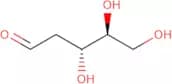
CAS:<p>Suppresses tumor angiogenesis; pro-apoptotic</p>Fórmula:C5H10O4Pureza:Min. 98 Area-%Forma y color:White PowderPeso molecular:134.13 g/molD-Gluconic acid copper (II) salt
CAS:<p>D-Gluconic acid copper (II) salt is a copper complex that has been shown to have an effect on iron homeostasis and fatty acid metabolism. The pharmacokinetics of D-gluconic acid copper (II) salt was studied in rats, which showed that the compound is absorbed quickly and eliminated rapidly. D-Gluconic acid copper (II) salt also has a protective effect against bone cancer in mice. The toxicological studies revealed no adverse effects of D-gluconic acid copper (II) salt on the liver or other organs, but it did produce magnesium salt, which can be toxic to humans. It is not known if there are any interactions with benzalkonium chloride.</p>Fórmula:C6H11O7CuForma y color:Blue PowderPeso molecular:226.93 g/molEthyl 2,4-di-O-acetyl-6-azido-6-deoxy-a-D-thiomannopyranoside
<p>Ethyl 2,4-di-O-acetyl-6-azido-6-deoxy-a-D-thiomannopyranoside is a synthetic compound derived from the sugar thiomalan. It is not naturally occurring or found in any living organism and has been synthesized for research purposes. The molecular weight of this compound is 693.92 g/mol and the chemical formula is C14H24N2O8. This compound has been shown to have various glycosylation modifications and can be used for custom synthesis by request.</p>Fórmula:C12H19N3O6SPureza:Min. 95%Peso molecular:333.36 g/molD-Sedoheptulose 7-phosphate lithium
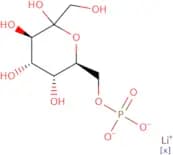
CAS:<p>D-Sedoheptulose 7-phosphate lithium (DSDP) is a substance that is used in the synthesis of ribulose. It provides the carbonyl group for the synthesis of acetyl-CoA and plays an important role in energy metabolism. DSDP has been shown to be effective against streptococcus faecalis, which may be due to its ability to inhibit protein synthesis by binding to ribulose phosphates, thereby preventing the production of ATP. DSDP also inhibits cellular transformation, which may be due to its ability to bind with DNA and block RNA synthesis. In vitro studies have shown that DSDP can inhibit both Streptococcus faecalis and Escherichia coli at concentrations below 10 mM. These effects are likely mediated by enzymatic activities that are involved in bacterial cell physiology.</p>Fórmula:C7H15O10P•(Li)xPureza:Min. 95%Forma y color:PowderPeso molecular:290.16 g/mol2,6-Dichloro-9-(2-deoxy-3,5,DI-O-(4-methylbenzoyl-β-D-erythropentofuranosyl)-9H-purine)
CAS:<p>Fluorinated 2,6-dichloro-9-(2-deoxy-3,5,DI-O-(4-methylbenzoyl)-beta-D-erythropentofuranosyl) 9H-purine is a synthetic monosaccharide with a fluorinated methyl group attached to the sugar. It has been used in the synthesis of complex carbohydrates and oligosaccharides. Fluorinated 2,6-dichloro-9-(2-deoxy-3,5,DI-O-(4-methylbenzoyl)-beta-D-erythropentofuranosyl) 9H-purine can be obtained by Custom Synthesis or Click Modification. This compound is also known as CAS No. 3892580 3.</p>Fórmula:C26H22Cl2N4O5Pureza:Min. 95%Peso molecular:541.4 g/molD-Lyxono-1,4-lactone
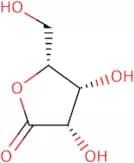
CAS:<p>D-Lyxono-1,4-lactone is an inhibitor of the enzyme fucosidase. It competitively inhibits the enzyme, but does not inhibit other hydroxamic acids such as enantiomers of D-lyxono-1,4-lactone. D-Lyxono-1,4-lactone has been used to treat HIV and AIDS because it prevents viral replication by blocking the synthesis of glycoproteins in the virus's envelope. It also has inhibitory effects on tumor cells that are not dependent on fucosidase activity. Magnetic resonance spectroscopy (NMR) studies have shown that d-lyxono-1,4-lactone binds to human liver cells and blocks the binding site for cytotoxic molecules in these cells. The molecular modelling study has demonstrated that d-lyxono 1,4 lactone binds to a specific site on human HLA class II molecule and reduces its</p>Fórmula:C5H8O5Pureza:(%) Min. 97%Forma y color:PowderPeso molecular:148.11 g/molUDP-D-glucose disodium salt
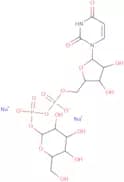
CAS:UDP-D-glucose disodium salt is a sugar-nucleotide substrate of glucosyltransferases. It’s used as the donor of glucose in the biosyntheses of glycoproteins, glycolipids and polysaccharides. It’s also used with its membrane receptor, P2RY14, to investigate innate mucosal immune responses in preventing infection in the female reproductive tract (FRT).Fórmula:C15H22N2Na2O17P2Pureza:Min. 85 Area-%Forma y color:White PowderPeso molecular:610.27 g/mol5-O-Acetyl-a-L-arabinofuranose
CAS:<p>5-O-Acetyl-a-L-arabinofuranose (5OAA) is an acetylated aldonic acid. It is a custom synthesized, high purity, complex carbohydrate that has been modified by fluorination, monosaccharide modification, and glycosylation. This compound can be used to modify proteins and nucleic acids. 5OAA can be used in the synthesis of oligosaccharides and polysaccharides. 5OAA has been shown to have click chemistry modifications with methyl groups and sugars.</p>Fórmula:C7H12O6Pureza:Min. 95%Peso molecular:192.17 g/molAdenophorine
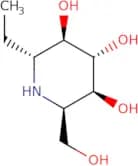
CAS:<p>Adenophorine is a potent enzyme inhibitor that competes with the substrate to bind to the active site of β-glucosidase and α-galactosidase. It is a synthetic compound that has been synthesized by imine coupling, followed by stereoselective reduction with piperidine. Adenophorine inhibits β-glucosidase and α-galactosidase in vitro, which are enzymes involved in the breakdown of complex sugars. These enzymes are inhibited by adenophorine at concentrations well below those required for other drugs used to treat similar conditions. In addition, adenophorine has shown activity against pancreatic alpha-amylase. Adenophorine can be used to inhibit the enzyme activities in the intestine and pancreas, as well as other tissues where these enzymes are found.</p>Fórmula:C8H17NO4Pureza:Min. 95%Peso molecular:191.22 g/molDextran 60, MW: 54,000 to 66,000
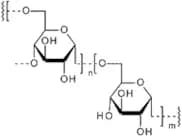
CAS:Complex glucan (a 1-6) from Leuconostoc spp.; extender in blood transfusionsFórmula:(C6H10O5)nForma y color:White Powder(1S) -1- [(2S, 3R) - 3- Hydroxy- 1- (phenylmethyl) - 2- azetidinyl] -1, 2- ethanediol
CAS:<p>(1S) -1- [(2S, 3R) - 3- Hydroxy- 1- (phenylmethyl) - 2- azetidinyl] -1, 2- ethanediol is an enantiomerically pure sugar with a CAS number of 1322748-34-4. It is a synthetic sugar that contains a saccharide. The sugar has been modified to contain an azetidinyl and an ethanediol group. This modification gives the sugar a glycosylation and methylation pattern. The product was synthesized in the lab, unlike natural sugars which are derived from plants or animals.</p>Fórmula:C12H17NO3Pureza:Min. 95%Peso molecular:223.27 g/mol







![[2R- (2a, 3a, 4b, 5a) ] -3,4,5-Trihydroxy-2- piperidinecarboxylic acid methyl ester](/_next/image/?url=https%3A%2Fstatic.cymitquimica.com%2Fproducts%2F3D%2Fthumb-webp%2FMT163497.webp&w=3840&q=75)







![(1S) -1- [(2S, 3R) - 3- Hydroxy- 1- (phenylmethyl) - 2- azetidinyl] -1, 2- ethanediol](/_next/image/?url=https%3A%2Fstatic.cymitquimica.com%2Fproducts%2F3D%2Fthumb-webp%2FMH163545.webp&w=3840&q=75)