Glycoscience
Subcategorías de "Glycoscience"
- Aminoazúcares(108 productos)
- Anticuerpos relacionados con azúcares(282 productos)
- Glicolípidos(46 productos)
- Glicosaminoglicanos (GAGs)(55 productos)
- Glucósidos(419 productos)
- Monosacáridos(6.618 productos)
- Oligosacáridos(3.711 productos)
- Polisacáridos(503 productos)
Se han encontrado 11016 productos de "Glycoscience"
Man-6 Glycan, 2-AB labelled
Man-6 Glycan, 2-AB labelled is a custom synthesis of mannose-6-phosphate, a monosaccharide. The molecule contains six carbons and one phosphate group. It can be modified with fluorination, methylation, or click modification. This glycan is synthesized by the addition of an oligosaccharide to a polysaccharide. Mannose-6-phosphate is an Oligosaccharide that carries out glycosylation reactions in the body. It is used as a precursor for other glycans such as N-Acetylglucosamine and N-Acetylgalactosamine.
Pureza:Min. 95%2-Azido-2-deoxy-3,5-O-benzylidene-L-xylono-1,4-lactone
2-Azido-2-deoxy-3,5-O-benzylidene-L-xylono-1,4-lactone is a sugar compound that can be custom synthesized. It has been shown to be a methylation product of 2,3,4,6-tetraacetylgalactose and is an oligosaccharide with a saccharide chain that includes glucose and xylose. The chemical formula for this compound is C11H13NO7. This compound has a CAS Number of 73028-81-2 and can be purchased from various vendors at high purity levels. 2Azido2deoxy3,5ObenzylideneLxylono1,4lactone is used as a reagent in the synthesis of complex carbohydrates. It can also be used to modify monosaccharides and sugar compounds with fluorination or modification reactions.Pureza:Min. 95%4-(4-(2-Pyridinyl)-3-(E)-buten-2-one-1-yl)piperidine-2,6-dione
4-(4-(2-Pyridinyl)-3-(E)-buten-2-one-1-yl)piperidine-2,6-dione is a synthetic compound that has been modified with fluorination, methylation, and click modification. It is an oligosaccharide molecule that was synthesized in the laboratory. The molecular weight of this compound is 718.Pureza:Min. 95%2,3:4,5-Di-O-isopropylidene-D-gulonic acid methyl ester
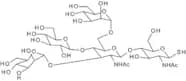
2,3:4,5-Di-O-isopropylidene-D-gulonic acid methyl ester is a custom synthesis that has been modified with fluorination and methylation. It is a monosaccharide, which is synthesized by the click modification of an oligosaccharide. The CAS number for this compound is 7791-54-2. This chemical can be used to produce polysaccharides and complex carbohydrates.Pureza:Min. 95%2-Acetamido-4-O-[2-acetamido-4-O-(β-D-glucopyranosyl)-3,6-di-O-(α-D-mannopyranosyl)-2-deoxy-β-D-glucopyranosyl]-2-deoxy-β-D-thiogluc opyranoside
2-Acetamido-4-O-[2-acetamido-4-O-(b-D-glucopyranosyl)-3,6-di-O-(a-D-mannopyranosyl)-2,6-di-O-(a,b,c,d)-D mannopyranosyl]-2,6-di-O-(a,b,c,d)-D mannopyranosyl]-2 deoxy -b D thioglucopyranose is a carbohydrate that belongs to the class of saccharides. This compound is modified with fluorination and methylation and can be custom synthesized. It has high purity and can be glycosylated or click modified.Fórmula:C34H58N2O25SPureza:Min. 95%Forma y color:SolidPeso molecular:926.89 g/molDextran 2000 - MW: 1,500,000 to 3,500,000
CAS:Dextran 2000 is a high molecular weight biocompatible polymer with transport properties. It is used in a variety of medical applications, such as red blood cell transfusions and the prevention of post-surgical adhesions. Dextran 2000 has been shown to be a safe and effective means of preventing hemolysis during red blood cell transfusion. This agent binds to amine groups on the surface of erythrocytes, which prevents complement activation and subsequent lysis. Additionally, dextran 2000 has been shown to exhibit low cytotoxicity against neuronal cells in vitro.
Pureza:Min. 95%Forma y color:White Off-White Powder2,6-Anhydro-D-glycero-D-gluo-heptonic acid amide
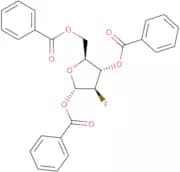
2,6-Anhydro-D-glycero-D-gluo-heptonic acid amide is a synthetic glycoside that is used as an intermediate in the synthesis of oligosaccharides and polysaccharides. The compound is a fluorinated sugar with a methoxy group at the 2 position. This modification provides for increased stability to oxidation reactions and improved solubility in organic solvents. The compound can be modified to include other functional groups, such as methyl or click modifications. 2,6-Anhydro-D-glycero-D-gluo-heptonic acid amide has CAS number 8881–41–8 and can be purchased from various chemical suppliers.Pureza:Min. 95%1,3,5-Tri-O-benzoyl-2-deoxy-2-fluoro-α-L-arabinofuranose
CAS:Intermediate in synthesis of clevudineFórmula:C26H21FO7Pureza:Min. 98 Area-%Forma y color:PowderPeso molecular:464.44 g/mol2-Deoxy- 4-C-methyl-2- methylene- 3, 4- O- isopropylidene -L- erythro- pentonic acid d- lactone
2-Deoxy-4-C-methyl-2-methylene-3,4-O-isopropylidene -L-erythro pentonic acid d-lactone is a methylated sugar with a degree of substitution of 1.0, which can be used for the synthesis of various saccharides and polysaccharides. This product has been modified with click chemistry. It is available in custom synthesis and high purity. The CAS number for this compound is 121592-71-8, and it can be used to synthesize glycans or oligosaccharides. This product can be fluorinated or complexed with other sugars.Pureza:Min. 95%2-Acetamido-6-O-(α-2-N-acetylneuraminyl)-2-deoxy-α-D-galactopyranosyl N-acetylserine
CAS:2-Acetamido-6-O-(a-2-N-acetylneuraminyl)-2-deoxy-a-D-galactopyranosyl N-acetylserine is a synthetic glycosyl amino acid.Fórmula:C24H39N3O17Pureza:Min. 95%Forma y color:PowderPeso molecular:641.58 g/mol2,6-di-n-pentyl-γ-cyclodextrin
2,6-di-n-pentyl-gamma-cyclodextrin is a glycosylation reagent that is used in the synthesis of oligosaccharides and polysaccharides. It has been used to synthesize an anti-inflammatory agent for the treatment of inflammatory bowel disease. This compound can be modified by Click chemistry, which allows for the attachment of different molecules to its surface. 2,6-di-n-pentyl-gamma-cyclodextrin is also a fluorinated compound with CAS number 689069-46-2.Fórmula:C128H240O40Pureza:Min. 95%Peso molecular:2,419.25 g/molAllyl 6-O-benzyl 2-deoxy-3-O-((R)-1'-ethoxycarbonylethyl)-2-(2,2,2-trichloroethoxycarbonylamino)-a-D-glucopyranoside
Allyl 6-O-benzyl 2-deoxy-3-O-(R)-1'-ethoxycarbonylethyl)-2-(2,2,2-trichloroethoxycarbonylamino)-a-D-glucopyranoside is a synthetic carbohydrate that can be custom synthesized. It is a saccharide, an oligosaccharide, and a sugar. This product has been fluorinated and methylated. The CAS number for Allyl 6-O-benzyl 2-deoxy-3-O-(R)-1'-ethoxycarbonylethyl)-2-(2,2,2-trichloroethoxycarbonylamino)-a-D-glucopyranoside is 589791.
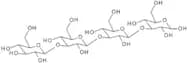
Pureza:Min. 95%Laminaritetraose
CAS:Ex algal/bacterial polysaccharides-value in b1-3 glucanase assays & diagnosticsFórmula:C24H42O21Pureza:Min. 95 Area-%Forma y color:White PowderPeso molecular:666.6 g/mol1,3,4,6-Tetra-O-acetyl-2-azido-2-deoxy-a-D-galactopyranose
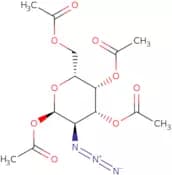
CAS:1,3,4,6-Tetra-O-acetyl-2-azido-2-deoxy-a-D-galactopyranose is an azide sugar that is resistant to the activity of sulfide and can be used as a probe for sulfide in the distal colon. It has been shown that this sugar binds to recombinant human erythrocyte enzymes and inhibits their activities. The hydrolysis of this sugar by pancreatic enzymes has been shown to be dependent on the conformational state of the enzyme. This sugar also inhibits salivary amylase and intestinal sucrase activities.Fórmula:C14H19N3O9Pureza:Min. 95%Forma y color:White PowderPeso molecular:373.32 g/molTri-b-GalNAcAc3-6-aminohexyl-NHCbz
CAS:Tri-b-GalNAc-6-aminohexyl-NHCbz is the peracetylated form with a protected terminal amino group (NHCbz). It is a synthetic ligand designed to target the asialoglycoprotein receptor (ASGPR) on hepatocytes. The three terminal beta-N-acetylgalactosamine (GalNAc) sugars provide an efficient ASGPR binding. It serves as a platform for lysosomal targeting chimera (LYTAC) development, allowing for the creation of chimeras that specifically target unwanted proteins for degradation within hepatocytes. In addition, tri-b-GalNAc-6-aminohexanoate facilitates the delivery of therapeutic cargo, such as RNA or Cas9 complexes, directly to hepatocytes via ASGPR-mediated endocytosis. This approach is promising for gene therapy and RNAi applications in the liver due to the specificity of ASGPR targeting and the versatility of the conjugation moiety.Fórmula:C93H145N11O39Pureza:Min. 95 Area-%Peso molecular:2,041.2 g/molD-Galacturonic acid monohydrate
CAS:D-Galacturonic acid (GalA) is a hexuronic acid with the CH2OH at C5 of galactose replaced by a carboxyl group (Collins, 2006). D-galacturonic acid is abundant in pectic polysaccharides which are characterized by a high α-1,4 linked galacturonic acid content and include pectic acid (polygalacturonic acid), rhamnogalacturonan I (Oomen, 2002), rhamnogalacturonan (RG) II (Vidal, 2000), xylogalacturonan, and homogalacturonan. These polymers play roles in strengthening cell walls, cell adhesion and are established as part of signaling cascades that detect cell wall degradation upon pathogen attack.Fórmula:C6H10O7·H2OPureza:(Titration) Min. 97%Forma y color:White Off-White PowderPeso molecular:212.15 g/mol5-Chloro-8-hydroxyquinoline b-D-glucuronide
CAS:Chromogenic substrate targeting beta-glucuronidase
Fórmula:C15H14ClNO7Pureza:Min. 98 Area-%Forma y color:White PowderPeso molecular:355.73 g/mol3-O-Benzyl-1,2,4-tri-O-acetyl-D-xylopyranoside
3-O-Benzyl-1,2,4-tri-O-acetyl-D-xylopyranoside is a methylated saccharide that has been modified with the click chemistry. This product can be used for the synthesis of complex carbohydrates and glycosylations. This product is available in high purity and custom synthesis. It is soluble in water or aqueous solutions, making it ideal for use in biological applications. 3-O-Benzyl-1,2,4-tri-O-acetyl-D-xylopyranoside can be used as an intermediate for the synthesis of oligosaccharides and glycoconjugates. It has CAS number 69936–76–5.Pureza:Min. 95%a-D-Glucopyranosyl fluoride
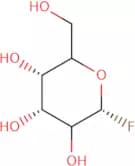
CAS:a-D-Glucopyranosyl fluoride is an irreversible inhibitor of the enzyme glycosidase. This product has been used to study the kinetic and mechanism of human serum alpha-glucosidase, which is a key enzyme in the digestion of carbohydrates. Kinetic studies have shown that 4-hydroxycinnamic acid and glucose are competitive inhibitors of the enzyme. The reaction mechanism for this product involves hydrogen fluoride cleavage of the glycosidic bond. The optimum pH for this product is 7.
Fórmula:C6H11FO5Pureza:Min. 95%Forma y color:White PowderPeso molecular:182.15 g/molPolysucrose 400
CAS:Water-soluble, nontoxic, enzyme-resistant polymer for biological applications
Forma y color:White PowderPeso molecular:400.02,6-di-O-n-pentyl-3-O-acetyl-γ-cyclodextrin
This gamma-cyclodextrin (γ-CD) derivative is a modified cyclic oligosaccharide composed of eight glucose units, featuring a larger cavity size than α- and β-cyclodextrins. This structural characteristic allows γ-CDs to form inclusion complexes with a wider range of guest molecules, making it particularly versatile in various industries. In the food sector, it is used as a carrier and stabilizer for flavors, fat-soluble vitamins, and polyunsaturated fatty acids, protecting volatile compounds from evaporation. In pharmaceuticals, it enhances the solubility and bioavailability of poorly water-soluble drugs and, thanks to its larger ring size, allows for the encapsulation of larger molecules or even entire drug molecules. γ-CDs and derivatives are also used for environmental remediation and, in analytical chemistry, for the extraction and concentration of target substances.Fórmula:C144H256O48Pureza:Min. 95%Peso molecular:2,755.54 g/mol1-Deoxy-D-tagatose
CAS:1-Deoxy-D-tagatose (1Dt) is a competitive inhibitor of glycolysis, which blocks the conversion of glucose to pyruvate. 1Dt has been shown to inhibit the growth of strain CAEN on media containing l-arabinose and d-xylose as carbon sources. 1Dt also inhibits the activity of dehydrogenase enzymes in C. elegans, leading to inhibition of mitochondrial respiration and impaired locomotion. It has been shown that 1Dt can be used as a substrate for bioproduction, with hydrazone as an intermediate product. Larger molecules are produced after hydrolysis and decarboxylation of 1Dt. The most common products are tagatose, l-fucitol, and l-arabinose. 1Dt has been shown to have anti-inflammatory properties in animal models by inhibiting the production of reactive oxygen species that are generated during inflammationFórmula:C6H12O5Pureza:Min. 95%Peso molecular:164.16 g/molBenzyl 4,6-O-benzylidene-2-deoxy-2-phthalimido-b-D-glucopyranoside
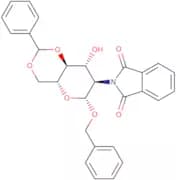
CAS:Benzyl 4,6-O-benzylidene-2-deoxy-2-phthalimido-b-D-glucopyranoside is a modified glycosylated deoxyhexose. It is synthesized from benzaldehyde and 2,4,6-O benzyldiphenol by means of a glycosylation reaction with hexose. This product has been fluorinated to give it the desired properties. Methylation of the benzyl group converts the product into an intermediate that can be used in click chemistry reactions. Monosaccharides are then added to produce oligosaccharides. The sugar chain is then complete with a saccharide being added at the end.Fórmula:C28H25NO7Pureza:Min. 95%Forma y color:White PowderPeso molecular:487.51 g/molSunitinib N-glucuronide
Sunitinib N-glucuronide is a synthetic small molecule with a molecular weight of 517.63 Da and a chemical formula of C14H18F3N5O6S. Sunitinib N-glucuronide is a monosaccharide sugar that is modified with fluorine. It is one of the products of the methylation, custom synthesis, and click modification reactions. The CAS number for this product is 70698-74-7. Sunitinib N-glucuronide has a purity level of 98%, which means that it has less than 2% impurities. This product can be used in oligosaccharides, polysaccharides, or saccharides as a complex carbohydrate or high purity carbohydrate. It can also be used as an additive to modify the properties of monosaccharides and sugars.Pureza:Min. 95%Arabinoxylan
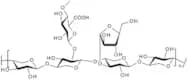
CAS:Arabinoxylans consist of α-L-arabinofuranose residues attached as branch-points to β-(1,4)-linked D-xylopyranose main chains. These may be 2- or 3-substituted or 2- and 3- di-substituted. The arabinose residues may also be linked to other groups attached such as glucuronic acid residues, ferulic acid cross links and acetyl groups. Arabinoxylans generally consist of between 1500 - 5000 residues.
Pureza:Min. 95%Forma y color:PowderAtractyloside dipotassium salt
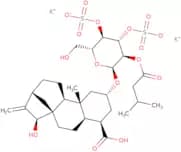
CAS:Atractyloside is a natural compound that can be extracted from plants. It has been shown to have pluripotent activity, which means it can differentiate into different types of cells. Atractyloside also exhibits antioxidant and anti-apoptotic properties, which are believed to be due to its ability to increase mitochondrial membrane potential and reduce reactive oxygen species production. Atractyloside has also been shown to protect against neuronal death in vitro and in vivo by inhibiting the activation of caspase-dependent cell death pathways. Atractyloside has been shown to have a cardioprotective effect in animal models of myocardial infarcts, although it is unclear if this effect is due to the drug or due to the atractyloside contained in traditional Chinese medicine.Fórmula:C30H44K2O16S2Pureza:Min. 90 Area-%Forma y color:White/Off-White SolidPeso molecular:802.99 g/mol1,3,5-Tri-O-benzoyl-a-L-ribofuranose
CAS:1,3,5-Tri-O-benzoyl-a-L-ribofuranose is a synthetic sugar with a complex carbohydrate structure. It is synthesized by the sequential addition of benzoyl groups to the alditol acetal of ribose. The molecular weight of this compound is 598.6 g/mol and its CAS number is 171866-30-1. 1,3,5-Tri-O-benzoyl-a-L-ribofuranose has been shown to be an excellent substrate for glycosylation and methylation reactions due to the presence of three reactive hydroxyl groups that can react with nucleophiles such as amines or thiols. Methylation reactions are typically carried out in the presence of sodium methoxide in methanol at room temperature for several hours. Glycosylation reactions require the use of activated glycosyl donors such as UDP glucose, UDP galactose
Fórmula:C26H22O8Pureza:Min. 97 Area-%Forma y color:PowderPeso molecular:462.45 g/molD-Glucose-6-phosphate disodium salt dihydrate
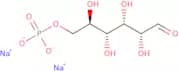
CAS:Glucose 6-phosphatase substrateFórmula:C6H11Na2O9P·2H2OPureza:Min. 98%Forma y color:White PowderPeso molecular:340.13 g/molEthyl 2-acetamido-3,4,6-tri-O-acetyl-2-deoxy-b-D-thioglucopyranoside
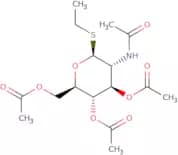
CAS:Ethyl 2-acetamido-3,4,6-tri-O-acetyl-2-deoxy-b-D-thioglucopyranoside is a modified carbohydrate that has been synthesized by the click modification of an acetylated triose. This chemical was synthesized by reacting ethyl 2-(2'-deoxy-(1->4)-beta--D--glucopyranoside) with trimethylsilylacetamide and copper(I) chloride in dry tetrahydrofuran. This product has high purity and is used as a research tool for glycobiology.
Fórmula:C16H25NO8SPureza:Min. 95%Forma y color:White PowderPeso molecular:391.44 g/mol2, 5- Anhydro- 3- azido- 3- deoxy- D- altronic acid methyl ester
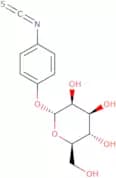
CAS:2, 5-Anhydro-3-azido-3-deoxy-D-altronic acid methyl ester is a Carbohydrate that belongs to the saccharide class. It is an Oligosaccharide containing 2 Monosaccharides and 1 Disaccharide. This product is custom synthesized, high purity, and has been Fluorinated and Methylated. The modification of this product includes Click chemistry.Fórmula:C7H11N3O5Pureza:Min. 95%Peso molecular:217.18 g/mol4-Isothiocyanatophenyl-a-D-mannopyranoside
CAS:4-Isothiocyanatophenyl-a-D-mannopyranoside is a synthetic molecule that is used for the modification of saccharides and polysaccharides. It is used in glycosylation reactions to introduce an alpha-N-acetylgalactosamine residue with a methyl group at position 6 of the pyranose ring to produce N,O-linked glycans. This product can be custom synthesized to meet specific customer requirements. It has high purity, excellent solubility in water, and does not contain any toxic impurities.Fórmula:C13H15NO6SPureza:Min. 95 Area-%Forma y color:Off-White PowderPeso molecular:313.33 g/mol3-O-Benzyl-1-O-tert-butyldimethylsilyl- D- glucitol cyclic 5, 6- carbonate
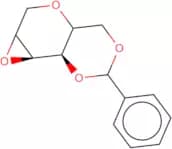
3-O-Benzyl-1-O-tert-butyldimethylsilyl- D- glucitol cyclic 5, 6- carbonate (3BTBDMS) is an organic compound that is used as a synthetic intermediate. It can be used for the synthesis of oligosaccharides and saccharides. 3BTBDMS can also be fluorinated, glycosylated, or methylated to create other compounds. This product has a molecular weight of 288.36 g/mol and a CAS number of 106929–04–8.Pureza:Min. 95%1,5:2,3-Dianhydro-4,6-O-benzylidene-D-mannitol
CAS:1,5:2,3-Dianhydro-4,6-O-benzylidene-D-mannitol is a modification of an oligosaccharide that has been synthesized by the glycosylation of D-mannitol. The methylation and fluorination reactions have also been performed on this sugar. This product is high purity and is in the form of a white powder.Fórmula:C13H14O4Pureza:Min. 95%Forma y color:PowderPeso molecular:234.25 g/molGlucotropaeolin potassium
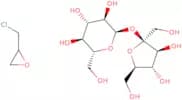
CAS:Glucotropaeolin potassium is a dietary compound that is found in plants. It contains the flavonoids progoitrin, glucosinolates, and isothiocyanates. Glucotropaeolin potassium can be extracted from plant tissue using a stable isotope to increase the quantity of extract. This extract can then be analyzed by high-performance liquid chromatography (HPLC) and colorimetric methods for its content of glucoraphanin and gluconapin. The profile of this extract can also be determined using silver ions.Fórmula:C14H18NO9S2·KPureza:Min. 98 Area-%Forma y color:PowderPeso molecular:447.52 g/molNigerose
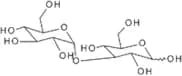
CAS:Nigerose is a chemical compound that belongs to the group of oligosaccharides. It is a glycan with a basic structure and has inhibitory properties. Nigerose is an important intermediate in the synthesis of high-mannose-type oligosaccharides, which are used as vaccines against infectious diseases. Nigerose has been shown to be an inhibitor of glycosyltransferases and can be used for wastewater treatment. This compound reacts with water to produce hydrogen gas, which can be harnessed for energy production. Nigerose also reacts with base solution in a titration calorimetry experiment to produce heat, indicating that it has a basic structure.
Fórmula:C12H22O11Pureza:Min. 93 Area-%Forma y color:White PowderPeso molecular:342.3 g/molIsosorbide dinitrate - 60% lactose and 40% Isosorbide dinitrate
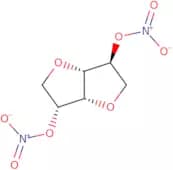
CAS:Isosorbide dinitrate is used to treat chronic bronchitis and congestive heart failure. It dilates blood vessels, allowing more oxygen-rich blood to reach the heart. Isosorbide dinitrate is also used to relieve chest pain (angina) and reduce complications after a heart attack. Isosorbide dinitrate is a prodrug that is converted in vivo to its active form, isosorbide mononitrate, by the enzyme nitric oxide synthase in response to hypoxia. In addition, it has been shown that this drug reduces levels of low-density lipoprotein cholesterol (LDL-C) and may be useful for the treatment of high cholesterol.
The mechanism of action for reducing LDL-C levels is not known but may be due to increased clearance of LDL-C from plasma or decreased production of very low density lipoproteins (VLDL). This medication does not affect triglycerides or high density lipFórmula:C6H8N2O8Pureza:Min. 95%Forma y color:White PowderPeso molecular:236.14 g/molN-Acetyl-D-glucosamine
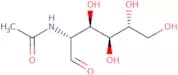
CAS:N-acetyl D-glucosamine (GlcNAc) is an aldohexose (2-acetamido-2-deoxyglucose) in which the hydroxyl group at position 2 is replaced by NHAc (Collins, 2006). N-acetyl D-glucosamine forms the exoskeletons of molluscs and insects as the building block of the polysaccharide chitin (Rudrapatnam, 2003). N-acetyl D-glucosamine is a key component of N- and O-linked glycans, present in glycolipids and the glycosaminoglycan hyaluronic acid (Fallacara, 2018). A recent study has suggested that N-acetyl D-glucosamine may have therapeutic potential for COVID-19 as it affects the spike protein-ACE2 receptor interaction during the infection with SARS-CoV-2 virus (Baysal, 2021).Fórmula:C8H15NO6Pureza:Min. 98 Area-%Forma y color:PowderPeso molecular:221.21 g/mol6-Amino-6-deoxy-b-cyclodextrin hydrochloride
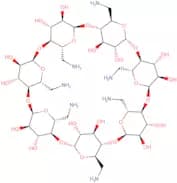
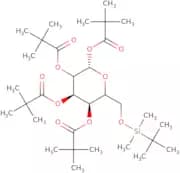
CAS:This beta-cyclodextrin (β-CD) derivative is a functionalized cyclic oligosaccharide composed of seven glucose units, characterized by a hydrophilic exterior and a lipophilic cavity (bigger than α-CD and smaller than γ-CDs), which allows it to encapsulate various guest molecules. This structural feature facilitates its use in multiple applications, including pharmaceuticals, food enhancement, and cosmetics. In the pharmaceutical industry, it enhances the solubility and stability of poorly water-soluble drugs, improving their bioavailability and efficacy while also masking unpleasant tastes. The food sector utilizes it as a stabilizer for flavors, colors, and nutrients, extending shelf life by protecting sensitive ingredients from degradation. In cosmetics, it serves as a complexing agent for fragrances and active components, ensuring their stability and controlled release. Its use expands to many other fields, including nanotechnology for drug delivery systems, environmental remediation for extracting organic pollutants, textiles for slow-release fragrances, and analytical chemistry for chiral separation.Fórmula:C42H77N7O28·7HClPureza:Min. 95%Forma y color:White Slightly Yellow PowderPeso molecular:1,383.32 g/mol1,2,3,4-Tetra-O-pivaloyl-6-O-(tert-butyldimethylsilyl)-b-D-glucopyranose
1,2,3,4-Tetra-O-pivaloyl-6-O-(tert-butyldimethylsilyl)-b-D-glucopyranose is a high purity oligosaccharide that can be custom synthesized to your specifications. This modification is an Oligosaccharide and Carbohydrate which is a complex carbohydrate. It has CAS No. and Monosaccharide as well as Methylation and Glycosylation. It is also a Sugar and Fluorination with saccharides.
Fórmula:C32H58O10SiPureza:Min. 95%Peso molecular:630.9 g/mol1-O-Acetyl-2,3,4,6-tetra-O-benzyl-b-D-galactopyranose
CAS:Synthetic building block
Fórmula:C36H38O7Pureza:Min. 98 Area-%Forma y color:White PowderPeso molecular:582.68 g/molHeparin disaccharide II-S trisodium salt
CAS:Heparin breakdown productFórmula:C12H16NNa3O16S2Pureza:Min. 95 Area-%Forma y color:White Off-White PowderPeso molecular:563.35 g/mol1,4-b-D-Mannotetraose
CAS:Isolated from ivory-nut mannan, Picea glauca and Pinus strobus glucomannansFórmula:C24H42O21Pureza:Min. 95 Area-%Forma y color:White PowderPeso molecular:666.58 g/mol2,5-Anhydro- 3- deoxy-D- ribo- hexonic acid
2,5-Anhydro-3-deoxy-D-ribohexonic acid is a fluorinated monosaccharide. It is synthesized by the modification of 2,5-anhydro-3-deoxyglucose with N-(2'-fluoroethyl)trimethoxysilane (FETS). This synthetic compound can be used as a glycosylation or polysaccharide building block in the synthesis of complex carbohydrates. The FETS modification allows for the introduction of various functional groups on C1 and C2 while maintaining the high purity.
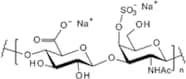
Pureza:Min. 95%Chondroitin sulfate sodium salt
CAS:Chondroitin sulphate is the most abundant glycosaminoglycan in mammalian tissues and occurs both in skeletal and soft connective tissue. The disaccharide repeat unit consists of N-acetyl galactosamine sulphate linked β1,4 to glucuronic acid.Pureza:Min. 95%Forma y color:White Off-White PowderMethyl N-benzyl-4,6-dideoxy-4,6-imino-2,3-O-isopropylidene-b-D-talopyranoside
Methyl N-benzyl-4,6-dideoxy-4,6-imino-2,3-O-isopropylidene-b-D-talopyranoside is a fluorinated monosaccharide with a custom synthesis. It is a synthetic oligosaccharide that has undergone glycosylation and polysaccharide modification. This compound has been modified by methylation, click chemistry, and sugar formation. It is available in high purity with a CAS number of 29059-07-1.
Pureza:Min. 95%2, 3:5, 6- Di- O- isopropylidene- D- mannofuranose
2, 3:5, 6-Di-O-isopropylidene-D-mannofuranose is a fluorinated monosaccharide that is used in glycosylation and polysaccharide modification. This compound has an O-methyl group on the hydroxyl group of the C2 position and a methyl group on the hydroxyl group of the C3 position. It is a white to off-white powder with a molecular weight of 332.37 g/mol. 2, 3:5, 6-Di-O-isopropylidene-D-mannofuranose has been shown to be stable at high temperatures and pH levels. It has a CAS number of 8061-93-0.Pureza:Min. 95%3-O-Hydroxyethyl-D-glucose
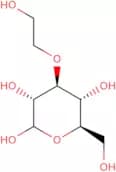
CAS:3-O-Hydroxyethyl-D-glucose (3HEG) is a hexose sugar that can be synthesized from D-glucose and glycerol. It is an important precursor for the synthesis of polyethylene glycols for drug delivery and has been shown to be a potent inhibitor of glucose uptake in Xenopus oocytes. 3HEG is also a good carbon source for cell growth, but it can only be metabolised by cells with the appropriate enzymes. Glucofuranose, which is structurally similar to 3HEG, can inhibit uptake of glucose by binding to glucose transporters on the cell membrane surface. This inhibition may be due to the structural similarities between these two sugars. Mechanistic studies indicate that this inhibition may occur as a result of competitive inhibition or allosteric modulation, but further research is required to elucidate this mechanism.Fórmula:C8H16O7Pureza:Min. 98 Area-%Forma y color:Yellow PowderPeso molecular:224.21 g/mol2-Azidoethyl N-acetyl-D-lactosamine
CAS:2-Azidoethyl N-acetyl-D-lactosamine is a custom synthesis that is a complex carbohydrate. It has been modified to include methylation and glycosylation. The saccharide is composed of several sugar molecules, including glucose and galactose, which are linked by alpha (1→4) or beta (1→3) bonds. The carbohydrate can be fluorinated, which increases its stability in the presence of oxygen. This compound has CAS number 338971-38-3. 2-Azidoethyl N-acetyl-D-lactosamine is a high purity product that can be used in the modification of other carbohydrates with click chemistry.Fórmula:C16H28N4O11Pureza:Min. 95%Forma y color:PowderPeso molecular:452.41 g/mol(2S, 3S, 4R) -3- [[[(2S, 3S, 4R) - 3- Azido- 4- [[[(1, 1- dimethylethyl) dimethylsilyl] oxy] methyl] - 1- (phenylmethyl) - 2- azetid inyl] carbonyl] amino] - 4- [[[(1, 1- dimethylethyl) dimethylsilyl] oxy] methyl] - 1- (phenylmethyl) -2- azetidinecarb
CAS:The product is a custom synthesis of the amino acid azetidine-2-carboxylic acid. It is synthesized from 2-acetamido-3,4-dihydroxybenzoic acid and 1,1'-dimethylethyl dimethylsilyl ether as starting materials. The product is used in glycosylation reactions to form complex carbohydrates with sugars. The product has been shown to be useful in Click chemistry, which is a type of chemical reaction where biotinylated molecules are used to attach other molecules in lab experiments. The CAS number for the product is 1992035-15-0.Fórmula:C37H58N6O5Si2Pureza:Min. 95%Peso molecular:723.06 g/molLevan - from Erwinia herbicola
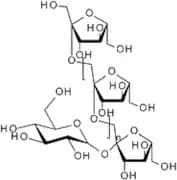
CAS:Levan is a (2,6)-linked fructan produced by Erwinia herbicola. The polysaccharide contains branches every 10-12 fructose residues linked (1,2) and is reported to have a molecular weight in excess of 1000 KDa. Potential industrial applications of levan have been proposed as an emulsifier, formulation aid, stabilizer and thickener, surface-finishing agent, encapsulating agent, and carrier for flavor and fragrances. In addition, levan is promising in medicine as a plasma substitute, drug activity prolongator and antihyperlipidemic agent.Pureza:Min. 95%Forma y color:Powder













![(2S, 3S, 4R) -3- [[[(2S, 3S, 4R) - 3- Azido- 4- [[[(1, 1- dimethylethyl) dimethylsilyl] oxy] methy…](/_next/image/?url=https%3A%2Fstatic.cymitquimica.com%2Fproducts%2F3D%2Fthumb-webp%2FMA163463.webp&w=3840&q=75)