Glycoscience
La glicociencia es el estudio de los carbohidratos y sus derivados, así como de las interacciones y funciones biológicas en las que participan. Este campo de investigación es crucial para comprender una amplia variedad de procesos biológicos, incluyendo el reconocimiento celular, la señalización, la respuesta inmune y el desarrollo de enfermedades. La glicociencia tiene aplicaciones importantes en la biotecnología, la medicina, y el desarrollo de nuevos fármacos y terapias. En CymitQuimica, ofrecemos una amplia selección de productos de alta calidad y pureza para la investigación en glicociencia. Nuestro catálogo incluye monosacáridos, oligosacáridos, polisacáridos, glicoconjugados, y reactivos específicos, diseñados para apoyar a los investigadores en sus estudios sobre la estructura, función y aplicaciones de los carbohidratos en sistemas biológicos. Estos recursos están destinados a facilitar descubrimientos científicos y aplicaciones prácticas en diversas áreas de la biociencia y la medicina.
Subcategorías de "Glycoscience"
- Aminoazúcares(108 productos)
- Anticuerpos relacionados con azúcares(282 productos)
- Glicolípidos(46 productos)
- Glicosaminoglicanos (GAGs)(55 productos)
- Glucósidos(419 productos)
- Monosacáridos(6.624 productos)
- Oligosacáridos(3.682 productos)
- Polisacáridos(503 productos)
Se han encontrado 11046 productos de "Glycoscience"
Ordenar por
Pureza (%)
0
100
|
0
|
50
|
90
|
95
|
100
Methyl 2-azido-3,4,6-tri-O-acetyl-2-deoxy-b-D-mannopyranoside
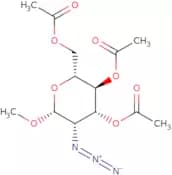
CAS:<p>Methyl 2-azido-3,4,6-tri-O-acetyl-2-deoxy-bD mannoside is a custom synthesis that can be modified to suit the needs of the customer. It is an oligosaccharide and polysaccharide that has been modified with methylation and glycosylation. This product has CAS No. 97604-59-6 and is available for purchase in high purity with a purity level of at least 95%. Methyl 2-azido-3,4,6-triO acetyl -2 deoxy b D mannoside has been fluorinated to create a synthetic sugar.</p>Fórmula:C13H19N3O8Pureza:Min. 95%Forma y color:White PowderPeso molecular:345.31 g/molL-Lyxosamine HCl
L-Lyxosamine HCl is a synthetic monosaccharide that has been modified to contain a fluorine atom. L-Lyxosamine HCl is a methyl donor in the Methylation reaction and can be used as an intermediate for the synthesis of oligosaccharides and polysaccharides. This product is available in high purity, with an average yield of 97%. The CAS No. for this product is 590-81-6.Fórmula:C5H11NO4HClPureza:Min. 95%Peso molecular:185.61 g/molN-5-Carboxypentyl-1-deoxygalactonojirimycin
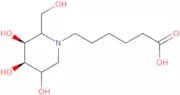
CAS:<p>N-5-Carboxypentyl-1-deoxygalactonojirimycin is an inhibitor of glycolipid hydrolase and a potential drug for the treatment of lysosomal storage disorders. N-5-Carboxypentyl-1-deoxygalactonojirimycin is derived from the natural product galactonojirimycin, which has been shown to inhibit glycolipid hydrolase in vitro. The compound was developed by modifying the peptide sequence to increase its affinity for the enzyme. N-5-Carboxypentyl-1-deoxygalactonojirimycin displays a higher affinity for glycolipid hydrolase than galactonojirimycin, and it also has a greater inhibitory effect on this enzyme.<br>N-5-Carboxypentyl-1-deoxygalactonojirimycin is</p>Fórmula:C12H23NO6Pureza:Min. 95%Forma y color:White PowderPeso molecular:277.31 g/mol1,3,4,6-Tetra-O-acetyl-2-azido-2-deoxy-D-galactopyranose
CAS:1,3,4,6-Tetra-O-acetyl-2-azido-2-deoxy-D-galactopyranose is a carbohydrate that has been shown to bind to the lectin domain of the human insulin receptor. This binding is thought to modulate the activity of this protein. The carbohydrate has also been shown to inhibit the uptake of galactose by pancreatic beta cells in vitro. 1,3,4,6-Tetra-O-acetyl-2-azido-2-deoxy-D-galactopyranose is postulated to have anti cancer properties and may be used as a blocker for tumor growth.Fórmula:C14H19N3O9Pureza:Min. 95%Forma y color:White PowderPeso molecular:373.32 g/mol2,5-Anhydro-1,3-O-isopropylidene-6-O-trityl-D-glucitol
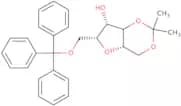
CAS:<p>2,5-Anhydro-1,3-O-isopropylidene-6-O-trityl-D-glucitol is a complex carbohydrate that is synthesized by the modification of glucose. This product has been modified with methylation and glycosylation.<br>2,5-Anhydro-1,3-O-isopropylidene-6-O-trityl--D--glucitol is a white powder that is soluble in water and ethanol. <br>It can be used for fluoroquinolone resistance studies, which are important for developing new antibiotics to combat bacterial infections.</p>Fórmula:C28H30O5Pureza:Min. 95%Peso molecular:446.53 g/molN-Benzoyl-D-glucosamine
CAS:<p>Lectins are carbohydrate-binding proteins that can be classified into different types based on their specificities for glycan structures. One of the most common types is the N-acetyl-D-glucosamine (NAG) lectin, which binds to oligomers of NAG and related sugars. Lectins are used to activate cells and induce cell death. The dodecyl NAG lectin has been shown to bind to glucocerebrosides in a reductively irreversible manner and has been used as a model for such interactions. This lectin is also inexpensively produced from a synthetic benzylidene acetal, which can be made from commercially available materials. It has been shown that this lectin binds to polyacrylamide gels in an SDS-polyacrylamide gel electrophoresis, with a pH optimum at 7.0 and an amino acid composition that includes glutamic acid, glutamine, asparagine, ser</p>Fórmula:C13H17NO6Pureza:Min. 95%Forma y color:White PowderPeso molecular:283.28 g/mol2,3-Di-O-benzyl-6-O-tert-butyldimethylsilyl-gamma-cyclodextrin
<p>This gamma-cyclodextrin (γ-CD) derivative is a modified cyclic oligosaccharide composed of eight glucose units, featuring a larger cavity size than α- and β-cyclodextrins. This structural characteristic allows γ-CDs to form inclusion complexes with a wider range of guest molecules, making it particularly versatile in various industries. In the food sector, it is used as a carrier and stabilizer for flavors, fat-soluble vitamins, and polyunsaturated fatty acids, protecting volatile compounds from evaporation. In pharmaceuticals, it enhances the solubility and bioavailability of poorly water-soluble drugs and, thanks to its larger ring size, allows for the encapsulation of larger molecules or even entire drug molecules. γ-CDs and derivatives are also used for environmental remediation and, in analytical chemistry, for the extraction and concentration of target substances.</p>Fórmula:C208H288O40SI8Pureza:Min. 95%Peso molecular:4,475.79 g/molL-Hexaguluronic acid hexasodium
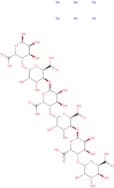
CAS:Please enquire for more information about L-Hexaguluronic acid hexasodium including the price, delivery time and more detailed product information at the technical inquiry form on this pageFórmula:C36H50O37•Na6Pureza:Min. 95%Peso molecular:1,212.7 g/molMonofucosyllacto-N-hexaose II
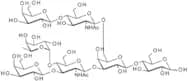
CAS:<p>Monofucosyllacto-N-hexaose II is a tetraol that is used as a reagent in the synthesis of enantioenriched and synthetically tetrasaccharidic products. Monofucosyllacto-N-hexaose II can be obtained by the reaction of Grignard reagents with glucose or by stereoselective reduction of an alpha, beta unsaturated ketone. The presence of the glucose residue in Monofucosyllacto-N-hexaose II makes it an acceptor for esterification reactions. This compound has chiral centers due to its two stereogenic centers at C2 and C3, which are both beta positions on the glucose residue. Monofucosyllacto-N-hexaose II also has a free hydroxyl group at C5 that can be esterified to produce chiral esters.</p>Fórmula:C46H78N2O35Pureza:Min. 95%Peso molecular:1,219.1 g/molMan-3 Glycan, 2-AB labelled
<p>2-AB labeled core pentasaccharide found in most N-linked oligosaccharides. Purified from the oligosaccharide pool released from bovine serum by hydrazinolysis using a combination of HPLC and glycosidase digestion.</p>Pureza:Hplc.Forma y color:PowderLacto-N-neofucopentaose
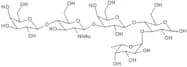
<p>Neutral pentasasaccharide naturally present in human breast milk</p>Fórmula:C32H55NO25Pureza:Min. 90 Area-%Forma y color:PowderPeso molecular:853.77 g/mol2-Deoxy-D-glucono-1,5-lactone
CAS:<p>2-Deoxy-D-glucono-1,5-lactone is a crystalline compound that is isolated from the hydrolysis of D-gluconic acid. This compound has been found to be a diastereoisomeric product with a lactone ring and an epimerization process. It can also be synthesized by reacting epichlorohydrin with potassium hydroxide in the presence of a hydroxy group. 2DG is an elimination product of 2-deoxyglucose and has been shown to have antihyperglycemic effects due to its ability to inhibit glucose synthesis in the liver and muscle cells. This compound also inhibits protein synthesis in bacteria, which may lead to cell death.</p>Fórmula:C6H10O5Pureza:Min. 95%Peso molecular:162.14 g/molPhenethyl glucosinolate potassium salt
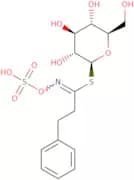
CAS:Phenethyl glucosinolate potassium salt is a compound found in plants belonging to the Brassicaceae family. It has been shown to be highly toxic to larvae of the cabbage butterfly and other insects that feed on brassica plants. Phenethyl glucosinolate potassium salt has been shown to inhibit the development of these insects, probably by inhibiting protein synthesis in the insect's gut. The major sulfur-containing compound in this product is gluconasturtiin, which has been shown to inhibit growth of pekinensis at high temperatures. This compound also inhibits radiation-induced DNA damage and does not show significant effects on nonsignificant organisms such as yeast and mold.Fórmula:C15H20NO9S2KPureza:Min. 95%Forma y color:PowderPeso molecular:461.55 g/molD-Gluconic acid sodium salt
CAS:<p>D-Gluconic acid sodium salt is a glycol ether that is used as an injection solution. It has been shown to have antibacterial efficacy against wild-type strains of bacteria such as Escherichia coli, Pseudomonas aeruginosa, and Staphylococcus aureus. The in vitro antimicrobial action of D-gluconic acid sodium salt was found to be due to its ability to inhibit bacterial growth by interfering with the synthesis of DNA. D-Gluconic acid sodium salt also has been shown to have antihypertensive effects in rats through the inhibition of angiotensin II type 1 receptor (AT1) signaling pathway and erythrocyte proliferation. This drug also has been shown to bind benzalkonium chloride and x-ray diffraction data show that it is crystalline in nature. The analytical method for determining the concentration of D-gluconic acid sodium salt is by electrochemical impedance</p>Fórmula:C6H11NaO7Pureza:Min. 95%Forma y color:White PowderPeso molecular:218.14 g/molDigalactosyldiacylglycerol - 10mg/ml in Chloroform-Methanol
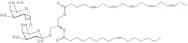
CAS:<p>In plants and algae, the two main galactolipids, monogalactosyldiacyglycerol (MGDG) and digalactosyldiacyglycerol (DGDG), are synthesized by galactosyltransferases in the plastid envelope. They have been linked to the anti-inflammatory and cancer benefits of a green leafy vegetable diet in humans due to their ability to regulate the levels of free radicals like nitric oxide (NO)</p>Fórmula:C51H84O15Pureza:Min. 95%Forma y color:PowderPeso molecular:937.2 g/molMaltose
CAS:<p>Please enquire for more information about Maltose including the price, delivery time and more detailed product information at the technical inquiry form on this page</p>Fórmula:C12H22O11Peso molecular:342.3 g/molGlycosylceramide - from plant origin
CAS:<p>Glucosylceramide (Glc-Cer) is the common precursor in the biosynthesis of most glycosphingolipids, with exception of some Gal-Cer derivatives, such as, GM4. Glucosylceramide consists of a glucosyl moiety which is β-O-glycosydically linked to ceramide, which itself, consists of the long-chain aminoalcohol sphingosine and a fatty acid. Glucosylceramide (also called glucocerebroside) is synthesised enzymatically, by the glucosylceramide synthase-catalysed with the addition of a glucose residue to ceramide. Glucosylceramide is involved in the regulation of various cellular events and also serves as a main constituent in liposome formulations.</p>Fórmula:C40H75NO9Pureza:Min. 95%Peso molecular:714.02 g/molPachyman - from Poria cocos
CAS:<p>Poria cocos is an edible medicinal fungus known as “Fuling” in Chinese that has been used as a Chinese traditional medicine for more than two thousand years. Polysaccharide material is the most abundant organic substance in the fungus, accounting for about 85% of the total and is a mixture of polysaccharides with the major component being Pachyman, a β-glucan with a 1,3 backbone and 1,6 side chains. It is reported that Pachyman has a wide range of biological activities including antitumour, immunomodulatory, anti-inflammatory and antioxidative properties. Pachyman is a beta-glucan with a 1,3 backbone and 1,6 side chains of fungal origin (Poria cocos).<br>The image was kindly provided by Dr. Chris Lawson.</p>Pureza:Min. 95%Forma y color:White Powder1,2,3,4,6-Penta-O-acetyl-D-galactopyranose
CAS:1,2,3,4,6-Penta-O-acetyl-D-galactopyranose is an analog of the natural pentoses that binds to the mitochondrial membrane and inhibits the production of pro-inflammatory cytokines. This drug has been shown to inhibit the binding of lysophosphatidic acid (LPA) to its receptor by substituting for LPA in this binding site. 1,2,3,4,6-Penta-O-acetyl-D-galactopyranose also inhibits the expression of proinflammatory cytokines such as interleukin 6 (IL6) and IL1β in a dose dependent manner. This drug is also capable of inhibiting phosphotungstic acid from binding to a monolayer surface and can be used as a glycopolymer for cell culture. It has been shown that 1,2,3,4,6-Penta-O-acetylFórmula:C16H22O11Pureza:Min. 95%Forma y color:PowderPeso molecular:390.34 g/molMethyl 2-deoxy-L-ribofuranoside
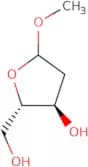
CAS:<p>Methyl 2-deoxy-L-ribofuranoside is an intermediate in the synthesis of l-arabinose. It can be obtained by the reaction of methyl 2,3-dideoxy-D-ribofuranoside with pivaloyl chloride. The antiviral activity of this compound has been shown by its ability to inhibit the replication of influenza A virus. Methyl 2-deoxy-L-ribofuranoside is a fluorinating agent that can be used for the synthesis of oligosaccharides and nucleosides. This intermediate also serves as a substrate for a number of organic reactions, including regioselective and stereoselective chlorination.</p>Fórmula:C6H12O4Pureza:Min. 95%Forma y color:PowderPeso molecular:148.16 g/mol