Glycoscience
La glicociencia es el estudio de los carbohidratos y sus derivados, así como de las interacciones y funciones biológicas en las que participan. Este campo de investigación es crucial para comprender una amplia variedad de procesos biológicos, incluyendo el reconocimiento celular, la señalización, la respuesta inmune y el desarrollo de enfermedades. La glicociencia tiene aplicaciones importantes en la biotecnología, la medicina, y el desarrollo de nuevos fármacos y terapias. En CymitQuimica, ofrecemos una amplia selección de productos de alta calidad y pureza para la investigación en glicociencia. Nuestro catálogo incluye monosacáridos, oligosacáridos, polisacáridos, glicoconjugados, y reactivos específicos, diseñados para apoyar a los investigadores en sus estudios sobre la estructura, función y aplicaciones de los carbohidratos en sistemas biológicos. Estos recursos están destinados a facilitar descubrimientos científicos y aplicaciones prácticas en diversas áreas de la biociencia y la medicina.
Subcategorías de "Glycoscience"
- Aminoazúcares(108 productos)
- Anticuerpos relacionados con azúcares(282 productos)
- Glicolípidos(46 productos)
- Glicosaminoglicanos (GAGs)(55 productos)
- Glucósidos(419 productos)
- Monosacáridos(6.624 productos)
- Oligosacáridos(3.682 productos)
- Polisacáridos(503 productos)
Se han encontrado 11046 productos de "Glycoscience"
Ordenar por
Pureza (%)
0
100
|
0
|
50
|
90
|
95
|
100
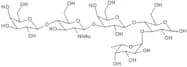
Lacto-N-neofucopentaose
<p>Neutral pentasasaccharide naturally present in human breast milk</p>Fórmula:C32H55NO25Pureza:Min. 90 Area-%Forma y color:PowderPeso molecular:853.77 g/molMan-3 Glycan, 2-AB labelled
<p>2-AB labeled core pentasaccharide found in most N-linked oligosaccharides. Purified from the oligosaccharide pool released from bovine serum by hydrazinolysis using a combination of HPLC and glycosidase digestion.</p>Pureza:Hplc.Forma y color:PowderGlucose dehydrogenase
CAS:<p>Glucose Dehydrogenase is an enzyme, which is typically derived from microbial sources such as bacteria and fungi. It functions by catalyzing the oxidation of glucose to gluconolactone, concurrently reducing a cofactor such as NAD⁺ or PQQ. This biochemical reaction is critical in various analytical applications due to its specificity and efficiency in glucose detection.Glucose Dehydrogenase is widely employed in the development of biosensors and diagnostic assays. Its primary application is in blood glucose monitoring devices, where its ability to accurately quantify glucose levels is crucial for managing diabetes. Additionally, it is utilized in research and development settings for biochemical assays that require precise glucose measurements. The enzyme's rapid and specific action on glucose molecules makes it an indispensable tool in both clinical and laboratory environments, contributing to advancements in biosensing technologies and metabolic studies.</p>Digalactosyldiacylglycerol - 10mg/ml in Chloroform-Methanol
CAS:<p>In plants and algae, the two main galactolipids, monogalactosyldiacyglycerol (MGDG) and digalactosyldiacyglycerol (DGDG), are synthesized by galactosyltransferases in the plastid envelope. They have been linked to the anti-inflammatory and cancer benefits of a green leafy vegetable diet in humans due to their ability to regulate the levels of free radicals like nitric oxide (NO)</p>Fórmula:C51H84O15Pureza:Min. 95%Forma y color:PowderPeso molecular:937.2 g/molOctanoyl b-D-glucosylamine
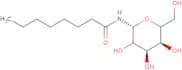
CAS:<p>Octanoyl b-D-glucosylamine is a synthetic compound that has been designed for use in the synthesis of complex carbohydrates. It is an octanoyl derivative of D-glucosamine, which is a sugar. This compound can be used for the modification of saccharides and polysaccharides, as well as sugars. It has been shown to be resistant to glycosylation and fluorination reactions.</p>Fórmula:C14H27NO6Pureza:Min. 95%Peso molecular:305.37 g/molLipid IVa
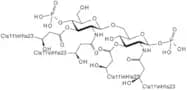
CAS:<p>Lipid IVA is a tetra-acylated precursor molecule of lipid A which is a component of lipopolysaccharides (LPS) on the outer membrane of gram-negative bacteria. On the innate immune cells of hosts there are toll-like receptor 4 (TLR4) and MD-2 which recognize LPS. This recognition event ultimately leads to the activation of NFκB which in turn results in pro-inflammatory cytokine production. Studies have suggested lipid A in Escherichia coli to be an agonist for both mouse and human TLR4, while lipid IVA can induce species specific TLR4 responses. For example for horse and mouse TLR4 and MD-2, Lipid IVA is an agonist where as it is an antagonist for TLR4 and MD-2 in humans.</p>Fórmula:C68H130N2O23P2Pureza:One Main SpotForma y color:White PowderPeso molecular:1,405.7 g/molN-Acetylneuraminic acid hexamer disodium salt
<p>N-Acetylneuraminic acid hexamer disodium salt is a custom synthesis of a fluorinated, methylated and acetylated N-acetylneuraminic acid. This molecule is an oligosaccharide with three sugar rings. It has been modified by click chemistry and glycosylation to create a complex carbohydrate. The CAS number for this compound is 156587-48-2.</p>Fórmula:C66H98N6O49Na6Pureza:Min. 95%Forma y color:White PowderPeso molecular:1,897.43 g/mol2,3,4,6-Tetra-O-acetyl-D-mannopyranose
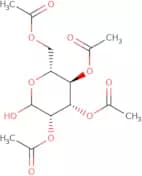
CAS:<p>2,3,4,6-Tetra-O-acetyl-D-mannopyranose is a stereoselective technique used for the production of trisaccharides. It is also an acetylated form of D-mannopyranose that is obtained by acetylation of D-mannopyranose with acetic anhydride in the presence of hydrochloric acid or pyridine. The compound can be obtained as either levorotatory or dextrorotatory isomers depending on whether the hydroxyl group or carbonyl group are in the axial position. 2,3,4,6-Tetra-O-acetyl-D-mannopyranose can be used as a substrate for enzyme preparations to produce aminoglycoside antibiotics such as hygromycin A. Acetylation increases the solubility and stability of this drug and reduces its toxicity to humans</p>Fórmula:C14H20O10Pureza:Min. 98 Area-%Forma y color:White PowderPeso molecular:348.3 g/mol3'-methoxy apiin;Chrysoeiol-7-(2-O-apiosylglucoside)
CAS:<p>Please enquire for more information about 3'-methoxy apiin;Chrysoeiol-7-(2-O-apiosylglucoside) including the price, delivery time and more detailed product information at the technical inquiry form on this page</p>Pureza:Min. 95%2-Acetamido-3-O-(2-acetamido-2-deoxy-b-D-glucopyranosyl)-2-deoxy-D-galactopyranose
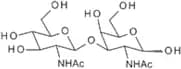
CAS:<p>2-Acetamido-3-O-(2-acetamido-2-deoxy-b-D-glucopyranosyl)-2-deoxy-D-galactopyranose is a methylated, saccharide, Polysaccharide. It is a custom synthesis of a carbohydrate sugar. It is fluorinated to increase its bioavailability. 2 Acetamido 3 O 2 acetamido 2 deoxy b D glucopyranosyl 2 deoxy D galactopyranose has CAS No. 95673 98 6 and the molecular weight is 524.87 g/mol. It has a purity of >99% and comes in powder form.</p>Fórmula:C16H28N2O11Pureza:Min. 95%Forma y color:White PowderPeso molecular:424.4 g/molD-Gluconic acid sodium salt
CAS:<p>D-Gluconic acid sodium salt is a glycol ether that is used as an injection solution. It has been shown to have antibacterial efficacy against wild-type strains of bacteria such as Escherichia coli, Pseudomonas aeruginosa, and Staphylococcus aureus. The in vitro antimicrobial action of D-gluconic acid sodium salt was found to be due to its ability to inhibit bacterial growth by interfering with the synthesis of DNA. D-Gluconic acid sodium salt also has been shown to have antihypertensive effects in rats through the inhibition of angiotensin II type 1 receptor (AT1) signaling pathway and erythrocyte proliferation. This drug also has been shown to bind benzalkonium chloride and x-ray diffraction data show that it is crystalline in nature. The analytical method for determining the concentration of D-gluconic acid sodium salt is by electrochemical impedance</p>Fórmula:C6H11NaO7Pureza:Min. 95%Forma y color:White PowderPeso molecular:218.14 g/molD-Glucosamine-3,4,6-tri-O-sulphate trisodium salt
CAS:<p>D-Glucosamine-3,4,6-tri-O-sulphate trisodium salt is a high purity and custom synthesis of D-glucosamine. It is a sugar with click modification and fluorination. It has CAS No. 157297-03-5 and it is synthesized from glycosylation, methylation, and modification. It has a molecular weight of 517.85 g/mol and the chemical formula C9H14N2O12S3NaO6. Glucosamine is an oligosaccharide that can be found in many complex carbohydrates such as chitin or cellulose.</p>Fórmula:C6H10NO14S3Na3Pureza:Min. 95%Forma y color:PowderPeso molecular:485.31 g/mol3-Acetamido-3,6-dideoxy-D-galactose
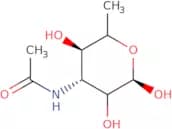
CAS:<p>3-Acetamido-3,6-dideoxy-D-galactose is a monosaccharide with two functional groups. It has been shown to be bifunctional and can act as a glycosyl donor or acceptor. 3-Acetamido-3,6-dideoxy-D-galactose was isolated from the type strain of Streptomyces venezuelae. It is also found in fatty acids and some strains of bacteria, such as Bacillus megaterium. The biological properties of 3-acetamido--3,6-dideoxy--D--galactose have been studied using monoclonal antibodies, magnetic resonance spectroscopy (MRS), and 13C nuclear magnetic resonance spectroscopy (NMR).</p>Fórmula:C8H15NO5Pureza:Min. 95%Forma y color:PowderPeso molecular:205.21 g/molGlobotriose-sp-biotin
Globotriose-sp-biotin is a custom synthesis that contains a fluorinated, methylated, and modified monosaccharide. It is a synthetic oligosaccharide with glycosylation at the reducing end. Globotriose-sp-biotin can be used in the modification of polysaccharides and complex carbohydrates to improve their bioactivity. This product has a CAS number of 127798-73-5 and is listed as an Oligosaccharide under Glycosylations in the Carbohydrate section.Pureza:Min. 95%Forma y color:Powder3-Azido-3-deoxy-1,2-O-isopropylidene-a-D-ribofuranose
CAS:<p>3-Azido-3-deoxy-1,2-O-isopropylidene-a-D-ribofuranose is a synthetic carbohydrate that contains fluorine and is used as a glycosylation and methylation reagent. It has been shown to react with various saccharides, including glucose, maltose, lactose, sucrose, and cellobiose. In addition to its use in glycosylation reactions, 3-azido-3-deoxy-1,2-O-isopropylidene -a D ribofuranose can be used for click chemistry. This reagent is available in high purity and is synthesized from the natural sugar ribofuranose.</p>Pureza:Min. 95%2,3,4,6-Tetra-O-acetyl-a-D-mannopyranosyl azide
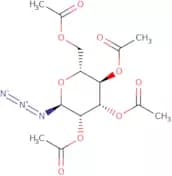
CAS:<p>2,3,4,6-Tetra-O-acetyl-a-D-mannopyranosyl azide is a crystalline solid that can be obtained by heating 2,3,4,6-tetra-O-acetyl-a-D-mannopyranose with sodium azide. This compound has been used in the x-ray crystallographic technique for obtaining electron density maps. The x ray data collected from this compound showed the distinct difference between the electron density of the atoms and their surroundings.</p>Fórmula:C14H19N3O9Forma y color:PowderPeso molecular:373.32 g/molChondroitin sulphate
CAS:Chondroitin sulphate is an inhibitor that has been extensively studied in human and animal models. This active agent has been shown to have a protein inhibitory effect on epithelial cells, as well as an inhibitory effect on cell growth in Chinese medicine and Chinese medicinal plants. Chondroitin sulphate has been found to exhibit inhibitory activity against endothelial cells, which may be due to its ability to inhibit the nuclear translocation of NF-κB. This compound can be detected by liquid chromatography and has been shown to have a significant inhibitory effect on the proliferation of HepG2 cells. Overall, chondroitin sulphate shows great potential for use in healthcare products aimed at regulating cell growth and inflammation.Pureza:ReportedForma y color:PowderD-Sedoheptulose
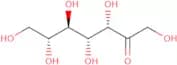
CAS:<p>D-Sedoheptulose is a sugar that is a member of the pentoses. It has been shown to have a ph optimum of 4.5 and oxidizing potential of -0.18 V. It is also an important intermediate in carbohydrate metabolism and can be used as an energy source by cells. D-Sedoheptulose plays a role in transcriptional regulation and cellular physiology, as well as being involved in the production of acyl chains and disulfide bonds for proteins. D-Sedoheptulose has also been found to have synergic effects with other sugars such as glucose, sucrose, or fructose, which may be due to its ability to act as an inducer of reductive enzymes such as glucose-6-phosphate dehydrogenase (G6PD).</p>Fórmula:C7H14O7Pureza:Min. 95%Forma y color:PowderPeso molecular:210.18 g/molD-Glucose-6-phosphate dipotassium salt hydrate
CAS:<p>Glucose 6-phosphatase substrate</p>Fórmula:C6H11O9PK2·H2OPureza:Min. 95%Peso molecular:354.33 g/molN-Oleoyl-N-methyltaurine sodium salt
CAS:<p>N-Oleoyl-N-Methyltaurine sodium salt is a glycol ether that has been shown to be an effective transport inhibitor for fatty acids. It inhibits the growth of bacteria and fungi by interfering with the cell membrane lipid synthesis. N-Oleoyl-N-Methyltaurine sodium salt also has anti-inflammatory properties, which may be due to its ability to inhibit prostaglandin synthesis.</p>Fórmula:C21H40NO4S·NaPureza:Min. 30.00%Peso molecular:425.6 g/mol