Glycoscience
La glicociencia es el estudio de los carbohidratos y sus derivados, así como de las interacciones y funciones biológicas en las que participan. Este campo de investigación es crucial para comprender una amplia variedad de procesos biológicos, incluyendo el reconocimiento celular, la señalización, la respuesta inmune y el desarrollo de enfermedades. La glicociencia tiene aplicaciones importantes en la biotecnología, la medicina, y el desarrollo de nuevos fármacos y terapias. En CymitQuimica, ofrecemos una amplia selección de productos de alta calidad y pureza para la investigación en glicociencia. Nuestro catálogo incluye monosacáridos, oligosacáridos, polisacáridos, glicoconjugados, y reactivos específicos, diseñados para apoyar a los investigadores en sus estudios sobre la estructura, función y aplicaciones de los carbohidratos en sistemas biológicos. Estos recursos están destinados a facilitar descubrimientos científicos y aplicaciones prácticas en diversas áreas de la biociencia y la medicina.
Subcategorías de "Glycoscience"
- Aminoazúcares(108 productos)
- Anticuerpos relacionados con azúcares(282 productos)
- Glicolípidos(46 productos)
- Glicosaminoglicanos (GAGs)(55 productos)
- Glucósidos(419 productos)
- Monosacáridos(6.624 productos)
- Oligosacáridos(3.682 productos)
- Polisacáridos(503 productos)
Se han encontrado 11046 productos de "Glycoscience"
Ordenar por
Pureza (%)
0
100
|
0
|
50
|
90
|
95
|
100
2-[(1E)-2-[6-(β-D-Galactopyranosyloxy)-2,3-dihydro-1H-xanthen-4-yl]ethenyl]-3,3-dimethyl-1-propyl-3H-indolium iodide
CAS:<p>Please enquire for more information about 2-[(1E)-2-[6-(β-D-Galactopyranosyloxy)-2,3-dihydro-1H-xanthen-4-yl]ethenyl]-3,3-dimethyl-1-propyl-3H-indolium iodide including the price, delivery time and more detailed product information at the technical inquiry form on this page</p>Fórmula:C34H40NO7•IPureza:Min. 95%Peso molecular:701.59 g/mol(1S,3S,4R,8S)-8-Benzyloxy-1-hydroxymethyl-3-methoxy-2,6-dioxabicyclo[3,2,1]octane
CAS:<p>1-Hydroxymethyl-8-benzyloxy-3-methoxy-2,6-dioxabicyclo[3,2,1]octane is a sugar that can be modified with various functional groups. This compound is synthesized by modification of the 1S,3S,4R,8S configuration of 8-Benzyloxy-1-(hydroxymethyl)-3-methoxy-2,6 dioxabicyclo[3,2,1]octane. The synthesis can be performed in two steps: first the hydroxymethyl group is replaced by benzyloxymethyl using 1-(benzyloxy)propanol and then the methoxy group is replaced by a methoxy group with sodium methoxide.</p>Fórmula:C15H20O5Pureza:Min. 95%Peso molecular:280.32 g/molD-Maltose monohydrate
CAS:<p>Please enquire for more information about D-Maltose monohydrate including the price, delivery time and more detailed product information at the technical inquiry form on this page</p>Fórmula:C12H24O12Pureza:Min. 98 Area-%Peso molecular:360.31 g/molApiogalacturonan polysaccharides sodium
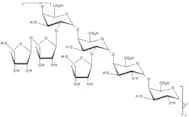
CAS:<p>An apiose-rich pectic polysaccharide zosterin is found in the sea grass Zostera marina and is typical of similar structures occurring in higher plants. The structure consists of an α-1,4-D-galactopyranosyluronan backbone substituted by 1,2-linked apiofuranose oligosaccharides and single apiose residues. The average molecular mass of the polysaccharide has been shown to be about 4100 Da with a low polydispersity.</p>Pureza:Min. 60%Forma y color:PowderUDP-Gal 2Na
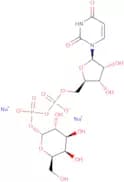
CAS:<p>UDP-a-D-galactose disodium salt (UDP-Gal) is a sugar-nucleotide substrate of galactosyltransferases. It’s used as the donor of galactose in the biosyntheses of glycoproteins and glycolipids. Its low cellular content is also hypothetically linked to the defective galactosylation in galactosemia.</p>Fórmula:C15H22N2O17P2·2NaPureza:Min. 95 Area-%Forma y color:PowderPeso molecular:610.27 g/molRef: 3D-MU06699
Producto descatalogadoN-Acetyl-D-mannosamine
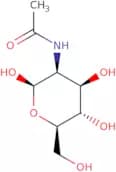
CAS:<p>N-Acetyl D-mannosamine (ManNAc) is an aldohexose (2-acetamido-2-deoxymannose) in which the axial hydroxyl group at position 2 is replaced by a N-acetyl group (Collins, 2006). It has been reported that N-acetyl D-mannosamine supplementation, may provide novel means to break the link between obesity and hypertension (Peng, 2019). N-Acetyl-D-mannosamine and N-acetyl-D-glucosamine are the essential precursors of sialic acid, the specific monomer of polysialic acid, a bacterial pathogenic determinant, for example, Escherichia coli K1 uses both amino sugars as carbon sources. It has been reported that ManNAc can be used as a treatment for hereditary inclusion body myopathy, an adult-onset, progressive neuromuscular disorder and also for renal disorders involving proteinuria and hematuria due to podocytopathy and/or segmental splitting of the glomerular basement membrane (Galeano, 2007).</p>Fórmula:C8H15NO6Pureza:Min. 98 Area-%Forma y color:White PowderPeso molecular:221.21 g/molRef: 3D-MA05269
Producto descatalogadoChondroitin disaccharide 6S sodium salt
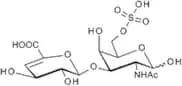
CAS:<p>Chondroitin disaccharide 6S sodium salt is a synthetic, fluorinated, oligosaccharide that has been custom synthesized and glycosylated. It is a sugar-based compound with a high purity and excellent solubility in water. It was synthesized by click modification of the sugar monomer with an amine group at the reducing end. The chondroitin disaccharide 6S sodium salt was further modified with methylation to yield a product with a higher purity.</p>Fórmula:C14H21NO15S·2NaPureza:Min. 90 Area-%Forma y color:PowderPeso molecular:521.36 g/molRef: 3D-OC01702
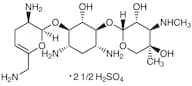
Producto descatalogadoSisomicin Sulfate
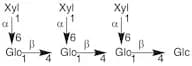
CAS:Fórmula:C19H37N5O7H2SO4Pureza:>98.0%(HPLC)Forma y color:White to Almost white powder to crystalPeso molecular:692.71Heptasaccharide Glc4Xyl3
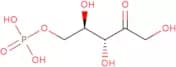
CAS:Fórmula:C39H66O33Pureza:>80.0%(HPLC)Forma y color:White to Almost white powder to crystalPeso molecular:1,062.92D-Ribulose 5-phosphate sodium salt
CAS:<p>Reference compound for metabolites of the pentosephosphate pathway</p>Fórmula:C5H11O8P·xNaPureza:Min. 96 Area-%Forma y color:White Yellow PowderPeso molecular:230.11 g/molRef: 3D-MR45852
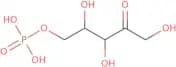
Producto descatalogadoD-Ribulose 5-phosphate sodium
CAS:<p>Ribulose 5-phosphate sodium is a chemical that can be used to inhibit the enzyme ribulose phosphate reductase. Ribulose 5-phosphate sodium has been shown to inhibit glycolaldehyde production in the chloroplasts of plants, effectively reducing the amount of carbon dioxide produced. This chemical has also been shown to have an inhibitory effect on other enzymes involved in carbon fixation and assimilation. The effectiveness of this chemical is dependent on the specific plant species and environmental conditions.</p>Fórmula:C5H11O8P•NaxPureza:Min. 95%Forma y color:PowderPeso molecular:230.11 g/molRef: 3D-AAA09387
Producto descatalogado6-Amino-6-deoxy-beta-cyclodextrin
CAS:<p>This beta-cyclodextrin (β-CD) derivative is a functionalized cyclic oligosaccharide composed of seven glucose units, characterized by a hydrophilic exterior and a lipophilic cavity (bigger than α-CD and smaller than γ-CDs), which allows it to encapsulate various guest molecules. This structural feature facilitates its use in multiple applications, including pharmaceuticals, food enhancement, and cosmetics. In the pharmaceutical industry, it enhances the solubility and stability of poorly water-soluble drugs, improving their bioavailability and efficacy while also masking unpleasant tastes. The food sector utilizes it as a stabilizer for flavors, colors, and nutrients, extending shelf life by protecting sensitive ingredients from degradation. In cosmetics, it serves as a complexing agent for fragrances and active components, ensuring their stability and controlled release. Its use expands to many other fields, including nanotechnology for drug delivery systems, environmental remediation for extracting organic pollutants, textiles for slow-release fragrances, and analytical chemistry for chiral separation.</p>Fórmula:C42H71NO34Peso molecular:1,134 g/molMono-2-O-(p-toluenesulfonyl)-γ-cyclodextrin
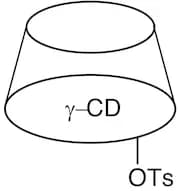
CAS:Fórmula:C55H86O42SPureza:>95.0%(HPLC)Forma y color:White to Almost white powder to crystalPeso molecular:1,451.31Hydroxypropyl cellulose - Average MW 150,000
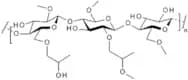
CAS:<p>In water, hydroxypropyl cellulose forms liquid crystals with many mesophases depending on concentration. These mesophases include isotropic, anisotropic, nematic and cholesteric, the latter resulting in many colors such as violet, green and red. Pharmaceutical applications include treatments for medical conditions such as dry eye syndrome (keratoconjunctivitis sicca), recurrent corneal erosions, decreased corneal sensitivity, exposure and neuroparalytic keratitis. It is also used as a binder in tablets. Hydroxypropylcellulose is also used as a thickener, a binder and emulsion stabiliser in foods with E number E463. HPC is used as a support matrix for DNA separations by capillary and microchip electrophoresis.</p>Ref: 3D-YH158877
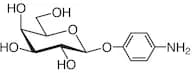
Producto descatalogado4-Aminophenyl β-D-Galactopyranoside
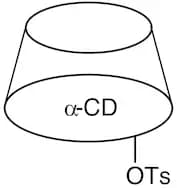
CAS:Fórmula:C12H17NO6Pureza:>98.0%(HPLC)Forma y color:White to Almost white powder to crystalPeso molecular:271.27Mono-2-O-(p-toluenesulfonyl)-α-cyclodextrin
CAS:Fórmula:C43H66O32SPureza:>98.0%(HPLC)Forma y color:White to Almost white powder to crystalPeso molecular:1,127.03Rengasin-3'-O-glucoside
<p>Rengasin-3'-O-glucoside is a fine chemical, useful building block, and research chemical. It is a versatile building block that can be used in the synthesis of complex compounds. Rengasin-3'-O-glucoside is also a useful intermediate or scaffold for reactions. This compound has been shown to react with 1,2-ethanediol and form an ester, which can be hydrolyzed to release glycerol and the original rengasin-3'-O-glucoside.</p>Fórmula:C22H22O11Pureza:(%) Min. 75%Peso molecular:462.4 g/molRef: 3D-FR65387
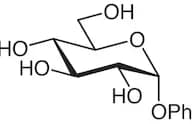
Producto descatalogadoPhenyl α-D-Glucopyranoside
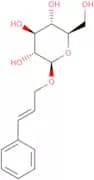
CAS:Fórmula:C12H16O6Pureza:>97.0%(GC)Forma y color:White to Light yellow powder to crystalPeso molecular:256.253-Phenyl-2-propenylbeta-D-glucopyranoside
CAS:<p>3-Phenyl-2-propenylbeta-D-glucopyranoside is a flavonoid that has been shown to have inhibitory properties. It has been used as an analytical method for the diagnosis of bronchial reactivity. The high resistance of 3-phenyl-2-propenylbeta-D-glucopyranoside to oxidation and reduction make it an interesting candidate for antiinflammatory agents. When testing the effects of this compound on human bronchial tissue, it was found that 3-phenyl-2-propenylbeta-D-glucopyranoside inhibited allergic symptoms by inhibiting the release of inflammatory mediators such as histamine and leukotrienes, which are released in response to allergens and other irritants in the airways. The use of this compound may be useful in the treatment of asthma patients who suffer from allergic reactions to dust, pollen, or animal dander.</p>Fórmula:C15H20O6Pureza:Min. 95%Forma y color:PowderPeso molecular:296.32 g/molRef: 3D-FP152931
Producto descatalogado
![2-[(1E)-2-[6-(β-D-Galactopyranosyloxy)-2,3-dihydro-1H-xanthen-4-yl]ethenyl]-3,3-dimethyl-1-propyl-…](/_next/image/?url=https%3A%2Fstatic.cymitquimica.com%2Fproducts%2F3D%2Fthumb-webp%2FMG183953.webp&w=3840&q=75)

![(1S,3S,4R,8S)-8-Benzyloxy-1-hydroxymethyl-3-methoxy-2,6-dioxabicyclo[3,2,1]octane](/_next/image/?url=https%3A%2Fstatic.cymitquimica.com%2Fproducts%2F3D%2Fthumb-webp%2FMB10613.webp&w=3840&q=75)