Glycoscience
La glicociencia es el estudio de los carbohidratos y sus derivados, así como de las interacciones y funciones biológicas en las que participan. Este campo de investigación es crucial para comprender una amplia variedad de procesos biológicos, incluyendo el reconocimiento celular, la señalización, la respuesta inmune y el desarrollo de enfermedades. La glicociencia tiene aplicaciones importantes en la biotecnología, la medicina, y el desarrollo de nuevos fármacos y terapias. En CymitQuimica, ofrecemos una amplia selección de productos de alta calidad y pureza para la investigación en glicociencia. Nuestro catálogo incluye monosacáridos, oligosacáridos, polisacáridos, glicoconjugados, y reactivos específicos, diseñados para apoyar a los investigadores en sus estudios sobre la estructura, función y aplicaciones de los carbohidratos en sistemas biológicos. Estos recursos están destinados a facilitar descubrimientos científicos y aplicaciones prácticas en diversas áreas de la biociencia y la medicina.
Subcategorías de "Glycoscience"
- Aminoazúcares(108 productos)
- Anticuerpos relacionados con azúcares(282 productos)
- Glicolípidos(46 productos)
- Glicosaminoglicanos (GAGs)(55 productos)
- Glucósidos(419 productos)
- Monosacáridos(6.624 productos)
- Oligosacáridos(3.682 productos)
- Polisacáridos(503 productos)
Se han encontrado 11046 productos de "Glycoscience"
Ordenar por
Pureza (%)
0
100
|
0
|
50
|
90
|
95
|
100
Methyl b-D-glucuronide sodium salt
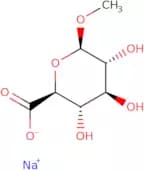
CAS:<p>1-O-Methyl-β-D-glucuronic acid is a β-glucuronidase inducer.</p>Fórmula:C7H11NaO7Pureza:(Titration) Min 99.0%Forma y color:White Slightly Yellow PowderPeso molecular:230.15 g/mol(1S,3S,4R,8S)-8-Benzyloxy-1-hydroxymethyl-3-methoxy-2,6-dioxabicyclo[3,2,1]octane
CAS:<p>1-Hydroxymethyl-8-benzyloxy-3-methoxy-2,6-dioxabicyclo[3,2,1]octane is a sugar that can be modified with various functional groups. This compound is synthesized by modification of the 1S,3S,4R,8S configuration of 8-Benzyloxy-1-(hydroxymethyl)-3-methoxy-2,6 dioxabicyclo[3,2,1]octane. The synthesis can be performed in two steps: first the hydroxymethyl group is replaced by benzyloxymethyl using 1-(benzyloxy)propanol and then the methoxy group is replaced by a methoxy group with sodium methoxide.</p>Fórmula:C15H20O5Pureza:Min. 95%Peso molecular:280.32 g/molNeoagaro oligosaccharides
<p>Potential prebiotic oligosaccharides made from agar by enzymatic hydrolysis</p>Pureza:Min. 95%2,3,4,6-Tetra-O-acetyl-β-D-thioglucopyranose
CAS:<p>Inhibits the Maillard reaction between glucose and glycine</p>Fórmula:C14H20O9SPureza:Min. 95%Forma y color:PowderPeso molecular:364.37 g/molRef: 3D-MT03205
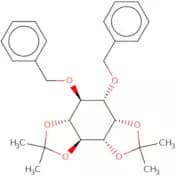
Producto descatalogado2,3:4,5-Di-O-isopropylidene-1,6-di-O-benzyl-D-myo-inositol
<p>2,3:4,5-Di-O-isopropylidene-1,6-di-O-benzyl-D-myo-inositol is a complex carbohydrate and a sugar. It is an oligosaccharide with two monosaccharides and a glycosidic linkage. It has been modified by methylation, fluorination and Click chemistry. This compound has been custom synthesized for high purity.</p>Fórmula:C26H32O6Pureza:Min. 95%Peso molecular:440.53 g/molGDP-D-mannose disodium salt
CAS:<p>GDP-D-mannose is a natural mannosyl donor and substrate for mannosyltransferases that catalyses mannosylation, for instance during the synthesis of the trimannoside core of complex, high-mannose or hybrid N-glycans. GDP-D-mannose is widely used in (chemo)enzymatic synthesis of oligosaccharides and its biosynthesis occurs from glucose-6-phosphate over several steps. GDP-D-mannose consists of a D-mannose unit, α-glycosydically linked to the nucleotide guanosine diphosphate (GDP). Examples of this important reaction would be the transfer of mannosyl moieties onto the dolichol-P-P-GlcNAc2 precursor of N-glycans in the endoplasmatic reticulum, with release of GDP, or the mannosylation reactions during GPI-anchor (bio)synthesis. GDP-D-mannose has also been used for the in vitro synthesis of b-mannan oligosaccharides.</p>Fórmula:C16H23N5O16P2Na2Pureza:Min. 95 Area-%Peso molecular:649.3 g/molD-Maltose monohydrate
CAS:<p>Please enquire for more information about D-Maltose monohydrate including the price, delivery time and more detailed product information at the technical inquiry form on this page</p>Fórmula:C12H24O12Pureza:Min. 98 Area-%Peso molecular:360.31 g/mol1,4-b-D-Mannotriose
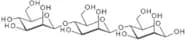
CAS:<p>Isolated from the partial acid and enzymic hydrolysates of several of the mannans, galactomannans and glucomannans. While the trisaccharide has been isolated from all of these sources the tetrasaccharide has only been isolated from ivory-nut mannan, white spruce (Picea glauca) and Pinus strobus glucomannans. Crystalline penta- and hexa-saccharides have been isolated from ivory-nut mannan hydrolysates.</p>Fórmula:C18H32O16Pureza:Min. 95 Area-%Forma y color:White PowderPeso molecular:504.44 g/molRef: 3D-OM31999
Producto descatalogadoN-Acetyl-D-mannosamine
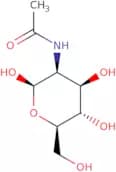
CAS:<p>N-Acetyl D-mannosamine (ManNAc) is an aldohexose (2-acetamido-2-deoxymannose) in which the axial hydroxyl group at position 2 is replaced by a N-acetyl group (Collins, 2006). It has been reported that N-acetyl D-mannosamine supplementation, may provide novel means to break the link between obesity and hypertension (Peng, 2019). N-Acetyl-D-mannosamine and N-acetyl-D-glucosamine are the essential precursors of sialic acid, the specific monomer of polysialic acid, a bacterial pathogenic determinant, for example, Escherichia coli K1 uses both amino sugars as carbon sources. It has been reported that ManNAc can be used as a treatment for hereditary inclusion body myopathy, an adult-onset, progressive neuromuscular disorder and also for renal disorders involving proteinuria and hematuria due to podocytopathy and/or segmental splitting of the glomerular basement membrane (Galeano, 2007).</p>Fórmula:C8H15NO6Pureza:Min. 98 Area-%Forma y color:White PowderPeso molecular:221.21 g/molRef: 3D-MA05269
Producto descatalogado1-Azido- 1- deoxy- 2- C- hydroxymethyl - 2, 3-O-isopropylidene-D- glucitol
<p>1-Azido-1-deoxy-2-C-hydroxymethyl-2,3-O-isopropylidene -D-glucitol is a synthetic monosaccharide that can be used for glycosylation, methylation, and click modification. It is a complex carbohydrate with an Oligosaccharide structure. 1-Azido -1-deoxy -2 -C -hydroxymethyl -2,3 -O -isopropylidene D glucitol has been fluorinated. This compound is a sugar that has been modified with a Click modification. It is a sugar that has been synthesized and custom synthesized by high purity.</p>Pureza:Min. 95%D-Allose pentaacetate
CAS:<p>D-Allose pentaacetate is a modified oligosaccharide that can be used as a synthetic intermediate in the production of complex carbohydrates. It has been shown to have high purity and is easily synthesized in a laboratory setting. D-Allose pentaacetate is a monosaccharide with five acetate groups that can be methylated or glycosylated, which makes it an ideal candidate for modification. D-Allose pentaacetate has CAS No. 144071-49-8 and can be found on PubChem CID: 1215965.</p>Fórmula:C16H22O11Pureza:Min. 95%Forma y color:PowderPeso molecular:390.34 g/molExopolysaccharide - from Bacillus polymixa
<p>Bacterial exopolysaccharide from gram negative Bacillus polymixa</p>Fórmula:C23H36O18Pureza:Min. 95%Forma y color:PowderPeso molecular:600.52 g/mol5,6-O-Isopropylidene-L-gulonic acid-1,4-lactone
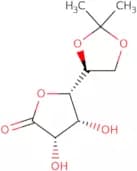
CAS:<p>5,6-O-Isopropylidene-L-gulonic acid-1,4-lactone is a synthetic monosaccharide with the molecular formula C8H14O5. It has a CAS number of 94697-68-4 and is available for custom synthesis. The chemical structure of 5,6-O-Isopropylidene-L-gulonic acid-1,4-lactone consists of a methyl group attached to the hydroxyl at position 1 and a fluoro group attached to the hydroxyl at position 4. 5,6--O--Isopropylidene--L--gulonic acid--1,4--lactone is not naturally occurring and is made by modification of glycosides. This compound can be used in click chemistry or complex carbohydrate reactions.</p>Fórmula:C9H14O6Pureza:Min. 99 Area-%Forma y color:White PowderPeso molecular:218.2 g/molRef: 3D-MI04758
Producto descatalogadoTri-b-GalNAc-b-alanine-PEG3-amine
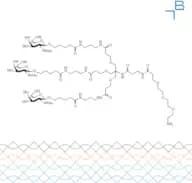
<p>This molecule contains three terminal beta-N-acetylgalactosamine (GalNAc) sugars for efficient ASGPR binding. The beta-alanine linker separates the GalNAc unit from a PEG3 spacer, improving water solubility and potentially influencing pharmacokinetics. The terminal amine group serves as a reactive handle for conjugation to various biomolecules via amide bond formation. This multifunctional combination makes tri-b-GalNAc-b-alanine-PEG3-amine a versatile tool for researchers developing targeted therapies and diagnostics exploiting the ASGPR pathway.</p>Fórmula:C73H132N12O35Pureza:Min. 95%Forma y color:PowderPeso molecular:1,689.89 g/molL-Fucose
CAS:<p>L-Fucose is a monosaccharide that is an important component of glycoproteins and glycolipids. L-Fucose is also found in the cell wall of bacteria. The most abundant sources of L-fucose are from the hydrolysis of lactose or sucrose by bacteria, or as a result of intestinal microbial fermentation. L-Fucose has been shown to be involved in the regulation of many metabolic processes, including the glomerular filtration rate and sephadex g-100 binding capacity in the kidney. It has also been shown to improve growth in infant rats with protein malnutrition. The enzyme that catalyzes the conversion of D-arabinose to L-fucose is known as fucokinase.</p>Fórmula:C6H12O5Pureza:Min. 98.0 Area-%Peso molecular:164.16 g/mol1-Octen-3-ol glucoside
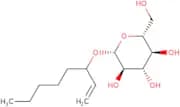
CAS:<p>1-Octen-3-ol glucoside is a synthetic, fluorinated sugar that is modified with glycosylation, methylation, and click chemistry. It contains a high degree of purity and is custom synthesized to order. This product can be used as a substitute for other sugars in the production of oligosaccharides, saccharides, and polysaccharides.<br>1-Octen-3-ol glucoside has been shown to have various modifications including glycosylation, methylation, and click chemistry. It is often used when there are restrictions on the types of sugars that can be used in the synthesis of complex carbohydrates.</p>Fórmula:C14H26O6Pureza:Min. 95%Forma y color:PowderPeso molecular:290.35 g/molRef: 3D-MO182722
Producto descatalogado1-Deoxy-L-allitol
CAS:<p>1-Deoxy-L-allitol is a naturally occurring compound found in human urine. It has been shown to have a role in the regulation of glucose metabolism, as it is catalysed by liver enzymes and can affect the synthesis of glycogen. 1-Deoxy-L-allitol also has been found to be an activator of t-cells, which are immune cells that help regulate the body's response to infection.</p>Fórmula:C6H14O5Pureza:Min. 95%Peso molecular:166.17 g/molL-Guluronic acid sodium
CAS:<p>L-Guluronic acid sodium is a monosaccharide that plays a crucial role in cardiac health. It is involved in the uptake and utilization of polyene carbohydrates, carotenoids, and fatty acids by human myocardial cells. L-Guluronic acid sodium has been shown to enhance the bioavailability of these essential nutrients, promoting optimal heart function. Additionally, this compound acts as a reactive analog, mimicking the effects of certain molecules involved in mammalian cell signaling pathways. This unique property makes L-Guluronic acid sodium a potential therapeutic agent for various cardiovascular conditions and may have implications in other areas such as stent technology and cancer research.</p>Fórmula:C6H9O7NaPureza:Min. 98 Area-%Forma y color:PowderPeso molecular:216.12 g/molRef: 3D-MG182938
Producto descatalogadoEthyl 2-O-benzoyl-3-O-benzyl-4-O-levulinoyl-b-D-thioglucopyranoside
<p>Ethyl 2-O-benzoyl-3-O-benzyl-4-O-levulinoyl-b-D-thioglucopyranoside is a glycosylation product of ethyl levulinate and 3,4,6,7,8,9,10,11,12-hexahydroxybenzoate. This compound has undergone methylation at the C2 position of the benzoic acid moiety and click modification at the C1 position of the benzoyl group. It is a polysaccharide that is used as a fluorinating agent in organic synthesis. Ethyl 2-O-benzoyl-3-O-benzyl-4-O-levulinoyl b -D--thioglucopyranoside is an oligosaccharide with six monosaccharides attached to each other by glycosidic bonds. The CAS No</p>Pureza:Min. 95%1,4-Anhydro-2,O:5,6-di-O-isopropylidene-2-C-(hydroxymethyl)-D-galactitol
<p>1,4-Anhydro-2,O:5,6-di-O-isopropylidene-2-C-(hydroxymethyl)-D-galactitol is a custom synthesis. It is commonly used in the modification of saccharides and oligosaccharides to produce fluorinated derivatives with various functional groups. The preparation of this compound has been described by Click chemistry.</p>Pureza:Min. 95%

![(1S,3S,4R,8S)-8-Benzyloxy-1-hydroxymethyl-3-methoxy-2,6-dioxabicyclo[3,2,1]octane](/_next/image/?url=https%3A%2Fstatic.cymitquimica.com%2Fproducts%2F3D%2Fthumb-webp%2FMB10613.webp&w=3840&q=75)