Compuestos relacionados con enzimas, péptidos y proteínas
Los compuestos relacionados con enzimas, péptidos y proteínas son críticos para estudiar y manipular las vías bioquímicas. Estos compuestos incluyen enzimas que catalizan reacciones bioquímicas, péptidos que actúan como hormonas y moléculas de señalización, y proteínas que desempeñan una amplia gama de funciones dentro de los organismos. Esta categoría abarca inhibidores, activadores, sustratos y otros reactivos esenciales para la enzimología, la proteómica y la investigación de péptidos. En CymitQuimica, ofrecemos una diversa selección de compuestos de alta calidad para facilitar su investigación en cinética enzimática, función de proteínas y síntesis de péptidos, asegurando resultados precisos y fiables.
Subcategorías de "Compuestos relacionados con enzimas, péptidos y proteínas"
- Aminoácidos (AA)(40.509 productos)
- Enzimas(3.560 productos)
- Péptidos(30.719 productos)
- Proteínas(15.022 productos)
Se han encontrado 1312 productos de "Compuestos relacionados con enzimas, péptidos y proteínas"
Ordenar por
Pureza (%)
0
100
|
0
|
50
|
90
|
95
|
100
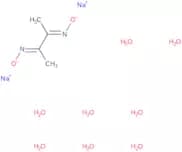
Dimethylglyoxime disodium salt octahydrate
CAS:<p>Dimethylglyoxime is a pesticide that has been used to control insects and nematodes. It has been found to be effective in controlling mosquitoes, flies, and other pests. This compound is also used as an extractor in microextraction. Dimethylglyoxime is not toxic to humans and does not cause any adverse effects on the environment or human health. It can be used with chlorine for wastewater treatment.</p>Fórmula:C4H8N2Na2O2·8H2OPureza:Min. 95%Forma y color:PowderPeso molecular:306.22 g/molTetramethylammonium fluoride tetrahydrate
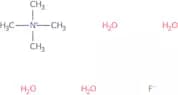
CAS:<p>Tetramethylammonium fluoride tetrahydrate (TMF) is an ionic liquid that is a reaction product of tetraethylammonium and hydrochloric acid. TMF has been shown to react reversibly with water to produce aqueous hydrogen fluoride, which can be detected at low concentrations with a variety of analytical techniques such as gas chromatography. TMF has also been shown to have selectivities for the transport of silicon and calcium carbonate ions, which are useful in electrochemical studies. The activation energies for the reaction of TMF with water were determined by electrochemical studies to be around -0.4 eV.</p>Fórmula:C4H12FN·4H2OForma y color:White PowderPeso molecular:165.2 g/molACTH(1-39) trifluoroacetate
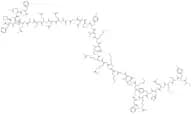
CAS:<p>ACTH(1-39) trifluoroacetate is a synthetic form of ACTH that is used for the diagnosis of autoimmune diseases and bowel disease. It is also used to assess the function of the adrenal gland in cases of suspected Cushing's syndrome. The blood sampling procedure involves withdrawing a small amount of blood from the patient and adding ACTH(1-39) trifluoroacetate to it, which causes an increase in cortisol concentration. ACTH(1-39) trifluoroacetate binds to corticotropin receptors on cells in the body, causing them to release basic proteins that are responsible for inflammation. This drug may be a potential biomarker for metabolic disorders such as obesity. It has been shown to have anti-inflammatory properties and can be used as a nonsteroidal anti-inflammatory drug (NSAID).</p>Fórmula:C207H308N56O58SPureza:Min. 98 Area-%Forma y color:PowderPeso molecular:4,541.07 g/mol2-Cyanoethyl phosphate barium salt hydrate
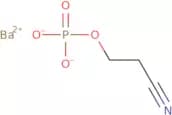
CAS:<p>2-Cyanoethyl phosphate barium salt hydrate is an alkaline compound that is soluble in water. It has been used to synthesize phosphodiesters, benzene, dioxan and alcohols. The chemical was originally developed as a reagent for the quantitative conversion of ethyl acetate esters to their corresponding acid chlorides. This reaction can be carried out quantitatively in tetrahydrofuran at room temperature with yields of about 95%. 2-Cyanoethyl phosphate barium salt hydrate also converts alcohols to their corresponding monophosphates quantitatively in alkaline conditions. Crystalline forms are obtained by reacting the compound with triethylamine and benzene.</p>Fórmula:C3H6BaNO4P•xH2OPureza:Min. 95%Forma y color:PowderPeso molecular:324.42 g/molSorbitan monolaurate
CAS:<p>Sorbitan monolaurate is a natural compound that can be isolated from the seeds of the Cucurbitaceae family. It is used in sample preparation for biocompatible polymers, as well as for detergent compositions. Sorbitan monolaurate has been shown to act as an absorption enhancer, which may be due to its ability to form hydrogen bonds with other molecules and its capacity to interact with sodium citrate. Sorbitan monolaurate also has biological properties such as the inhibition of autoimmune diseases, malonic acid production, and bacterial growth.</p>Fórmula:C18H34O6Pureza:Min. 95%Forma y color:Slightly Yellow Clear LiquidPeso molecular:346.46 g/molDiflucortolone valerate
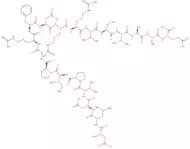
CAS:Producto controlado<p>Diflucortolone valerate is a corticosteroid that is used to treat inflammatory skin diseases. It is a prodrug that is hydrolyzed in vivo to diflucortolone, its active form. Diflucortolone valerate has been shown to be effective against alopecia areata and mycological skin infections. The optimum concentration of this drug for treating these conditions is 0.5% or less, with side effects such as erythema, scaling, and burning at the application site occurring at higher concentrations. Diflucortolone valerate also has broad-spectrum antimicrobial activity against bacteria and fungi, including methicillin-resistant Staphylococcus aureus (MRSA) isolates.</p>Fórmula:C27H36F2O5Pureza:Min. 95%Forma y color:PowderPeso molecular:478.57 g/molCalcineurin Substrate trifluoroacetate salt H-Asp-Leu-Asp-Val-Pro-Ile-Pro-Gly-Arg-Phe-Asp-Arg-Arg-Val-Ser-Val-Ala-Ala-Glu-OH trifluo roacetate salt
CAS:<p>Please enquire for more information about Calcineurin Substrate trifluoroacetate salt H-Asp-Leu-Asp-Val-Pro-Ile-Pro-Gly-Arg-Phe-Asp-Arg-Arg-Val-Ser-Val-Ala-Ala-Glu-OH trifluo roacetate salt including the price, delivery time and more detailed product information at the technical inquiry form on this page</p>Fórmula:C92H150N28O29Pureza:Min. 95%Peso molecular:2,112.35 g/molGlycidyl butyrate
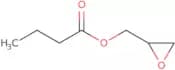
CAS:<p>Glycidyl butyrate is a chemical compound that is structurally similar to acetic acid. It has been shown to have antimicrobial properties, inhibiting the growth of bacteria by binding to surface-exposed fatty acids and hydroxyl groups. Glycidyl butyrate can also inhibit the enzyme activity of bacterial esterases, which are responsible for hydrolyzing esters. This property prevents the breakdown of glycidol, which can have toxic effects in humans and animals. The antimicrobial activity of glycidyl butyrate has been shown in vitro on a number of bacterial strains, including Streptococcus pyogenes (Group A streptococci), Bacillus subtilis (a spore-forming bacterium), Escherichia coli (a Gram-negative bacterium), Pseudomonas aeruginosa (a Gram-negative bacterium) and Staphylococcus aureus (a Gram-positive bacterium).</p>Fórmula:C7H12O3Pureza:Min. 95%Forma y color:Colorless Clear LiquidPeso molecular:144.17 g/mol4-Bromoveratrole
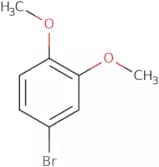
CAS:<p>4-Bromoveratrole is a triphenylene with a molecular weight of 454.42 g/mol and a melting point of 90°C. It has been shown that this molecule binds to the receptor for acetylcholine, which is found in the central nervous system and on muscles. The binding of 4-bromoveratrole to this receptor leads to the release of chloride ions from the cell, which increases the activity of acetylcholine. The detection sensitivity of 4-bromoveratrole in solution was determined by adding malonic acid or hydrochloric acid, which led to an increase in fluorescence intensity. This molecule also has fatty acid and hydroxyl groups that have been shown to have anti-inflammatory properties.</p>Fórmula:C8H9BrO2Pureza:Min. 95%Forma y color:Clear LiquidPeso molecular:217.06 g/molCitric acid tripotassium monohydrate
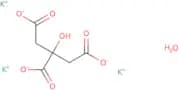
CAS:<p>Citric acid tripotassium salt monohydrate is a membrane-stabilizing agent that has been shown to improve the function of the circuitry in animals. It has been used for the treatment of motoneurons and muscle pain. Citric acid tripotassium salt monohydrate has also been found to be an effective treatment for chronic pain, which may be due to its ability to block pain signals from reaching the brain. This drug has also shown efficacy in treating neurological disorders such as Parkinson's disease, Alzheimer's disease, and multiple sclerosis. Citric acid tripotassium salt monohydrate is effective at improving the physiological mechanisms that are responsible for translating nervous system activity into movement.</p>Fórmula:C6H8O7•H2O•K3Pureza:Min. 95%Forma y color:White To Off-White SolidPeso molecular:237.43 g/molrac-Metoprolol hemitartrate
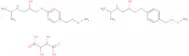
CAS:Producto controlado<p>Metoprolol is a beta-adrenergic receptor blocker that is used in the treatment of high blood pressure and congestive heart failure. It also has an effect on the regulation of energy metabolism, decreasing myocardial oxygen consumption, and increasing myocardial contractility. The drug binds to erythrocyte membrane proteins, including albumin and alpha-1-acid glycoprotein, which are responsible for transporting metoprolol from plasma to the tissue. Metoprolol succinate is a prodrug that is metabolized by esterases to release metoprolol in vivo. Metoprolol has been shown to reduce systolic blood pressure in patients with hypertension. It has been found to be effective in reducing symptoms of cardiac arrhythmias, such as atrial fibrillation or ventricular tachycardia, when combined with other antiarrhythmic drugs. Metoprolol can also be used for the treatment of metabolic disorders such</p>Fórmula:C34H56N2O12Forma y color:White PowderPeso molecular:684.81 g/molN-Ethyl-N-(2-hydroxy-3-sulfopropyl)-3-methylaniline sodium salt dihydrate
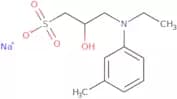
CAS:<p>N-Ethyl-N-(2-hydroxy-3-sulfopropyl)-3-methylaniline sodium salt dihydrate (NMS) is a functional group with a side effect profile that is characterized by low incidence of adverse events. This drug has been shown to be well tolerated in clinical use, and there is evidence that it may be useful for the treatment of infectious diseases. Clinical studies have demonstrated that NMS can improve fatty acid and cholesterol levels, as well as reducing carnitine palmitoyltransferase activity. These effects are due to the inhibition of lipoprotein lipase, cholesterol esterase and carnitine palmitoyltransferase enzymes. In addition, NMS has been shown to be effective against dermatitis caused by atopic dermatitis or psoriasis.</p>Fórmula:C12H18NNaO4S·2H2OPureza:Min. 98 Area-%Forma y color:White PowderPeso molecular:331.36 g/molToremifene citrate
CAS:Producto controlado<p>Estrogen receptor modulator</p>Fórmula:C32H36ClNO8Pureza:Min. 95%Forma y color:PowderPeso molecular:598.08 g/molOndansetron hydrochloride dihydrate
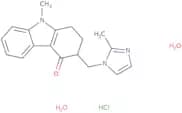
CAS:<p>Serotonin receptor 5-HT3 antagonist</p>Fórmula:C18H24N3O3ClPureza:Min. 95%Forma y color:PowderPeso molecular:365.85 g/molrec IL-4 (human)
<p>Please enquire for more information about rec IL-4 (human) including the price, delivery time and more detailed product information at the technical inquiry form on this page</p>Pureza:Min. 95%Calcium dobesilate
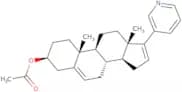
CAS:<p>Calcium dobesilate is a calcium salt that emits chemiluminescence in the presence of an oxidant. It has been used as a treatment for hypercalcemia, which is caused by high levels of calcium in the blood, and to prevent skin cancer. The experimental model was conducted on human serum and showed that calcium dobesilate reduced the enzyme activities in serum samples by 30% after 15 minutes of incubation. This reduction was statistically significant when compared to untreated groups. Calcium dobesilate also inhibited the growth of skin cancer cells in a pharmacological agent-induced experimental model.</p>Fórmula:C8H6O5S•Ca0Pureza:Min. 98 Area-%Forma y color:PowderPeso molecular:418.41 g/molAbiraterone acetate
CAS:Producto controlado<p>CYP17 enzyme inhibitor</p>Fórmula:C26H33NO2Pureza:Min. 98 Area-%Forma y color:PowderPeso molecular:391.55 g/molCreatine phosphate, disodium salt tetrahydrate, pH > 8.00
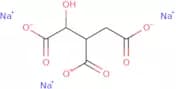
CAS:<p>Creatine phosphate, disodium salt tetrahydrate, is a fine chemical that is used as a versatile building block for the synthesis of other compounds. Creatine phosphate is useful in research because it can be converted to creatine, which can then be converted to phosphocreatine. Creatine phosphate has been shown to have a number of biological activities including the promotion of cell proliferation and differentiation. This product is an extremely high quality reagent for use in laboratory experiments.</p>Fórmula:C4H16N3Na2O9PPureza:Min. 95.0 Area-%Peso molecular:327.14 g/molDL-Isocitric acid trisodium
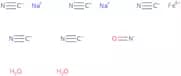
CAS:<p>DL-Isocitric acid trisodium salt hydrate is a nutrient solution that is used to provide energy for bacterial growth. DL-Isocitric acid trisodium salt hydrate provides sodium citrate, sodium succinate, and sodium carbonate which are essential for the metabolism of fatty acids. It also stabilizes chemical compounds and can be used as an alternative to the use of antibiotics. DL-Isocitric acid trisodium salt hydrate has been shown to inhibit enzyme activity in bacteria by binding to the active site of enzymes, inhibiting protein synthesis and cell division. The addition of colloidal gold particles can enhance its effectiveness in preventing bacterial growth.</p>Fórmula:C6H8O7•Na3Pureza:Min. 95%Forma y color:PowderPeso molecular:261.09 g/molSodium nitroprusside dihydrate
CAS:Producto controlado<p>Sodium nitroprusside dihydrate is an oxygen transport agent that works by inhibiting the enzyme cyclase. This inhibits the production of tnf-α and other inflammatory mediators, which reduces inflammation and pain. Sodium nitroprusside dihydrate is used to lower blood pressure in emergency situations, such as shock. It has been shown to be effective for treating pulmonary hypertension, chronic obstructive pulmonary disease, and other conditions related to oxygen transport. Sodium nitroprusside dihydrate is a metastable molecule that can be converted into a stable form (sodium nitroprusside) by ester hydrochloride or fatty acid esters.</p>Fórmula:C5FeN6O•(H2O)2•Na2Pureza:Min. 98.0%Forma y color:Red PowderPeso molecular:297.95 g/mol