Antimicrobianos
Los antimicrobianos son agentes que destruyen o inhiben el crecimiento de microorganismos, incluyendo bacterias, virus, hongos y parásitos. Estos compuestos son esenciales en la prevención y tratamiento de infecciones, desempeñando un papel crucial en la medicina, la agricultura y la industria alimentaria. En CymitQuimica, ofrecemos una extensa gama de antimicrobianos de alta calidad y pureza, adecuados para diversas aplicaciones científicas e industriales. Nuestro catálogo incluye antibióticos, antifúngicos, antivirales y desinfectantes, todos diseñados para satisfacer las necesidades de investigación y desarrollo, así como para aplicaciones clínicas y de producción. Con nuestros productos, los profesionales pueden garantizar la eficacia y seguridad en el control de infecciones y en la protección de la salud pública.
Subcategorías de "Antimicrobianos"
- Antibióticos(4.132 productos)
- Antifúngicos(897 productos)
- Antiparasitarios(702 productos)
- Antivirales(764 productos)
Se han encontrado 2423 productos de "Antimicrobianos"
Ordenar por
Pureza (%)
0
100
|
0
|
50
|
90
|
95
|
100
N-Acetal bromopride
CAS:N-Acetal bromopride is a chemical compound that serves as a derivative of bromopride, which is a selective dopamine D2 receptor antagonist. This derivative is synthesized from bromopride, typically through organic chemical processes, and modified to possess an acetal functional group. The presence of this functional group potentially alters its pharmacokinetic or pharmacodynamic properties, although these specific changes may still be under research.Fórmula:C16H24BrN3O3Pureza:Min. 95%Peso molecular:386.28 g/molDihydropenicillin F potassium
CAS:Dihydropenicillin F potassium is a novel antibiotic compound, which is semisynthetic in nature, derived from the penicillin family. It is sourced through the modification of natural penicillins, bringing about enhanced stability and efficacy against certain resistant bacterial strains. The mode of action involves the inhibition of bacterial cell wall synthesis, primarily targeting the penicillin-binding proteins (PBPs). This disruption consequently leads to cell lysis and the eventual bacterial death.Fórmula:C14H22N2O4S•KPureza:Min. 95%Peso molecular:353.5 g/molHygromycin A
CAS:Hygromycin A is an antimicrobial compound isolated from the bacterium *Streptomyces hygroscopicus*. It functions by inhibiting protein synthesis within microbial cells. This compound disrupts the elongation phase of translation by binding to the ribosomal subunit, therefore impeding mRNA decoding during protein assembly.Fórmula:C23H29NO12Pureza:Min. 95%Peso molecular:511.5 g/molCefmenoxime hydrochloride
CAS:<p>Cefmenoxime hydrochloride is a third-generation cephalosporin antibiotic with action on bacterial cell wall synthesis and is used for treating gynecological and obstetric infections.</p>Fórmula:C16H17N9O5S3HClPureza:Min. 95%Forma y color:White PowderPeso molecular:529.79 g/molCecropin A
CAS:Cecropin A is an antimicrobial peptide, which is derived from the immune systems of insects, specifically moths. It displays potent antimicrobial properties through its ability to disrupt bacterial cell membranes, leading to cell lysis and death. This peptide primarily targets Gram-negative bacteria but is also effective against some Gram-positive strains. Cecropin A has garnered significant scientific interest due to its potential applications in developing new antimicrobial agents, particularly in the face of increasing antibiotic resistance. By integrating Cecropin A into therapeutic strategies, researchers aim to broaden the spectrum of antimicrobial options available for use in both clinical and agricultural settings, offering a promising avenue for future drug development.Fórmula:C184H313N53O46Pureza:Min. 95%Peso molecular:4,003.78 g/molTaniborbactam hydrochloride
CAS:<p>Taniborbactam hydrochloride is a β-lactamase inhibitor that is synthetically derived for use in combination with β-lactam antibiotics. Its mode of action involves the inhibition of β-lactamase enzymes, which are produced by certain bacteria to confer resistance to β-lactam antibiotics, including cephalosporins and carbapenems.</p>Fórmula:C19H30BCl2N3O5Pureza:Min. 95%Peso molecular:462.2 g/molDoxorubicin Impurity 2
CAS:<p>Doxorubicin Impurity 2 is a chemical impurity of doxorubicin with no direct therapeutic action but used in research and quality control.</p>Fórmula:C19H12O6Pureza:Min. 95%Forma y color:PowderPeso molecular:336.29 g/molNocardamine
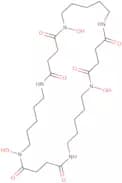
CAS:<p>Nocardamine is a siderophore-based antioxidant, which is naturally derived from the soil-dwelling actinobacteria known as Streptomyces. Its primary mode of action involves the chelation of metal ions, effectively sequestering them and preventing metal-catalyzed oxidation reactions. By binding to iron and other transition metals, Nocardamine mitigates oxidative stress at a cellular level, which could otherwise contribute to cellular damage and dysfunction.</p>Fórmula:C27H48N6O9Pureza:Min. 95%Peso molecular:600.71 g/molPolymyxin B1-I
CAS:Polymyxin B1-I is an antimicrobial peptide, which is sourced from the bacterium *Bacillus polymyxa*. It functions by interacting with and disrupting the bacterial cell membranes. The polypeptide inserts into the phospholipid bilayer, causing increased permeability and eventual cell lysis. This mechanism is particularly effective against Gram-negative bacteria due to the structural composition of their outer membranes.Fórmula:C56H98N16O13Peso molecular:1,203.5 g/mol14-Bromodaunorubicin HBr
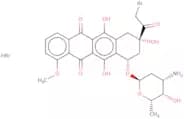
CAS:<p>14-Bromodaunorubicin HBr is a synthetic antitumor antibiotic derivative, which is a modified version of daunorubicin, an anthracycline antibiotic originally isolated from Streptomyces peucetius. With the inclusion of a bromine atom at the 14th position, this compound is designed to enhance the antitumor efficacy and alter pharmacokinetic properties compared to its parent molecule.</p>Fórmula:C27H28BrNO10·BrHPureza:75%MinPeso molecular:687.33 g/molCefazolin
CAS:<p>Cefazolin is a broad-spectrum antibiotic that inhibits the growth of Gram-positive and Gram-negative bacteria. It is an effective cephalosporin antibiotic against both aerobic and anaerobic bacteria. Cefazolin is used in clinical isolates to inhibit the growth of methicillin-resistant staphylococcus, resistant microorganisms, and systemic inflammation. Some studies has shown good results to inhibit tumor necrosis factor-α (TNFα) production in cell culture.</p>Fórmula:C14H14N8O4S3Pureza:Min. 95%Peso molecular:454.51 g/molDMDNA31
CAS:<p>DMDNA31 is a synthetic nucleotide analog, which is a man-made compound designed to mimic the natural building blocks of DNA. It originates from advanced chemical synthesis processes, allowing precise control over its structure to mimic specific nucleotide sequences. DMDNA31 operates by integrating into DNA strands during replication, thereby enabling the study of genetic mutations and the mapping of genomic sequences.</p>Fórmula:C50H62N4O13Pureza:Min. 95%Peso molecular:927 g/molCeftobiprole medocaril sodium
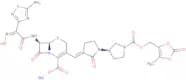
CAS:<p>Ceftobiprole medocaril sodium is a broad-spectrum cephalosporin antibiotic, which is a synthetically derived prodrug of ceftobiprole. Upon administration, ceftobiprole medocaril is rapidly converted into its active form, ceftobiprole, by the body's endogenous esterases. The mode of action involves binding to penicillin-binding proteins (PBPs) in the bacterial cell wall, leading to the inhibition of cell wall synthesis and ultimately the death of the bacteria. This action is effective against a wide range of gram-positive and gram-negative bacteria, including methicillin-resistant Staphylococcus aureus (MRSA) and penicillin-resistant Streptococcus pneumoniae.</p>Fórmula:C26H26N8O11S2NaPureza:Min. 95%Peso molecular:713.65 g/molCefepime Related Compound E
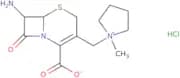
CAS:<p>Cefepime Related Compound E is a chemical impurity, which is typically encountered as a byproduct in the synthesis or degradation of the antibiotic cefepime. This impurity is derived from synthetic processes used in the pharmaceutical industry and can originate from a variety of pathways during the manufacturing or storage of cefepime.</p>Fórmula:C13H20ClN3O3SPureza:Min. 95%Peso molecular:333.83 g/molRetrocyclin-1 trifluoroacetate salt
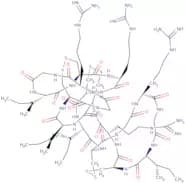
CAS:Retrocyclin-1 trifluoroacetate salt is a synthetic antimicrobial peptide, which is derived from humanized sequences based on the theta-defensin family, originally found in certain primates. Retrocyclin-1 is particularly notable for its circular structure which contributes to its stability and biological activity. The peptide is produced through a process of solid-phase peptide synthesis, designed to mimic the native cyclic conformation of natural theta-defensins.Fórmula:C74H128N30O18S6Pureza:Min. 95%Peso molecular:1,918.4 g/molTenofovir alafenamide (free base)
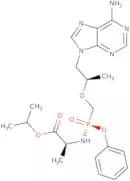
CAS:<p>Tenofovir alafenamide (free base) is a prodrug of tenofovir with action on viral reverse transcriptase to block replication and is used for treating HIV/AIDS and chronic hepatitis B with improved safety profile.</p>Fórmula:C21H29N6O5PPureza:Min. 97 Area-%Forma y color:PowderPeso molecular:476.47 g/molLomefloxacin hydrochloride
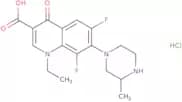
CAS:<p>Lumefantrine is an antimalarial compound with a mode of action that inhibits heme detoxification in Plasmodium parasites. It is used in combination with artemether for treating malaria.</p>Fórmula:C17H19F2N3O3•HClPureza:Min. 95%Forma y color:PowderPeso molecular:387.81 g/molQuinupristin
CAS:<p>Quinupristin is a semi-synthetic antibiotic, which is derived from the natural compound pristinamycin IIA produced by the bacterium Streptomyces pristinaespiralis. It operates by binding to the 50S ribosomal subunit in bacterial cells, inhibiting protein synthesis and thus exerting a bacteriostatic effect. This mechanism effectively disrupts the growth and proliferation of susceptible bacteria.</p>Fórmula:C53H67N9O10SPureza:Min. 95%Peso molecular:1,022.22 g/molDaclatasvir
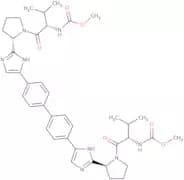
CAS:<p>Daclatasvir is a direct-acting antiviral agent, which is derived from synthetic chemical sources with a specific mode of action targeting the hepatitis C virus (HCV) replication process. It functions as an inhibitor of the HCV nonstructural protein 5A (NS5A), a vital component necessary for viral RNA replication and virion assembly. By binding to two distinct domains of NS5A, Daclatasvir disrupts its ability to function, thereby effectively halting the replication of the viral genome.</p>Fórmula:C40H50N8O6Pureza:Min. 95%Peso molecular:738.88 g/mol4-Demethyl daunomycinone
CAS:<p>4-Demethyl daunomycinone is an anthracycline derivative, which is a natural or semi-synthetic compound derived from the bacterium *Streptomyces*. It is primarily studied for its potential use in anticancer therapies, given its structural similarity to other well-known anthracyclines like daunorubicin and doxorubicin. These compounds are known to intercalate into DNA, thereby disrupting the function of DNA and RNA synthesis, leading to the inhibition of cell proliferation.</p>Fórmula:C20H16O8Pureza:Min. 95%Peso molecular:384.34 g/mol