Terpenoides
Subcategorías de "Terpenoides"
- Diterpenos (C₂₀)(671 productos)
- Hemiterpenos (C₅)(21 productos)
- Monoterpenos (C₁₀)(709 productos)
- Sesquiterpenos (C₂₅)(452 productos)
- Tetraterpenos (C₄₀)(63 productos)
- Triterpenos (C₃₀)(1.128 productos)
Se han encontrado 1423 productos de "Terpenoides"
Curcumol
CAS:Curcumol is a bioactive compound, which is a sesquiterpenoid alcohol primarily extracted from the rhizome of the plant Curcuma wenyujin, a member of the Zingiberaceae family. The source plant is native to parts of Asia and has been traditionally used in herbal medicine. The mode of action of Curcumol involves modulation of multiple biochemical pathways, including anti-inflammatory and antioxidant pathways. It has been observed to influence cellular signaling cascades that regulate apoptosis, cell proliferation, and angiogenesis, making it a compound of interest in oncology research.
Fórmula:C15H24O2Pureza:Min. 95%Forma y color:PowderPeso molecular:236.35 g/molDiosbulbin B
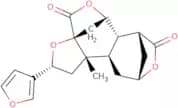
CAS:Diosbulbin B is a naturally occurring sesquiterpene lactone, which is derived primarily from the plant Dioscorea bulbifera, commonly known as "air potato" or "bitter yam." As a bioactive compound, Diosbulbin B demonstrates a mode of action that involves the induction of cytotoxicity in malignant cells, primarily through the disruption of microtubule dynamics, leading to cell cycle arrest and apoptosis.Fórmula:C19H20O6Pureza:Min. 98 Area-%Forma y color:PowderPeso molecular:344.36 g/molCycloastragenol
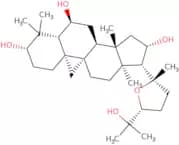
CAS:Triterpenoid saponin with many suggested pharmacological propertiesFórmula:C30H50O5Pureza:Min. 98 Area-%Forma y color:White PowderPeso molecular:490.72 g/molCimigenoside
CAS:Cimigenoside is a naturally occurring triterpene saponin, which is a phytochemical compound extracted primarily from the roots of the Cimicifuga species, such as Cimicifuga racemosa, commonly known as black cohosh. The source of this compound is rooted in traditional medicinal practices, where these plants have been used for their therapeutic benefits.Fórmula:C35H56O9Pureza:Min. 95%Forma y color:Off-White PowderPeso molecular:620.81 g/molPeduncloside II
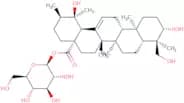
CAS:Peduncloside II is a rare glucoside, a type of chemical compound, that is naturally derived from specific plant sources. The source of Peduncloside II is primarily the traditional medicinal plant, which has been utilized in various indigenous pharmacopeias, particularly in certain regions of Asia. It is isolated from plant tissues where it functions as a secondary metabolite.
Fórmula:C36H58O10Pureza:Min. 95%Forma y color:PowderPeso molecular:650.84 g/molSterebin A - Stevia rebaudiana
CAS:Sterebin A is a natural sweetener, which is derived from the plant Stevia rebaudiana, a species native to South America. The primary source of Sterebin A is the leaves of this plant, which contain glycosides such as stevioside and rebaudioside. These glycosides interact with taste receptors on the tongue, providing a sweetness that is significantly more intense than sucrose, without the caloric content. The biochemical mechanism involves the binding of these compounds to specific receptor sites, simulating the perception of sweetness in humans.Fórmula:C18H30O4Pureza:90%MinForma y color:PowderPeso molecular:310.43 g/molUrsolic acid - 90%
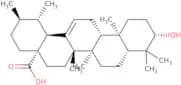
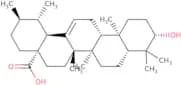
CAS:Producto controladoUrsolic acid - 90% is a natural compound classified as a pentacyclic triterpenoid, which is derived predominantly from the waxy coating of apples, as well as other fruits and herbs such as rosemary and thyme. This highly concentrated form ensures a purity level suited for scientific research and application.Fórmula:C30H48O3Forma y color:White Off-White PowderPeso molecular:456.7 g/molα-Hederin
CAS:Antispasmodic, moliscicidic, anthelmithic and inhibitor of cell proliferationFórmula:C41H66O12Pureza:Min. 98 Area-%Forma y color:White PowderPeso molecular:750.96 g/molGinsenoside F11
CAS:Ginsenoside F11 is a saponin compound, which is a bioactive component derived from Panax quinquefolius, commonly known as American ginseng. This compound is extracted from the roots of the plant, where it naturally occurs as part of its complex phytochemical profile. Ginsenoside F11 acts through multiple biochemical pathways, primarily by modulating neurotransmitter systems and exhibiting antioxidant properties. It influences cellular mechanisms by interacting with specific receptors and enzymes, thereby affecting signal transduction processes.
Pureza:Min. 95%Erythrodiol
CAS:Producto controladoErythrodiol is a pentacyclic triterpenoid alcohol, which is primarily derived from the hydrolysis of oleanolic acid, found predominantly in the leaves and fruits of the olive tree, Olea europaea. As a bioactive compound, it plays a significant role in various biological processes due to its potent antioxidant, anti-inflammatory, and cardioprotective properties.Fórmula:C30H50O2Pureza:Min. 97 Area-%Forma y color:PowderPeso molecular:442.72 g/molManool
CAS:Manool is a diterpene compound, which is derived from natural plant sources, predominantly from the essential oils of certain coniferous trees. It exhibits a unique cyclic structure and is classified within the group of labdane diterpenes. Manool is extracted through steam distillation of the plant material followed by purification processes to isolate its active form.Fórmula:C20H34OPureza:Min. 90 Area-%Forma y color:Yellow PowderPeso molecular:290.48 g/molGinsenoside Rc
CAS:Ginsenoside Rc is a bioactive compound, which is a triterpenoid saponin derived from the root of the Panax ginseng plant. It possesses a unique mode of action through its interaction with cell membrane receptors, influencing various signaling pathways. Among its many effects, Ginsenoside Rc modulates immune response, exhibits antioxidant properties, and can regulate glucose metabolism and cardiovascular function.
Fórmula:C53H90O22Pureza:Min. 98 Area-%Forma y color:White Off-White PowderPeso molecular:1,079.3 g/molDigoxin
CAS:Digoxin and its derivatives are the most widely used as cardiac glycosides. Digoxin is isolated from the foxglove plant, Digitalis lanata, and has pharmacokinetic properties that are intermediate between digitoxin and the short acting strophanthus glycosides. Digoxin is regarded as the drug of choice for the treatment of congestive heart failure as its main assets are the rapid onset of action, good absorption ratio and the medium half-life which makes toxic reactions easier to manage (Albrecht, 1999).Fórmula:C41H64O14Pureza:Min. 95%Forma y color:PowderPeso molecular:780.94 g/molUrsolic acid - 98%
CAS:Producto controladoUrsolic acid - 98% is a naturally occurring triterpenoid compound, which is sourced primarily from the waxy coating of fruits, such as apples, as well as from several medicinal herbs like rosemary and holy basil. This compound is known to possess a variety of biological activities due to its molecular structure.Fórmula:C30H48O3Forma y color:White Off-White PowderPeso molecular:456.7 g/molGentiopicroside
CAS:Gentiopicroside is a bitter iridoid glycoside, which is predominantly sourced from plants of the Gentianaceae family, such as Gentiana lutea. It acts as a natural compound with several biological activities emanating from its unique chemical structure. The mode of action of gentiopicroside involves modulating various enzymatic pathways and exhibiting antioxidant properties due to its ability to scavenge free radicals and reduce oxidative stress.Fórmula:C16H20O9Pureza:Min. 95%Forma y color:PowderPeso molecular:356.33 g/molAsiaticoside A
CAS:Pentacyclic triterpene; anti-inflammatory, anti-oxidant & anti-ageingFórmula:C48H78O20Pureza:Min. 95%Forma y color:White PowderPeso molecular:975.12 g/mol(+/-)-Geosmin
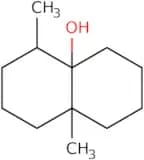
CAS:Geosmin is an "earth" smelling aromatic compound that is produced by soil bacteria. Together with other substances, geosmin is a key constituent of petrichor, the pleasant scent released into the air following rainfall, after impact of water droplets with soil.Fórmula:C12H22OPureza:Min. 95%Forma y color:Clear LiquidPeso molecular:182.3 g/molGinkgolide M
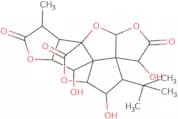
CAS:Ginkgolide M is a diterpenoid trilactone, which is a natural compound derived from the leaves of the Ginkgo biloba tree. Ginkgo biloba is an ancient plant species known for its resilient nature and traditional medicinal use. The mode of action of Ginkgolide M involves antagonism of platelet-activating factor (PAF) receptors. By this mechanism, it influences various biological processes such as platelet aggregation and inflammation, which are critical pathways in numerous physiological and pathological states.
Fórmula:C20H24O10Pureza:Min. 95%Peso molecular:424.4 g/molDehydrocostus lactone
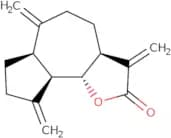
CAS:Dehydrocostus lactone is a sesquiterpene lactone, which is a natural compound extracted from plants, notably from the roots of Saussurea lappa, a plant known for its therapeutic properties. This compound exerts its mode of action primarily through the inhibition of key inflammatory pathways, including the NF-κB pathway. By interfering with these pathways, dehydrocostus lactone can modulate the expression of pro-inflammatory cytokines, thereby exhibiting anti-inflammatory effects.Fórmula:C15H18O2Pureza:Min. 95%Peso molecular:230.3 g/molBayogenin
CAS:Producto controladoBayogenin is a steroidal sapogenin, which is a bioactive compound originating from plant sources such as certain species of the Dioscorea genus (wild yams). It is primarily extracted through processes that involve saponin hydrolysis to yield the sapogenin itself. Bayogenin, like other sapogenins, serves as a precursor in the synthesis of steroidal compounds. Its mode of action involves serving as a substrate in organic synthesis, where it facilitates the production of various steroidal drugs and hormones.Fórmula:C30H48O5Pureza:Min. 98 Area-%Forma y color:PowderPeso molecular:488.7 g/molGinsenoside Rg1
CAS:Ginsenoside Rg1 is a bioactive compound, which is primarily derived from the roots of Panax ginseng, a traditional medicinal herb. It belongs to the family of ginsenosides, which are glycosylated triterpenoid saponins known for their diverse pharmacological activities. The mechanism of action of Ginsenoside Rg1 involves modulation of various cellular signaling pathways, including the regulation of reactive oxygen species, apoptosis, and inflammation. It also exhibits neuroprotective effects by promoting neuronal growth and differentiation.Fórmula:C42H72O14Pureza:Min. 95%Forma y color:White PowderPeso molecular:801.03 g/mol(R)-(-)-Carvone
CAS:Applications (R)-(-)-Carvone, is an antinociceptive monoterpene found as the main active constituent of essential oils obtained from plants of the genus Mentha. It is a novel agonist of TRPV1 channels. It can also be used as a chiral starting material.
References Goncalves, J.C., et al.: Cytometry part A., 83(2), 212 (2013); Liebigs ann., Chem., 403 (1993);Fórmula:C10H14OForma y color:ColourlessPeso molecular:150.22anti-(1R)-(+)-Camphorquinone 3-Oxime
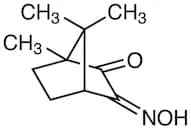
CAS:Fórmula:C10H15NO2Pureza:>95.0%(GC)(N)Forma y color:White to Orange to Green powder to crystalPeso molecular:181.24Cantharidin
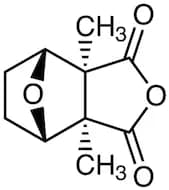
CAS:Fórmula:C10H12O4Pureza:>98.0%(GC)Forma y color:White to Almost white powder to crystalPeso molecular:196.20Betulinic Acid
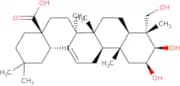
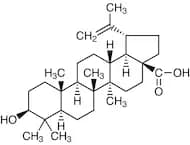
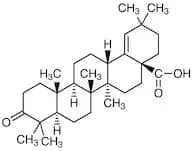
CAS:Fórmula:C30H48O3Pureza:>97.0%(GC)(T)Forma y color:White to Light yellow to Light orange powder to crystalPeso molecular:456.71Moronic Acid
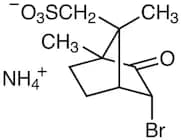
CAS:Fórmula:C30H46O3Pureza:>96.0%(HPLC)Forma y color:White to Almost white powder to crystalPeso molecular:454.70(-)-3-Bromocamphor-8-sulfonic Acid Ammonium Salt
CAS:Fórmula:C10H18BrNO4SPureza:>97.0%(T)Forma y color:White to Light yellow to Light orange powder to crystalPeso molecular:328.221-(1,5-Dimethyl-5-hexen-1-yl)-4-methyl-1,4-cyclohexadiene
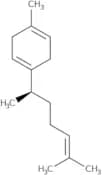
CAS:1-(1,5-Dimethyl-5-hexen-1-yl)-4-methyl-1,4-cyclohexadiene is a sesquiterpene compound, which is biosynthetically derived from plant sources. These compounds are typically synthesized through the mevalonate pathway in plants and have a wide range of functionalities due to their diverse structural framework. The mode of action of this compound is often linked to its interaction with cellular receptors, membrane permeability, and its ability to interfere with various biochemical pathways. Terpene compounds like this one can have bioactive properties, influencing processes such as inflammation, oxidative stress, or microbial growth.Fórmula:C15H24Pureza:Min. 95%Forma y color:Colorless PowderPeso molecular:204.35 g/molLycopene
CAS:Fórmula:C40H56Pureza:>85.0%(qNMR)Forma y color:Red to Dark red powder to crystalPeso molecular:536.89Linalool - synthetic grade
CAS:Linalool - synthetic grade is a versatile terpene alcohol, which is synthetically produced from petrochemicals. Its mode of action involves interacting with olfactory receptors, which contributes to its characteristic floral aroma. Additionally, linalool is involved in various biochemical transformations, often acting as an intermediate in chemical reactions due to its reactive functional groups.
Fórmula:C10H18OPureza:Min. 95%Forma y color:Colorless Clear LiquidPeso molecular:154.25 g/molAbsinthin
CAS:Absinthin is a sesquiterpene lactone, which is a naturally occurring chemical compound derived from the Artemisia absinthium plant, commonly known as wormwood. It is primarily extracted from the aerial parts of this perennial herb. Absinthin's mode of action involves its interaction with cell membrane components and enzyme systems, potentially influencing various biochemical pathways. Its structure allows it to engage in specific binding interactions that can impact cellular processes.Fórmula:C30H40O6Pureza:Min. 95 Area-%Forma y color:PowderPeso molecular:496.64 g/molIpsenol
CAS:Pheromone of Ips bark beetlesFórmula:C10H18OPureza:Min. 95 Area-%Forma y color:Colorless Clear LiquidPeso molecular:154.25 g/molVerbenalin
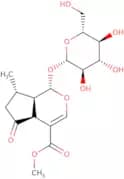
CAS:Verbenalin is an iridoid glycoside, which is a naturally occurring compound sourced from the plant genus Verbena, notably from Verbena officinalis. It is characterized by its cyclic monoterpene structure linked to a sugar moiety. This compound is known for its biological activity, primarily influencing the nervous system.Fórmula:C17H24O10Pureza:Min. 95%Peso molecular:388.37 g/molGinsenoside Rk2
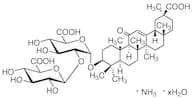
CAS:Ginsenoside Rk2 is a bioactive compound, specifically a saponin, which is extracted from the root of Panax ginseng, a plant traditionally used in Asian medicine. The mode of action of Ginsenoside Rk2 involves modulating various cellular pathways, including influencing gene expression and enzyme activity, which contribute to its diverse physiological effects. It has been studied for its potential to impact cell signaling mechanisms, including those involved in inflammation, oxidative stress, and apoptosis.Fórmula:C36H60O7Pureza:Min. 95%Forma y color:PowderPeso molecular:604.86 g/molMonoammonium Glycyrrhizinate
CAS:Fórmula:C42H65NO16Pureza:>75.0%(HPLC)Forma y color:White to Light yellow powder to crystalPeso molecular:839.97Chrysanthellin A
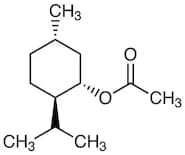
CAS:Chrysanthellin A is a sesquiterpene lactone, which is a type of natural bioactive compound. It is isolated from Chrysanthellum americanum, a flowering plant belonging to the Asteraceae family. The mode of action of Chrysanthellin A involves modulating inflammatory pathways and potentially inhibiting certain enzymes involved in metabolic processes.Fórmula:C58H94O25Pureza:Min. 95%Forma y color:PowderPeso molecular:1,191.35 g/mol(+)-Menthyl Acetate
CAS:Fórmula:C12H22O2Pureza:>98.0%(GC)Forma y color:Colorless to Almost colorless clear liquidPeso molecular:198.31Ginsenoside Rb1 - 94%
CAS:Ginsenoside Rb1 - 94% is a bioactive compound, which is a major ginsenoside found in Panax ginseng, a plant species with a long history of medicinal use. It is extracted through meticulous processes to ensure high purity, focusing on the retention of its bioactive properties.Fórmula:C54H92O23Pureza:Min. 95%Forma y color:PowderPeso molecular:1,109.29 g/molMelanin, from Sepia officinalis
CAS:Melanin is a natural pigment, which is derived from Sepia officinalis, commonly known as the common cuttlefish. This pigment is a complex biopolymer sourced from the ink sac of the cuttlefish, a cephalopod that produces ink as a defense mechanism. The mode of action of melanin involves its unique ability to absorb a broad range of the electromagnetic spectrum, providing effective protection against ultraviolet radiation. Additionally, it exhibits remarkable antioxidant properties due to its free radical scavenging abilities.Fórmula:C18H10N2O4Peso molecular:318.28 g/molGinsenoside Rd
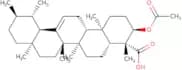
CAS:Fórmula:C48H82O18Pureza:>98.0%(HPLC)Forma y color:White to Almost white powder to crystalPeso molecular:947.173-Acetyl-beta-boswellic acid
CAS:3-Acetyl-beta-boswellic acid is a pentacyclic triterpenoid compound, which is derived from the resin of the Boswellia serrata tree. It exhibits significant biological activity, mainly due to its anti-inflammatory properties. The mode of action primarily involves the inhibition of 5-lipoxygenase, an enzyme crucial in the biosynthesis of leukotrienes, which are mediators in inflammatory and allergic responses. Additionally, it has been shown to modulate various signaling pathways and transcription factors involved in inflammation.
Fórmula:C32H50O4Pureza:Min. 95%Peso molecular:498.74 g/molCannabigerovarinic acid
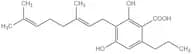
CAS:Carboxylic acid with phenol functionFórmula:C20H28O4Pureza:≥ 90.0 % (HPLC)Forma y color:PowderPeso molecular:332.43Α-onocerin
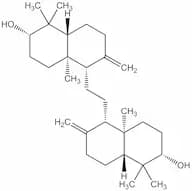
CAS:Cyclic alcoholFórmula:C30H50O2Pureza:≥ 95.0 % (HPLC)Forma y color:CrystalsPeso molecular:442.73Benzoylpaeoniflorin
CAS:Producto controladoApplications Benzoylpaeoniflorin is a derivative of Paeoniflorin (P133830), a monoterpene glycoside with potential anti-inflammatory activity. Paeoniflorin inhibits monocyte phagocytosis, or the TNF-α and PGE-2 production of monocytes.
References Zhu, X. et al.: Nat. Prod. Res., 28, 301(2014); Di, W. et al.: Int. Immunopharmacol.,, 14, 172 (2012);Fórmula:C30H32O12Forma y color:Off-WhitePeso molecular:584.57Isoalloalantolactone - Inula helenium (elecampane)
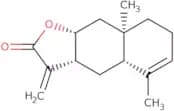
CAS:Isoalloalantolactone is a sesquiterpene lactone, which is a type of naturally occurring organic compound. It is derived from the roots of Inula helenium, commonly known as elecampane. This plant source is known for its historical use in traditional medicine, often utilized for its purported health benefits.
Fórmula:C15H20O2Pureza:Min. 95%Peso molecular:232.32 g/molLucidenic acid P
CAS:Lucidenic acid P is a triterpenoid compound, which is a bioactive metabolite isolated from Ganoderma lucidum, a medicinal mushroom known for its diverse pharmacological properties. It is primarily sourced from the fruiting bodies of this fungus, where it is present as part of a complex mixture of triterpenoids.
Fórmula:C29H42O8Pureza:Min. 95%Peso molecular:518.64 g/molSabinene hydrate
CAS:Sabinene hydrate is a bicyclic monoterpene alcohol, which is a naturally occurring compound found in essential oils of various plants, especially in species such as Juniperus and Myristica. This compound is derived from the oxidation of sabinene, a terpene prevalent in numerous aromatic plants.Fórmula:C10H18OPureza:Min. 95%Peso molecular:154.25 g/molXylopic acid
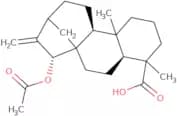
CAS:Xylopic acid is a bioactive compound, which is a diterpenoid isolated from the plant species Xylopia aethiopica. This compound is derived primarily from the fruits of the plant, often referred to as the African pepper or grains of Selim. Xylopic acid exhibits its mode of action by interacting with various biological pathways, including anti-inflammatory and antimicrobial processes, as well as modulating specific cellular receptors and enzymatic activities.Fórmula:C22H32O4Pureza:Min. 95%Peso molecular:360.49 g/molBetulonicacid
CAS:Betulonic acid is a naturally occurring triterpenoid compound, which is sourced from the bark of certain species of birch trees, mainly Betula species. It exhibits anti-inflammatory and anti-cancer properties, primarily through the modulation of various signaling pathways involved in inflammation and apoptosis. Betulonic acid acts by inhibiting key enzymes and transcription factors, such as cyclooxygenase and NF-κB, thereby reducing the production of pro-inflammatory mediators and promoting cell death in cancerous cells.Fórmula:C30H46O3Pureza:Min. 95%Peso molecular:454.68 g/mol