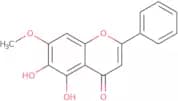
Flavonoides
Subcategorías de "Flavonoides"
- Antocianidinas(46 productos)
- Antocianina(46 productos)
- Catequina(88 productos)
- Chalconas(237 productos)
- Pterocarpan(28 productos)
Se han encontrado 2410 productos de "Flavonoides"
Liquiritin apioside
CAS:Liquiritin apioside is a flavonoid glycoside, which is predominantly derived from the root of Glycyrrhiza uralensis, commonly known as licorice. This compound acts primarily through its anti-inflammatory and antioxidant properties, which involve the modulation of various cellular pathways. Specifically, it influences the activity of inflammatory cytokines and oxidative stress markers, potentially inhibiting pathways such as nuclear factor-kappa B (NF-κB).
Fórmula:C26H30O13Pureza:Min. 95%Forma y color:White PowderPeso molecular:550.51 g/molOnonin
CAS:Ononin is an isoflavonoid glycoside, which is derived from various plant sources, including species of the genus Ononis. It is primarily sourced from the roots and aerial parts of these plants, where it occurs as a natural constituent. The mode of action of Ononin involves its hydrolysis to form its aglycone, formononetin, which is known to exhibit estrogenic activity due to its structural similarity to estrogenic compounds.
Fórmula:C22H22O9Pureza:Min. 95%Forma y color:White PowderPeso molecular:430.4 g/molAcicerone
CAS:Please enquire for more information about Acicerone including the price, delivery time and more detailed product information at the technical inquiry form on this pageFórmula:C17H12O6Pureza:Min. 95%Peso molecular:312.27 g/molWogonoside
CAS:Wogonoside is a naturally occurring flavonoid glycoside, which is derived primarily from Scutellaria baicalensis, a traditional Chinese medicinal herb. It functions through its ability to modulate various biochemical pathways, demonstrating significant anti-inflammatory and anticancer properties. Wogonoside exerts its effects by inhibiting key enzymes and signaling pathways involved in inflammation, such as nuclear factor-kappa B (NF-κB), and inducing apoptosis in cancer cells through the activation of caspases and modulation of apoptosis-related proteins.Fórmula:C22H20O11Pureza:Min. 95%Forma y color:PowderPeso molecular:460.39 g/molNeoliquiritin
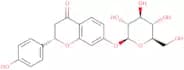
CAS:Neoliquiritin is a flavonoid compound, which is derived from the root of the licorice plant, Glycyrrhiza glabra. This compound exhibits significant antioxidant properties through its ability to scavenge free radicals, thereby reducing oxidative stress within biological systems. Neoliquiritin is primarily utilized in scientific research to explore its potential therapeutic effects, particularly its anti-inflammatory and antioxidant activities. Its mode of action involves modulation of various cellular signaling pathways associated with inflammation and oxidative damage, making it a subject of interest in studies related to chronic diseases and skin conditions. Researchers investigate its potential in mitigating oxidative stress-related cellular damage, offering insights into its possible applications in pharmacology and dermatology.Fórmula:C21H22O9Pureza:Min. 95%Forma y color:PowderPeso molecular:418.39 g/molEupatorin 5-methyl ether
CAS:Eupatorin 5-methyl ether is a bioactive compound, which is a naturally occurring flavonoid found in certain plant species. This compound is derived from various plants, including those in the Asteraceae family. Eupatorin 5-methyl ether functions primarily through modulating various biochemical pathways, exhibiting anti-inflammatory, antioxidant, and anticancer activities.Fórmula:C19H18O7Pureza:Min. 95%Forma y color:PowderPeso molecular:358.34 g/mol4'-Hydroxyflavanone
CAS:4'-Hydroxyflavanone is a naturally occurring flavonoid compound, which is derived from plant sources, particularly citrus fruits and other types of vegetation. The compound is characterized by its phenolic structure, which plays a significant role in its biological activity. 4'-Hydroxyflavanone exhibits its mode of action primarily through antioxidant activity, which involves scavenging reactive oxygen species and thus protecting cells from oxidative stress.Fórmula:C15H12O3Pureza:Min. 95%Forma y color:PowderPeso molecular:240.25 g/mol8-O-Methylretusin
CAS:8-O-Methylretusin is a naturally occurring O-methylated flavonoid, which is derived from various plant sources. This compound is notable for its potential bioactive properties, including antioxidative, anti-inflammatory, and anticancer activities. The mode of action of 8-O-Methylretusin primarily involves modulation of cellular signaling pathways, such as the inhibition of reactive oxygen species and modulation of key transcription factors that regulate inflammatory and apoptotic processes.Fórmula:C17H14O5Pureza:Min. 95%Peso molecular:298.29 g/mol3,7,2',4',5'-Pentamethoxyflavone
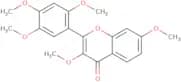
CAS:3,7,2',4',5'-Pentamethoxyflavone is a naturally occurring flavonoid compound, which is a type of polyphenolic product. It is commonly found in various plant species, serving potential protective and adaptive functions within these organisms. The mode of action of 3,7,2',4',5'-Pentamethoxyflavone involves interaction with multiple biological pathways, including modulation of enzyme activity and influence over cellular signaling pathways. Its biochemical interactions often result in antioxidant, anti-inflammatory, and possible antiproliferative effects.Fórmula:C20H20O7Pureza:Min. 95%Peso molecular:372.37 g/molKaempferol 3-b-glucopyranoside
CAS:Kaempferol 3-b-glucopyranoside is a flavonoid glycoside, which is a compound typically isolated from a variety of plants, including tea, broccoli, and fruits such as apples and grapes. It represents a crucial category of secondary metabolites prevalent in the plant kingdom, often serving roles in plant defense and pigmentation. The mode of action of Kaempferol 3-b-glucopyranoside is primarily attributed to its antioxidant properties, effectively scavenging free radicals and thereby mitigating oxidative stress. Furthermore, it is known to modulate various cellular signaling pathways, including those related to apoptosis and inflammation, by influencing kinase activity and gene expression.
Fórmula:C21H20O11Pureza:Min. 95%Forma y color:PowderPeso molecular:448.38 g/molHerbacetin-8-glucoside-3-sophoroside
CAS:Herbacetin-8-glucoside-3-sophoroside is a flavonoid glycoside derivative, which is a bioactive compound commonly found in plant sources, particularly within the flavonoid subclass. This compound is notable for its multifunctional biological activities and potential health benefits. It is primarily sourced from plant materials, where it can be extracted and isolated for further study and application.Fórmula:C33H40O22Pureza:Min. 95%Peso molecular:788.66 g/mol8-Hydroxygenistein
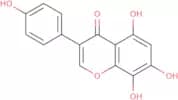
CAS:8-Hydroxygenistein is a naturally occurring isoflavone, which is a type of polyphenolic compound. It is derived primarily from plants, particularly soybeans and other legumes. This compound exhibits its mode of action through selective inhibition of tyrosine kinase enzymes, interference with the cell cycle, and modulation of signal transduction pathways. It also acts as a potent antioxidant, scavenging free radicals and reducing oxidative stress within cells.
Fórmula:C15H10O6Pureza:Min. 95%Forma y color:Yellow PowderPeso molecular:286.24 g/molTheaflavin-3'-gallate (TF-3'-G)
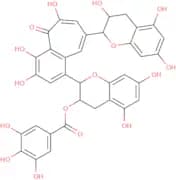
CAS:Induces cell death in human prostate cancer by disrupting mitochondria function
Fórmula:C36H28O16Pureza:Min. 95%Forma y color:Red PowderPeso molecular:716.6 g/molIsorhamnetin-5-O-methyl ether-3-glucoside
CAS:Isorhamnetin-5-O-methyl ether-3-glucoside is a flavonoid glycoside, which is a secondary metabolite typically found in various plant sources such as fruits, vegetables, and certain herbs. It is part of a larger class of compounds known as flavonoids, which are well-known for their diverse biological activities. The mode of action of Isorhamnetin-5-O-methyl ether-3-glucoside primarily involves its antioxidant properties, which allow it to neutralize free radicals and reduce oxidative stress.Fórmula:C22H22O13Pureza:Min. 95%Peso molecular:494.4 g/molLinarin
CAS:Linarin is a naturally occurring flavonoid compound, which is primarily extracted from plant sources such as the leaves of *Buddleja davidii* and *Mentha aquatica*. This flavonoid is notable for its biological activity, which is characterized by its interaction with various enzymes and receptors involved in cellular processes.Fórmula:C28H33O14Pureza:Min. 95%Forma y color:PowderPeso molecular:593.55 g/molZapotin
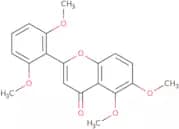
CAS:Zapotin is a natural compound, which is sourced from the seeds of the Sapote Blanco (Casimiroa edulis). This organic compound exhibits its mode of action primarily through its interaction with cancerous cells. Zapotin induces apoptosis in these cells by modulating key signaling pathways, thereby preventing cell proliferation and enhancing programmed cell death. This mechanism underscores its potential as a chemopreventive agent.Fórmula:C19H18O6Pureza:Min. 95%Forma y color:PowderPeso molecular:342.34 g/mol7,4'-Dimethoxyflavone
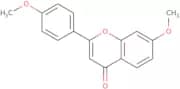
CAS:7,4'-Dimethoxyflavone is a naturally occurring flavonoid derivative, which is found predominantly in certain plants, particularly within the citrus family. This compound is characterized by the presence of two methoxy groups attached to its flavone backbone. It functions by interacting with various biological pathways, including those involved in antioxidant and anti-inflammatory responses. Its molecular structure allows it to modulate enzyme activities and receptor interactions, although the exact mechanisms are still under study.Fórmula:C17H14O4Pureza:Min. 98 Area-%Forma y color:PowderPeso molecular:282.29 g/molPiscerythrone
CAS:Piscerythrone is a specialized chemical compound derived from certain marine organisms, which is primarily sourced from vibrant crustaceans. It acts through biochemical interactions that modulate pigmentation processes at the cellular level. The compound's mode of action involves binding to specific receptors involved in the enzymatic pathways of pigment production, influencing the synthesis and deposition of pigments such as astaxanthin.Fórmula:C21H20O7Pureza:Min. 95%Peso molecular:384.38 g/molPinostrobin
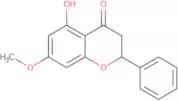
CAS:Pinostrobin is a natural flavonoid compound, which is derived primarily from the rhizomes of plants such as the fingerroot (Boesenbergia rotunda) and various species of the Pinus genus. Its mode of action involves potent antioxidant activity, where it scavenges free radicals, thus reducing oxidative stress. Additionally, Pinostrobin exhibits antimicrobial properties by disrupting microbial cell membranes and inhibiting essential microbial enzymes.
Fórmula:C16H14O4Forma y color:PowderPeso molecular:270.28 g/mol5,6-Dihydroxy-7-methoxyflavone
CAS:5,6-Dihydroxy-7-methoxyflavone is a naturally occurring flavonoid compound, which is predominantly sourced from various plants, often found in the leaves, stems, or roots. This compound belongs to the broader class of flavonoids, which are known for their diverse biochemical activities. As a flavone derivative, its structure includes hydroxyl and methoxy functional groups that contribute to its biological activity.
Fórmula:C16H12O5Pureza:Min. 95%Forma y color:Yellow PowderPeso molecular:284.26 g/mol