Flavonoides
Subcategorías de "Flavonoides"
- Antocianidinas(46 productos)
- Antocianina(46 productos)
- Catequina(88 productos)
- Chalconas(237 productos)
- Pterocarpan(28 productos)
Se han encontrado 2410 productos de "Flavonoides"
2',7,8-Trimethoxyflavone
CAS:2',7,8-Trimethoxyflavone is a specialized flavonoid compound, which is naturally derived from certain medicinal plants. This compound belongs to the broader class of polyphenolic molecules known as flavones, often found in various fruits and vegetables. It is primarily isolated from plants such as Kaempferia parviflora, renowned for its traditional use in herbal medicine.
Fórmula:C18H16O5Pureza:Min. 95%Peso molecular:312.32 g/molIsookanin
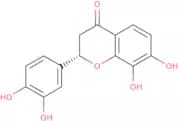
CAS:Isookanin is a naturally occurring flavonoid compound, which is derived from various plant sources, including certain flowers and herbs. Its mode of action involves interacting with cellular pathways to exhibit anti-inflammatory and antioxidant properties. Isookanin achieves this by modulating the activity of enzymes and signaling molecules involved in inflammatory responses, thereby potentially reducing oxidative stress and inflammation.Fórmula:C15H12O6Pureza:Min. 98 Area-%Forma y color:PowderPeso molecular:288.25 g/mol(+)-trans-Taxifolin
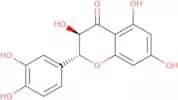
CAS:(+)-trans-Taxifolin is a flavonoid compound, which is a type of plant secondary metabolite. It is naturally found in various plant sources, including the bark of Douglas fir (Pseudotsuga menziesii) and Siberian larch (Larix sibirica), as well as in milk thistle. The primary mode of action of this compound is its antioxidant activity, which involves scavenging free radicals and reducing oxidative stress within cells. This activity is facilitated by its ability to donate hydrogen atoms or electrons to neutralize reactive oxygen species, thus preventing cellular damage.Fórmula:C15H12O7Pureza:Min. 95%Forma y color:PowderPeso molecular:304.25 g/mol3-Hydroxy-7,8,3'-trimethoxyflavone
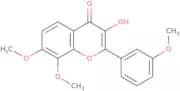
CAS:3-Hydroxy-7,8,3'-trimethoxyflavone is a specialized flavonoid compound, which is isolated predominantly from certain plant sources known for their diverse array of secondary metabolites. The compound belongs to the flavone subclass, characterized by its distinctive hydroxyl and methoxy functional groups, which are crucial in determining its biochemical properties and interactions.Fórmula:C18H16O6Pureza:Min. 95%Peso molecular:328.32 g/mol2',3,5,7-Tetrahydroxyflavone
CAS:2',3,5,7-Tetrahydroxyflavone is a naturally occurring flavonoid compound, which is primarily derived from various plant sources known for their rich polyphenolic content. This compound is characterized by its multiple hydroxyl groups that confer significant antioxidant properties. Its mode of action primarily involves the scavenging of free radicals and the inhibition of oxidative enzyme systems. Additionally, it is known to modulate several intracellular signaling pathways, including those involved in inflammation and apoptosis.Fórmula:C15H10O6Pureza:Min. 95%Forma y color:PowderPeso molecular:286.24 g/molAmentoflavone-7”,4”’-dimethyl ether
CAS:Amentoflavone-7",4"'-dimethyl ether is a synthetic biflavonoid derivative, which is modeled on natural compounds found in certain plant species. Biflavonoids are typically sourced from plants like Gingko biloba and Selaginella, known for their varied biological activities. The dimethyl ether modification enhances the molecule's chemical stability and potentially its bioavailability.Fórmula:C32H22O10Pureza:Min. 95%Peso molecular:566.51 g/mol2'-Hydroxyflavonol
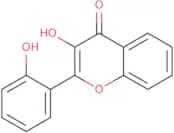
CAS:2'-Hydroxyflavonol is a flavonoid derivative, which is a polyphenolic compound commonly found in plants. This compound is derived from natural sources, particularly various fruits, vegetables, and roots. Its mode of action is primarily through its role as an antioxidant, where it scavenges free radicals, thereby reducing oxidative stress. Furthermore, it can modulate multiple signaling pathways, contributing to its various bioactivities.
Fórmula:C15H10O4Pureza:Min. 95%Peso molecular:254.24 g/molTheaflavin-3-O-gallate
CAS:Theaflavin-3-O-gallate is a polyphenolic compound, which is derived from the oxidation of specific catechins found predominantly in black tea (Camellia sinensis). This compound is a significant member of the theaflavins, which are formed during the fermentation process of tea leaves. The bioactivity of Theaflavin-3-O-gallate is attributed to its ability to interact with and modulate various biological pathways, mainly through its antioxidant properties and its role in modulating cellular oxidative stress responses.Fórmula:C36H28O16Pureza:Min. 95%Forma y color:Red PowderPeso molecular:716.6 g/mol4',6,7-Trimethoxyisoflavone
CAS:4',6,7-Trimethoxyisoflavone is a naturally occurring isoflavone, which is a type of phytoestrogen found in certain plants. This compound is generally derived from plant sources that are rich in isoflavones, such as soybeans and other legumes. Isoflavones like 4',6,7-Trimethoxyisoflavone are known to exhibit a range of biological activities due to their structural similarity to estrogens, allowing them to bind to estrogen receptors.Fórmula:C18H16O5Pureza:Min. 95%Forma y color:White Off-White PowderPeso molecular:312.32 g/molPyraclostrobin
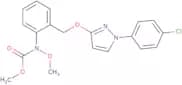
CAS:Pyraclostrobin is a fungicide, which is a synthetic compound derived from the strobilurin class of fungicidal chemistry. It is characterized as a product of chemical synthesis designed to inhibit fungal growth through its unique mode of action. Pyraclostrobin functions by disrupting mitochondrial respiration in the targeted fungi, specifically inhibiting electron transfer at the cytochrome bc1 complex. This interference halts ATP production, ultimately leading to the death of the fungal cells.Fórmula:C19H18ClN3O4Pureza:Min. 95%Forma y color:PowderPeso molecular:387.82 g/molHegoflavon B
CAS:Please enquire for more information about Hegoflavon B including the price, delivery time and more detailed product information at the technical inquiry form on this pageFórmula:C30H20O12Pureza:Min. 95%Peso molecular:572.47 g/molCampylosaurone
CAS:Campylosaurone is a synthetic antimicrobial compound, which is derived from chemical synthesis. Its mode of action involves the disruption of bacterial cell wall synthesis, ultimately leading to cell lysis and death. This compound exhibits broad-spectrum activity against a variety of gram-positive and gram-negative bacteria, making it versatile in combating resistant strains.Fórmula:C30H20O12Pureza:Min. 95%Peso molecular:572.47 g/mol3,6,2',4',5'-Pentamethoxyflavone
CAS:3,6,2',4',5'-Pentamethoxyflavone is a flavonoid compound, which is a type of polyphenolic secondary metabolite found in various plants. It is isolated from certain plant species known for their medicinal properties, such as Orthosiphon stamineus. This compound is characterized by the presence of five methoxy groups attached to the flavone backbone, which is thought to significantly influence its biological activity.
Fórmula:C20H20O7Pureza:Min. 95%Peso molecular:372.37 g/molAlfalone
CAS:Please enquire for more information about Alfalone including the price, delivery time and more detailed product information at the technical inquiry form on this pageFórmula:C17H14O5Pureza:Min. 95%Forma y color:PowderPeso molecular:298.29 g/molDiosmin - 90%
CAS:Phlebotropic drug used in the treatment of venous diseaseFórmula:C28H32O15Pureza:Min. 95%Forma y color:Yellow PowderPeso molecular:608.54 g/molFlavanone azine
CAS:Flavanone azine is a synthetic compound derived from flavonoid sources, specifically engineered through the structural manipulation of flavanone molecules. Flavonoids are naturally occurring compounds found in plants known for their diverse biological activities. The synthetic derivation allows for enhanced stability and bioavailability compared to natural counterparts.Fórmula:C30H24N2O2Pureza:Min. 95%Peso molecular:444.52 g/mol6,7-Dihydroxyflavone
CAS:6,7-Dihydroxyflavone is a small molecule flavonoid compound, which is a synthetic product derived to mimic naturally occurring substances. This compound is primarily sourced from the metabolic pathways involved in the biosynthesis of flavonoids, which are naturally found in plants. The mode of action of 6,7-Dihydroxyflavone involves the selective activation of the TrkB receptor, mimicking the action of the brain-derived neurotrophic factor (BDNF). This receptor plays a crucial role in neuronal survival, differentiation, and synaptic plasticity.Fórmula:C15H10O4Pureza:Min. 95 Area-%Forma y color:Yellow PowderPeso molecular:254.24 g/molIsoglabrone
CAS:Isoglabrone is a flavonoid compound, which is derived primarily from certain plant species known for their medicinal properties. As a plant-derived compound, isoglabrone is part of a broader class of natural products that are the focus of extensive research due to their diverse biological activities. The mode of action of isoglabrone involves the modulation of various signaling pathways, which may include antioxidant, anti-inflammatory, and anticancer activities. These actions are mediated through interactions with cellular receptors and enzyme systems, altering gene expression and cellular responses.Fórmula:C20H16O5Pureza:Min. 95%Peso molecular:336.34 g/molTricetin-6,8-di-C-glucoside
CAS:Tricetin-6,8-di-C-glucoside is a specific type of flavonoid glucoside, which is derived primarily from certain plant sources known for their rich polyphenolic content. This compound is characterized by the attachment of sugar moieties directly to carbon atoms on the flavonoid structure, specifically the 6 and 8 positions of the tricetin molecule. This C-glucosylation confers unique stability and solubility properties, distinguishing it from O-linked glycosides.Fórmula:C27H30O17Pureza:Min. 95%Forma y color:PowderPeso molecular:626.52 g/molHerbacetin
CAS:Herbacetin is a naturally occurring flavonoid, which is a type of polyphenolic compound extracted from plants, particularly from the leaves of the flax plant. It functions primarily by inhibiting the activity of various enzymes and signaling pathways that are involved in oxidative stress and inflammatory responses. The inhibition of these pathways can modulate cellular processes, making it a subject of interest in the study of disease mechanisms and potential treatments.Fórmula:C15H10O7Pureza:Min. 95%Forma y color:Off-White PowderPeso molecular:302.24 g/mol