Flavonoides
Subcategorías de "Flavonoides"
- Antocianidinas(46 productos)
- Antocianina(46 productos)
- Catequina(88 productos)
- Chalconas(237 productos)
- Pterocarpan(28 productos)
Se han encontrado 2410 productos de "Flavonoides"
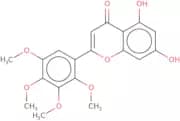
5,7-Dihydroxy-2',3',4',5'-tetramethoxyflavone
CAS:5,7-Dihydroxy-2',3',4',5'-tetramethoxyflavone is a naturally occurring flavonoid, which is a type of polyphenolic compound. It is sourced primarily from various plant species, particularly those belonging to the genus *Scutellaria* and other related species known for their rich flavonoid content. The mode of action of 5,7-Dihydroxy-2',3',4',5'-tetramethoxyflavone involves modulation of key signaling pathways associated with oxidative stress and inflammatory processes, which can contribute to cellular protection and homeostasis.Fórmula:C19H18O8Pureza:Min. 95%Forma y color:SolidPeso molecular:374.34 g/mol7-Hydroxyflavone
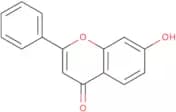
CAS:7-Hydroxyflavone is a naturally occurring flavonoid, which is a type of polyphenolic compound derived primarily from various plant sources. As a natural antioxidant, its mode of action involves the scavenging of free radicals, thus providing potential protective effects against oxidative stress. This compound also influences multiple cellular signaling pathways and can modulate the activity of certain enzymes.Fórmula:C15H10O3Pureza:Min. 95%Forma y color:PowderPeso molecular:238.24 g/molAlpinumisoflavone dimethyl ether
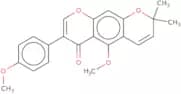
CAS:Alpinumisoflavone dimethyl ether is a naturally occurring isoflavonoid, which is a type of phytochemical compound. It is derived from the plant family Leguminosae, particularly found in some species of the genus Millettia. This compound acts primarily through the modulation of cellular pathways associated with inflammation and cell proliferation, often involving the inhibition of specific kinases and signaling molecules that are active in both cancerous and inflammatory processes.
Fórmula:C22H20O5Pureza:Min. 95%Peso molecular:364.39 g/molQuercetin-7,3',4'-trimethyl ether-3-rhamnoside
CAS:Quercetin-7,3',4'-trimethyl ether-3-rhamnoside is a methylated flavonoid glycoside, which is a specialized compound found in certain plant species. This compound is derived from natural plant sources, particularly various herbs and fruits that are known to produce bioactive flavonoids. The mode of action of quercetin-7,3',4'-trimethyl ether-3-rhamnoside involves its ability to interact with various cellular signaling pathways, potentially modulating oxidative stress, inflammation, and other cellular processes.Fórmula:C24H26O11Pureza:Min. 95%Peso molecular:490.46 g/mol3',4'-Dihydroxyflavone
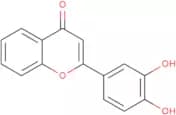
CAS:3',4'-Dihydroxyflavone is a type of flavonoid compound, which is naturally found in various plants. These secondary metabolites are crucial for plant health and defense mechanisms. Known for their antioxidative and anti-inflammatory properties, flavonoids play a significant role in moderating oxidative stress and inflammation.Fórmula:C15H10O4Pureza:Min. 95%Forma y color:PowderPeso molecular:254.24 g/molBaicalein-6-glucuronide - from Scutellaria galericulata (skullcap)
CAS:Baicalein-6-glucuronide is a glucuronide derivative of the flavonoid baicalein, derived from the herb Scutellaria galericulata, commonly known as skullcap. This flavonoid is intricately bound with a glucuronic acid moiety, which enhances its solubility and bioavailability compared to its parent compound. The source, Scutellaria galericulata, is a perennial herbaceous plant native to wetlands and known for its rich phytochemical profile.Fórmula:C21H18O11Pureza:Min. 95%Forma y color:Yellow PowderPeso molecular:446.36 g/mol5-Hydroxy-3,6,2'-trimethoxyflavone
CAS:5-Hydroxy-3,6,2'-trimethoxyflavone is a naturally occurring flavone, which is a type of polyphenolic compound. It is primarily sourced from various Erythrina species, which are flowering plants in the legume family. This compound interacts with biological systems through its role as an antioxidant, influencing enzyme activity and modulating signaling pathways. It may exert anti-inflammatory, anticancer, and neuroprotective effects, though these mechanisms require further elucidation in vivo. Its applications predominantly lie in biomedical research, where it serves as a tool for studying flavonoid functions and their potential therapeutic benefits. Scientists also examine its role in traditional medicine systems to validate and explore its health-related effects. As research progresses, 5-Hydroxy-3,6,2'-trimethoxyflavone continues to generate interest due to its complex interactions within biological frameworks and potential for diverse therapeutic applications.
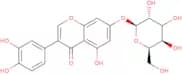
Fórmula:C18H16O6Pureza:Min. 95%Peso molecular:328.32 g/molOrobol 7-O-glucoside
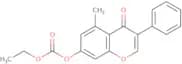
CAS:Orobol 7-O-glucoside is a flavonoid glucoside, which is a type of phenolic compound widely studied in the scientific community for its potential biological activities. It is derived from natural plant sources, particularly legumes, where it occurs as a conjugate of the isoflavone orobol. The mode of action of Orobol 7-O-glucoside involves its ability to scavenge free radicals, providing potent antioxidant effects. This compound exhibits the ability to modulate signaling pathways relevant to oxidative stress and inflammation, suggesting possible therapeutic roles in related disorders.Fórmula:C21H20O11Pureza:Min. 95%Forma y color:PowderPeso molecular:448.38 g/mol5-Methyl-7-hydroxyisoflavone ethylcarbonate ester
CAS:5-Methyl-7-hydroxyisoflavone ethylcarbonate ester is a synthetic isoflavone derivative, which is structurally derived from naturally occurring flavonoids commonly found in plants such as soy and red clover. This compound is designed to retain the biological activity of its parent isoflavones while enhancing certain pharmacokinetic properties, particularly stability and bioavailability.Fórmula:C19H16O5Pureza:Min. 95%Forma y color:PowderPeso molecular:324.33 g/mol2'-Hydroxyflavone
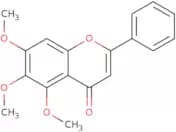
CAS:2'-Hydroxyflavone is a flavonoid compound that is naturally derived from various plant sources and is commonly found in certain fruits, vegetables, and herbs. Its structure is characterized by the presence of a hydroxyl group at the 2' position, which significantly influences its biological activity.Fórmula:C15H10O3Forma y color:PowderPeso molecular:238.24 g/mol5,6,7-Trimethoxyflavone
CAS:5,6,7-Trimethoxyflavone is a specialized flavonoid compound, which is derived from natural plant sources. This compound exists primarily in certain species of the plant kingdom, such as citrus fruits, where it is part of a group of polyphenolic compounds known for their diverse biological activities. Its structure is characterized by the presence of three methoxy groups at positions 5, 6, and 7 on the flavone backbone, contributing to its distinct biochemical properties.
Fórmula:C18H16O5Pureza:Min. 95%Forma y color:PowderPeso molecular:312.32 g/molIsosakuranetin
CAS:Isosakuranetin is a flavonoid compound, which is derived from various plant sources, especially citrus fruits and other botanicals. Its mode of action involves modulating key signaling pathways, primarily through its antioxidant properties. These antioxidants scavenge free radicals, thereby mitigating oxidative stress and reducing cellular damage. This biochemical activity makes isosakuranetin a compound of interest in various fields related to health and disease prevention.Fórmula:C16H14O5Pureza:Min. 95%Forma y color:PowderPeso molecular:286.28 g/mol7,2'-Dihydroxy-4',5'-methylenedioxyisoflavone
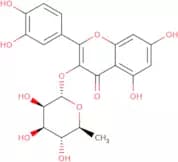
CAS:7,2'-Dihydroxy-4',5'-methylenedioxyisoflavone is a naturally occurring isoflavone compound, which is typically isolated from various plant sources. This compound is a secondary metabolite, often found in plants known for their therapeutic properties. Isoflavones are well-recognized for their potential bioactivity, acting as phytoestrogens due to their structural similarity to estrogen.Fórmula:C16H10O6Pureza:Min. 95%Peso molecular:298.25 g/molQuercetin 3-α-L-rhamnoside
CAS:Quercetin 3-α-L-rhamnoside is a flavonoid compound, which is a plant-derived product with rich biological activity. It is primarily sourced from various fruits and vegetables, where it occurs naturally as a glycoside. The mode of action involves its capability to modulate oxidative stress and inflammation through interactions with several cellular pathways, primarily by acting as an antioxidant and modulating enzyme activity related to reactive oxygen species.
Fórmula:C21H20O11Pureza:Min. 95%Forma y color:White PowderPeso molecular:448.38 g/molTectoridin
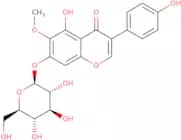
CAS:Tectoridin is a naturally occurring isoflavone glycoside, which is derived from the rhizomes of the Iris plant, particularly from Iris tectorum. This compound acts as a bioactive isoflavone that can undergo enzymatic hydrolysis to release tectorigenin, the aglycone form. Tectoridin and its metabolites are investigated for their pharmacological properties, which include antioxidant, anti-inflammatory, and anti-cancer activities.
Fórmula:C22H22O11Pureza:Min. 95%Forma y color:White PowderPeso molecular:462.4 g/mol(S)-Equol
CAS:(S)-Equol is a non-steroidal estrogen, which is a metabolite produced by the gut microbiota from dietary isoflavones, specifically daidzein, found in soy and other legumes. It has high affinity for estrogen receptor beta, playing a significant role in modulating estrogenic activity without altering steroid hormone levels.Fórmula:C15H14O3Pureza:Min. 98 Area-%Forma y color:PowderPeso molecular:242.27 g/mol6-Prenyl-3'-methoxydaidzein
6-Prenyl-3'-methoxydaidzein is a prenylated isoflavonoid, which is a secondary metabolite frequently found in the Leguminosae family, particularly in the roots of certain plant species. This compound exhibits a unique structural modification that involves the addition of a prenyl group, which can enhance its biological activity. Known for its potential antioxidant properties, 6-Prenyl-3'-methoxydaidzein acts by scavenging free radicals and reducing oxidative stress within cellular systems.Fórmula:C21H20O5Pureza:Min. 95%Peso molecular:352.38 g/molNeoisoliquiritin
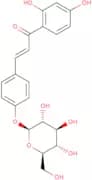
CAS:Neoisoliquiritin is a bioactive flavonoid glycoside, which is a derivative of isoliquiritin. It is primarily sourced from the roots of Glycyrrhiza species, commonly known as licorice plants. This compound is formed through the natural modifications of flavonoids within the plant, involving glycosylation processes that enhance its solubility and stability.
Fórmula:C21H11O9Pureza:Min. 95%Forma y color:PowderPeso molecular:418.39 g/molFerreirin
CAS:Ferreirin is an iron chelator, which is derived from natural sources. It functions by binding to excess iron ions in biological systems, forming a stable complex that can be excreted from the body. This mode of action is critical in managing iron overload conditions, often seen in various pathological states such as thalassemia or hemochromatosis where excess iron poses a risk of oxidative damage to cells and tissues.
Fórmula:C16H14O6Pureza:Min. 95%Peso molecular:302.28 g/mol7-Hydroxy-5-methylflavone
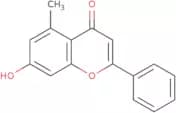
CAS:7-Hydroxy-5-methylflavone is a flavonoid compound, which is a diverse group of phytonutrients present in a variety of plants. These compounds are derived from flavonoid biosynthesis pathways that commonly occur in fruits, vegetables, and certain beverages like tea. Flavonoids are well-regarded for their roles in plant defense mechanisms and their antioxidative properties.
Fórmula:C16H12O3Pureza:Min. 95%Forma y color:PowderPeso molecular:252.26 g/mol