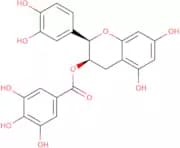
Catequina
Las catequinas son flavonoides que se encuentran en el té, el cacao y otros alimentos de origen vegetal. Son conocidas por sus propiedades antioxidantes, que ayudan a prevenir el estrés oxidativo y la inflamación. Se han estudiado las catequinas por sus posibles beneficios cardiovasculares, neuroprotectores y anticancerígenos. En CymitQuimica, ofrecemos una amplia selección de catequinas para la investigación en áreas como la nutrición, las ciencias de la salud y la farmacología.
Se han encontrado 88 productos de "Catequina"
Ordenar por
Pureza (%)
0
100
|
0
|
50
|
90
|
95
|
100
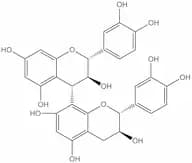
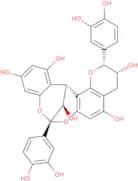
Procyanidin b3
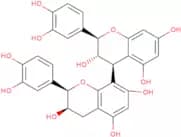
CAS:Oxygen-heterocyclic compoundFórmula:C30H26O12Pureza:≥ 95.0 % (HPLC)Forma y color:PowderPeso molecular:578.52Cinnamtannin a2
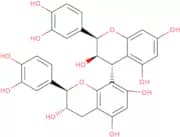
CAS:Oxygen-heterocyclic compoundFórmula:C60H50O24Pureza:≥ 85.0 % (HPLC)Forma y color:PowderPeso molecular:1155.04Procyanidin b2
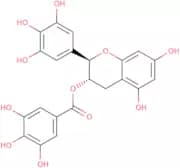
CAS:Oxygen-heterocyclic compoundFórmula:C30H26O12Pureza:≥ 90.0 % (HPLC)Forma y color:PowderPeso molecular:578.53(+)-catechin 5-gallate
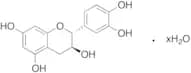
CAS:Oxygen-heterocyclic compoundFórmula:C22H18O10Pureza:≥ 90.0 % (HPLC)Forma y color:PowderPeso molecular:442.38(+/-)-Catechin xHydrate
CAS:Producto controlado<p>Applications (+/-)-Catechin xHydrate is an antioxidant flavonoid.<br>References Liao, J. et al.: J. Agri. Food. Chem., 65, 3013 (2017);<br></p>Fórmula:C15H14O6Forma y color:NeatPeso molecular:290.27(-)-Epicatechin Gallate
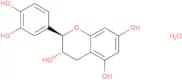
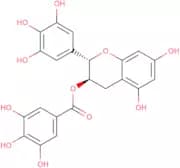
CAS:Producto controlado<p>Stability Light Sensitive<br>Applications One of the catechin isomers and a potent antioxidant that can modulate a wide range of membrane proteins. Its bilayer-modifying potency was tested using gramicidin A (gA) channels as probes. All the catechins alter gA channel function and modify bilayer properties, with a 500-fold range in potency. The gallate group causes current block, as evident by brief downward current transitions.<br>References Ingolfsson, H., et al.: FEBS Lett., 585, 3101 (2011),<br></p>Fórmula:C22H18O10Forma y color:White To Off-WhitePeso molecular:442.37(+)-Catechin hydrate
CAS:<p>(+)-Catechin hydrate is a chiral flavonoid, which is a type of natural polyphenol compound. It is primarily sourced from various plants, including tea leaves, cocoa, and certain fruits. As an integral component of the flavonoid group, (+)-Catechin hydrate exhibits strong antioxidant activity, primarily through its ability to scavenge free radicals and chelate metal ions, thereby mitigating oxidative stress within biological systems.</p>Fórmula:C15H14O6·xH2OPureza:Min. 98 Area-%Forma y color:Off-White PowderPeso molecular:290.27 g/molProcyanidin B3
CAS:<p>Procyanidin B3 is a flavonoid compound, which is a type of plant-derived polyphenol, sourced primarily from the seeds and skins of various fruits, especially grapes and apples. It functions primarily through strong antioxidant activity, neutralizing free radicals and reducing oxidative stress. This mode of action is fundamental to its potential therapeutic effects, as oxidative stress is a contributor to numerous chronic diseases.</p>Fórmula:C30H26O12Pureza:Min. 98 Area-%Forma y color:Off-White PowderPeso molecular:578.52 g/molProcyanidin B1
CAS:<p>Procyanidin B1 is a polyphenolic compound, which is a type of naturally occurring organic compound. It is primarily sourced from various plants, including grape seeds, apples, and cocoa. This compound is a proanthocyanidin, specifically a type of flavonoid, and is often found in the skins, seeds, and leaves of these plants.</p>Fórmula:C30H26O12Pureza:Min. 95 Area-%Forma y color:PowderPeso molecular:578.52 g/mol(+)-Gallocatechin gallate
CAS:<p>(+)-Gallocatechin gallate is a polyphenolic compound, which is a specific type of catechin predominantly derived from green tea leaves, Camellia sinensis. It belongs to the flavonoid class of phytochemicals, known for their diverse biological activities. The compound exhibits potent antioxidant properties by scavenging free radicals and chelating metal ions, thereby reducing oxidative stress. It also modulates various signaling pathways involved in inflammation and cell proliferation.</p>Fórmula:C22H18O11Pureza:Min. 98 Area-%Forma y color:White PowderPeso molecular:458.37 g/mol(-)-Epicatechin
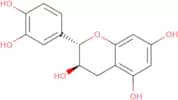
CAS:<p>(-)-Epicatechin is a flavonoid compound, which is a type of polyphenol that can be found in various natural sources such as cacao beans, green tea, and certain fruits. Structurally, it belongs to the class of catechins and is known for its antioxidant properties.</p>Fórmula:C15H14O6Pureza:Min. 95 Area-%Forma y color:Off-White PowderPeso molecular:290.27 g/mol(-)-Gallocatechin gallate
CAS:<p>(-)-Gallocatechin gallate is a flavonoid compound, specifically a type of catechin, which is a phytochemical sourced primarily from tea plants, particularly green tea leaves. This compound is structurally characterized by its polyphenolic framework, which significantly contributes to its biological activity.</p>Fórmula:C22H18O11Pureza:Min. 95%Forma y color:White PowderPeso molecular:458.37 g/molProcyanidin B4
CAS:<p>Procyanidin B4 is a type of proanthocyanidin, which is a class of flavonoids. This compound is predominantly derived from various plant sources, notably grape seeds and certain fruits like apples. Its mode of action is primarily through its antioxidant properties, which involve scavenging free radicals and reducing oxidative stress at the cellular level. Procyanidin B4 operates by stabilizing free radicals with its phenolic hydroxyl groups, thereby inhibiting lipid peroxidation and protecting cellular components such as DNA, proteins, and lipids from oxidative damage.</p>Fórmula:C30H26O12Pureza:Min. 98 Area-%Forma y color:White PowderPeso molecular:578.52 g/molProcyanidin B2
CAS:<p>Procyanidin B2 is a type of polyphenol, specifically a flavonoid compound, which is derived from plant sources such as grape seeds, apples, and cacao beans. This compound is characterized by its dimeric structure, consisting of two epicatechin units linked through a specific bond. The mode of action of Procyanidin B2 involves its function as a potent antioxidant, which allows it to neutralize free radicals and reduce oxidative stress at the cellular level. Additionally, it influences various signaling pathways, modulating enzyme activity and gene expression related to inflammation and cell survival.</p>Fórmula:C30H26O12Pureza:Min. 98 Area-%Forma y color:Off-White PowderPeso molecular:578.52 g/molProcyanidin A2
CAS:<p>Procyanidin A2 is a type of flavonoid, which is a class of bioactive compounds extracted primarily from various plant sources such as grape seeds, cranberries, and cocoa. These compounds are known for their complex molecular structures that include oligomeric catechins. Procyanidin A2 exerts its effects by modulating oxidative stress pathways through its potent antioxidant activity. It neutralizes free radicals, thus protecting cellular components from damage and potentially ameliorating oxidative stress-related conditions.</p>Fórmula:C30H24O12Pureza:Min. 95%Forma y color:White To Off-White SolidPeso molecular:576.5 g/mol(+)-Catechin
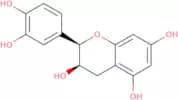
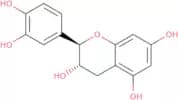
CAS:<p>(+)-Catechin is a type of polyphenolic compound, specifically a flavan-3-ol, which is a member of the broader class of flavonoids. It is derived from natural sources, predominantly found in a variety of plants such as tea leaves, cocoa, berries, and certain fruits. The compound plays a significant role as a natural antioxidant, combating oxidative stress by scavenging free radicals and chelating metal ions.</p>Fórmula:C15H14O6Pureza:Min. 98 Area-%Forma y color:Off-White PowderPeso molecular:290.27 g/mol(-)-Catechin
CAS:<p>(-)-Catechin is a flavonoid compound, classified as a polyphenolic antioxidant, which is predominantly derived from plant sources such as tea leaves, cocoa, and various fruits. Its molecular structure allows it to scavenge free radicals and chelate metal ions, exhibiting potent antioxidant properties. This reactive nature contributes to its ability to modulate signaling pathways and inhibit enzymatic activities related to oxidative stress and inflammation.</p>Fórmula:C15H14O6Pureza:Min. 98 Area-%Forma y color:PowderPeso molecular:290.27 g/mol(-)-Epigallocatechin
CAS:<p>(-)-Epigallocatechin is a polyphenolic compound, which is a type of catechin, primarily found in the tea plant, Camellia sinensis. This compound is abundant in green tea leaves and is recognized for its potent antioxidant properties. The source of (-)-Epigallocatechin can be traced back to the biosynthesis pathway in plants, where it contributes to the plant's defense mechanisms against environmental stressors.</p>Fórmula:C15H14O7Pureza:Min. 95%Forma y color:PowderPeso molecular:306.27 g/molEpicatechin-(2β->5,4β->6)-ent-epicatechin
CAS:<p>Epicatechin-(2beta->5,4beta->6)-ent-epicatechin is a type of flavonoid dimer, which is derived from natural plant sources, particularly in some fruits and nuts known for their rich polyphenolic content. This compound belongs to the class of procyanidins, which are well-known for their potent antioxidant properties.</p>Fórmula:C30H24O12Pureza:Min. 95%Peso molecular:576.5 g/mol(-)-Epicatechin gallate
CAS:<p>(-)-Epicatechin gallate is a type of catechin, which is a polyphenolic compound primarily sourced from green tea leaves. This compound is known for its potent antioxidant properties, which effectively neutralize free radicals, thereby reducing oxidative stress and potentially preventing cellular damage.</p>Fórmula:C22H18O10Pureza:Min. 95%Forma y color:White PowderPeso molecular:442.37 g/mol