Nucleótidos
Los nucleótidos son compuestos orgánicos que sirven como building blocks de los ácidos nucleicos, esenciales para la formación del ADN y ARN. Cada nucleótido está compuesto por una base nitrogenada, una molécula de azúcar y uno o más grupos fosfato. Estos nucleótidos se unen para formar largas cadenas, creando el material genético que lleva y transmite la información genética en todos los organismos vivos. En esta sección, encontrará una amplia variedad de nucleótidos cruciales para la investigación en genética, biología molecular y bioquímica. Son fundamentales para estudiar los procesos genéticos, sintetizar ácidos nucleicos y desarrollar herramientas diagnósticas y terapéuticas. En CymitQuimica, ofrecemos nucleótidos de alta calidad para apoyar su investigación científica y aplicaciones, asegurando precisión y fiabilidad en sus experimentos.
Subcategorías de "Nucleótidos"
Se han encontrado 2634 productos de "Nucleótidos"
Ordenar por
Pureza (%)
0
100
|
0
|
50
|
90
|
95
|
100
1-b-D-Arabinofuranosyluracil 5'-monophosphate
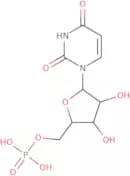
CAS:<p>1-b-D-Arabinofuranosyluracil 5'-monophosphate is a pyrimidine nucleotide analog. Because of its structural similarity to natural nucleotides, it can interact with enzymes involved in nucleic acid synthesis. It is also a metabolite of Ara-U (arabinosyluracil), which is itself a compound studied for its biological activity. Scientists could potentially use this molecule in research to study how cells process and use nucleotides, and to understand how changes in nucleotide structure can affect biological processes.</p>Fórmula:C9H13N2O9PPureza:Min. 95%Forma y color:PowderPeso molecular:324.18 g/mol7-Deaza-2'-C-ethynyladenosine
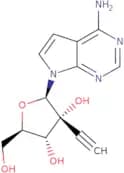
CAS:<p>7-Deaza-2'-C-ethynyladenosine (7DAA) is a research inhibitor that is classified as a polymerase inhibitor. It binds to the active site of the viral NS5B polymerase and inhibits RNA synthesis, which leads to virus replication. 7DAA has shown activity against hepatitis B virus (HBV) and hepatitis C virus (HCV). It also shows multifunctional properties in its inhibition of HBV genotypes A1, A3, and D1. In addition, 7DAA interacts with the RNA binding site on HCV polymerase protein and prevents binding of the viral RNA genome to this site. 7DAA also inhibits HIV replication by preventing assembly of the reverse transcriptase enzyme complex at an early stage.</p>Fórmula:C13H14N4O4Pureza:Min. 95%Forma y color:PowderPeso molecular:290.27 g/mol2'-Deoxyuridine-5'-monophosphate disodium salt
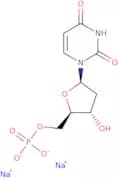
CAS:<p>2'-Deoxyuridine-5'-monophosphate disodium salt (2DUMP) is a nucleoside analog that inhibits the synthesis of DNA and RNA by inhibiting the enzyme thymidylate synthase. 2DUMP is a covalent inhibitor of thymidylate synthase, which prevents the formation of dTMP from deoxyuridine 5'-triphosphate. This compound has been shown to be effective in treating squamous cell cancer and hyperproliferative diseases such as chronic myelogenous leukemia. 2DUMP is also used as an antiviral agent against HIV, herpes simplex virus, and varicella zoster virus. It has been shown to bind to benzalkonium chloride (BAK) in biological samples such as serum or plasma.<br>2DUMP binds to BAK through a covalent linkage between the 3' hydroxyl group on BAK and the phosphate group on 2DUMP</p>Fórmula:C9H11N2O8PNa2Pureza:Min. 95%Forma y color:PowderPeso molecular:352.15 g/mol3'-O-Propargyladenosine
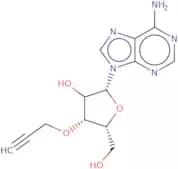
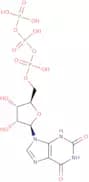
CAS:3'-O-Propargyladenosine is a modified nucleoside that has antiviral and anti-inflammatory properties. It is a synthetic compound that is chemically related to adenosine. 3'-O-Propargyladenosine is an activator of the immune system and it inhibits viral DNA synthesis. The compound also has been shown to reduce inflammation in mice by inhibiting the production of prostaglandin E2 (PGE2). 3'-O-Propargyladenosine has been shown to inhibit the replication of human immunodeficiency virus type 1 (HIV-1) and cytomegalovirus (CMV).Fórmula:C13H15N5O4Pureza:Min. 95%Forma y color:PowderPeso molecular:305.29 g/molXanthosine-5'-triphosphate triethylammonium salt - 100 mM aqueous solution
CAS:<p>Inhibitor of adenylyl and guanylyl cyclase</p>Fórmula:C10H15N4O15P3·xC6H15NPureza:Min. 95%Forma y color:Colorless PowderPeso molecular:524.17 g/mol2'-O-Propargyladenosine
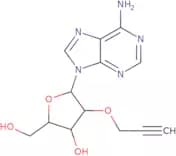
CAS:<p>2'-O-Propargyladenosine is a modified nucleoside that belongs to the group of deoxyribonucleosides. It is an activator of viral DNA polymerases, which causes the synthesis of viral DNA to stop. This compound has antiviral and anticancer activities. 2'-O-Propargyladenosine has been shown to be effective against various human cancer cell lines in vitro and in vivo. It is a synthetic nucleoside with high purity, showing no detectable impurities by HPLC analysis.</p>Fórmula:C13H15N5O4Pureza:Min. 95%Forma y color:White PowderPeso molecular:305.29 g/mol2-Fluoroadenosine
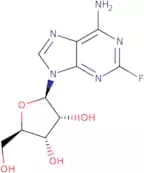
CAS:<p>2-Fluoroadenosine is a nucleoside that has shown high resistance to the enzyme cyclase. This property may be due to its structural and conformational properties, which are different from those of adenosine. 2-Fluoroadenosine has been shown to inhibit the synthesis of ATP in ventricular myocardium and fat cells, as well as increase levels of adenylate kinase in blood. It has also been shown to have potential as a drug target for autoimmune diseases, such as multiple sclerosis. 2-Fluoroadenosine can be used for biochemical and pharmacokinetic studies because it is rapidly metabolized by the liver and excreted in urine.<br>2-Fluoroadenosine can also be used to measure changes in the ratio of adenylate kinase:adenylate kinase reductase (AKAR) in blood plasma.</p>Fórmula:C10H12FN5O4Pureza:Min. 95%Forma y color:White Slightly Yellow PowderPeso molecular:285.23 g/molUridine-3',5'-cyclic monophosphate sodium salt
CAS:<p>Uridine-3',5'-cyclic monophosphate sodium salt is a phosphotriester that is an intermediate in the biosynthesis of nucleosides. It is also a phosphodiesterase inhibitor, which means it inhibits the breakdown of cyclic nucleotides and allows them to accumulate. This drug has been shown to increase platelet production and has anti-inflammatory effects. Uridine-3',5'-cyclic monophosphate sodium salt is a human metabolite that can be synthesized from uridine, which is present in DNA, RNA, and food sources such as meat, eggs, and milk. The synthesis of uridine-3',5'-cyclic monophosphate sodium salt requires phosphoramidite as a precursor.</p>Fórmula:C9H10N2O8P·NaPureza:Min. 98 Area-%Forma y color:White PowderPeso molecular:328.2 g/mol2'-Deoxy-4'-ethynyl-2-fluoroadenosine
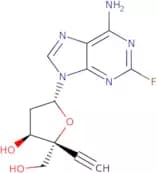
CAS:<p>2'-Deoxy-4'-ethynyl-2-fluoroadenosine (EFdA) is an analog of adenosine. EFdA is a potent inhibitor of HIV replication, and has been shown to be effective against other viruses such as influenza virus, herpes simplex virus, and vesicular stomatitis virus. EFdA was the first nucleoside analog to show antiviral activity in tissue culture against these viruses. This drug also inhibits the synthesis of mitochondrial rRNA and reduces the formation of mitochondrial DNA in human cells by inhibiting mitochondrial DNA polymerase γ. EFdA also prevents the binding of monoclonal antibodies to human B lymphocytes, which may be due to its steric interactions with plasma RNA. This drug is metabolized by cytochrome P450 2C8 and 2C9 into a variety of metabolites that are excreted in urine as glucuronides or sulfates. EFdA has a long</p>Fórmula:C12H12FN5O3Pureza:Min. 95%Peso molecular:293.25 g/molAdenosine 3'-monophosphate sodium
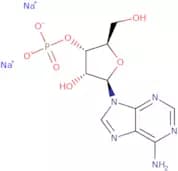
CAS:<p>Adenosine 3'-monophosphate sodium is a nucleotide that is used as a substrate for enzymes. It has been shown to increase the enzymatic activity of papaverine, litoralis, subtilis, and histidine phosphatase. Adenosine 3'-monophosphate sodium also has protease activity, which can be activated by adding an enzyme preparation containing subtilisin and trypsin. This compound also has a pH optimum of 8.0-9.5 and is active at an alkaline pH of 9.5-10.5. The specific strain of bacteria will determine the optimal pH range for activity, with enterobacter bacterial strains having a maximum range of 6-7 and brevibacterium bacteria strains having a range of 4-6.</p>Fórmula:C10H12N5O7PNa2Pureza:Min. 95%Forma y color:White To Off-White SolidPeso molecular:391.19 g/molAdenylyl-3'-5'-guanosine sodium salt
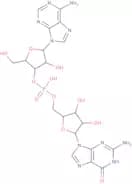
CAS:<p>3'-Adenylyl-5'-guanosine ammonium salt is a dinucleoside that competes with guanosine for binding to the enzyme adenylate cyclase. This reaction leads to increased levels of cyclic AMP, which causes an increase in the rate of viral replication. 3'-Adenylyl-5'-guanosine ammonium salt has been shown to inhibit the growth of pyogenic bacteria such as Streptococcus pyogenes and has also been used to treat influenza infections. 3'-Adenylyl-5'-guanosine ammonium salt is an inorganic compound that is found in tobacco. It can be synthesized from uridine and p-nitrophenyl phosphate by the reaction: 3'--O--(CH2)4--COOH + H2N--PO4--> 3'--O--(CH2)4--CONH2 + H3PO4</p>Fórmula:C20H24N10O11P·NaPureza:Min. 95%Peso molecular:634.43 g/mol2'-Deoxyadenosine - isolated from DNA
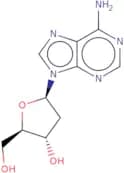
CAS:<p>2'-Deoxyadenosine is a nucleoside that is found in DNA. It has been shown to have potent anticancer activity against carcinoma cell lines and to bind to the adenosine receptor A3. 2'-Deoxyadenosine has also been shown to inhibit the production of inflammatory cytokines, such as tumor necrosis factor-α and interleukin-6, from nuclear extracts of mouse tumor cells. This nucleoside may be a potential drug target for the treatment of cancer and inflammation.</p>Fórmula:C10H13N5O3Pureza:Min. 98 Area-%Forma y color:PowderPeso molecular:251.24 g/mol3'-Deoxy-5-methyluridine
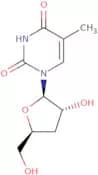
CAS:<p>3'-Deoxy-5-methyluridine (3'-DMAU) is a synthetic nucleoside that is used in the treatment of viral infections. 3'-DMAU has antiviral and anticancer activity, and it has been used to synthesize DNA for genetic engineering. It has shown promising results in the treatment of HIV as well as in the prevention of cancer metastasis. 3'-DMAU inhibits DNA synthesis by binding to the enzyme RNA polymerase, which blocks its interaction with ribonucleosides, thus inhibiting RNA synthesis. In addition, 3'-DMAU causes cell death by inhibiting protein synthesis. The drug is activated by phosphorylation to form 5'-triphosphate and 5'-diphosphate derivatives, which inhibit DNA and RNA synthesis at multiple sites within the cell.</p>Fórmula:C10H14N2O5Pureza:Min. 95%Forma y color:PowderPeso molecular:242.23 g/mol3-Acetylpyridine adenine dinucleotide disodium, reduced form
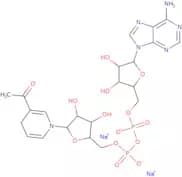
CAS:<p>Reduced synthetic analog of NADH with an acetylpyridine modification. It is used as a reducing substrate to study the mechanisms of NAD(P)+-dependent reductases and to probe the active sites and catalytic processes of these important enzymes through its altered spectroscopic and binding properties. The disodium salt ensures good solubility for biochemical applications.</p>Fórmula:C22H30N6O14P2•Na2Pureza:Min. 95%Forma y color:Slightly Yellow PowderPeso molecular:710.43 g/mol2',3',5'-Tri-O-acetyl-8-bromoguanosine
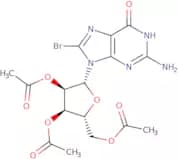
CAS:<p>2',3',5'-Tri-O-acetyl-8-bromoguanosine is a synthetic nucleoside analog that inhibits the growth of tumor cells. It has been shown to inhibit the progression of prostate cancer and cervical cancer by binding to guanosine, preventing its conversion into ATP. This compound also prevents proliferation in hek293 and glioblastoma cells. The mechanism of action may be due to oxidative phosphite formation, which causes DNA damage and subsequent apoptosis.</p>Fórmula:C16H18BrN5O8Pureza:Min. 95%Forma y color:Off-White To Light (Or Pale) Yellow SolidPeso molecular:488.25 g/molGuanylyl-3',5'-guanosine ammonium salt
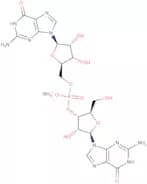
CAS:<p>Guanylyl-3',5'-guanosine ammonium salt is a novel antiviral agent that has high antiviral activity against influenza A virus. It is a guanine derivative which has been modified to include an aminopropyl group and an ammonium cation. This compound also acts as an activator for deoxyribonucleosides, nucleotides, and ribonucleosides. Guanylyl-3',5'-guanosine ammonium salt may be used in the manufacture of DNA, RNA, and phosphoramidites. This compound also has anticancer effects by inhibiting the proliferation of tumor cells and inducing apoptosis.</p>Fórmula:C20H25N10O12P·H3NPureza:Min. 95%Peso molecular:645.48 g/molFludarabine phosphate
CAS:<p>Fludarabine phosphate is an antileukemic drug that inhibits DNA polymerase α and β, as well as other enzymes in the nucleotide synthesis pathway. It is used to treat patients with chronic myelogenous leukemia (CML) who have developed resistance to other treatments. Fludarabine phosphate has been shown to induce a cytotoxic effect against tumor cells by binding to ATP-binding cassette transporter proteins on the cell membrane and inhibiting intracellular targets such as DNA, RNA, and protein synthesis. Fludarabine phosphate has also been shown to inhibit the growth of tumor cells through synergistic interactions with other anticancer drugs such as hydroxyurea or busulfan, which may be due to its ability to inhibit enzyme activities such as erythrocyte alkaline phosphatase.</p>Fórmula:C10H13FN5O7PPureza:Min. 98 Area-%Forma y color:PowderPeso molecular:365.21 g/mol5-Bromo-2'-deoxycytidine
CAS:<p>5-Bromo-2'-deoxycytidine is a synthetic nucleoside analogue that is used to treat diabetic neuropathy. It is structurally similar to cytidine, and inhibits the enzyme DNA polymerase by intramolecular catalysis. This causes deamination of the 5-bromo group, which prevents further synthesis of DNA. 5-Bromo-2'-deoxycytidine has been shown to be effective in vivo in a mouse model for inflammatory bowel diseases, including colitis and eosinophilic enteritis. The drug was also found to inhibit the production of Eosinophil peroxidase from HL-60 cells in vitro.</p>Fórmula:C9H12BrN3O4Pureza:Min. 95%Forma y color:Off-White PowderPeso molecular:306.11 g/molN6-Benzyladenosine 5'-triphosphate sodium salt - 10 mM aqueous solution
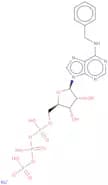
CAS:<p>N6-Benzyladenosine 5'-triphosphate sodium salt - 10 mM aqueous solution is an analog of adenosine triphosphate (ATP). It is used in the study of protein kinase C. ATP and its analogs are able to phosphorylate proteins and regulate their activity. This study has shown that N6-benzyladenosine 5'-triphosphate sodium salt - 10 mM aqueous solution is an atp analog that activates protein kinase C, leading to the phosphorylation of proteins. This analog also inhibits tyrosine kinases, which may be due to its ability to inhibit the reuptake of serotonin and other transmitters.</p>Fórmula:C17H22N5O13P3·xNaPureza:Min. 95%Forma y color:Colorless PowderPeso molecular:597.3 g/molStearoyl coenzyme A free acid hydrate
CAS:<p>Stearoyl coenzyme A free acid hydrate is a natural, non-synthetic lipid molecule that belongs to the group of fatty acids. It is found in the form of a white crystalline powder and has a melting point at approximately 56°C. Stearoyl CoA free acid hydrate is an essential component of cellular metabolism, carrying out reactions such as desaturase, dextran sulfate, and other enzyme activities. Stearoyl CoA free acid hydrate may have therapeutic applications for metabolic disorders and obesity. The enzyme complex that catalyzes the synthesis of stearoyl CoA free acid hydrate in adipocytes is ATP-binding cassette transporter (ABC) A1 and ABCG1, which are members of the superfamily of ATP-binding cassette (ABC) transporters. It also plays a role in regulating immune responses via Toll-like receptor 4 (TLR4).</p>Fórmula:C39H70N7O17P3S•H2OPureza:Min. 92 Area-%Forma y color:White PowderPeso molecular:1,052.01 g/mol