Nucleósidos
Se han encontrado 3569 productos de "Nucleósidos"
2'-Deoxy-5'-O-DMT-uridine 3'-succinyl CPG 1000Å
2'-Deoxy-5'-O-DMT-uridine 3'-succinyl CPG 1000Å is an anticancer drug that is used in the treatment of acute myeloid leukemia. This compound is a modified nucleoside. It has been shown to inhibit the growth of cultured cells and induce apoptosis by causing DNA damage. The anticancer properties of 2'-deoxy-5'-O-DMT-uridine 3'-succinyl CPG 1000Å are mediated by its inhibition of DNA synthesis, RNA synthesis, and protein synthesis.
Pureza:Min. 95%Sapacitabine
CAS:Sapacitabine is an oral prodrug that is converted to its active form, the cytotoxic agent 9-β-D-arabinofuranosyladenine (araA), by cellular enzymes. It has potent antitumor activity against solid tumours and has been shown to be effective in a variety of human cancer cell lines. Sapacitabine targets intracellular targets, including DNA methyltransferases and other enzymes involved in the synthesis of RNA and DNA. The drug has been shown to have synergistic effects when used with other cytotoxic agents such as 5-fluorouracil and gemcitabine, which are also inhibitors of DNA methyltransferase.
Fórmula:C26H42N4O5Pureza:Min. 95%Peso molecular:490.64 g/mol3'-Azido-2',3'-dideoxy-N2-isobutyrylguanosine
3'-Azido-2',3'-dideoxy-N2-isobutyrylguanosine is an antiviral agent that belongs to the class of nucleosides. It is a novel phosphoramidite which can be used in the synthesis of ribonucleosides and deoxyribonucleosides. 3'-Azido-2',3'-dideoxy-N2-isobutyrylguanosine has shown anticancer activity, with a potential use as an inhibitor of cellular proliferation, including tumor cells. 3'-Azido-2',3'-dideoxy-N2-isobutyrylguanosine also inhibits viral replication by interfering with the initiation and elongation steps of viral DNA synthesis.Pureza:Min. 95%N2-Isobutyryl-N-trityl-morpholinoguanine methyl dimethylphosphoramide chloridate
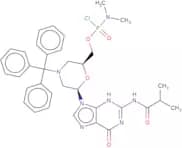
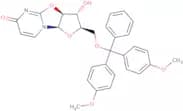
CAS:N2-Isobutyryl-N-trityl-morpholinoguanine methyl dimethylphosphoramide chloridate is a novel modified nucleoside analog with antiviral and anticancer activity. It is a phosphoramidite that is used in the synthesis of oligonucleotides and polynucleotides. N2-Isobutyryl-N-trityl-morpholinoguanine methyl dimethylphosphoramide chloridate has been shown to inhibit viral replication in vitro by inhibiting viral DNA polymerase, as well as tumor growth in vivo by inducing apoptosis. This compound has also been shown to be an activator for RNA polymerases I, II, and III.Pureza:Min. 95%2,2’-Anhydro-5’-O-DMT-uridine
CAS:2,2’-Anhydro-5’-O-DMT-uridine is a high purity synthetic nucleoside that is modified with a hydroxymethyl group in the 2' position. It is a monophosphate and diphosphate derivative of uridine. This nucleoside has antiviral and anticancer properties, as well as the ability to inhibit HIV replication.Fórmula:C30H28N2O7Pureza:Min. 95%Peso molecular:528.55 g/molN4-Acetyl-2'-deoxy-5'-O-DMT-cytidine 3'-Me phosphoramidite
N4-Acetyl-2'-deoxy-5'-O-DMT-cytidine 3'-Me phosphoramidite is a novel monophosphate nucleoside that is synthesized using an acetylation and methylation reaction. It has a cytidine base and is modified with an acetyl group and a methyl group. N4-Acetyl-2'-deoxy-5'-O-DMT-cytidine 3'-Me phosphoramidite has been shown to inhibit the growth of cancer cells in vitro, as well as to have antiviral and anticancer activity. This product is available in high purity, high quality, and with modifications to improve its stability.Fórmula:C39H49N4O8PPureza:Min. 95%Peso molecular:732.8 g/mol2'-Deoxy-5'-O-DMT-5-methylcytidine
CAS:2'-Deoxy-5'-O-DMT-5-methylcytidine is a nucleoside analog that can be used to treat cancer. This compound is synthesized by the conversion of 5′-O-dimethoxytrityl (DMT)-2'-deoxycytidine to its 5′-O-DMT phosphoramidite. The phosphoramidite is then reacted with methylene chloride, methanol, and ammonia to form the monophosphate. 2'-Deoxy-5'-O-DMT-5-methylcytidine has been shown to be an effective anticancer drug in vitro and in vivo. It targets DNA synthesis, which prevents the duplication of genetic material necessary for cell division.Fórmula:C31H33N3O6Pureza:Min. 95%Forma y color:White to off-white solid.Peso molecular:543.63 g/mol8-(4-Aminophenyl)-2'-deoxyguanosine
8-(4-Aminophenyl)-2'-deoxyguanosine is an Activator that has novel properties. It is a diphosphate of 8-(4-Aminophenyl)thymidine and is also known as 8-APT. It has been shown to have anticancer and antiviral activity in animal models, and it may be a potential treatment for HIV infection. The chemical name for 8-APT is 2'-deoxyguanosine, 8-(4-aminophenyl)-, (8R*,9S*)-.
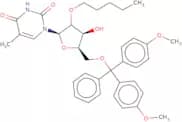
Fórmula:C16H18N6O4Pureza:Min. 95%Peso molecular:358.35 g/mol5'-O-DMT-5-methyl-2'-O-pentyluridine
5'-O-DMT-5-methyl-2'-O-pentyluridine is a monophosphate nucleoside with anticancer activity. It is a novel, synthetic, high purity and quality compound that is modified from 5'-O-DMT-5-methyluridine. This compound has been shown to be an effective antiviral agent against HIV and HSV, as well as an inhibitor of DNA synthesis in cells.
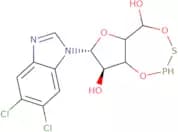
Fórmula:C36H42N2O8Pureza:Min. 95%Peso molecular:630.74 g/mol5,6-Dichloro-(1-b-D-ribofuranosyl) benzimidazole 3',5'-cyclic monophosphothioate, Sp-isomer sodium salt
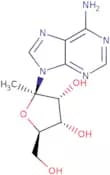
CAS:5,6-Dichloro-(1-b-D-ribofuranosyl) benzimidazole 3',5'-cyclic monophosphothioate, Sp-isomer sodium salt (SPP) is a cytostatic agent that binds to the α subunit of the voltage-dependent Ca2+ channel. It has been shown to inhibit tumor growth in mouse models of hyperproliferative diseases such as bladder cancer and pulmonary fibrosis. SPP also inhibits the proliferation of human bladder cells in culture by inhibiting cyclic nucleotide phosphodiesterase activity. This leads to an increase in intracellular calcium concentrations and activation of cation channels. SPP is an analog of rolipram, which has been shown to have anti-inflammatory effects on detrusor muscle cells.Fórmula:C12H10Cl2N2O5P·NaPureza:Min. 95%Peso molecular:419.16 g/mol6-Amino-9-(1-deoxy-b-D-psicofuranosyl)purine
CAS:6-Amino-9-(1-deoxy-β-D-psicofuranosyl)purine (6APdP) is a nucleoside with potential chemotherapeutic activity. It has been shown to suppress the expression of genes that encode proteins involved in cell proliferation and differentiation, including suppressor genes. 6APdP is activated by methyladenosine monophosphate kinase and binds to the ribose hydroxyl group on RNA molecules. This molecule has been shown to inhibit hepatitis B virus replication and cancer cell growth in animal models. The hydrogen bonding interactions between 6APdP and the ribose hydroxyl group are stronger than those associated with ethylene diamine tetraacetic acid (EDTA). 6APdP is also an inhibitor of protein synthesis.Fórmula:C11H15N5O4Pureza:Min. 95%Forma y color:PowderPeso molecular:281.27 g/mol2-Amino-8-bromo-9-(b-D-ribofuranosyl)purine
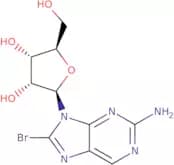
CAS:2-Amino-8-bromo-9-(b-D-ribofuranosyl)purine is a modified nucleoside that inhibits viral DNA and RNA synthesis. It has antiviral properties against influenza, herpes simplex virus type 1, hepatitis B virus, and human immunodeficiency virus type 1. 2-Amino-8-bromo-9-(b-D-ribofuranosyl)purine has been shown to be effective in the treatment of cancers such as leukemia, lymphoma, and breast cancer. This drug is a novel nucleoside analogue that is used for cancer chemotherapy. 2-Amino 8 bromo 9 (b D ribofuranosyl) purine is not active against bacteria or fungi.Fórmula:C10H12BrN5O4Pureza:Min. 95%Peso molecular:346.14 g/mol3-Deazauridine-5'-triphosphate triethylamine salt
CAS:3-Deazauridine-5'-triphosphate triethylamine salt is a xanthosine analog that has been used as a biochemical reagent in animals and humans. It is postulated to be a potential cancer therapeutic agent because of its ability to inhibit DNA synthesis and cell division. 3-Deazauridine-5'-triphosphate triethylamine salt inhibits the biosynthesis of uridine in leukemic mice, hamster V79 cells, and mammalian cells. This drug inhibits the incorporation of uracil into RNA by competitive inhibition with respect to ATP. 3DATTP also inhibits the incorporation of thymidine into DNA by competitive inhibition with respect to dCTP.Fórmula:C10H16NO15P3Pureza:Min. 95%Peso molecular:483.15 g/mol8-Bromo-5'-o-(dimethyoxytrityl)-N2-(dimethyl-aminomethylidene)-2'-deoxyguanosine
CAS:8-Bromo-5'-O-(dimethyoxytrityl)-N2-(dimethyl-aminomethylidene)-2'-deoxyguanosine (8-Bromo-5'-O-(DMT)-dG) is a novel nucleoside that is synthesized by reacting 8-bromo-5'-O-(dimethyoxytrityl)-2'-deoxyguanosine with dimethylaminomethylidene. It has antiviral, anticancer, and ribonucleoside activities. 8-Bromo-5'-O-(DMT)-dG is used as a building block for the synthesis of oligonucleotides, phosphoramidites, and other modified nucleosides. 8-Bromo-5'-O-(DMT)-dG is currently being developed as an anticancer drug.Fórmula:C34H35BrN6O6Pureza:Min. 95%Peso molecular:703.6 g/mol2'-O-tert-Butyldimethylsilyl-5'-O-DMT-adenosine
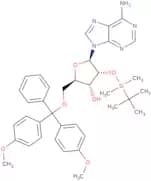
CAS:2'-O-tert-Butyldimethylsilyl-5'-O-DMT-adenosine is a modified nucleoside that is used to synthesize oligonucleotides. It is a phosphoramidite, and can be used in the synthesis of DNA or RNA. 2'-O-tert-Butyldimethylsilyl-5'-O-DMT-adenosine is an antiviral agent that has been shown to have anticancer activity in animal models. It has been shown to inhibit the production of tumor necrosis factor alpha (TNFα) and serum enzymes, such as dismutase activity, in mice with lung cancer. This drug also has a toxic effect on respiratory system cells, which may be due to its ability to induce apoptosis.
Pureza:Min. 95%1-(5-o-(Dimethoxytrityl)-β-D-2-deoxyribofuranosyl)-3-nitropyrrole
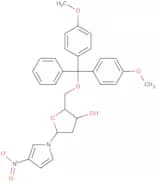
CAS:1-(5-O-(dimethoxytrityl)-β-D-2-deoxyribofuranosyl)-3-nitropyrrole is a novel nucleoside phosphoramidite that has been modified to include an oxazole moiety. It is an antiviral and anticancer drug that inhibits the replication of DNA by binding to the enzyme DNA polymerase. 1-(5-O-(dimethoxytrityl)-β-D-2-deoxyribofuranosyl)-3-nitropyrrole is also a substrate for monophosphate, diphosphate, and triphosphate nucleotide kinases, which are enzymes that catalyze the phosphorylation of 5'-monophosphates. This nucleoside phosphoramidite can be used in the synthesis of oligonucleotides and modified oligonucleotides.Fórmula:C30H30N2O7Pureza:Min. 95%Peso molecular:530.6 g/mol5'-Fluoro-5'-deoxy-adenosine
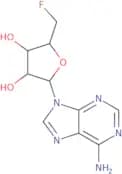
CAS:5'-Fluoro-5'-deoxy-adenosine (FDA) is a fluorinated adenosine derivative that has been shown to regulate glucose levels in plasma. It has been shown to increase the uptake of glucose in cells and improve insulin sensitivity, which may be due to its ability to increase the production of nitric oxide. FDA is also thought to act as an antioxidant and may be useful for treating autoimmune diseases such as insulin resistance and type II diabetes.Fórmula:C10H12FN5O3Pureza:Min. 95%Forma y color:PowderPeso molecular:269.23 g/molKinetin riboside-5'-diphosphate sodium salt
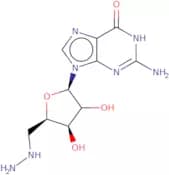
Kinetin riboside-5'-diphosphate sodium salt is a synthetically modified nucleoside that is used as an activator for DNA synthesis and in the treatment of cancer. Kinetin riboside-5'-diphosphate sodium salt has been shown to have antiviral and anticancer effects, as well as being able to modify the activity of natural substances such as kinetin. This compound has been shown to inhibit tumor growth and reduce the size of some types of tumors in mice. It also inhibits viral replication by blocking viral RNA polymerase activity and inhibiting viral protein synthesis.Pureza:Min. 95%5'-Hydrazino-5'-deoxyguanosine
CAS:5'-Hydrazino-5'-deoxyguanosine is a novel diphosphate nucleoside analog that has been shown to be an efficient activator of the anti-cancer enzyme ribonucleotide reductase. It is synthesized by reacting 5'-hydrazinouridine with hydroxylamine and then coupling with 5'-deoxyguanosine. The resulting product has been shown to inhibit DNA synthesis in vitro and in vivo, as well as to produce cytotoxic effects in human cancer cells. This compound also inhibits bacterial growth by binding to DNA-dependent RNA polymerase, thereby preventing transcription and replication. The high frequency of human activity has been shown using a patch-clamp technique on human erythrocytes. This active form is metabolized through a number of metabolic transformations, including hydrolysis by esterases or glucuronidases, oxidation by cytochrome P450 enzymes, reduction by glutathione reductase, or
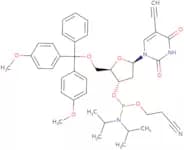
Fórmula:C10H15N7O4Pureza:Min. 95%Peso molecular:297.27 g/mol2'-Deoxy-5'-DMT-5-ethynyluridine 3'-CE phosphoramidite
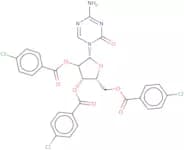
CAS:2'-Deoxy-5'-DMT-5-ethynyluridine 3'-CE phosphoramidite is a nucleoside that is used as an activator for DNA synthesis. It has been shown to be effective against viruses such as HIV and herpes simplex virus. This compound also has anticancer properties. 2'-Deoxy-5'-DMT-5-ethynyluridine 3'-CE phosphoramidite binds to the viral RNA or DNA, displacing the natural phosphate group on the 5' end of the viral chain and preventing viral replication.Fórmula:C41H47H40O8Pureza:Min. 95%Peso molecular:708.12 g/mol2',3',5'-Tri-O-(p-chlorobenzoyl)-5-azacytidine
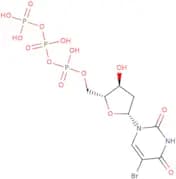
CAS:2',3',5'-Tri-O-(p-chlorobenzoyl)-5-azacytidine is a novel nucleoside phosphoramidite for the synthesis of DNA and RNA. It has been modified to be resistant to antiviral and anticancer agents, as well as to be an activator of monophosphate. 2',3',5'-Tri-O-(p-chlorobenzoyl)-5-azacytidine has high purity and quality, as well as being novel and modified.Fórmula:C29H21Cl3N4O8Pureza:Min. 95%Peso molecular:659.86 g/mol5-Bromo-2'-deoxyuridine-5'-triphosphate sodium salt
CAS:5-Bromo-2'-deoxyuridine-5'-triphosphate sodium salt is a modified nucleoside with antiviral properties. This drug inhibits the polymerase activity of reverse transcriptase and thus prevents the synthesis of DNA from RNA. 5-Bromo-2'-deoxyuridine-5'-triphosphate sodium salt has been shown to be effective against herpes viruses, influenza virus, and cytomegalovirus. This drug also prevents the replication of HIV.Fórmula:C9H14N2O14P3BrPureza:Min. 95%Peso molecular:547.04 g/molThymidylyl-(3'-5')-2'-deoxyadenosine ammonium salt
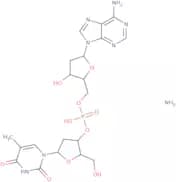
CAS:Thymidylyl-(3'-5')-2'-deoxyadenosine ammonium salt is a nucleoside that is a synthetic analog of thymidine. It has antiviral activity and is used in the synthesis of DNA and RNA. This product has shown to be effective against HIV, influenza, polio, herpes, and human papillomavirus. Thymidylyl-(3'-5')-2'-deoxyadenosine ammonium salt can also be used for the synthesis of phosphoramidites for oligonucleotide synthesis.Fórmula:C20H26N7O10P·NH3Pureza:Min. 95%Peso molecular:572.47 g/mol(-)-Adenosine 3'-monophosphate hydrate
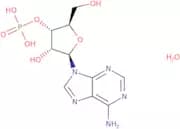
CAS:Adenosine 3'-monophosphate hydrate is a nucleoside that is an important intermediate in the biosynthesis of DNA and RNA. It is a phosphodiesterase inhibitor, which prevents the breakdown of adenosine 3'-monophosphate (cAMP). This compound also has a role in various other metabolic pathways, such as the synthesis of purines. Adenosine 3'-monophosphate hydrate is used for preparing adenosylcobalamin and for studies on phosphodiesterases. The nature of this compound is determined by its chemical structure, including functional groups and sequences. Its modification includes the addition of phosphate groups to its ribose sugar moiety. Adenosine 3'-monophosphate hydrate has a molecular weight of 372.4 g/mol and optimum pH of 7-8.
The hybridization behavior and ph optimum are characteristic properties of this compound.Fórmula:C10H16N5O8PPureza:Min. 95%Peso molecular:365.24 g/molN6-Methyl-2'-O-methyladenosine 5'-monophosphate
N6-Methyl-2'-O-methyladenosine 5'-monophosphate (N6-MMAMP) is a nucleoside analogue that is used as an anticancer and antiviral agent. N6-MMAMP is a modified nucleoside that has been shown to be effective in the treatment of some cancers, such as leukemia. It also has antiviral properties and can be used to inhibit the replication of viruses such as human immunodeficiency virus type 1 (HIV). N6-MMAMP has been shown to have high purity and quality, making it an excellent choice for research purposes.Pureza:Min. 95%1-(3’,5’-Di-O-benzoyl-2'-Deoxy-2'-fluoro-b-D-arabinofuranosyl)uracil
CAS:1-(3’,5’-Di-O-benzoyl-2'-Deoxy-2'-fluoro-b-D-arabinofuranosyl)uracil (1DBUA) is a nucleoside phosphoramidite that is an antiviral agent. It inhibits viral replication by blocking the synthesis of DNA and RNA. 1DBUA does not have any anticancer activity and has been shown to be toxic to cells in culture. The purity of 1DBUA is high and it can be used for the preparation of oligonucleotides. 1DBUA has been modified with a benzoyl group at C1’ position. This modification improves solubility and prevents hydrolysis by esterases or glucuronidases. 1DBUA also acts as an activator in DNA polymerase reactions, which increases the efficiency of DNA synthesis.Pureza:Min. 95%2'-Deoxy-2'-fluoroadenosine 5'-a-thiotriphosphate sodium salt
2'-Deoxy-2'-fluoroadenosine 5'-a-thiotriphosphate sodium salt (2'F-ATP) is a nucleoside analog that inhibits viral DNA polymerase and induces apoptosis in cancer cells. It is a novel, modified nucleotide that can be phosphorylated to 2'F-dATP, 2'F-AMP, or 2'F-GMP. The phosphate group in 2'F-ATP is replaced by a thiophosphate group, which increases the stability of the molecule and prevents it from being hydrolyzed by phosphatases. This makes it an effective activator for DNA synthesis reactions.Pureza:Min. 95%5,6-Dihydrothymidine
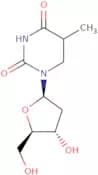
CAS:5,6-Dihydrothymidine is a hydroxylated thymidine analogue. It binds to the leukocyte antigen, which is found on many different types of cells. 5,6-Dihydrothymidine inhibits the replication of herpes simplex virus and can be used for diagnostic purposes. 5,6-Dihydrothymidine has been shown to have conformational properties that are similar to those of thymine, which allows it to bind to the template strand in DNA. This binding prevents the synthesis of messenger RNA from DNA. 5,6-Dihydrothymidine is also able to inhibit cell growth in culture and can be used as a cell culture medium supplement.Fórmula:C10H16N2O5Pureza:Min. 95%Forma y color:PowderPeso molecular:244.24 g/molN4-Benzoyl-1-(a-D-mannopyranosyl)cytosine
N4-Benzoyl-1-(a-D-mannopyranosyl)cytosine is a modified deoxyribonucleoside that has antiviral and anticancer activities. It is a phosphoramidite, which can be converted to nucleosides using standard methods. N4-Benzoyl-1-(a-D-mannopyranosyl)cytosine is also an activator of the DNA polymerase enzyme and a high quality, novel anti-cancer drug.Fórmula:C17H19N3O7Pureza:Min. 95%Forma y color:White to off-white powder.Peso molecular:377.35 g/mol5'- O- [Bis(4- methoxyphenyl) phenylmethyl] - thymidine 3'- (hydrogen phosphonate) ,compd. with N, N- diethylethanamine (1:1)
CAS:5'- O- [Bis(4- methoxyphenyl) phenylmethyl] - thymidine 3'- (hydrogen phosphonate) ,compd. with N, N- diethylethanamine (1:1) is a novel monophosphate nucleoside that has been synthesized and evaluated in vitro as an anticancer agent. It inhibits the proliferation of various human tumor cell lines, including breast cancer cells. This compound is also active against HIV-1 virus but not against other viruses tested. 5'- O- [Bis(4- methoxyphenyl) phenylmethyl] - thymidine 3'- (hydrogen phosphonate) ,compd. with N, N- diethylethanamine (1:1), like other nucleosides, can be modified to suit particular needs and then used for therapeutic purposes.
Fórmula:C31H33N2O9PPureza:Min. 95%Peso molecular:608.58 g/mol6-Thioguanosine-5'-O-monophosphate sodium salt
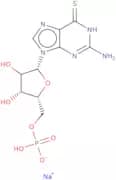
CAS:6-Thioguanosine-5'-O-monophosphate sodium salt is a nucleotide that is an endogenous purine nucleotide. It has been shown to inhibit the phosphorylation of adenosine monophosphate (AMP) by camp levels, which leads to increased cellular levels of cAMP and cyclic adenosine 3',5'-monophosphate (cAMP). 6TGMP has been shown to inhibit the growth of cancer cells in vitro, including hepatoma cells and ovcar-3 cells. This nucleotide also inhibits the activity of several growth factors, such as insulin-like growth factor 1 (IGF1), transforming growth factor beta (TGFβ), and fibroblast growth factor 2 (FGF2).Fórmula:C10H13N5O7PS·xNaPureza:Min. 95%Forma y color:PowderPeso molecular:378.28 g/molEthyl-2,4-diamino-pyrimidine-5-carboxylate
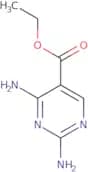
CAS:Ethyl-2,4-diamino-pyrimidine-5-carboxylate is a nucleoside that is used in the synthesis of ribonucleosides and deoxyribonucleosides. It has been shown to be an activator for DNA polymerase and an antiviral agent. Ethyl-2,4-diamino-pyrimidine-5-carboxylate binds to the enzyme DNA polymerase and stimulates its activity by facilitating the conversion of RNA into DNA. This drug also inhibits the replication of virus cells by inhibiting viral RNA synthesis.Fórmula:C7H10N4O2Pureza:Min. 95%Peso molecular:182.18 g/molO6-Chlorophenyl-I ce-phosphoramidite
CAS:Please enquire for more information about O6-Chlorophenyl-I ce-phosphoramidite including the price, delivery time and more detailed product information at the technical inquiry form on this pageFórmula:C52H64ClN6O8PSiPureza:Min. 95%Peso molecular:995.6 g/mol5-Fluorouridine-5'-monophosphate sodium salt - 10mM aqueous solution
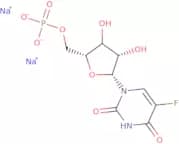
CAS:5-Fluorouridine-5'-monophosphate sodium salt is a nucleoside analog that is used as an antiviral drug. It inhibits viral DNA synthesis by competitive inhibition of thymidylate, which is a precursor for DNA synthesis. 5-Fluorouridine-5'-monophosphate sodium salt has been shown to be active against human pathogens and cancer cells in vitro. The enzyme activity of 5-fluorouridine-5'-monophosphate sodium salt can be inhibited by the presence of p-nitrophenyl phosphate, which is also a product of the enzymatic reaction. This may lead to synergistic effects in cells with both enzymes present.Fórmula:C9H12FN2O9PPureza:Min. 95%Forma y color:Colorless PowderPeso molecular:342.17 g/molThymidine 5'- triphosphate-3'-monophosphate
CAS:Thymidine 5'-triphosphate-3'-monophosphate is a nucleoside that is used in the synthesis of DNA. It is an activator of anticancer drugs, and has been shown to have antiviral properties. Thymidine 5'-triphosphate-3'-monophosphate can be used for the treatment of viral diseases such as herpes simplex virus type 1 (HSV-1), herpes simplex virus type 2 (HSV-2), cytomegalovirus (CMV), and human immunodeficiency virus (HIV) infection. This nucleoside also plays a role in the prevention of tumor growth and metastasis because it inhibits DNA synthesis.Fórmula:C10H18N2O17P4Pureza:Min. 95%Peso molecular:562.15 g/mol3-[2'-Deoxy-5'-O-DMT-b-D-ribofuranosyl]pyrido[2,3-d]pyrimidine-2,7(8H)-dione 3'-CE phosphoramidite
CAS:3-[2'-Deoxy-5'-O-DMT-b-D-ribofuranosyl]pyrido[2,3-d]pyrimidine-2,7(8H)-dione 3'-CE phosphoramidite is a synthetic compound that is a member of the class of brassinosteroids. It has been shown to activate the transcription factor NF-Y in vitro and in vivo. Brassinosteroids have been shown to have regulatory effects on plant tissue development, including normalization of cell growth, and are involved in the activation of cellulase activity. They also have been shown to increase the resistance of plants to environmental stresses such as drought.
Fórmula:C42H48N5O8PPureza:Min. 95%Peso molecular:781.83 g/mol2-Chloropyrimidine-4-carboxamide
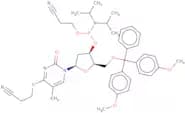
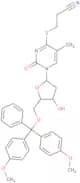
CAS:2-Chloropyrimidine-4-carboxamide is an activator that is a novel chemical entity of deoxyribonucleosides, phosphoramidites, ribonuclesides, and antiviral nucleosides. It has been shown to have high purity and quality. 2-Chloropyrimidine-4-carboxamide has been used in the synthesis of oligodeoxynucleotides for antiviral activity.Fórmula:C5H4ClN3OPureza:Min. 95%Peso molecular:157.56 g/mol4-(2-Cyanoethylthio)-5'-O-DMT-thymidine 3'-CE phosphoramidite
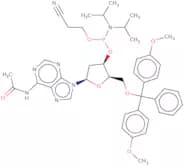
4-(2-Cyanoethylthio)-5'-O-DMT-thymidine 3'-CE phosphoramidite is a novel, modified nucleoside with antiviral activity. It is activated by the addition of a DMT group to its 5' end and has an anticancer effect. The monophosphate form of 4-(2-Cyanoethylthio)-5'-O-DMT-thymidine 3'-CE phosphoramidite has been shown to inhibit viral DNA synthesis in vitro and to be cytotoxic against human cancer cell lines. 4-(2-Cyanoethylthio)-5'-O-DMT- thymidine 3'-CE phosphoramidite is a high quality, high purity product that can be used as a nucleoside or nucleotide in anticancer drugs.Fórmula:C43H52N5O7PSPureza:Min. 95%Peso molecular:813.96 g/molN6-Acetyl-2'-deoxy-5'-O-DMT-adenosine 3'-CE phosphoramidite
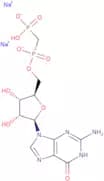
CAS:N6-Acetyl-2'-deoxy-5'-O-DMT-adenosine 3'-CE phosphoramidite is a novel, modified, activator with antiviral and anticancer properties. It is the monophosphate of the acetylated 2'-deoxyadenosine 3'-cyanoethylphosphoramidite and has been shown to be effective in inhibiting DNA synthesis in cell cultures. This product is synthesized using high purity reagents and purification techniques.Fórmula:C42H50N7O7PPureza:Min. 95%Forma y color:SolidPeso molecular:795.86 g/mola,b-Methyleneguanosine 5'-diphosphate sodium salt
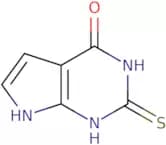
CAS:a,b-Methyleneguanosine 5'-diphosphate sodium salt is a chemical species that binds to the influenza virus neuraminidase. The drug binding site on the influenza virus neuraminidase has been identified in high resolution by NMR and X-ray crystallography. This drug is able to inhibit the release of infectious particles and prevent infection by the influenza virus, which is an important biological weapon in bioterrorism. The compound is not active against other viruses such as HIV and herpes simplex virus type 1. In addition, this chemical species also inhibits the activity of geniculate nucleus neurons and may be effective for treatment of chronic pain caused by nerve injury.Fórmula:C11H17N5O10P2·xNaPureza:Min. 95%Peso molecular:441.23 g/mol7-Deaza-2-mercaptohypoxanthine
CAS:7-Deaza-2-mercaptohypoxanthine is a nucleoside that has been found to have anticancer activity in vivo. It has also been shown to inhibit the replication of HIV and herpes simplex virus. 7-Deaza-2-mercaptohypoxanthine is an analog of hypoxanthine, which is a nucleoside that can be found in DNA and RNA. In addition, this compound can be used as a phosphoramidite or nucleotide analogue for the synthesis of DNA and RNA. This compound can also be used as an antiviral agent against herpes simplex virus type 1 (HSV1).Fórmula:C6H5N3OSPureza:Min. 95%Peso molecular:167.19 g/molN6-Benzoyl-2'-deoxy-5'-O-DMT-adenosine 3'-Rp-oxazaphospholidine
N6-Benzoyl-2'-deoxy-5'-O-DMT-adenosine 3'-Rp-oxazaphospholidine is an activator of DNA polymerase. It has been shown to be a potent inhibitor of viral replication and an anticancer agent in vitro. The compound has also been shown to inhibit the growth of tumor cells in vivo. N6-Benzoyl-2'-deoxy-5'-O-DMT-adenosine 3'-Rp-oxazaphospholidine is a novel nucleoside analogue that has not been previously reported.Pureza:Min. 95%5'-O-Benzoyl-2'-deoxyuridine
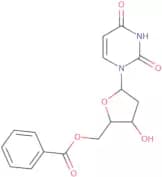
CAS:5'-O-Benzoyl-2'-deoxyuridine is a synthetic nucleoside that is a component of DNA. 5'-O-Benzoyl-2'-deoxyuridine is used as an antiviral agent and for the treatment of some cancers, including lymphomas, leukemia, and certain types of solid tumors. It has also been shown to be effective in the treatment of hepatitis B virus infection. This compound inhibits viral replication by competing with natural nucleosides for incorporation into DNA and RNA. 5'-O-Benzoyl-2'-deoxyuridine binds to double helix DNA at the groove between adenine and thymine bases and prevents further binding of nucleotides to this site. It also inhibits viral DNA synthesis by preventing conversion of ribonucleotides to deoxynucleosides. This drug is not active against bacteria or fungi; however, it can cause serious side effects such as pancreatitis and liver toxicity.Fórmula:C16H16N2O6Pureza:Min. 95%Peso molecular:332.32 g/molN4-Benzoyl-5'-O-DMT-2'-O-(2-methoxyethyl)cytidine 3'-CE phosphoramidite
Nucleoside phosphoramidite used in oligonucleotide synthesisFórmula:C49H58N5O10PPureza:Min. 95%Peso molecular:907.99 g/mol2-(Aminomethyl)pyrimidine oxalate
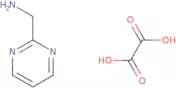
CAS:2-(Aminomethyl)pyrimidine oxalate is a substance that can be found in cicer arietinum. This compound has been shown to be tumorigenic, and it is hypothesized that the tumorigenicity of this compound is due to its ability to recombine with DNA and expressed genes, which may lead to the development of tumors. 2-(Aminomethyl)pyrimidine oxalate has been shown to activate translation of genes that are involved in tumorigenesis. The gene product which has been identified as being activated by 2-(aminomethyl)pyrimidine oxalate is called rhizogenes. Rhizogenes have been shown to have virulent phenotypes when exposed to cicer arietinum. With all these properties, it is believed that 2-(aminomethyl)pyrimidine oxalate may cause cancer or other harmful effects on organisms.br> br>Fórmula:C5H7N3·C2H2O4Pureza:Min. 95%Peso molecular:199.16 g/mol7-Methylinosine
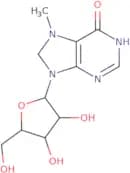
CAS:7-Methylinosine is a versatile compound that has various applications in different fields. It is used as an intermediate in the synthesis of drugs such as azasetron, eletriptan, and fructan. Additionally, it has been shown to have detergent properties that make it useful in cleaning products. 7-Methylinosine also plays a role in cholesterol metabolism and has been implicated in the development of fibrosis. Studies have found that this compound can inhibit the activity of enzymes involved in glucosinolate biosynthesis and may play a role in plant defense against pathogens. Furthermore, 7-Methylinosine has been isolated from Nocardia sp., which suggests its potential use as a source of novel bioactive compounds.Fórmula:C11H16N4O5Pureza:Min. 95%Peso molecular:284.27 g/molBis(2-cyanoethyl)-N,N-diisopropyl phosphoramidite
CAS:Bis(2-cyanoethyl)-N,N-diisopropyl phosphoramidite is a potent inhibitor that targets human immunodeficiency virus (HIV) and cancer. It acts as an analog of substrates for human plasma membrane kinases, which are essential for the replication of HIV. Bis(2-cyanoethyl)-N,N-diisopropyl phosphoramidite has been shown to inhibit lung metastasis in mice, indicating its potential therapeutic use against cancer. This compound also exhibits inhibitory activities against Escherichia coli alkaline phosphatase and other enzymes, suggesting its pharmacological activity may extend beyond HIV and cancer treatment. Overall, Bis(2-cyanoethyl)-N,N-diisopropyl phosphoramidite is a promising inhibitor with potential applications in multiple fields.Fórmula:C12H22N3O2PPureza:Min. 90 Area-%Forma y color:Slightly Yellow Clear LiquidPeso molecular:271.3 g/mol9-Deaza-2'-deoxyguanosine
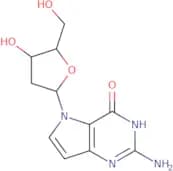
CAS:9-Deaza-2'-deoxyguanosine is a novel synthetic nucleoside that activates the ribonucleotide reductase enzyme. The activation of this enzyme was found to be dependent on the presence of diphosphate, which is a cofactor for this enzyme. 9-Deaza-2'-deoxyguanosine has been shown to inhibit the growth of cells in culture and to induce apoptosis. It also inhibits viral replication by interfering with the synthesis of viral DNA. In addition, 9-Deaza-2'-deoxyguanosine can inhibit tumor cell proliferation and promote differentiation in vitro.Fórmula:C11H14N4O4Pureza:Min. 95%Peso molecular:266.25 g/molS4-(2-Cyanoethyl)-5'-o-(dimethoxytrityl)-4-thiothymidine
CAS:S4-(2-Cyanoethyl)-5'-o-(dimethoxytrityl)-4-thiothymidine is a DNA analog that inhibits the growth of tumor cells. It binds to purine nucleosides and prevents the synthesis of DNA and RNA, which can lead to cell death. S4-(2-Cyanoethyl)-5'-o-(dimethoxytrityl)-4-thiothymidine has been shown to inhibit the growth of tumor cells in vitro. It is an effective inhibitor of HIV replication in vitro, but it does not have any antiviral activity against other viruses. This drug is a modified form of thymidine, which is an important component of DNA.Fórmula:C34H35N3O6SPureza:Min. 95%Peso molecular:613.7 g/mol7-Deaza-7-iodoadenosine
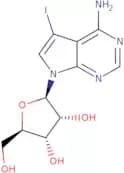
CAS:7-Deaza-7-iodoadenosine is a nucleotide that has been used in experiments to assess the levels of adenosine, a dinucleotide phosphate that is involved in many cellular functions. 7-deaza-7-iodoadenosine has been shown to inhibit locomotor activity in rats and cyclase activity in 3T3-L1 preadipocytes. It also inhibits the release of inflammatory proteins from polymorphonuclear leucocytes and angiogenesis (formation of new blood vessels) in liver cells. Although this nucleotide has not been extensively studied, it has been proposed as an antiinflammatory agent because it inhibits protein synthesis and downregulates proinflammatory proteins.
Fórmula:C11H13IN4O4Pureza:Min. 95%Peso molecular:392.15 g/mol












![5'- O- [Bis(4- methoxyphenyl) phenylmethyl] - thymidine 3'- (hydrogen phosphonate) ,compd. with N,…](/_next/image/?url=https%3A%2Fstatic.cymitquimica.com%2Fproducts%2F3D%2Fthumb-webp%2FNT158343.webp&w=3840&q=75)


![3-[2'-Deoxy-5'-O-DMT-b-D-ribofuranosyl]pyrido[2,3-d]pyrimidine-2,7(8H)-dione 3'-CE phosphoramidite](/_next/image/?url=https%3A%2Fstatic.cymitquimica.com%2Fproducts%2F3D%2Fthumb-webp%2FPD09988.webp&w=3840&q=75)