Toxinas
Se han encontrado 134 productos para "Toxinas".
Joro spider toxin
CAS:Joro spider toxin is a neurotoxic peptide, which is derived from the venom of the Joro spider (Trichonephila clavata). This toxin specifically targets neuronal ion channels and acts by modifying their activity, which can lead to alterations in neurotransmission processes. The mode of action involves binding to specific ion channel sites, altering their conformation and function, thereby affecting ionic conductance across neuronal membranes.Fórmula:C27H47N7O6Pureza:Min. 95%Peso molecular:565.71 g/molOuabain octahydrate
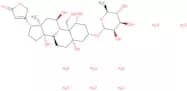
CAS:Na+/K+-ATPase inhibitor
Fórmula:C29H44O12·8H2OPureza:Min. 95%Forma y color:White PowderPeso molecular:728.77 g/molD-Tubocurarine chloride
CAS:D-Tubocurarine chloride is a neuromuscular blocking agent, which is a naturally occurring alkaloid derived from the bark and stems of Chondrodendron tomentosum, a plant native to South America. This compound functions by competitively binding to nicotinic acetylcholine receptors at the neuromuscular junction, inhibiting acetylcholine from transmitting nerve impulses to muscles. The result is skeletal muscle relaxation, which is crucial during surgical procedures where muscle paralysis is required for intubation or to ensure the absence of movement.
Fórmula:C37H42Cl2N2O6Pureza:Min. 95%Forma y color:PowderPeso molecular:681.64 g/molPicrotoxinin
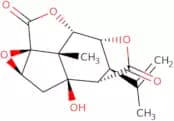
CAS:Picrotoxinin is a sesquiterpene lactone, which is a naturally occurring compound derived from the seeds of plants in the Annonaceae family, specifically the species Anamirta cocculus. This compound plays a critical role as a non-competitive antagonist at the GABA_A receptor, interfering with the inhibitory effects of gamma-aminobutyric acid (GABA) in the central nervous system by blocking the associated chloride ion channel.
Fórmula:C15H16O6Pureza:Min. 95%Forma y color:PowderPeso molecular:292.28 g/molAndromedotoxin
CAS:Andromedotoxin is a naturally occurring toxin derived from the plants of the genus Rhododendron, known for its potent effects on ion channels within biological systems. This compound, primarily sourced from certain species within the Ericaceae family, functions by binding to sodium channels in nerve cells. By altering the permeability of these channels, it disrupts normal neuronal activity, leading to potential neurotoxic outcomes.
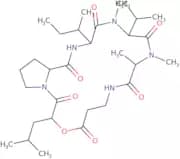
Fórmula:C22H36O7Pureza:Min. 95%Forma y color:PowderPeso molecular:412.52 g/molDestruxin A
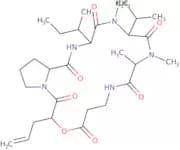
CAS:Destruxin A is a cyclodepsipeptide, which is a specialized secondary metabolite originating from the entomopathogenic fungus, Metarhizium anisopliae. This bioactive compound exerts its effects through a multifaceted mode of action, primarily disrupting ion channels and perturbing cellular homeostasis within insect hosts. The interference with calcium and potassium ion fluxes leads to paralysis and ultimately death of the targeted pests, making it an effective biocontrol agent. Destruxin A holds significant potential in integrated pest management programs, particularly in agriculture, where it offers a sustainable alternative to synthetic chemical pesticides. Its specificity to insect physiology ensures minimal impacts on non-target organisms, promoting ecological balance. Studies continue to explore its application spectrum and effectiveness, seeking to optimize its deployment in various pest-infested environments, including crops and stored products.
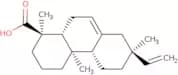
Fórmula:C29H47N5O7Pureza:Min. 95%Forma y color:PowderPeso molecular:577.71 g/molIsopimaric acid
CAS:Isopimaric acid is a natural diterpene resin acid, which is derived primarily from the oleoresin of coniferous trees, specifically from the genus Pinus. It is a constituent of the resin exuded by pine trees and is often obtained through the distillation or extraction of pine resin.Fórmula:C20H30O2Pureza:(%) Min. 98%Forma y color:PowderPeso molecular:302.45 g/molKT5720
CAS:KT5720 is a selective protein kinase A (PKA) inhibitor, which is a synthetic chemical compound often utilized in laboratory research. The source of this compound stems from chemical synthesis processes used to investigate intracellular signaling pathways. Its mode of action involves competitive inhibition, where it binds to the ATP-binding site on the PKA enzyme, thereby obstructing the enzyme's activity and preventing the phosphorylation of target substrates.
Fórmula:C32H31N3O5Pureza:Min. 98 Area-%Forma y color:PowderPeso molecular:537.61 g/molFumonisin B2
CAS:Fumonisin B2 is a mycotoxin, which is a naturally occurring toxin produced by certain species of fungi. Specifically, it is produced by Fusarium species, such as Fusarium verticillioides and Fusarium proliferatum, commonly found in cereal crops like corn. This mycotoxin disrupts cellular lipid metabolism, particularly the sphingolipid pathway, by inhibiting the enzyme ceramide synthase. This disruption can lead to cell dysfunction and contributes to the pathogenesis of animal diseases.Pureza:Min. 95%Penicillic Acid
CAS:Penicillic Acid is a mycotoxin, which is derived primarily from molds of the Penicillium and Aspergillus species. This secondary metabolite is a concern due to its toxicological properties. The mode of action of Penicillic Acid involves the inhibition of key enzymes, affecting cellular metabolic processes which can result in cytotoxic effects observed in various biological systems.Pureza:Min. 95%Destruxin B
CAS:Destruxin B is a mycotoxin, which is a secondary metabolite derived from the fungus *Metarhizium anisopliae*. This compound acts as an insecticidal agent by disrupting calcium homeostasis in target insects, leading to paralysis and eventually death.
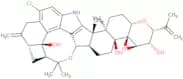
Pureza:Min. 95%Penitrem A
CAS:Penitrem A is a potent mycotoxin, which is a secondary metabolite produced predominantly by the fungi of the genus *Penicillium*, particularly *Penicillium crustosum*. It operates primarily as a tremorgenic compound, affecting the neuromuscular systems through interference with neurotransmitter release mechanisms. Penitrem A achieves this by blocking calcium channels and modulating the function of neurotransmitter release sites at nerve terminals, leading to its characteristic effects on the nervous system.Pureza:Min. 95%Zearalanone
CAS:Zearalanone is a mycotoxin that is produced by certain species of the Fusarium fungi. This compound is structurally related to the known mycotoxin zearalenone, and it exhibits similar functionalities. It is primarily found in grains such as maize, barley, oats, wheat, and rice that have been contaminated by these fungi. The mode of action of zearalanone involves its mimicry of estrogenic activity. It binds to estrogen receptors in various tissues, disrupting normal endocrine functions. This disruption can have significant implications in both human and animal health, leading to reproductive issues and developmental anomalies.
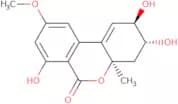
Pureza:Min. 95%Altenuene
CAS:Altenuene is a mycotoxin, which is a secondary metabolite produced by fungi, primarily belonging to the genus Alternaria. It is typically derived from fungal cultures that grow on plant material, especially in agricultural settings. Altenuene’s mode of action involves interacting with cellular components to disrupt normal cell function, demonstrating notable antifungal and phytotoxic effects.
Pureza:Min. 95%Neosolaniol
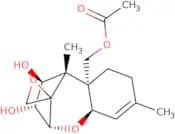
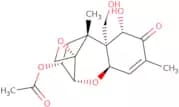
CAS:Neosolaniol is a type of trichothecene mycotoxin, which is a fungal metabolite primarily produced by certain Fusarium species. These fungi are prolific contaminants found in a variety of cereal grains and other crops worldwide. The mode of action of neosolaniol involves the inhibition of protein synthesis within eukaryotic cells by binding to ribosomes, thereby disrupting normal cellular function and leading to cytotoxic effects.Pureza:Min. 95%15Acetoxyscirpenol
CAS:15Acetoxyscirpenol is a trichothecene mycotoxin, which is a secondary metabolite produced by certain species of fungi, particularly those within the Fusarium genus. This compound acts by inhibiting protein synthesis through its interaction with the ribosome, leading to cytotoxic effects on eukaryotic cells. This mode of action makes 15Acetoxyscirpenol a potent inhibitor of cellular proliferation, and it is often used in scientific research to investigate the mechanisms behind cell cycle regulation, apoptosis, and other cellular processes.
Fórmula:C17H24O5Pureza:Min. 95%Peso molecular:324.37 g/molConvallatoxin
CAS:Convallatoxin is a cardiac glycoside, which is derived from the plant Convallaria majalis, commonly known as lily of the valley. This compound operates by specifically inhibiting the Na+/K+-ATPase enzyme, a crucial membrane-bound ion pump that maintains the electrochemical gradients of sodium and potassium ions across the cell membrane. Inhibition of this enzyme leads to an increase in intracellular sodium levels, subsequently affecting calcium ion exchange and resulting in enhanced cardiac contractility.
Fórmula:C29H42O10Pureza:Min. 95%Forma y color:PowderPeso molecular:550.64 g/mol3-Acetyl-DON
CAS:3-Acetyl-DON is a mycotoxin, specifically a trichothecene, which is primarily produced by Fusarium species. This compound is an acetylated derivative of deoxynivalenol (DON), often encountered in contaminated cereals and grains. Its source, Fusarium fungi, is prevalent in agricultural crops, especially during humid weather conditions.Pureza:Min. 95%Fusarenon X
CAS:Fusarenon X is a mycotoxin, which is a secondary metabolite produced by certain species of the Fusarium fungi. This compound is primarily derived from Fusarium graminearum and Fusarium crookwellense, which are fungi commonly found in various cereal grains, particularly in temperate regions.Pureza:Min. 95%Fumonisin B3
CAS:Fumonisin B3 is a mycotoxin compound, which is a secondary metabolite produced by molds, particularly those belonging to the Fusarium species. It is primarily found in cereal grains such as maize, where these fungi commonly thrive in specific environmental conditions. With a structure related to sphingoid bases, Fumonisin B3 interferes with sphingolipid metabolism by inhibiting the ceramide synthase enzyme. This disruption leads to the accumulation of sphinganine and a reduction in complex sphingolipids, affecting cell membrane integrity and signaling pathways.Fórmula:C34H59NO14Pureza:Min. 95%Forma y color:PowderPeso molecular:705.83 g/mol