Carbohidratos y glucoconjugados
Los carbohidratos son compuestos orgánicos formados por carbono, hidrógeno y oxígeno, y su estructura básica está constituida por monosacáridos. Estos se pueden unir para formar disacáridos, oligosacáridos o polisacáridos, dependiendo de la cantidad de unidades monoméricas. Los carbohidratos tienen un papel fundamental en el almacenamiento de energía, la estructura celular y la comunicación celular. Sus derivados se utilizan en productos farmacéuticos, como edulcorantes y excipientes.
En CymitQuimica disponemos de una amplia variedad de carbohidratos y sus derivados para investigación y aplicaciones industriales.
Se han encontrado 5013 productos de "Carbohidratos y glucoconjugados"
Ordenar por
Pureza (%)
0
100
|
0
|
50
|
90
|
95
|
100
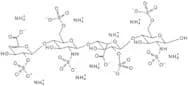
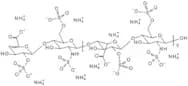
Heparin derived dp4 saccharide ammonium
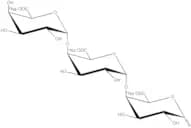
CAS:<p>Heparin is a linear sulphated polysaccharide comprising contiguous disaccharide units of a uronic acid and a derivative of 2-amino-2-deoxy-D-glucose. The heparin tetrasaccharide can be obtained from the degradation of heparin with the lyase enzymes isolated from Flavobacterium heparinum, which yields oligosaccharides terminated at the non-reducing end by the unsaturated unit, 4-deoxy-α-L-threo-hex-4-enopyranosyl uronic acid or its 2-0-sulphated derivative. The major product following lyase degradation is the trisulphated derivative DUA-2S + GlcNS-6S (unsaturated disaccharide). Other oligosaccharides such as the tetrasaccharide, illustrated below, can be produced by the lytic degradation of heparin (Moffat, 1991).</p>Fórmula:C24H40N2O39S6•(NH3)xPureza:Of Main Disaccharide Unit Approx. 75%Forma y color:PowderPeso molecular:Av 1200Methyl syringate 4-O-β-D-gentiobiose
<p>Methyl syringate 4-O-beta-D-gentiobiose is a modification, which is an oligosaccharide carbohydrate complex. It is synthesized by custom synthesis and has a high purity. It is a CAS number and has the molecular formula C12H20O9. This compound can be found in nature as a monosaccharide or polysaccharide sugar. The methylation of this compound can produce methyl syringate 4-O-beta-D-gentiobiose.</p>Fórmula:C22H22O15Peso molecular:526.4 g/molCellobionic acid ammonium salt
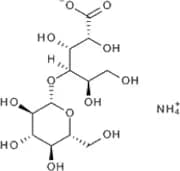
CAS:<p>Cellobionic acid is produced by oxidative enzymes working on cellulose. These compounds have found application in cosmetic antiaging formulations, moisturizers, and peels, and in treatment products to improve hyperpigmentation and acne. The bionic acids such as cellobionic acid offer the benefits of α-hydroxyacids without irritation. They also provide additional antioxidant/chelation, barrier strengthening, and moisturizing effects.</p>Fórmula:C12H25NO12Pureza:Min. 95%Forma y color:Off-White PowderPeso molecular:375.33 g/molMaltose syrup
<p>Used for making baked goods, soft drinks, sweets, alcoholic drinks, and infant food. It is also used to produce the sugar substitute maltitol.</p>Pureza:Min. 95%Maltodextrin - dextrose equivalent 13.0-17.0
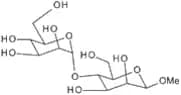
CAS:<p>Produced from starch; white hygroscopic spray-dried powder; easily digestible</p>Pureza:Min. 95%Forma y color:White PowderMethyl 4-O-(a-D-mannopyranosyl)-b-D-mannopyranoside
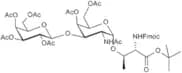
<p>Methyl 4-O-(a-D-mannopyranosyl)-b-D-mannopyranoside is a synthetic glycosylated oligosaccharide, which is a polysaccharide composed of various monosaccharides. Methyl 4-O-(a-D-mannopyranosyl)-b-D-mannopyranoside is a mannosylated derivative of the sugar, methyl 4-O-(a -D-mannopyranosyl) b -D -mannopyranoside. This sugar can be used as an intermediate in the synthesis of other sugars and carbohydrates. It has also been used to synthesize glycoproteins for use in immunology research.</p>Fórmula:C13H24O11Pureza:Min. 95%Peso molecular:356.32 g/mol2-Acetamido-3-O-(2,3,4,6-tetra-O-acetyl-b-D-galactopyranosyl)-4,6-di-O-acetyl-2-deoxy-a-D-galactopyranosyl-Fmoc-L-threonine tert-but yl ester
<p>2-Acetamido-3-O-(2,3,4,6-tetra-O-acetyl-b-D-galactopyranosyl)-4,6-di-O-acetyl-2,6 -deoxy--a-,D-,galactopyranosyl--Fmoc--L--threonine tert--but yl ester is a synthetic carbohydrate that contains 2 acetamido groups and 3 O-(2,3,4,6 tetra O acetyl b D galactopyranosyl) groups. The chemical name for this compound is 2 Acetamido 3 O (2 3 4 6 tetra O acetyl b D galactopyranosyl) 4 6 di O acetyl 2 deoxy a D galactopyranosyl Fmoc L threonine tert but yl ester. It has been synthesized by the Click modification reaction of an oligos</p>Fórmula:C49H62N2O21Pureza:Min. 95%Peso molecular:1,015.02 g/molN-Acetylneuraminic acid-OVA
<p>N-Acetylneuraminic acid-OVA refers to ovalbumin that has been conjugated with N-acetylneuraminic acid (Neu5Ac), a type of sialic acid. Sialic acids are important components of glycan structures and play various roles in biological processes, such as cell-cell interactions, immune response, and pathogen recognition. Conjugation of ovalbumin with N-acetylneuraminic acid can be used as a tool to study sialic acid-mediated biological phenomena or as an immunogen to elicit a specific immune response.</p>Forma y color:PowderHeparin derived dp12 Saccharide ammonium salt
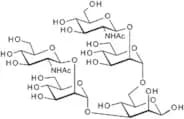
<p>Heparin is a carbohydrate that is derived from the mucopolysaccharide heparin. It is a complex carbohydrate that consists of a chain of alternating N-acetylglucosamine and glucuronic acid. Heparin is used as an anticoagulant to prevent blood clotting, which may occur due to injury or during surgery. Heparin's use in medicine has been limited by its low solubility and rapid clearance from the body. Recently, it has been modified with a fluorine atom on the sugar ring, which increases their solubility and bioavailability. Click chemistry can be used to attach other molecules to the saccharide ammonium salt in order to modify the properties of heparin. This modification can be done with methyl groups or glycosyl groups, and it can also be done with other sugars such as galactose or glucose.</p>Pureza:Min. 95%Forma y color:PowderPeso molecular:~3550 (Average)Bianntennary N-linked core pentasaccharide
<p>The bianntennary N-linked core pentasaccharide is an oligosaccharide that contains a biantennary glycan and a high purity. This product can be custom synthesized with custom modifications. The bianntennary N-linked core pentasaccharide is an excellent substrate for Click modification, fluorination, and glycosylation reactions. It has been shown to have antiviral activity against herpes simplex virus type 1 (HSV-1) in the guinea pig erythrocyte assay. This product has been methylated at the 6 position of the sugar moiety to yield a modified form.</p>Fórmula:C34H58N2O26Pureza:Min. 95 Area-%Forma y color:White PowderPeso molecular:910.82 g/mol6-O-(a-D-Mannopyranosyl)-D-mannose
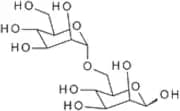
CAS:<p>Produced by the reverse hydrolysis of a mannose substrate. Isolated from the partial hydrolysates of bakers' yeast (Saccharomyces cerevisiae) mannan. This disaccharide also forms the sugar portion of the phospholipid, phosphatidylinositodimannoside, of Mycobacterium tuberculosis.</p>Fórmula:C12H22O11Pureza:Min. 95%Forma y color:White PowderPeso molecular:342.3 g/mol1-O-(α-Glucopyranosyl)-D-mannitol dihydrate
CAS:<p>Inulin is a naturally occurring plant carbohydrate that is present in over 36,000 species of plants. Inulin can be found in the roots, tubers, and leaves of various plants. It is used as a food additive and as an ingredient in dietary supplements. Inulin has been shown to have clinical relevance for energy metabolism and fatty acid synthesis. It has also been shown to be effective against inflammatory bowel disease when used as a prebiotic. Isomalt (inositol hexaphosphate) is an artificial sweetener that is often used in sugar-free products such as chewing gum or candy. Anthelmintic drugs are medications that kill worms, which may include nematodes or cestodes. Probiotics are live bacteria that can provide health benefits to humans when consumed in adequate amounts. Acid formation refers to the process by which the stomach produces hydrochloric acid to digest food during digestion. Symptoms of bowel disease include diarrhea and abdominal pain. Water vapor refers to water molecules</p>Fórmula:C12H24O11•2H2OPureza:Min. 95%Forma y color:PowderPeso molecular:380.34 g/molTrehalose hexaacetate
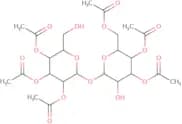
CAS:<p>Trehalose hexaacetate is a polysaccharide that is used as a food additive. It has been shown to be a potent inhibitor of methylation and fluorination, which are post-translational modifications that are important for the function of proteins. Trehalose hexaacetate also has a high degree of glycosylation, which makes it an excellent candidate for complex carbohydrate synthesis. The compound can be custom synthesized with high purity and at low cost.</p>Fórmula:C24H34O17Pureza:Min. 95 Area-%Forma y color:PowderPeso molecular:594.52 g/molHyaluronic acid tetrasaccharide
CAS:<p>Hyaluronic acid is a polysaccharide containing repeating disaccharide units of 1,3-N-acetyl glucosamine and 1, 4-glucuronic acid. This tetrasaccharide and other enzymatically produced polymer homologs have been of value in the study of hyaluronic acid metabolism in both healthy and diseased tissues (Hascall, 2019).</p>Fórmula:C28H44N2O23Pureza:Min. 95%Forma y color:White PowderPeso molecular:776.65 g/mol2'-O-Fucosyllactulose
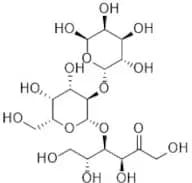
CAS:<p>2'-O-Fucosyllactulose is a modified carbohydrate that has been synthesized from a natural source. It is an oligosaccharide that contains the monosaccharide, fucose. This product can be used in the synthesis of polysaccharides and glycosylation reactions. 2'-O-Fucosyllactulose has been methylated, fluorinated, and glycosylated, which makes it suitable for use as a sugar in biotechnology applications.</p>Fórmula:C18H32O15Pureza:Min. 90 Area-%Forma y color:PowderPeso molecular:488.44 g/molLacto-N-fucopentaose V
CAS:<p>Human milk oligosaccharide; binds cholera toxin TcdA</p>Fórmula:C32H55NO25Pureza:Min. 80%Forma y color:PowderPeso molecular:853.77 g/molMethyl 2-acetamido-2-deoxy-3-O-(a-L-fucopyranosyl)-b-D-glucopyranoside
CAS:<p>Methyl 2-acetamido-2-deoxy-3-O-(a-L-fucopyranosyl)-b-D-glucopyranoside is a glycosylation product of the natural sugar, galactose. It is a synthetic compound that has been modified with methyl groups and fluorine to form an active pharmaceutical ingredient. Methyl 2-acetamido-2-deoxy-3-O-(a-L-fucopyranosyl)-b-D-glucopyranoside can be used as a monosaccharide or oligosaccharide in the synthesis of complex carbohydrates.</p>Fórmula:C15H27NO10Pureza:Min. 95%Forma y color:PowderPeso molecular:381.38 g/molGalacturonan DP3 sodium salt
<p>Sodium Trigalacturonate (α-1,4 sodium galacturonotriose) is derived from pectin or pectic acid, by enzymatic or partial acid hydrolysis (Combo, 2012). It is used inâ¯galacturonic acidâ¯metabolism research as a substrate to identify, differentiate, and characterize endo- and exopolygalacturonase(s), and gluconase(s) (Jayani, 2005). The addition of very short fragments of homogalacturonan, tri-galacturonate, and tetra-galacturonate oligosaccharides, restore development in dark-grown, de-etiolated seedling mutants, suggesting that they are unable to generate de-methylesterified pectin fragments. A model of spatiotemporally separated photoreceptive and signal-responsive cell types has been proposed, that contains overlapping subsets of the regulatory network of light-dependent seedling development (Sinclair, 2017).</p>Pureza:Min. 75 Area-%Forma y color:Powder4-Cyclohexylbutyl-4-O-(α-D-glucopyranosyl)-β-D-glucopyranoside
CAS:<p>For more than two decades, there has been substantial interest in developing novel membrane mimics specifically targeted for the biochemical and biophysical characterization of membrane proteins. Examples include new types of detergents, such as cycloalkyl maltosides (CYMAL detergents).</p>Fórmula:C22H40O11Forma y color:PowderPeso molecular:480.55 g/molBlood Group B trisaccharide-PAA-Biotin
<p>Blood group antigen conjugated to spacer and biotin</p>Pureza:Min. 95 Area-%Forma y color:PowderPeso molecular:545.5 g/mol5-(Dimethylamino)naphthalene-1-sulfonamidooctyl-O-(a-D-galactopyranosyl)-1,4-(b-D-galactopyranosyl)-1,4-b-D-glucopyranose
<p>The compound is an oligosaccharide with a complex carbohydrate. The product is custom synthesized and has been modified by fluorination. It is a high purity, synthetic monosaccharide sugar that is methylated.</p>Pureza:Min. 95%2-Acetamido-4-O-(2-acetamido-2-deoxy-β-D-glucopyranosyl)-2-deoxy-D-muramic acid
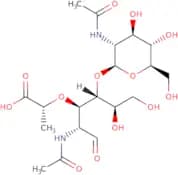
CAS:<p>A MurNAc disaccharide</p>Fórmula:C19H32N2O13Pureza:Min. 95 Area-%Forma y color:PowderPeso molecular:496.46 g/molGM1-Pentasaccharide labelled by biotin
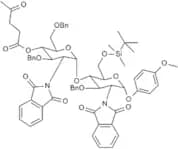
<p>GM1 pentasaccharide biotin (sodium salt) has a core tetrasaccharide structure (Galβ1,3GalNAcβ1,4Galβ1,4Glc) with sialic acid linked α2,3 to the inner galactose residue and biotin linked β to position 1 on the reducing glucose moiety (Ledeen, 2009). The parent ganglioside GM1 is abundant in all mammalian brains, where it covers 10%-20% of the total ganglioside mixture. It is found in epithelial membranes and is a key element for bacterial toxicity and viral infection as it is the intestinal receptor for cholera toxin the B-subunits of heat-labile toxin, rotavirus, and simian virus 40. GM1 ganglioside functions as a neurotrophic and neuroprotective compound and has been used therapeutically for diabetic and peripheral neuropathies. GM1 ganglioside also has the ability to bind amyloid-β proteins and is involved in Alzheimerâs pathogenesis (Chiricozzi, 2020).</p>Fórmula:C50H83N5O31SPureza:Min. 95%Forma y color:White PowderPeso molecular:1,282.28 g/mol4-Methoxyphenyl 4-O-(3,6-di-O-benzyl-2-deoxy-4-O-levulinoyl-2-phthalimido-β-D-glucopyranosyl)-6-O-tert-butyldimethylsilyl-3-O-benzyl -2-deoxy-2-phthalimido-β-D-glucopyranoside
<p>4-Methoxyphenyl 4-O-(3,6-di-O-benzyl-2-deoxy-4-O-levulinoyl-2-phthalimido-b-D-glucopyranosyl)-6-O-tert butyldimethylsilyl 3,O benzyl 2 deoxy 2 phthalimido b D glucopyranoside is a custom synthesis of a synthetic oligosaccharide. This glycosylation product is soluble in water and has CAS No. of 81238.</p>Fórmula:C67H72N2O16SiPureza:Min. 95%Peso molecular:1,189.38 g/molLaminaripentaose
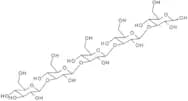
CAS:<p>Ex algal/bacterial polysaccharides-value in b1-3 glucanase assays & diagnostics</p>Fórmula:C30H52O26Pureza:Min. 85 Area-%Forma y color:PowderPeso molecular:828.72 g/molTrehalose-6,6'-dibehenate
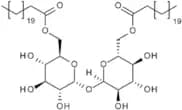
CAS:<p>Trehalose-6,6'-dibehenate (TDB) is a novel synthetic lipid that has been shown to have beneficial effects in the treatment of inflammatory bowel disease. This compound may act as an anti-inflammatory agent by inhibiting toll-like receptor 4 (TLR4)-mediated signaling and TLR4-dependent production of proinflammatory cytokines. TDB also inhibits HIV infection by interfering with CD4+ T cell function and decreasing the number of CD4+ cells in the gut. In addition, TDB has been shown to be effective against lps-induced inflammatory response in cell culture.</p>Fórmula:C56H106O13Pureza:One SpotForma y color:PowderPeso molecular:987.43 g/molGlobotriose
CAS:<p>an important cell surface epitope that acts as the receptor for Shiga-like toxin</p>Fórmula:C18H32O16Pureza:Min. 95%Forma y color:PowderPeso molecular:504.44 g/molMaltopentaose
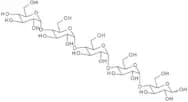
CAS:<p>Alpha-1,4-glucopentasaccharide derived from starch by hydrolysis and chromatography</p>Fórmula:C30H52O26Pureza:Min. 90 Area-%Forma y color:White PowderPeso molecular:828.72 g/molHuman milk neutral tetrasaccharides
<p>Mainly a mixture of Lacto-N-tetraose, Lacto-N-neo-tetraose, Lactodifucotetraose</p>Pureza:Min. 95%Forma y color:PowderD-Cellotetraose
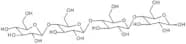
CAS:<p>Substrate for cellulases</p>Fórmula:C24H42O21Pureza:Min. 95 Area-%Forma y color:White Off-White PowderPeso molecular:666.58 g/molGlycyl-lacto-N-fucopentaose VI
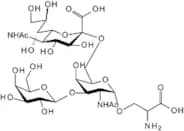
<p>Glycyl-lacto-N-fucopentaose VI is a polysaccharide that is synthesized by the enzymatic activity of glycosylase, methylase, and fluorinase. It can be modified with click chemistry to introduce a fluorine atom at the C4 position of the glucose molecule. This modification can be used for the synthesis of oligosaccharides. Glycyl-lacto-N-fucopentaose VI has CAS number 108897-96-5 and is available in high purity and custom synthesis.</p>Fórmula:C34H59N3O25Pureza:Min. 95%Peso molecular:909.84 g/mol6-Sialylgalacto-N-biosyl-serine
<p>6-Sialylgalacto-N-biosyl-serine is a custom synthesis product that has been fluorinated and modified. The material is an Oligosaccharide, Polysaccharide, saccharide, Carbohydrate, Fluorination, complex carbohydrate with a CAS number of 60919-07-2. It is highly pure with a purity of > 98% by HPLC analysis. The modification on the sugar molecule includes Click chemistry and Methylation. The monosaccharide sugar is the saccharide part of the molecule.</p>Fórmula:C28H47N3O21Pureza:Min. 95%Forma y color:White/Off-White SolidPeso molecular:761.68 g/mol1,6-anhydrochitobiose
<p>1,6-Anhydrochitobiose is an anhydosugar that can be used in the synthesis of oligosaccharides and polysaccharides</p>Fórmula:C12H22N2O8Peso molecular:322.39 g/molSodium alginate, Laminaria Hyperborea
CAS:<p>Sodium alginate is a biocompatible polymer that is used in the treatment of wastewater. It is a water-soluble substance that forms a viscous solution when dissolved in water. Sodium alginate has been shown to inhibit the growth of bacteria and fungi, as well as to reduce the number of coliforms and other microorganisms in water. The potential for an alginate to be biocompatible depends on its chemical structure, with Laminaria Hyperborea being the most biocompatible. Alginates have been shown to have surface properties that are similar to those of natural tissue, making them useful for wound dressings.</p>Fórmula:C6H9NAO7Forma y color:PowderPeso molecular:216.12 g/molGalacturonan DP5 sodium salt
<p>Sodium Pentagalacturonate, (β-1,4 sodium Pentagalacturonate) is derived from pectin or pectic acid, by enzymatic or partial acid hydrolysis (Combo, 2012). It is used inâ¯galacturonic acidâ¯metabolism research as a substrate to identify, differentiate, and characterize endo- and exopolygalacturonase(s), and gluconase(s) (Jayani, 2005). The addition of very short fragments of homogalacturonan, tri-galacturonate, tetra-galacturonate, and penta-galacturonate oligosaccharides, restore development in dark-grown, de-etiolated seedling mutants, suggesting that they are unable to generate de-methylesterified pectin fragments. A model of spatiotemporally separated photoreceptive and signal-responsive cell types has been proposed, that contains overlapping subsets of the regulatory network of light-dependent seedling development (Sinclair, 2017).</p>Pureza:(Hpaec-Pad) Min. 65%Forma y color:PowderMaltodextrin - dextrose equivalent 16.5-19.5
CAS:<p>Produced from starch by partial hydrolysis. White hygroscopic spray-dried powder, easily digestible, either moderately sweet or almost flavorless (depending on the degree of polymerisation).</p>Forma y color:White Powder4-Methoxyphenyl 4-O-(3,6-di-O-benzyl-2-deoxy-2-phthalimido-b-D-glucopyranosyl)-3,6-di-O-benzyl-2-deoxy-2-phthalimido-b-D-glucopyrano side
CAS:<p>4-Methoxyphenyl 4-O-(3,6-di-O-benzyl-2-deoxy-2-phthalimido-b-D-glucopyranosyl)-3,6-di-O-benzyl-2-deoxy -2 -phthalimido -b -D -glucopyrano side is a custom synthesis of a complex carbohydrate. It has a CAS number of 140615‑82‑3 and can be found in glycosylations, carbohydrates, methylation, sugar, fluorination. It is high purity with a lot of modifications.</p>Fórmula:C63H58N2O14Pureza:Min. 95%Peso molecular:1,067.14 g/molGlycyl-asialo, galactosylated biantennary
<p>Glycyl-asialo, galactosylated biantennary is a high purity custom synthesis of sugar. Glycyl-asialo, galactosylated biantennary is custom synthesized by the click modification of glycosylation and fluorination with methylation and modification. The CAS number for glycyl-asialo, galactosylated biantennary is **********.</p>Fórmula:C64H108N6O46Pureza:Min. 95%Peso molecular:1,697.56 g/molMan-8 Glycan, 2-AB labelled
<p>Man-8 Glycan, 2-AB labelled is a carbohydrate, modification. It is a saccharide that has been fluorinated and modified with methylation and glycosylation. It has a CAS number of 7071-83-0, and is available for custom synthesis. This product has high purity, is synthetic, and can be modified with a click modification. The molecular weight of this product is 604.</p>Pureza:Min. 95%Blood group B trisaccharide
CAS:<p>Core antigen fragment in ABO blood group system</p>Fórmula:C18H32O15Pureza:Min. 95%Forma y color:White PowderPeso molecular:488.44 g/mol1,4-β-D-Xylohexaose
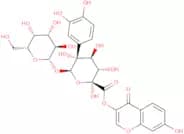
CAS:<p>1,4-beta-D-xylohexaose is a sugar that belongs to the group of xylooligosaccharides. It is an enzymatic inactivator that binds to the enzyme hydrolase family. Xylooligosaccharides are found in plant cell walls, where they can be used as a carbon source by termites. 1,4-beta-D-xylohexaose has been shown to be most active against neutral ph, but it is not active against acidic ph. The enzyme hydrolase family is inhibited by binding with 1,4-beta-D-xylohexaose and this prevents hydrolysis of carbohydrates, which includes glycosidic bonds.br>br><br>1,4-beta-D-xylohexaose has also been shown to be beneficial for sustainable agriculture practices as it inhibits enzymes that break down xylooligosaccharides</p>Fórmula:C30H50O25Pureza:Min. 95%Forma y color:PowderPeso molecular:810.7 g/mol2-(3,4-Dihydroxyphenyl)-5,7-dihydroxy-4-oxo-4H-1-benzopyran-3-yl O-b-D-galactopyranosyl-b-D-glucopyranosiduronic acid
CAS:<p>This is a custom synthesis that is a complex carbohydrate. It has been modified, glycosylated, and methylated to create a saccharide with an Oligosaccharide and Polysaccharide. This product is fluorinated, custom synthesized, and has high purity. The CAS number for this product is 77154-70-2.</p>Fórmula:C27H28O18Pureza:Min. 95%Peso molecular:640.5 g/molLacto-N-biose
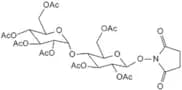
CAS:<p>Neutral disaccharide naturally present in human breast milk and possible bifidus factor, acceptor for the Helicobacter pylori enzyme α1,2-fucosyltransferase and disaccharide involved in the expression of Lewis blood group antigens.</p>Fórmula:C14H25NO11Pureza:Min. 90%Forma y color:White PowderPeso molecular:383.35 g/molO-(2,2',3,3',4',6,6'-Hepta-O-acetyl-b-D-maltosyl)-N-hydroxysuccinimide
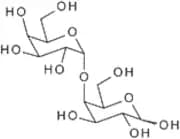
<p>O-(2,2',3,3',4',6,6'-Hepta-O-acetyl-b-D-maltosyl)-N-hydroxysuccinimide is a methylating reagent that is used in the synthesis of glycosides. It can be used to modify saccharides and polysaccharides with the desired sugar moiety.</p>Fórmula:C30H39NO20Pureza:Min. 95%Peso molecular:733.64 g/mol4-O-(a-D-Galactopyranosyl)-D-galactopyranose
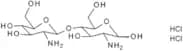
CAS:<p>Used as enzyme substrates, analytical standards and for in vitro diagnostics</p>Fórmula:C12H22O11Pureza:Min. 97 Area-%Forma y color:White PowderPeso molecular:342.3 g/molChitobiose dihydrochloride
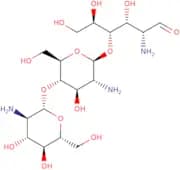
CAS:<p>Chitobiose is a dimer formed by beta-1,4-linked glucosamine units.<br>It is also the repeated dimer of chitin, a polysaccharide.</p>Fórmula:C12H24N2O9·2HClPureza:Min. 98 Area-%Forma y color:White PowderPeso molecular:413.25 g/molChitotriose trihydrochloride
CAS:<p>Chitotriose trihydrochloride is a modification of chitin, an oligosaccharide. Chitotriose trihydrochloride is a synthetic carbohydrate which is used as a raw material for the production of fibers, films, and adhesives. It can be used in the synthesis of complex carbohydrates such as starch and glycogen. Chitotriose trihydrochloride is a high purity carbohydrate with CAS No. 41708-93-4 that can be used to produce glycosylated proteins or polysaccharides.</p>Fórmula:C18H35N3O13·3HClPureza:Min. 95 Area-%Forma y color:PowderPeso molecular:610.87 g/molIsomaltoheptaose
CAS:<p>Produced from high maltose syrup by treatment with transglucosidase</p>Fórmula:C42H72O36Pureza:Min. 90 Area-%Forma y color:White PowderPeso molecular:1,153 g/molGM3-Ganglioside sodium
CAS:<p>Ganglioside GM3 (sodium salt) has a core disaccharide structure (Galβ1,4Glc) with sialic acid linked α2,3 to the galactose residue and ceramide linked β to position 1 on the reducing terminal glucose residue (Ledeen, 2009). Ganglioside GM3 is strongly associated with human tumors, such as: lung, brain and melanomas, where it is over expressed. It is seen as a possible tumor-associated carbohydrate antigen for cancer immunotherapy (Changping, 2019). GM3 ganglioside is implicated in various other diseases involving chronic inflammation, such as: insulin resistance, leptin resistance, T-cell function and immune disorders (e.g., allergic asthma). It has also been shown to play an essential role in murine and human auditory systems, and a common pathological feature of GM3S deficiency is deafness (Inokuchi, 2018).</p>Fórmula:C64H118N2O21·xNaPureza:Min. 98 Area-%Forma y color:White PowderPeso molecular:1,252 g/mol4-Aminophenyl 3-O-(a-D-mannopyranosyl)-a-D-mannopyranoside
<p>4-Aminophenyl 3-O-(a-D-mannopyranosyl)-a-D-mannopyranoside is a synthetic, high purity, custom synthesis carbohydrate that is modified with fluorination and glycosylation. It is a sugar that has a molecular weight of 578.5, and its CAS Number is 68856-68-2. 4-Aminophenyl 3-O-(a-D-mannopyranosyl)-a-D-mannopyranoside can be used in applications such as Click modification, fluorination, glycosylation, and methylation. This carbohydrate has many uses including being an intermediate for saccharide or complex carbohydrate synthesis.</p>Pureza:Min. 95%