Monosacáridos
Subcategorías de "Monosacáridos"
- Allosas(11 productos)
- Arabinosas(21 productos)
- Eritrosas(11 productos)
- Fructosas(9 productos)
- Fucosas(36 productos)
- Galactosamina(41 productos)
- Galactosa(262 productos)
- Glucosas(365 productos)
- Ácidos glucurónicos(52 productos)
- Glico-sustratos para enzimas(78 productos)
- Gulosas(6 productos)
- Idosas(4 productos)
- Inositoles(15 productos)
- Lyxosas(4 productos)
- Manosas(65 productos)
- O-glicanos(48 productos)
- Psicosas(3 productos)
- Ramnosas(10 productos)
- Ribosas(61 productos)
- Ácidos siálicos(100 productos)
- Sorbosas(4 productos)
- Azúcares(173 productos)
- Tagatosis(4 productos)
- Taloses(8 productos)
- Xilosas(20 productos)
Se han encontrado 6089 productos de "Monosacáridos"
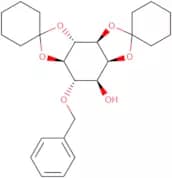
6-O-Benzyl-2,3:4,5-di-O-cyclohexylidene-D-myo-inositol
CAS:6-O-Benzyl-2,3:4,5-di-O-cyclohexylidene-D-myo-inositol is a complex carbohydrate that is synthesized from 6-O-benzyl-2,3:4,5-di-O-(cyclohexylidene)-D-myo-[1]-inositol. It can be used in the synthesis of glycosylations and other modifications. This product has been custom synthesized to high purity and is available for purchase.Fórmula:C26H34O6Pureza:Min. 95%Peso molecular:442.54 g/mol5-(Acetylamino)-4-amino-2,6-anhydro-3,4,5-trideoxy-7-O-methyl-D-glycero-D-galacto-non-2-enonic acid
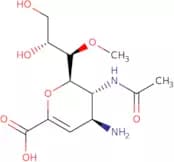
CAS:5-(Acetylamino)-4-amino-2,6-anhydro-3,4,5-trideoxy-7-O-methyl-D-glycero-D-galacto-non-2-enonic acid is a custom synthesis. It is synthesized by modification of the 7th carbon in the glycosidic bond and fluorination of the 4th carbon on the sugar ring. The chemical structure is based on an amino sugar composed of two acetic acid residues, one anhydro sugar residue and one methyl group. This product is a white to off white solid with a molecular weight of 597.07 g/mol that has a melting point of 154°C.Fórmula:C12H20N2O7Pureza:Min. 95%Peso molecular:304.3 g/mol2-O-Benzyl-D-glucose
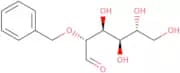
CAS:2-O-Benzyl-D-glucose is a disaccharide that is an intermediate in the synthesis of benzoic acid. It is benzylated with benzaldehyde and then reacted with sodium hydroxide to form 2-O-benzylidene-D-glucose. Spectroscopy has shown that this product has an anomeric proton at δH 7.1 to 7.4 and a pyranoside group at δH 4.2 to 4.6, which are characteristic of 2-O-benzylidene-D-glucose. The sugar's molecular formula is C9H12O5, and its molecular weight is 230. The sugar has been shown to be acylated with acetate or benzoic acid as well as undergo glycosidation reactions in the presence of sulfuric acid or sodium hydroxide.
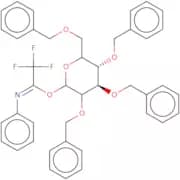
Fórmula:C13H18O6Pureza:Min. 95%Peso molecular:270.28 g/mol2,3,4,6-Tetra-O-benzyl-D-galactopyranosyl N-phenyl trifluoroacetimidate
This product is a type of modification and has many uses in the industry. It is an oligosaccharide that is a carbohydrate and can be used as a complex carbohydrate. This product can also be synthesized, which is done by custom synthesis. The CAS Number for this product is 908-92-1, which means it has high purity. This product is also an oligosaccharide that is a carbohydrate and can be used as a complex carbohydrate. This product can also be synthesized, which is done by custom synthesis. The CAS Number for this product is 908-92-1, which means it has high purity.Fórmula:C42H40F3NO6Pureza:Min. 95%Peso molecular:711.77 g/molD-Glucofuranuronic acid,gamma-lactone,1,6-13C2
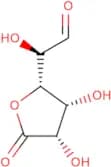
CAS:D-Glucofuranuronic acid,gamma-lactone,1,6-13C2 is an organic compound that is a glycosidic acid with a uronic acid group. It is composed of a hydrocarbon group and an acetylated d-xylose. This compound has been shown to have inhibitory activities against glycosidases and glycoside hydrolases. D-Glucofuranuronic acid,gamma-lactone,1,6-13C2 is synthesized by the reaction of trifluoroacetic acid with glyceraldehyde in the presence of water and an acid catalyst. It can be used as medicine for treating blood sugar levels but should not be taken in conjunction with other medicines because it inhibits their absorption.Fórmula:C2C4H8O6Pureza:Min. 95%Peso molecular:178.12 g/molCys-spacer-Gly-Gly-Tyr-D-Thr-Gly-Phe-Leu-Ser(glucoside)-amide
Custom synthesis, Modification, Fluorination, Methylation, Monosaccharide, Synthetic, Click modification, Oligosaccharide, saccharide CAS No.: 1101-98-2 Polysaccharide: Glycosylated Sugar: Carbohydrate Complex carbohydrate: Glycosylated Glycosylation: sugarPureza:Min. 95%Methyl 2,3,5-tri-O-acetyl-D-arabinofuranoside
CAS:Methyl 2,3,5-tri-O-acetyl-D-arabinofuranoside is a monosaccharide that is used in the synthesis of carbohydrates. It has been shown to inhibit the growth of Rhizopus stolonifer and other fungi. Methyl 2,3,5-tri-O-acetyl-D-arabinofuranoside has also been used for the quantitative analysis of deacetylated sugars. A chromatographic method was developed using an ion exchange resin and methyl glycosides as standards. The sugar was quantified by electron ionization mass spectrometry (EI) after conversion to its trimethylsilyl ether derivatives with triethylamine in methylene chloride. The spectrum obtained from EI analysis showed the presence of anomeric proton peaks at m/z 184 and 186, indicating that this sugar contains two anomeric hydroxyl groups on the same carbon atom.
Fórmula:C12H18O8Pureza:Min. 95%Peso molecular:290.27 g/mol2-O-Methyl-a-D-N-glycoloylneuraminic acid
CAS:2-O-Methyl-a-D-N-glycoloylneuraminic acid (2OMG) is a synthetic sugar that is used as a monosaccharide. It can be used to modify the glycosylation of saccharides, such as mono-, oligo-, and polysaccharides. The chemical structure of 2OMG includes one sugar unit and one methyl group in the alpha position, which makes it useful for click chemistry. This product is available in high purity and has a CAS number of 14206-42-9.Fórmula:C12H21NO10Pureza:Min. 95%Peso molecular:339.3 g/mol2-Naphthylmethyl 2-acetamido-2-deoxy-b-D-glucopyranoside
CAS:2-Naphthylmethyl 2-acetamido-2-deoxy-b-D-glucopyranoside is a synthetic, fluorinated monosaccharide. It is a custom synthesis that can be glycosylated and methylated to produce polysaccharides. It has been shown to inhibit cancer cell growth in vitro and in vivo by inhibiting protein synthesis.Fórmula:C19H23NO6Pureza:Min. 95%Peso molecular:361.39 g/mol2,3,4,6-Tetra-O-acetyl-b-D-galactopyranosyl-(N2-Fmoc)-L-serine
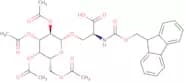
CAS:2,3,4,6-Tetra-O-acetyl-b-D-galactopyranosyl-(N2-Fmoc)-L-serine is a chemical compound. The molecular formula of this compound is C20H32O5 and the molecular weight is 376.429 g/mol. The chemical structure of this compound contains a tetra acetyl bDgalactopyranosyl residue linked to an N2 substituted Lserine residue.Fórmula:C32H35NO14Pureza:Min. 95%Peso molecular:657.63 g/molN-Fmoc-O-(2,3,4,6-tetra-O-acetyl-b-D-galactopyranosyl)-L-tyrosine
This compound is a custom synthesis that is fluorinated, methylated, and acetylated. It contains a monosaccharide and oligosaccharide sugar with glycosylation at the reducing end of the sugar. The molecular weight of this compound is 812.14 g/mol. This compound has CAS number 725-36-6 and its name is N-Fmoc-O-(2,3,4,6-tetra-O-acetyl-b-D-galactopyranosyl)-L-tyrosine.Fórmula:C39H39NO14Pureza:Min. 95%Peso molecular:733.71 g/molD-Arabinose-2-D
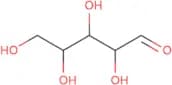
CAS:Please enquire for more information about D-Arabinose-2-D including the price, delivery time and more detailed product information at the technical inquiry form on this page
Fórmula:C5H10O5Pureza:Min. 95%Peso molecular:151.14 g/molMethyl 2,3,6-tri-O-benzoyl-a-D-glucopyranoside
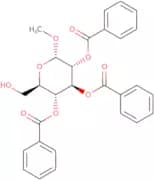
CAS:Methyl 2,3,6-tri-O-benzoyl-a-D-glucopyranoside is a biodegradable polymer that can be used for the prevention of boron diffusion into a prosthesis. It is also resistant to corrosion. Methyl 2,3,6-tri-O-benzoyl-a-D-glucopyranoside has been shown to have a transition temperature of 232 °C and this property makes it suitable for use in high temperature applications. This material is resistant to refractory environments and can be used as an additive in thermodynamic systems.
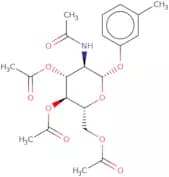
Fórmula:C28H26O9Pureza:Min. 98 Area-%Forma y color:PowderPeso molecular:506.5 g/mol3-Methylphenyl 2-acetamido-3,4,6-tri-O-acetyl-2-deoxy-b-D-glucopyranoside
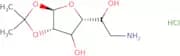
CAS:3-Methylphenyl 2-acetamido-3,4,6-tri-O-acetyl-2-deoxy-b-D-glucopyranoside is a synthetic chemical compound. It has been shown to have antiviral activity and inhibit the growth of bacteria.Fórmula:C21H27NO9Pureza:Min. 95%Peso molecular:437.44 g/mol6-Amino-6-deoxy-1,2-O-isopropylidene-a-D-glucofuranose HCl
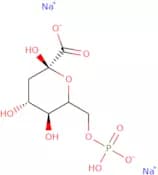
CAS:6-Amino-6-deoxy-1,2-O-isopropylidene-a-D-glucofuranose HCl is a custom synthesis product that can be used in the synthesis of oligosaccharides and polysaccharides. It has a CAS No. of 24384-88-1 and can be used to modify saccharides, carbohydrates, and sugars. This product is also fluorinated and is made from high purity raw materials. The chemical name for this product is 6-(amino)-6-(deoxy)-1,2:5,6:9,10:4′,5′:4′′,5′′′-[3H]isopropylidenea D glucofuranose hydrochloride.Fórmula:C9H17NO5·HClPureza:Min. 95%Peso molecular:255.7 g/mol3-Deoxy-D-arabino-heptulosonic acid 7-phosphate disodium salt
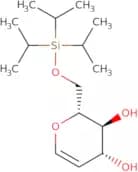
CAS:3-Deoxy-D-arabinonoheptulosonic acid 7-phosphate disodium salt is a phosphate derivative of 3-deoxy-D-arabinoheptulosonic acid (DAHP), which is an intermediate in the biosynthesis of heparin. DAHP is synthesized by the enzyme DAHP synthetase, which catalyses the conversion of D-xylose to DAHP. The enzyme can be activated by adding xylose or other sugar phosphates, and it can be inhibited by adding anthranilate or arabinose. 3-Deoxy-D-arabinonoheptulosonic acid 7-phosphate disodium salt is used as a substrate for various enzymes, including enzymes in biological samples and model systems. It was also used to study the rate constant for the polymerase chain reaction (PCR).Fórmula:C7H11Na2O10PPureza:Min. 95%Forma y color:Off-White PowderPeso molecular:332.11 g/mol6-O-Triisopropylsilyl-D-glucal
CAS:6-O-Triisopropylsilyl-D-glucal is a silyl ether that can be used as a protecting group for benzyl alcohol. It is an efficient, large-scale synthesis of the benzyl alcohol and d-glucuronolactone. 6-O-Triisopropylsilyl-D-glucal accelerates the reaction by removing water as a byproduct of the reaction, simplifying the synthesis to just two steps. This product is also useful for synthesizing other products with similar structures.
Fórmula:C15H30O4SiPureza:Min. 95%Peso molecular:302.48 g/molN1-b-D-Glucopyranosylamino-guanidine HCl
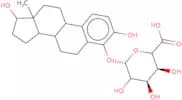
CAS:N1-b-D-Glucopyranosylamino-guanidine HCl is a synthetic, fluorinated, monosaccharide. It is a complex carbohydrate that can be modified to create a custom synthesis for glycosylation, methylation, or click modification. This product is CAS No. 109853-81-8 and has high purity.Fórmula:C7H16N4O5·HClPureza:Min. 95%Forma y color:White to off-white solid.Peso molecular:272.69 g/mol4-Hydroxyestradiol-4-O-b-D-glucuronide
CAS:4-Hydroxyestradiol-4-O-b-D-glucuronide is a custom synthesis of a sugar, Click modification, fluorination, glycosylation, synthetic, methylation, modification and oligosaccharide. It has CAS No. 90746-95-5. 4-Hydroxyestradiol-4-O-b-D-glucuronide is a saccharide with a complex carbohydrate structure.
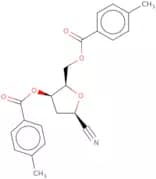
Fórmula:C24H32O9Pureza:Min. 95%Peso molecular:464.51 g/mol2-Deoxy-3,5-di-O-toluoyl-b-D-ribofuranosyl cyanide
2-Deoxy-3,5-di-O-toluoyl-b-D-ribofuranosyl cyanide is a fluorinated sugar that is synthesized from 2,6-dichloro-1,4,5,8,-tetraoxybenzene and 3,5-di-O-toluoyl bromide. It is a carbohydrate that belongs to the family of oligosaccharides.Fórmula:C22H21NO5Pureza:Min. 95%Peso molecular:379.41 g/mol3,6-Di-O-tert-butyldiphenylsilyl-D-glucal
CAS:3,6-Di-O-tert-butyldiphenylsilyl-D-glucal is a monosaccharide that is synthesized from D-glucal. It can be modified with methyl groups and fluorine atoms. 3,6-Di-O-tert-butyldiphenylsilyl-D-glucal has been shown to be effective in modifying polysaccharides, glycosylation, and oligosaccharides. This compound is also used in the synthesis of complex carbohydrates.Pureza:Min. 95%8-D-Glucopyranosyl-7,8,9,10-tetrahydro-6,10-methano-6H-pyrazino[2,3-h][3]benzazepine
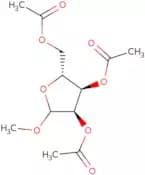
Please enquire for more information about 8-D-Glucopyranosyl-7,8,9,10-tetrahydro-6,10-methano-6H-pyrazino[2,3-h][3]benzazepine including the price, delivery time and more detailed product information at the technical inquiry form on this pageFórmula:C19H23N3O5Pureza:Min. 95%Peso molecular:373.4 g/molMethyl 2,3,5-tri-O-acetyl-D-ribofuranoside
CAS:Methyl 2,3,5-tri-O-acetyl-D-ribofuranoside is a natural product that has been shown to have immunomodulatory effects in vitro and in vivo. It inhibits the proliferation of various cancer cell lines and induces apoptosis. Methyl 2,3,5-tri-O-acetyl-D-ribofuranoside is also able to inhibit the activation of nuclear factor kappa B (NFκB), which is known to induce inflammation. Through its ability to inhibit NFκB activation, methyl 2,3,5-tri-O-acetyl-D-ribofuranoside may be able to reduce the severity of inflammatory skin diseases such as psoriasis.Fórmula:C12H18O8Pureza:Min. 95%Forma y color:Colorless PowderPeso molecular:290.27 g/mol1,2,3-Tri-O-benzyl-b-D-galactopyranoside
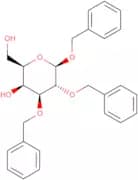
CAS:1,2,3-Tri-O-benzyl-b-D-galactopyranoside is a benzoylated galactoside that is used as a chemical intermediate in the synthesis of other compounds. This compound reacts with benzoyl chloride to form benzoyl benzyl b-D-galactopyranoside. The reactivity of this compound can be seen in its reaction with dibutyltin, which leads to the formation of 1,2,3-tri-O-(benzyl)-b-D-(benzoyl)benzoin. This product has been shown to be effective in inhibiting enzyme activity and bacterial growth at equimolar concentrations.Fórmula:C27H30O6Pureza:Min. 95%Peso molecular:450.52 g/molMethyl 2,3,4,6-tetra-O-acetyl-b-D-glucopyranose
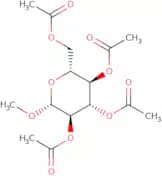
CAS:Methyl 2,3,4,6-tetra-O-acetyl-b-D-glucopyranose is a fluorinated synthetic oligosaccharide. It is custom synthesized to meet your specifications. Methyl 2,3,4,6-tetra-O-acetyl-b-D-glucopyranose is a complex carbohydrate with a glycosylation pattern that can be modified and methylated. This product has CAS No. 486085 9 and purity of >99%.Fórmula:C15H22O10Pureza:Min. 95%Peso molecular:362.33 g/molHydroxy pioglitazone (M-VII) b-D-glucuronide
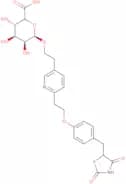
CAS:Hydroxy pioglitazone (M-VII) b-D-glucuronide is a synthetic, fluorinated glucuronide of hydroxy pioglitazone. It has been shown to inhibit the activity of bacterial dna gyrase and topoisomerase IV enzymes.
Fórmula:C25H28N2O10SPureza:Min. 95%Peso molecular:548.56 g/molTrifluoroacetamidopropyl b-D-galactopyranoside
Trifluoroacetamidopropyl b-D-galactopyranoside is a custom synthesis that is an Oligosaccharide. It is a complex carbohydrate with CAS No., and can be modified with methylation, glycosylation, and click modification. Trifluoroacetamidopropyl b-D-galactopyranoside has high purity and fluoride, which makes it a Synthetic.Pureza:Min. 95%N-Acetyl-D-glucosamine-d3
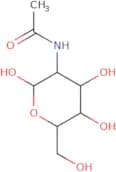
CAS:N-acetyl-D-glucosamine is a regiospecific and stereoselective hydrochloride of D-glucosamine. It is used as a building block for the synthesis of peptides, proteins, and other biological molecules. N-Acetyl-D-glucosamine is synthesized by reacting ethylene diamine with trifluoroacetic acid in the presence of hydrochloric acid. The proton at C2 in the NMR spectrum was found to be diagnostic for the compound. Solid phase microextraction (SPME) was used to extract this compound from a mixture of many components, and it was then analyzed using magnetic resonance spectroscopy (NMR).
Fórmula:C8H12D3NO6Pureza:Min. 95%Peso molecular:224.23 g/molMethyl 3-acetamido-4-O-benzoyl-6-bromo-2,3,6-trideoxy-a-D-ribo-hexopyranoside
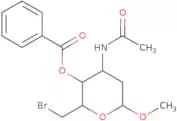
CAS:Methyl 3-acetamido-4-O-benzoyl-6-bromo-2,3,6-trideoxy--aDribohexopyranoside is a Custom synthesis that is classified as an Oligosaccharide. It has a molecular weight of 576.07 and a purity of >99%. The chemical formula for this compound is C22H30BrNO8. Methyl 3-acetamido-4-O-benzoyl-6-bromo-2,3,6--trideoxy--aDribohexopyranoside is used in the modification of saccharides with the purpose of synthesizing polysaccharides. This compound has been shown to be effective for the synthesis of glycosylations and methylations. Methyl 3 acetamido 4 O benzoyl 6 bromo 2,3,6 trideoxy - a D ribFórmula:C16H20BrNO5Pureza:Min. 95%Peso molecular:386.25 g/mol1,3,4,6-Tetra-O-acetyl-2-deoxy-2-(4,5-dichlorophthalimido)-D-glucopyranose
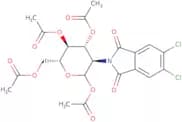
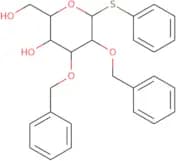
CAS:1,3,4,6-Tetra-O-acetyl-2-deoxy-2-(4,5-dichlorophthalimido)-D-glucopyranose is a Modification of the Carbohydrate. It is a synthetic compound that is used as a building block for the synthesis of complex carbohydrates. This product has been shown to be effective in the modification of glycoproteins and polysaccharides. The product can be used in applications such as fluorination reactions, saccharide methylation reactions, glycosylation reactions, and sugar polymerization reactions.Fórmula:C22H21Cl2NO11Pureza:Min. 95%Peso molecular:546.31 g/molPhenyl 2,3-di-O-benzyl-b-D-thiogalactopyranoside
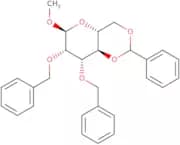
CAS:Phenyl 2,3-di-O-benzyl-b-D-thiogalactopyranoside is an organic compound that is used in the synthesis of saccharides. It is a custom synthesis product and can be modified to create a variety of products. Phenyl 2,3-di-O-benzyl-b-D-thiogalactopyranoside has been shown to have high purity and quality, as well as excellent stability. This product is also available in a variety of grades.Pureza:Min. 95%Methyl 2,3-di-O-benzyl-4,6-O-benzylidene-a-D-mannopyranoside
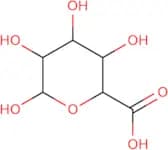
CAS:Methyl 2,3-di-O-benzyl-4,6-O-benzylidene-a-D-mannopyranoside is a custom synthesis of a complex carbohydrate. It is an Oligosaccharide and Polysaccharide that has been modified by methylation and glycosylation. This carbohydrate is saccharide with a high purity and a high degree of Fluorination. Methyl 2,3-di-O-benzyl-4,6-O-benzylidene-a-D-mannopyranoside is synthesized by Click chemistry using sugar as the starting material. The synthesis involves two steps: first, the sugar moiety was protected by benzylation to yield benzyl 2,3 di O acetate; second, it was methylated to give the desired product.Fórmula:C28H30O6Pureza:Min. 95%Peso molecular:462.55 g/molL-Galacturonic acid
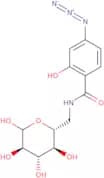
CAS:L-Galacturonic acid is an acidic polysaccharide that is a constituent of many plants, especially in the cell walls of pectin. L-Galacturonic acid has biochemical properties, such as growth factor activity and anticoagulant properties. It also has nucleophilic properties, which means it can be used to extract other substances. The chemical structures of L-galacturonic acid are C6H8O7 with hydroxyl groups on both carbons 1 and 4. The hydroxyl group on carbon 1 makes it a good reactant for nucleophilic attack by sodium carbonate. This reaction increases the number of negative charges on the molecule, which make it a good carbohydrate chemistry reagent. L-Galacturonic acid is not soluble in water but can be dissolved in hydrochloric acid or sodium carbonate solution. It is not toxic when ingested orally and has been shown to have anti-coagulant properties inPureza:Min. 95%6-(4-Azido-2-hydroxybenzamido)-6-deoxy-D-glucopyranose
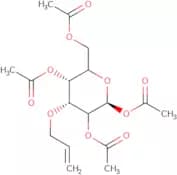
CAS:6-(4-Azido-2-hydroxybenzamido)-6-deoxy-D-glucopyranose (AGB) is a potential photoaffinity label that can be used to identify and characterize the transporter. The photoaffinity label is synthesized by reacting 2,4-dinitrophenylhydrazine with 6-(4-azido-2-hydroxybenzamido)-6-deoxy-D-glucopyranose in the presence of sodium bicarbonate or potassium carbonate. The photolysis of AGB produces an azide radical cation that reacts with amino acid residues on the protein surface, forming a covalent bond. This labeling process is irreversible.Fórmula:C13H16N4O7Pureza:Min. 95%Peso molecular:340.29 g/mol1,2,4,6-Tetra-O-acetyl-3-O-allyl-b-D-glucopyranose
CAS:1,2,4,6-Tetra-O-acetyl-3-O-allyl-b-D-glucopyranose is a high purity and custom synthesis compound. It is a synthetic monosaccharide with CAS number 39698-00-5. This product is methylated at the C1 and C6 positions. It can be used to modify natural or synthetic oligosaccharides and polysaccharides by click chemistry. The complex carbohydrate has also been fluorinated at the C2 position.
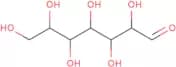
Fórmula:C17H24O10Pureza:Min. 95%Peso molecular:388.37 g/molL-Glycero-D-gluco-heptose
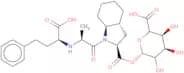
CAS:L-Glycero-D-gluco-heptose is a hexadecanoic acid that is used as a synthetic intermediate. L-Glycero-D-gluco-heptose can be synthesized from benzyl alcohol and galactose in a two step process. The first step involves the esterification of benzyl alcohol with galactose to form an acetal, while the second step involves hydrolysis of this acetal to form L-Glycero-D-gluco-heptose. The chemical data for L-Glycero-D-gluco-heptose has been determined by gas chromatography (GC) and mass spectrometry (MS). GC allows for the separation and identification of fatty acids, oligosaccharides, and other organic compounds, which are then identified by MS.Fórmula:C7H14O7Pureza:Min. 95%Forma y color:PowderPeso molecular:210.18 g/molTrandolaprilat acyl-D-glucuronide
CAS:Trandolaprilat acyl-D-glucuronide is a synthetic compound that has been designed for the treatment of hypertension. Trandolaprilat acyl-D-glucuronide is an active metabolite of trandolapril, which is a prodrug of trandolaprilat. Trandolaprilat acyl-D-glucuronide is glycosylated and has high purity with low impurities. It can be custom synthesized to meet your requirements. The CAS number for this compound is 1260610-97-6.Fórmula:C28H38N2O11Pureza:Min. 95%Peso molecular:578.61 g/moltrans-Resveratrol 4'-O-b-D-glucuronide
CAS:Trans-resveratrol 4'-O-b-D-glucuronide is a natural compound that is found in red wine and other foods. It has been shown to inhibit the growth of cancer cells through the activation of adenosine receptors, which are found on cancer cells and are responsible for apoptosis. Trans-resveratrol 4'-O-b-D-glucuronide has been shown to be an agonist of the adenosine a3 receptor, with high concentrations leading to apoptosis in human colon cancer cells. This compound also inhibits colon carcinogenesis by inhibiting cell proliferation and inducing apoptosis.Fórmula:C20H20O9Pureza:Min. 95%Peso molecular:404.37 g/mol1,6:3,4-Dianhydro-b-D-altropyranose
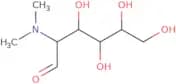
CAS:1,6:3,4-Dianhydro-b-D-altropyranose is a sugar that has been modified by methylation. It is a white powder with a melting point of 197°C. This product can be used as an intermediate in the synthesis of saccharides and polysaccharides. It can also be used as an intermediate for glycosylations and fluorinations. 1,6:3,4-Dianhydro-b-D-altropyranose is available in high purity and custom synthesis options.Fórmula:C6H8O4Pureza:Min. 95%Peso molecular:144.13 g/molN,N-Dimethyl-D-glucosamine
CAS:N,N-Dimethyl-D-glucosamine is a natural amino sugar that yields pyrazoles, triazoles, and formaldehyde. It can be prepared by the reaction of acetyl chloride with potassium hydroxide in hydrochloric acid. The synthesis of N,N-Dimethyl-D-glucosamine has been optimized on a Raney nickel catalyst to produce high yields of the desired product. This product is a broad spectrum antibiotic that has been shown to inhibit bacterial growth through inhibition of protein synthesis. The salt form of N,N-Dimethyl-D-glucosamine is sodium salt.Fórmula:C8H17NO5Pureza:Min. 95%Peso molecular:207.22 g/mol2-Deoxy-3,4-O-isopropylidene-D-arabinopyranose
2-Deoxy-3,4-O-isopropylidene-D-arabinopyranose is a synthetic sugar that has a high purity and can be custom synthesized. It is an oligosaccharide with a methylation and fluorination modification. This sugar can be used in glycosylation reactions to produce polysaccharides or complex carbohydrates. 2-Deoxy-3,4-O-isopropylidene-D-arabinopyranose is also used in click modifications. The CAS number for this compound is 5263038-92-2.
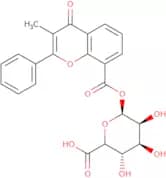
Pureza:Min. 95%3-Methylflavone-8-carboxylic acid acyl-b-D-glucuronide
CAS:3-Methylflavone-8-carboxylic acid acyl-b-D-glucuronide is a fluorinated synthetic compound that has been custom synthesized with a high purity. It is an oligosaccharide, monosaccharide, and complex carbohydrate. This chemical can be used for glycosylation, methylation, or click modification. The product is stable at room temperature and does not require any special storage conditions.Fórmula:C23H20O10Pureza:Min. 95%Peso molecular:456.4 g/molEthyl 2,3,4,6-tetra-O-(4-methoxybenzyl)-b-D-thioglucopyranoside
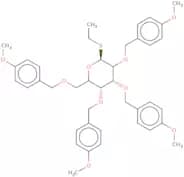
Ethyl 2,3,4,6-tetra-O-(4-methoxybenzyl)-b-D-thioglucopyranoside is a sugar that belongs to the class of oligosaccharides. It is a complex carbohydrate with an average degree of polymerization (DP) of 17. The sugar is synthesized by the glycosylation and methylation of glucose in the presence of ethyl 2,3,4,6-tetra-O-(4-methoxybenzyl)-b-D-thioglucopyranoside. This sugar has been used as a synthetic building block for the synthesis of other sugars. The molecular weight and purity are custom made to your specifications.Fórmula:C40H48O9SPureza:Min. 95%Peso molecular:704.87 g/molrac N,O-didesmethyl venlafaxine b-D-glucuronide hydrochloride
CAS:RacN,O-didesmethylvenlafaxine b-D-glucuronide hydrochloride is a synthetic glycosylated active metabolite of venlafaxine. It is an N-desmethyl derivative of racemic venlafaxine, which has been modified by oxygenation and fluorination of the methyl group at the nitrogen atom. RacN,O-didesmethylvenlafaxine b-D-glucuronide hydrochloride is a complex carbohydrate with high purity. It is also a saccharide that can be modified with click chemistry for desired modifications. The CAS No. for this compound is 1021933-99-2.Fórmula:C21H32ClNO8Pureza:Min. 95%Peso molecular:461.93 g/molPyrocatechol monoglucoside
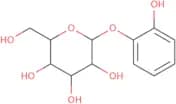
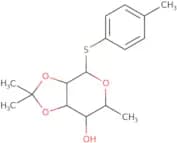
CAS:Pyrocatechol monoglucoside is a phenolic compound that is found in many plants. It has an anti-thrombotic effect, inhibits bacterial growth, and has anticarcinogenic effects. Pyrocatechol monoglucoside is also hepatoprotective and can be used as a natural food preservative. It has a bitter taste and can be found in leuconostoc mesenteroides and mesenteroides strains of bacteria.Pureza:Min. 95%4-Methylphenyl 2,3-O-isopropylidene-1-thio-α-L-rhamnopyranoside
CAS:4-Methylphenyl 2,3-O-isopropylidene-1-thio-α-L-rhamnopyranoside is a custom synthetic sugar that can be modified with different fluorination and modifications. It is an Oligosaccharide, Polysaccharide, saccharide, sugar, Carbohydrate. CAS No. 903906-55-8.Fórmula:C16H22O4SPureza:Min. 95%Peso molecular:310.41 g/mola-Spinasterol glucoside
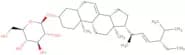
CAS:a-Spinasterol glucoside is a glucopyranoside that belongs to the group of triterpenoid. It has a bitter taste, and its chemical structure was first isolated from the seeds of Trichosanthes bracteata. This compound can be found in other plants such as cucurbitacin and cucumeroides. These two compounds are bitter and are used in Chinese traditional medicine for treating inflammation, pain, or even cancer. The chemical structure of a-spinasterol glucoside is related to vanillic acid, glyceryl palmitate, and vanillic acid.Pureza:Min. 95%2,3,4-Tri-O-benzoyl-L-fucopyranosyl bromide
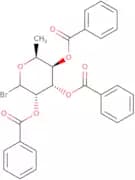
CAS:2,3,4-Tri-O-benzoyl-L-fucopyranosyl bromide is a synthetic compound that is used as a reagent in the synthesis of complex carbohydrates. It is also an intermediate in the synthesis of oligosaccharides and polysaccharides. This product can be modified by methylation, glycosylation and fluorination to generate desired products. The CAS number for this product is 855662-12-3.Fórmula:C27H23BrO7Pureza:Min. 95%Peso molecular:539.37 g/mol2-Fluoroethyl a-L-fucopyranoside
2-Fluoroethyl a-L-fucopyranoside is a custom synthesis that belongs to the class of methylated sugar derivatives. It is used as a glycosylation agent and has been shown to be useful in the synthesis of oligosaccharides, polysaccharides, and saccharides. 2-Fluoroethyl a-L-fucopyranoside can be fluorinated by heating with elemental fluorine or chlorine gas in an inert atmosphere. This modification can be used for the synthesis of high purity monosaccharides or sugars.Fórmula:C8H15FO5Pureza:Min. 95%Forma y color:White to off-white solid.Peso molecular:210.2 g/mol4-Methoxyphenyl 3-O-allyl-2-azido-4,6-O-benzylidene-2-deoxy-b-D-galactopyranoside
CAS:4-Methoxyphenyl 3-O-allyl-2-azido-4,6-O-benzylidene-2-deoxy-b-D-galactopyranoside is a glycosaminoglycan. It is used in the treatment of cancer to prevent metastasis and as an antiviral agent. 4MOP has been shown to inhibit the growth of virus in tissue culture by preventing the formation of new virus particles. The antiviral activity may be due to its ability to inhibit the replication of viruses at an early stage of the process. 4MOP also inhibits coagulation and antibody production, which are important for fighting infection.Fórmula:C23H25N3O6Pureza:Min. 95%Peso molecular:439.46 g/molAllyl 4,6-O-benzylidene-b-D-glucopyranoside
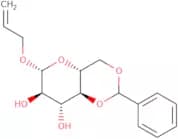
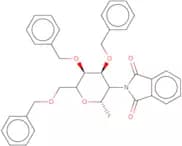
CAS:Allyl 4,6-O-benzylidene-b-D-glucopyranoside is a custom synthesis molecule that can be modified to suit your needs. It has been used in the synthesis of oligosaccharides and polysaccharides. Allyl 4,6-O-benzylidene-b-D-glucopyranoside is a high purity product that has been fluorinated with allyl bromide and benzoyl chloride. This product is a monosaccharide and sugar that can be synthesized from a variety of raw materials.Fórmula:C16H20O6Pureza:Min. 95%Peso molecular:308.33 g/mol3,4,6-Tri-O-benzyl-2-deoxy-2-phthalimdo-b-D-glucopyranosyl fluoride
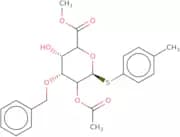
3,4,6-Tri-O-benzyl-2-deoxy-2-phthalimdo-b-D-glucopyranosyl fluoride is a modified sugar that is synthesized by the addition of a benzyl group to the 3' hydroxyl group. It's a white powder that is soluble in water and ethanol. This product has been shown to be stable in acid environments and can be used in glycosylation reactions.Fórmula:C35H32FNO6Pureza:Min. 95%Peso molecular:581.63 g/mol4-Methylphenyl 2-O-acetyl-3-O-benzyl-b-D-thioglucuronide methyl ester
CAS:4-Methylphenyl 2-O-acetyl-3-O-benzyl-b-D-thioglucuronide methyl ester is a custom synthesis of an oligosaccharide. It has been modified with fluorination and methylation, which are chemical reactions that alter the structure of the substance. Click modification is also a type of chemical reaction involving this substance.Fórmula:C23H26O7SPureza:Min. 95%Peso molecular:446.51 g/mol2-Deoxy-D-glucose 1-14C
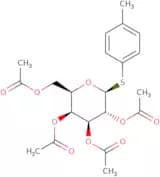
CAS:2-Deoxy-D-glucose 1-14C is a radioactive isotope of glucose. It is synthesized by the fluorination and methylation of D-glucose, followed by the addition of a 14C atom. The compound can be used in the study of glycosylations, oligosaccharides, and saccharides. 2-Deoxy-D-glucose 1-14C has been shown to react with various sugars to form new compounds that are used in glycobiology research. This compound is highly purified, as it does not undergo any reactions with other compounds or impurities. It is also available for custom synthesis and modification.Pureza:Min. 95%4-Methylphenyl 2,3,4,6-tetra-O-acetyl-β-D-thiogalactopyranoside
CAS:4-Methylphenyl 2,3,4,6-tetra-O-acetyl-b-D-thiogalactopyranoside is a custom synthesis of an oligosaccharide with a polysaccharide. It is a high purity glycosylated carbohydrate with a CAS number of 28244-99-7. The sugar has been modified by methylation and fluorination, as well as the Click modification.Fórmula:C21H26O9SPureza:Min. 95%Forma y color:PowderPeso molecular:454.49 g/molD-Gluconic acid - 45-50% in water
CAS:D-Gluconic acid is a white or colorless crystalline powder that is soluble in water. It has a molecular weight of 144.1 g/mol and its chemical formula is C6H12O7. D-Gluconic acid can be used as an antimicrobial agent, which inhibits the growth of bacteria by disrupting the formation of cell walls and inhibiting protein synthesis. It also has biochemical properties such as glycol ether, wild-type strain, and enzyme activities. D-Gluconic acid is often used as an additive to food products to improve flavor, stability, and shelf life.
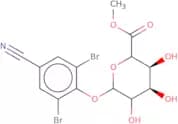
Fórmula:C6H12O7Pureza:Min. 95%Forma y color:PowderPeso molecular:196.16 g/molBromoxynil D-glucuronide methyl ester
Bromoxynil D-glucuronide methyl ester is a synthetic, high-purity chemical with a CAS number of 2512-06-3. It is an Oligosaccharide and sugar that is Glycosylated and Click modified. This product can be used in Custom synthesis or as a Modification to saccharides.Fórmula:C14H13Br2NO7Pureza:Min. 95%Peso molecular:467.06 g/mola-D-Mannose-1-phosphate 3-LINKER-FITC
a-D-Mannose-1-phosphate 3-LINKER-FITC is a custom synthesis, modification, and fluorination of the natural a-D-mannose monosaccharide. It is synthesized from a mixture of D-mannitol (1) and pyridine hydrochloride in the presence of triphenylphosphine (2). The methylation of 2,4,6 trichloroacetophenone with sodium methoxide in methanol yields the desired product 3. This product is then reacted with an excess of N-(3-dimethylaminopropyl)-N'-ethylcarbodiimide hydrochloride to yield 4. The reaction between 4 and 5 results in 6 which is then converted to 7 by treatment with diazomethane. 7 is then reacted with 8 to produce 9. The final product 10 is obtained by reacting 9 with three equivalents of N-(7-azabPureza:Min. 95%5-Azido-5-deoxy-1,2-O-isopropylidene-b-D-fructose
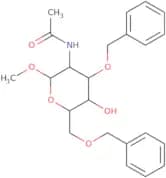
CAS:5-Azido-5-deoxy-1,2-O-isopropylidene-b-D-fructose is an oligosaccharide that is custom synthesized to your specifications. This compound has been modified with a methyl group at position C1 and has been fluorinated at C2. It has also undergone glycosylation at the reducing end of the molecule and can be used as a saccharide in the synthesis of complex carbohydrates.Fórmula:C9H15N3O5Pureza:Min. 95%Peso molecular:245.23 g/molMethyl 2-acetamido-3,6-di-O-benzyl-2-deoxy-b-D-glucopyranoside
CAS:Methyl 2-acetamido-3,6-di-O-benzyl-2-deoxy-b-D-glucopyranoside is a modified oligosaccharide. It has been shown to be useful for the synthesis of complex carbohydrates and sugar derivatives. The synthesis of this product involves the use of click chemistry, which is a chemoselective reaction that uses copper as a catalyst. This product can be used in the production of polysaccharides and saccharides, as well as other related compounds. Methyl 2-acetamido-3,6-di-O-benzyl-2-deoxy -b -D -glucopyranoside is synthesized from methyl 3,6 di O benzyl 2 deoxy b D glucopyranoside by reacting with acetamide in the presence of palladium acetate and ammonium formate in DMF at room temperature.Fórmula:C23H29NO6Pureza:Min. 95%Peso molecular:415.48 g/mol2-Acetamido-3-O-allyl-4,6-O-benzylidene-2-deoxy-b-D-glucopyranosyl azide
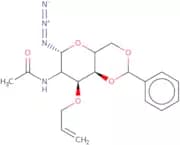
CAS:2-Acetamido-3-O-allyl-4,6-O-benzylidene-2,3-deoxy-bDglucopyranosyl azide is a sugar that can be synthesized from an acetamido group and an allyl group. It is used in the synthesis of complex carbohydrates. 2A3BPGA is a monosaccharide with a glycosylation pattern of alpha 1,2. The methylation of the hydroxyl groups on the glucose rings leads to the formation of 2A3BPGAM. This modification has been shown to alter the solubility and reactivity of this sugar.Fórmula:C18H22N4O5Pureza:Min. 95%Peso molecular:374.4 g/mol2,3-O-Cyclohexylidene-b-D-ribofuranose
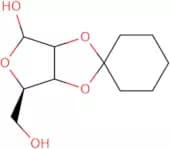
CAS:2,3-O-Cyclohexylidene-b-D-ribofuranose is a monosaccharide that is used in the synthesis of complex carbohydrates. This compound possesses a cyclic structure that contains an oxygen atom at the 2 position and a hydroxyl group at the 3 position. It has been modified by fluorination, methylation, glycosylation, and click chemistry. The chemical name for this compound is 2,3-O-Cyclohexylideneb-D-ribofuranose.
Fórmula:C11H18O5Pureza:Min. 95%Peso molecular:230.26 g/mol2-(L-Arabino-tetrahydroxybutyl)-4(R)-1,3-thiazolidine-4-carboxylic acid
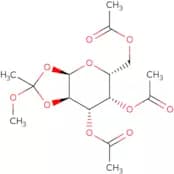
CAS:2-(L-Arabino-tetrahydroxybutyl)-4(R)-1,3-thiazolidine-4-carboxylic acid is a synthetic compound that has been modified to include sugar groups. It can be used for the synthesis of oligosaccharides and monosaccharides. The carbohydrate group has been modified with fluorination, glycosylation, and methylation. This modification can be useful in the production of complex carbohydrates.Fórmula:C8H15NO6SPureza:Min. 95%Peso molecular:253.27 g/mol3,4,6-Tri-O-acetyl-a-D-galactopyranose 1,2-(methyl orthoacetate)
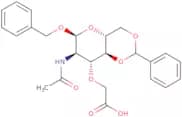
CAS:The survey was conducted to understand the current workforce and their feedback on the automated testing. The median number of respondents exceeded the number that was needed for a statistically significant result. The automated testing has helped to reduce the time it takes to test new features and has also improved the resilience of the developers. Feedback from testers has been positive, with many saying that they would recommend automated testing to other companies. This survey was conducted by an analyst who had an understanding of human-computer interaction and software development.Fórmula:C15H22O10Pureza:Min. 95%Peso molecular:362.33 g/molBenzyl 2-acetamido-4,6-O-benzylidene-3-O-(carboxymethyl)-2-deoxy-a-D-glucopyranoside
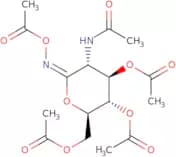
CAS:Benzyl 2-acetamido-4,6-O-benzylidene-3-O-(carboxymethyl)-2-deoxy-a-D-glucopyranoside is a custom synthesized, complex carbohydrate. It is a polysaccharide that has been modified with methylation and glycosylation. This product can be used for research purposes only and cannot be used in diagnostic procedures.Fórmula:C24H27NO8Pureza:Min. 95%Peso molecular:457.47 g/mol2-Acetamido-1,3,4,6-tetra-O-acetyl-2-deoxy-D-gluconhydroximo-1,5-lactone
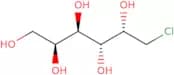
CAS:2-Acetamido-1,3,4,6-tetra-O-acetyl-2-deoxy-D-gluconhydroximo-1,5-lactone is a custom synthesis. It is a modification of natural sugars. It has fluorination and methylation to make the product more stable. The product is an oligosaccharide that is a saccharide with two monosaccharides attached together. It is made up of complex carbohydrates.Fórmula:C16H22N2O10Pureza:Min. 95%Peso molecular:402.35 g/mol6-Chloro-6-deoxy-D-galactitol
6-Chloro-6-deoxy-D-galactitol is a sugar with the molecular formula C6H12O6. It is a modification of galactose and has the same chemical structure as 6-chloro-D-mannitol. It can be used in the synthesis of complex carbohydrates, and it is also an intermediate for producing oligosaccharides or polysaccharides. 6-Chloro-6-deoxy-D-galactitol is also known as Lactotriose. This product has been modified by fluorination, which increases its stability and reduces its reactivity to other compounds.
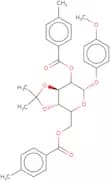
Fórmula:C6H13ClO5Pureza:Min. 95%Peso molecular:200.62 g/mol4-Methoxyphenyl 3,4-O-isopropylidene-2,6-di-O-toluoyl-b-D-galactopyranoside
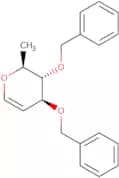
4-Methoxyphenyl 3,4-O-isopropylidene-2,6-di-O-toluoyl-b-D-galactopyranoside is a custom synthesis that is a complex carbohydrate. It is an oligosaccharide that has been modified with methylation and glycosylation. It also has been fluorinated and has undergone a click modification reaction. This product is of high purity and has been synthesized from saccharides and sugars.Fórmula:C32H34O9Pureza:Min. 95%Peso molecular:562.62 g/mol3,4-Di-O-benzyl-L-rhamnal
CAS:3,4-Di-O-benzyl-L-rhamnal is a high purity Glycosylation Oligosaccharide with a CAS No. 117249-17-9 that is synthesized by Click modification and methylation. It can be used as a raw material in the synthesis of complex carbohydrate. 3,4-Di-O-benzyl-L-rhamnal is water soluble and has an excellent stability in acidic conditions.Pureza:Min. 95%Phenyl 4-O-acetyl-3,6-di-O-benzyl-2-deoxy-2-phthalimido-b-D-thioglucopyranoside
CAS:Phenyl 4-O-acetyl-3,6-di-O-benzyl-2-deoxy-2-phthalimido-b-D-thioglucopyranoside is an oligosaccharide that has been modified with a click modification. The sugar is synthesized in high purity and the modification of this compound was achieved by fluorination. Phenyl 4O acetyl 3,6 di O benzyl 2 deoxy 2 phthalimido b D thioglucopyranoside is a carbohydrate that can be used as a monosaccharide or polysaccharide and has a complex structure. This chemical can also be used for methylation and is CAS No. 159734 71 1.Pureza:Min. 95%Methyl 2,3,4,6-tetra-O-acetyl-b-D-thiogalactopyranoside
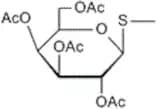
CAS:Methyl 2,3,4,6-tetra-O-acetyl-b-D-thiogalactopyranoside is a synthetic carbohydrate with the CAS number 55722-48-0. Methyl 2,3,4,6-tetra-O-acetyl-b-D-thiogalactopyranoside is used in the synthesis of oligosaccharides and monosaccharides. This product can be custom synthesized to meet your specifications. Methyl 2,3,4,6-tetra-O-acetyl-b -D -thiogalactopyranoside has been fluorinated and glycosylated for the synthesis of complex carbohydrates and saccharides. This product has high purity and can be customized to meet your specifications.Fórmula:C15H22O9SPureza:Min. 95%Peso molecular:378.4 g/mol4,7,8,9-Tetra-O-acetyl-N-acetyl-D-neuraminic acid methyl ester
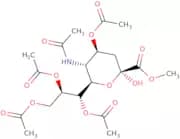
CAS:4,7,8,9-Tetra-O-acetyl-N-acetyl-D-neuraminic acid methyl ester is a modified form of sialic acid. This compound is a glycosylation product that has been modified with methyl groups and fluorine atoms. The fluorination of the molecule increases its stability and prevents it from being hydrolyzed by enzymes such as β-galactosidase. 4,7,8,9-Tetra-O-acetyl-N-acetyl-D-neuraminic acid methyl ester is often used in the synthesis of polysaccharides and oligosaccharides for medical purposes. This compound can be custom synthesized for research purposes or to meet special requirements.
Fórmula:C20H29NO13Pureza:Min. 95%Forma y color:White to off-white solid.Peso molecular:491.44 g/mol1-O -Acetyl-2,5-di-O-benzoyl-3-fluoro-3-deoxy-b-D-ribofuranoside
CAS:1-O -Acetyl-2,5-di-O-benzoyl-3-fluoro-3-deoxy-b-D-ribofuranoside is a synthetic sugar that belongs to the class of saccharides. It is a modification of fluorinated sugar that has been modified with acetylation and benzoylation. This compound can be used as an intermediate in the synthesis of oligosaccharides and glycosylations.Pureza:Min. 95%1,2,3,4,6-Penta-O-acetyl-5-thio-b-D-galactopyranoside
The 1,2,3,4,6-Penta-O-acetyl-5-thio-b-D-galactopyranoside is a custom synthesis. The compound is a complex carbohydrate that belongs to the group of Oligosaccharides. It is a saccharide with six hydroxyl groups and one acetate ester group. The CAS number for this compound is CID:270145-25-0. This compound has been modified by methylation and glycosylation. The 1,2,3,4,6-Penta-O-acetyl-5-thio-b-D-galactopyranoside can be used as an intermediate in the synthesis of other compounds with similar structures.Pureza:Min. 95%Equilin 3-O-b-D-glucuronide sodium salt
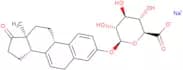
CAS:Equilin 3-O-b-D-glucuronide sodium salt is a synthetic, monosaccharide that can be used as a raw material for various glycosylation reactions. This compound is an example of a fluorinated sugar. Equilin 3-O-b-D-glucuronide sodium salt has the CAS number 27610-12-4 and can be custom synthesized to order. It can be modified with a click reaction or other modification techniques to generate desired products. This product is available in high purity and can be used for glycosylation reactions.Fórmula:C24H27O8·NaPureza:Min. 95%Peso molecular:466.46 g/molSitagliptin carbamoyl b-D-glucuronide
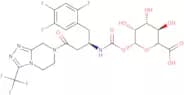
CAS:Sitagliptin carbamoyl b-D-glucuronide is a synthetic drug that has been modified to be sitagliptin, which is an oral antihyperglycemic agent. Sitagliptin carbamoyl b-D-glucuronide has been synthesized through the methylation of a polysaccharide. It is a complex carbohydrate and is soluble in water. This product can be used as an additive to many food items because it does not affect their taste or texture. The CAS number for this product is 940002-59-5. This product is synthesized by the modification of natural saccharides with fluorine gas and it has a high purity level. It can be used as an intermediate in other organic synthesis reactions and its primary use is as a sugar substitute that is not metabolized by human enzymes.Fórmula:C23H23F6N5O9Pureza:Min. 95%Peso molecular:627.45 g/mola-D-Mannopyranosyl L-serine
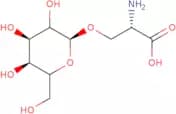
a-D-Mannopyranosyl L-serine is an oligosaccharide that is synthesized by the monosaccharide a-D-mannose and the amino acid serine. It is a complex carbohydrate that has been modified with fluorination, methylation, and click chemistry. This product has a CAS number of 2468-81-7 and can be used in glycosylation reactions. The purity of this product is high, with an optical purity of > 98%.
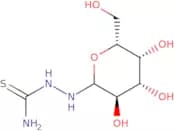
Fórmula:C9H17NO8Pureza:Min. 95%Peso molecular:267.24 g/molD-Galactopyranosyl thiosemicarbazide
CAS:D-Galactopyranosyl thiosemicarbazide is an organic compound that has been synthesized by methylation of the natural product, D-galactopyranosyl thiosemicarbazide. It is a white solid that can be used as a building block in the synthesis of other organic compounds. The fluorination of this compound has been carried out with N-fluorobenzenesulfonimide and N-fluorobenzoyl chloride to give the desired product. This compound is also available as a custom synthesis on request.Fórmula:C7H15N3O5SPureza:Min. 95%Peso molecular:253.32 g/mol4-Hydroxyestradiol 17-O-b-D-glucuronide
CAS:4-Hydroxyestradiol 17-O-b-D-glucuronide is a fluorinated methyl ether of estradiol, which is a polyketide natural product. It is used as an intermediate in the synthesis of complex carbohydrates. 4-Hydroxyestradiol 17-O-b-D-glucuronide is also known for its modification of saccharides and polysaccharides, including oligosaccharides and polysaccharides.Fórmula:C24H32O9Pureza:Min. 95%Peso molecular:464.51 g/mol4-Toluoyl 2,3-di-O-benzyl-4,6-O-benzylidene-α-D-thiomannopyranoside
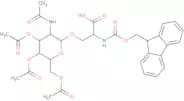
CAS:4-Toluoyl 2,3-di-O-benzyl-4,6-O-benzylidene-a-D-thiomannopyranoside is a modification of the sugar, Mannose. The chemical structure is similar to that of D-Mannose with the exception that one oxygen atom has been replaced with a fluorine atom. This structural change in the sugar's backbone imparts a higher degree of water solubility and a lower affinity for proteins. 4-Toluoyl 2,3-di-O-benzyl-4,6 -O -benzylidene -a -D -thiomannopyranoside is used as an artificial sweetener and flavor enhancer in food products.Fórmula:C34H34O5SPureza:Min. 95%Peso molecular:554.7 g/mol2-Acetamido-3,4,6-tri-O-acetyl-2-deoxy-b-D-galactopyranosyl-Fmoc serine
CAS:2-Acetamido-3,4,6-tri-O-acetyl-2-deoxy-b-D galactopyranosyl Fmoc serine is a modification of the natural glycoside 2 acetamido 3,4,6 tri O acetyl 2 deoxy b D galactopyranosyl. It is a synthetic carbohydrate that is used in the synthesis of complex carbohydrates. This product has been shown to be stable under acidic conditions and can be modified for use in glycosylation or other reactions.
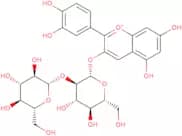
Fórmula:C32H36N2O13Pureza:Min. 95%Peso molecular:656.64 g/molCyanidin-3-O-sophoroside chloride
CAS:Cyanidin-3-O-sophoroside chloride (CAS: 6279-21-6) is a naturally occurring phenolic compound that has been isolated from the roots of Sophora flavescens. This compound is a glycosylated form of protocatechuic acid, which is an organic compound with antioxidant properties. The surface methodology on tissue structure showed that this compound can react with nucleophilic radicals and scavenge free radicals in the presence of chloride ions, which is important for its dietary and medicinal value. COS has also been shown to have anti-inflammatory activities in a model system by inhibiting the production of prostaglandins. COS can be extracted from plants by acidic hydrolysis or preparative high performance liquid chromatography.
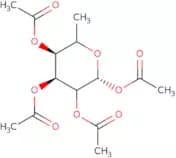
Fórmula:C27H31O16ClPureza:Min. 95%Forma y color:PowderPeso molecular:646.98 g/mol1,2,3,4-Tetra-O-acetyl-b-L-rhamopyranose
CAS:1,2,3,4-Tetra-O-acetyl-b-L-rhamopyranose is a fluorinated monosaccharide that is synthetically produced. It can be used in the synthesis of oligosaccharides and complex carbohydrates. 1,2,3,4-Tetra-O-acetyl-b-L-rhamopyranose is an important chemical intermediate for glycosylation reactions. This product has been modified with methyl groups and click chemistry to produce a reactive site for subsequent glycosylation reactions. 1,2,3,4 Tetra -O -acetyl -b -L -rhamopyranose has been shown to be stable to heat and acid conditions as well as high purity.Fórmula:C14H20O9Pureza:Min. 95%Peso molecular:332.3 g/mol1-O-Acetyl-2,3,5-tri-O-benzyl-L-ribofuranose
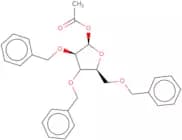
1-O-Acetyl-2,3,5-tri-O-benzyl-L-ribofuranose is a modified form of ribofuranose. It is a polymer that contains three or more monosaccharides linked together by glycosidic bonds. It has been modified with methyl groups and fluorine atoms to enhance its properties. This compound can be used in the synthesis of oligosaccharides, which are complex carbohydrates that are not found in nature and have potential applications as drugs.
Fórmula:C28H30O6Pureza:Min. 95%Peso molecular:462.53 g/molEthyl 4,6-O-benzylidene-3-O-tert-butyldimethylsilyl-2-O-levulinoyl-b-D-thioglucopyranoside
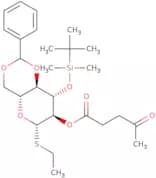
CAS:Ethyl 4,6-O-benzylidene-3-O-tert-butyldimethylsilyl-2-O-levulinoyl-b-D-thioglucopyranoside is a synthetic oligosaccharide that can be used for methylation. It is a fluorinated, complex carbohydrate that has been modified to have a high purity and low toxicity. This product has been custom synthesized for Click modification and oligosaccharides.Fórmula:C26H40O7SSiPureza:Min. 95%Peso molecular:524.74 g/molMethyl a-L-acosamine hydrochloride
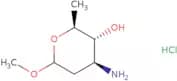
CAS:Methyl a-L-acosamine hydrochloride is a custom synthesis that belongs to the class of complex carbohydrates. It has been modified with methylation, glycosylation, and carbocation modification. This product is also fluorinated and has a high purity level. It can be used as an intermediate in the production of saccharides and other products.
Fórmula:C7H15NO3·HClPureza:Min. 95%Peso molecular:197.66 g/mol3,6-Di-O-butanoyl-1,2:4,5-di-O-isopropylidene-D-myo-inositol
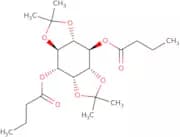
CAS:3,6-Di-O-butanoyl-1,2:4,5-di-O-isopropylidene-D-myo-inositol is a custom synthesis of an oligosaccharide. It is a polymer of glucose with 3 to 9 residues, which may be modified by methylation and glycosylation. The chemical formula for 3,6-Di-O-butanoyl-1,2:4,5-di-O-isopropylidene is C(14)H(30)O(8). 3,6 Di O butanoyl 1 2 4 5 di O isopropylidene D myo inositol has a molecular weight of 790.3 g/mol. The CAS number for this compound is 1307298 34 5. This compound is readily soluble in water and methanol. The purity of the material exceeds 98%.Fórmula:C20H32O8Pureza:Min. 95%Peso molecular:400.46 g/mol4-Isothiocyanatophenyl-a-D-glucopyranoside
CAS:4-Isothiocyanatophenyl-a-D-glucopyranoside is a synthetic fluorinated glycosylated oligosaccharide. Its chemical formula is C16H13N3O7. It has a molecular weight of 392.Fórmula:C13H15NO6SPureza:Min. 95%Peso molecular:313.33 g/mol1,2,3,4,6-Penta-O-acetyl-a-D-fructofuranose
CAS:1,2,3,4,6-Penta-O-acetyl-a-D-fructofuranose is a glycosylation product that is created by the reaction of 1,2,3,4,6-penta-O-acetylglucose and D-fructose. It is an oligosaccharide that belongs to the class of complex carbohydrates. This compound can be customized to have any desired substitution pattern or modification. 1,2,3,4,6-Penta-O-acetyl-a-D-fructofuranose has been shown to have high purity and can be used in a wide range of applications.Fórmula:C16H22O11Pureza:Min. 95%Peso molecular:390.34 g/mol3,5-O-Isopropylidene-D-arabinfuranose
3,5-O-Isopropylidene-D-arabinfuranose is a Modification of an oligosaccharide. It is a methylated monosaccharide that is synthesized in the laboratory. This product has been shown to have a CAS number, which is used to uniquely identify substances and establish their quality and purity. 3,5-O-Isopropylidene-D-arabinfuranose can be used as a raw material in the synthesis of complex carbohydrates such as polysaccharides or glycosylation with other compounds.Pureza:Min. 95%D-Galactose-4-D
CAS:Please enquire for more information about D-Galactose-4-D including the price, delivery time and more detailed product information at the technical inquiry form on this pageFórmula:C6H12O6Pureza:Min. 95%Peso molecular:181.16 g/moltrans-Zeatin-9-glucuronide
trans-Zeatin-9-glucuronide is a cytokinin derivative, which is synthesized from the conjugation of trans-zeatin with glucuronic acid. It is sourced from plant metabolic processes where cytokinins play a pivotal role in promoting cell division and growth regulation. The mode of action of trans-Zeatin-9-glucuronide involves its capacity to modulate signal transduction pathways linked to cytokinin activity. This regulation influences various physiological processes such as cell proliferation, differentiation, and morphogenesis in plants.
Fórmula:C16H21N5O7Pureza:Min. 95%Peso molecular:395.37 g/molb-D-Glucosyl C4-ceramide
CAS:b-D-Glucosyl C4-ceramide is a synthetic, fluorinated polysaccharide that has been modified with methylation, saccharide and glycosylation. This product is a complex carbohydrate consisting of a polymer of D-glucose units linked by β-(1→4) bonds. It is used in the synthesis of polysaccharides and oligosaccharides. The b-D-glucosyl C4-ceramide can be custom synthesized to meet customer specifications for purity, molecular weight and other physical properties.Fórmula:C28H53NO8Pureza:Min. 95%Peso molecular:531.72 g/molD-Arabinose-1-D
CAS:D-Arabinose-1-D is a potent inhibitor of human kinases, which are enzymes that play a crucial role in the regulation of cell growth and division. This analog has been shown to be effective in inhibiting tumor growth and inducing apoptosis in cancer cells. D-Arabinose-1-D is commonly used as a medicinal compound for its anticancer properties. It has also been found in human urine and Chinese medicinal herbs. As an inhibitor of protein kinases, D-Arabinose-1-D can block the activity of these enzymes, which are often overexpressed in cancer cells. The inhibition of these kinases can lead to the suppression of tumor growth and increase the efficacy of other anticancer drugs.Fórmula:C5H10O5Pureza:Min. 95%Peso molecular:151.14 g/mol2-Acetamido-4-O-(2-acetamido-2-deoxy-b-D-glucopyranosyl)-2-deoxy-D-muramic acid
CAS:2-Acetamido-4-O-(2-acetamido-2-deoxy-b-D-glucopyranosyl)-2-deoxy-D-muramic acid is a synthetic, monosaccharide that is used in the synthesis of complex carbohydrates. 2AA2DMUA has been modified with methylation, glycosylation, and fluorination. This product has a CAS No. 41137-10-4 and can be custom synthesized for your needs.Fórmula:C19H32N2O13Pureza:Min. 95%Peso molecular:496.46 g/molHyaluronate octasaccharide
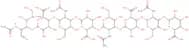
CAS:Hyaluronate octasaccharide is a regulatory molecule that has been found to be useful for staining and as a chondrocyte culture supplement. Hyaluronate octasaccharide is composed of two sugar molecules: glucuronic acid and N-acetylglucosamine. The molecular weight of this compound is about 5000 Daltons, and it has been found to show high levels of proton hydrogen bonding interactions with other molecules in the extracellular matrix. It also contains oligosaccharides and disaccharides. Hyaluronate octasaccharide can be used in vitro to stimulate cell growth, which may be due to its ability to stabilize collagen and elastin fibers by binding with collagenase.Fórmula:C56H86N4O45Pureza:Min. 95%Peso molecular:1,535.3 g/molADP-4-deoxy-D-glucose
ADP-4-deoxy-D-glucose is a carbohydrate derivative that has been modified with fluorination. ADP-4 is a methylated, custom synthesized oligosaccharide that contains saccharide and polysaccharide chains. It is not commercially available and must be custom synthesized. The modification of the sugar to ADP-4 involves the addition of one or more atoms of fluorine and may be accomplished by click chemistry. This product has high purity and can be used as a research reagent in the synthesis of complex carbohydrates.
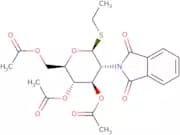
Pureza:Min. 95%Ethyl 3,4,6-tri-O-acetyl-2-deoxy-2-phthalimido-b-D-thioglucopyranoside
CAS:The compound is an O-acetylated glycoside of 2-deoxy-2-phthalimido-b-D-thioglucopyranoside with a sugar moiety. It is used in the synthesis of complex carbohydrates with click modification and high purity.
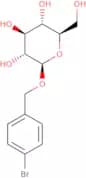
Fórmula:C22H25NO9SPureza:Min. 95%Forma y color:PowderPeso molecular:479.5 g/mol(4-Bromophenyl)methyl-beta-D-glucopyranoside
CAS:The 4-Bromophenyl)methyl-beta-D-glucopyranoside is a synthetic monosaccharide with a brominated phenyl group. It is a complex carbohydrate that can be used as an oligosaccharide or sugar. The 4-Bromophenyl)methyl-beta-D-glucopyranoside can be modified with fluorination, methylation, glycosylation and click modification. This product is available in high purity and custom synthesis.
Fórmula:C13H17BrO6Pureza:Min. 95%Peso molecular:349.17 g/mol1-Methylene-5-a-androstan-3-a-ol-17-one glucuronide
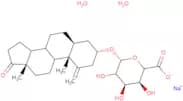
1-Methylene-5-a-androstan-3-a-ol-17-one glucuronide is a synthetic, modified sugar that is used for the synthesis of complex carbohydrates. It is available in high purity and can be custom synthesized according to customer specifications. 1 Methylene 5 a androstan 3 a ol 17 one glucuronide can be fluorinated, glycosylated, or methylated to meet the needs of different customers. This product has CAS No. 9002-00-6 and is available on request.Fórmula:C26H37O8·Na·2H2OPureza:Min. 95%Peso molecular:536.59 g/mol






![8-D-Glucopyranosyl-7,8,9,10-tetrahydro-6,10-methano-6H-pyrazino[2,3-h][3]benzazepine](/_next/image/?url=https%3A%2Fstatic.cymitquimica.com%2Fproducts%2F3D%2Fthumb-webp%2FMG183915.webp&w=3840&q=75)