Monosacáridos
Subcategorías de "Monosacáridos"
- Allosas(11 productos)
- Arabinosas(21 productos)
- Eritrosas(11 productos)
- Fructosas(9 productos)
- Fucosas(36 productos)
- Galactosamina(41 productos)
- Galactosa(261 productos)
- Glucosas(365 productos)
- Ácidos glucurónicos(52 productos)
- Glico-sustratos para enzimas(78 productos)
- Gulosas(6 productos)
- Idosas(4 productos)
- Inositoles(15 productos)
- Lyxosas(4 productos)
- Manosas(65 productos)
- O-glicanos(48 productos)
- Psicosas(3 productos)
- Ramnosas(10 productos)
- Ribosas(61 productos)
- Ácidos siálicos(100 productos)
- Sorbosas(4 productos)
- Azúcares(173 productos)
- Tagatosis(4 productos)
- Taloses(8 productos)
- Xilosas(20 productos)
Se han encontrado 6088 productos de "Monosacáridos"
3-Azidopropyl 2-acetamido-2-deoxy-3,4,6-tri-O-acetyl-b-D-glucopyranoside
3-Azidopropyl 2-acetamido-2-deoxy-3,4,6-tri-O-acetyl-b-D-glucopyranoside is a synthetic carbohydrate. It is a modification of the natural saccharide 3,4,6 tri O acetyl b D glucopyranoside. The modification in this case is the addition of an azide group to one of the hydroxyl groups on the sugar. This product has a CAS number and can be custom synthesized to meet your specific needs. It is available in high purity and can be modified by methylation or glycosylation.Pureza:Min. 95%Methyl 4,6-O-benzylidene-2,3-di-O-benzyl-a-D-glucopyranoside
CAS:Methyl 4,6-O-benzylidene-2,3-di-O-benzyl-a-D-glucopyranoside is a synthetic compound that is used as an intermediate in the production of other chemicals. The compound has been shown to be resistant to methylation and glycosylation. It has also been modified with a click chemistry reaction and fluorinated. Methyl 4,6-O-benzylidene-2,3-di-O-benzyl-a-D -glucopyranoside is a carbohydrate with a molecular formula of C12H24O14 and a molecular weight of 594.8 g/mol.Fórmula:C28H30O6Pureza:Min. 95%Forma y color:White PowderPeso molecular:462.53 g/molEzetimibe hydroxy-D-glucuronide D4
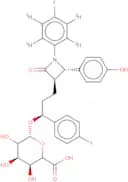
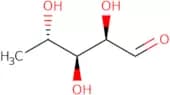
Producto controladoEzetimibe hydroxy-D-glucuronide D4 is a synthetic glycosylation product, which belongs to the category of oligosaccharides. It is a sugar that has been modified through fluorination and methylation. This product is soluble in water and has a purity of greater than 99% (based on HPLC analysis). Ezetimibe hydroxy-D-glucuronide D4 is a white, crystalline powder with a molecular weight of 586.2 g/mol and CAS number 144479-19-5.Fórmula:C30H25D4F2NO9Pureza:Min. 95%Peso molecular:589.57 g/mol5-Deoxy-L-arabinose
CAS:5-Deoxy-L-arabinose is a tetramethylurea derivative that has been synthesized for the treatment of hyperphenylalaninemia, an atypical form of phenylketonuria. It is an analog of 5-deoxy-l-ribose and can be used to generate molybdate from ammonium molybdate. This product also has antiviral activity and can be used to inhibit the growth of filamentous fungi, such as Verticillium dahliae. 5-Deoxy-L-arabinose can be used as a phase separator in chromatography. It is stereoselective and does not react with acid catalysts.Fórmula:C5H10O4Pureza:Min. 95%Forma y color:Slightly Yellow Clear Viscous LiquidPeso molecular:134.13 g/mol2-Azido-((R)-3,5-O-benzylidene)-2,6-dideoxy-L-mannofuranose
2-Azido-((R)-3,5-O-benzylidene)-2,6-dideoxy-L-mannofuranose is a carbohydrate with a complex sugar structure. This compound is synthesized by reacting 2,6-dideoxy-L-mannofuranose with sodium azide and benzyl bromide in the presence of triethylamine. The resulting product is purified by crystallization from methanol and ethanol. This chemical has been shown to react with DNA to form a stable covalent bond at the N7 position of guanine residues.Pureza:Min. 95%D-Erythrono-1.4-lactone
D-Erythrono-1.4-lactone is a carbohydrate that belongs to the group of oligosaccharides. It is a synthetic sugar with the CAS number 687-83-0. This carbohydrate is a monosaccharide with an oxygen atom in the alpha position, which has been fluorinated and methylated. The methylation on this sugar can be accomplished by either a glycosylation or click chemistry modification. This sugar can be used as an anti-tumor agent or as an adjuvant for chemotherapy treatments.
Pureza:Min. 95%1,4-Anhydro-D-xylitol
CAS:1,4-Anhydro-D-xylitol is a solid catalyst that is used for the synthesis of 1,4-anhydro-D-glucitol. The reaction follows a nucleophilic attack by sodium citrate on the oxygen atom at the anomeric position of D-xylose. 1,4-Anhydro-D-xylitol has been shown to be present in fruit extracts and it has been hypothesized that it may have biological activity as a growth factor or as a polylactic acid (PLA) or fatty acid film-forming polymer.
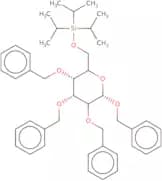
Fórmula:C5H10O4Pureza:Min. 95%Forma y color:PowderPeso molecular:134.13 g/mol1,2,3,4-Tetra-O-benzyl-6-O-triisopropylsilyl-a-D-mannopyranose
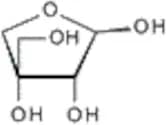
1,2,3,4-Tetra-O-benzyl-6-O-triisopropylsilyl-a-D-mannopyranose is a methylated saccharide. It has the CAS number of 43471-92-5 and is a synthetic modification of mannopyranose. This product can be modified with other functional groups to create customized synthesis for glycosylation and fluorination. It has high purity and is free from contaminants such as proteins, lipids, or carbohydrates.Fórmula:C43H56O6SiPureza:Min. 95%Peso molecular:697.01 g/molD-Apiose - Aqueous solution
CAS:D-Apiose is a triterpenoid saponin that is isolated from the bark of the Quillaja saponaria tree. It has been shown to inhibit tumor growth and induce cell death in animal models. D-Apiose is also known to be an inhibitor of sugar transport, hydroxylation, and ribitol dehydrogenase, which are all important cellular processes. This compound induces cell lysis by binding to cellular organelles such as the mitochondria and endoplasmic reticulum. Cell lysis leads to the release of intracellular contents into the extracellular environment, which can have potent antitumor activity. The hydroxyl group on D-Apiose allows it to react with ribitol dehydrogenase, which catalyzes a reaction involving the conversion of ribitol into 2-deoxyribose 5-phosphate. The ultimate product of this reaction is galacturonic acid, which may have anti-Fórmula:C5H10O5Pureza:Min. 95%Forma y color:Clear LiquidPeso molecular:150.13 g/mol5-O-tert-Butyldimethylsilyl-2,3-O-isopropylidene-D-ribofuranose
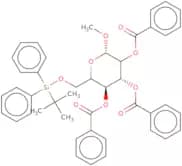
CAS:5-O-tert-Butyldimethylsilyl-2,3-O-isopropylidene-D-ribofuranose is a stereoselective, unsubstituted aryl group. It is used in the synthesis of deodorants and antiperspirants. This compound has been shown to have an effect on perspiration by reducing the amount of sweat produced by the apocrine glands. The mechanism of action may be related to its ability to inhibit c1-c4 esters that are involved in the synthesis of odoriferous substances. 5-O-tert-Butyldimethylsilyl-2,3-O-isopropylidene-D-ribofuranose also inhibits bacterial growth by binding to DNA gyrase and topoisomerase IV, which are enzymes that maintain the integrity of bacterial DNA.Fórmula:C14H28O5SiPureza:Min. 95%Forma y color:White PowderPeso molecular:304.45 g/molMethyl 2,3,4-tri-O-benzoyl-6-O-tert-butyldiphenylsilyl-a-D-galactopyranoside
Methyl 2,3,4-tri-O-benzoyl-6-O-tert-butyldiphenylsilyl-a-D-galactopyranoside is a custom synthesis of an oligosaccharide with a CAS number. It is an Oligosaccharide that is modified with Methylation and Glycosylation. The chemical modification of the saccharide moiety was achieved through Click chemistry using a triarylphosphine and methyl iodide followed by protection with tert butyl diphosphate. The chemical modification was done to the hydroxyl group at the C2 position on the glycosidic bond. This product has been fluorinated to give a high purity product. Methyl 2,3,4-tri-O-benzoyl-6-O-(tert butyldiphenylsilyl)-a D galactopyranoside isFórmula:C44H44O9SiPureza:Min. 95%Peso molecular:744.92 g/mol4,6-O-Benzylidene-1-O-(N-Cbz-3-aminopropyl)-b-D-galactopyranose
CAS:4,6-O-Benzylidene-1-O-(N-Cbz-3-aminopropyl)-b-D-galactopyranose is a methylated saccharide. It can be modified with click chemistry to produce a wide variety of compounds. 4,6-O-Benzylidene-1-O-(N-Cbz 3 -aminopropyl)-b D galactopyranose is a synthetic sugar that can be used for glycosylation and polysaccharide synthesis. This product is available in various purities and CAS number 189819 33 8.Fórmula:C24H29NO8Pureza:Min. 95%Peso molecular:459.49 g/molD-Fructose-1,6-diphosphate
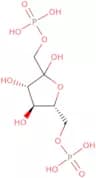
CAS:D-Fructose-1,6-diphosphate is a chemical that is found in the cytosol of cells. It is an intermediate in the metabolism of fructose and also has an important role in the synthesis of fatty acids and phospholipids. D-Fructose-1,6-diphosphate is an effective inhibitor of sodium succinate dehydrogenase, which converts succinate to fumarate. D-Fructose-1,6-diphosphate has a neutral pH profile and is not affected by changes in pH levels. The optimum pH for this compound is between 6.5 and 7.5. D-Fructose-1,6-diphosphate binds to proteins with unsaturated alkyl chains such as creatine kinase and glutamate dehydrogenase. It has been shown to have hemolytic effects on erythrocytes (red blood cells) at high concentrations, which may be due to its ability to bindFórmula:C6H14O12P2Pureza:(¹H-Nmr) Min. 95 Area-%Forma y color:White PowderPeso molecular:340.12 g/mol5-Bromo-5,6-dideoxy-3-O-benzoyl-D-gulono-1.4-lactone
5-Bromo-5,6-dideoxy-3-O-benzoyl-D-gulono-1.4-lactone is a Carbohydrate with the molecular formula C8H12Br2O7 and a molecular weight of 338. The CAS number for this compound is 9061-52-8. This compound is an Oligosaccharide with a molecular weight of 334. The structure of this compound is related to the structure of the natural sugar, glucose. 5-Bromo-5,6-dideoxy-3-O-(benzoyl)-D--gulono--1.4--lactone has been synthesized from 5,6 dideoxy erythrose in which one hydroxyl group has been replaced by bromine and one hydroxyl group has been replaced by benzoyl chloride. It has also been methylated and glycosylated.Pureza:Min. 95%2-Propynyl-2,3,4,6-tetra-O-acetyl-b-D-glucopyranoside
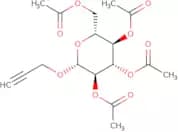
CAS:2-Propynyl-2,3,4,6-tetra-O-acetyl-b-D-glucopyranoside is a carbohydrate. It is an oligosaccharide that contains a glucose molecule with four acetyl groups at the 2 position. This type of modification can be used to create high purity compounds for research purposes. 2-Propynyl-2,3,4,6-tetra-O-acetyl-b-D-glucopyranoside also has methylation and glycosylation sites available for custom synthesis.Fórmula:C17H22O10Pureza:Min. 95%Forma y color:White PowderPeso molecular:386.35 g/mol1,2-Di-O-tert.butyldimethylsilyl-3,4:5,6-di-O-isopropylidene-D-glycero-a-D-talopyranoside
This compound is a high purity, custom synthesis. It is a sugar that can be fluorinated and glycosylated. It also has the ability to be modified with methylation and modification. The CAS Number is 1213-78-3. This carbohydrate has many functions: it can act as an oligosaccharide or monosaccharide and can also be used as a complex carbohydrate.Pureza:Min. 95%1-O-Methyl-β-D-xylopyranoside
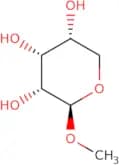
CAS:1-O-Methyl-beta-D-xylopyranoside is a glycoside that consists of a glucose molecule linked to the hydroxyl group of p-hydroxybenzoic acid through an alpha glycosidic bond. It is found in many plants, such as in the leaves of the common bay tree (Laurus nobilis) and in the bark of the cinnamon tree (Cinnamomum verum). 1-O-Methyl-beta-D-xylopyranoside is used as a sweetener and flavoring agent. It is also used in some pharmaceutical drugs, including antiulcer agents and antidiarrheal agents. This compound has been shown to have an effective dose of 5 mg/kg when given orally to humans.Fórmula:C6H12O5Pureza:Min. 98.0 Area-%Peso molecular:164.16 g/mol3-O-Benzyl-4-(hydroxymethyl)-1,2-O-isopropylidene-α-D-ribofuranose
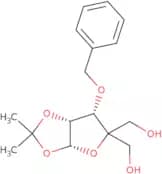
CAS:Synthetic building block for nucleic acid research
Fórmula:C16H22O6Pureza:Min. 98 Area-%Forma y color:White PowderPeso molecular:310.34 g/mol(2R, 3S, 4S) -N-Benzyl-3- fluoro- 4- (hydroxymethyl) - 2- azetidinecarboxylic acid
(2R, 3S, 4S)-N-Benzyl-3-fluoro-4-(hydroxymethyl)-2-azetidinecarboxylic acid is a synthetic sugar that is custom synthesized for pharmaceutical applications. It has a purity of 98% and is available in different quantities. The drug can be modified with fluorination, glycosylation, methylation, and modification. (2R, 3S, 4S)-N-Benzyl-3-fluoro-4-(hydroxymethyl)-2-azetidinecarboxylic acid can be used as a sugar or carbohydrate in the synthesis of oligosaccharide or monosaccharide. It has an CAS number of 58614-82-1 and can be found in the Glycosylations and Synthetic sections of the catalog.Pureza:Min. 95%6-Azido-6-deoxy-D-galactose
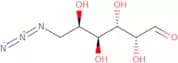
CAS:6-Azido-6-deoxy-D-galactose is a mutagenic compound that is used as a carbon source in the synthesis of other compounds. It has been shown to have mutagenicity in TA100 cells and to be active against Staudinger's naphthol. The compound is synthesised by chemoenzymatic methods, which involve the use of alcohols and an acetyl group. 6-Azido-6-deoxy-D-galactose can be used as a mutagenic agent for the production of mutants with desired properties.Fórmula:C6H11N3O5Pureza:Min. 95%Forma y color:White PowderPeso molecular:205.17 g/molD-Glucose-6-phosphate barium
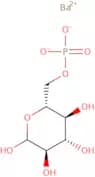
CAS:D-Glucose-6-phosphate barium salt is a custom synthesis of the saccharide, which is a component of the carbohydrates. It has been modified by fluorination, methylation, and monosaccharide modification. The synthesis of this compound can be done in a single reaction, and it is an example of glycosylation. This product has been shown to have high purity.Fórmula:C6H13O9P•BaxPureza:Min. 95%Forma y color:PowderPeso molecular:395.45(2S, 3R, 4R) -3- Fluoro- 4- (hydroxymethyl) - 1- (phenylmethyl) -2- azetidinecarboxylic acid
CAS:This is a synthetic carbohydrate with a fluorinated azetidinecarboxylic acid moiety. The monosaccharide is an L-rhamnose derivative, which has been methylated and glycosylated at the C-5 position. This sugar has been modified by Click chemistry to introduce a reactive group at the C-3 position. The oligosaccharides are composed of D-glucose, L-galactose, and L-fucose, which have been modified by fluorination and polysaccharide modification. This compound can be custom synthesized to suit your needs.Pureza:Min. 95%D-Gluconic acid magnesium (II) hydrate
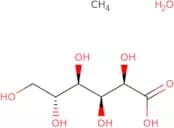
CAS:D-Gluconic acid magnesium (II) hydrate is a proton that is used as an enzyme inhibitor. It has been shown to inhibit glutamate pyruvate transaminase, which is involved in the production of inflammatory cytokines such as TNF-α and IL-1β. D-Gluconic acid magnesium (II) hydrate also inhibits creatine kinase, which plays an important role in the production of inflammatory cytokines. This compound has been shown to be effective at inhibiting bowel disease and inflammatory diseases.Fórmula:C6H11O7Mg·xH2OPureza:Min. 95%Forma y color:PowderPeso molecular:207.3 g/molMethyl 2,3,4-tri-O-acetyl-6-O-tert-butyldiphenylsilyl-a-D-mannopyranoside
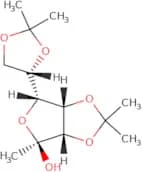
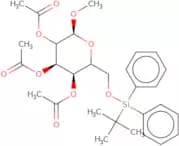
Methyl 2,3,4-tri-O-acetyl-6-O-tert-butyldiphenylsilyl-a-D-mannopyranoside is a custom synthesis of an oligosaccharide. It is modified by fluorination, methylation and acetylation. This compound can be used in the production of glycosylated proteins for use as pharmaceuticals. The CAS number for this compound is 568792–66–8.Fórmula:C29H38O9SiPureza:Min. 95%Peso molecular:558.71 g/mol(3aS, 4S, 6aR) Tetrahydro- 2, 2, 6a- trimethyl- 4H- 1, 3- dioxolo[4, 5- c] pyrrole- 4- methanol
(3aS, 4S, 6aR) Tetrahydro- 2, 2, 6a- trimethyl- 4H- 1, 3- dioxolo[4, 5- c] pyrrole- 4- methanol is a synthetic compound that is a member of the class of compounds known as tetrahydropyrroloquinolines. It is a monosaccharide sugar with an alkyl group at C6 and an amine group at C2. The compound has been shown to inhibit bacterial growth by inhibiting DNA synthesis. This inhibition leads to the production of less nucleotides and nucleic acids necessary for DNA replication. The methylation at C2 is critical for this inhibitory effect.Pureza:Min. 95%meso-D-glycero-D-gulo-heptitol
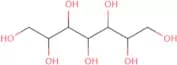
CAS:Meso-D-glycero-D-gulo-heptitol is an enzyme inhibitor that is used in food composition. It has a redox potential of +0.5 V and can be used to inhibit the growth of metal hydroxides through chelation. This compound was found to have skin cell protective effects, as well as an ability to inhibit protein synthesis. Meso-D-glycero-D-gulo-heptitol is also a natural compound with physiological function, such as the prevention of dmannnoheptulose from being converted into D-mannitol. The hydrochloric acid or alcohol residue on this compound does not cause any adverse effects on human cells because it does not affect their redox potentials.Fórmula:C7H16O7Pureza:Min. 95%Peso molecular:212.2 g/mol2-Azidoethyl 2-acetamido-2-deoxy-b-D-glucopyranoside
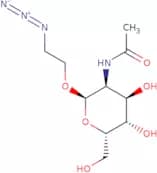
CAS:2-Azidoethyl 2-acetamido-2-deoxy-b-D-glucopyranoside is a toxic compound that inhibits protein synthesis by binding to the enzyme glucokinase. It has been shown to inhibit the release of fatty acids in hepatocytes and to inhibit triglyceride lipase activity in cell culture. This chemical also has a damaged sequence, which is a factor that may lead to toxicity. 2-Azidoethyl 2-acetamido-2-deoxy-b-D-glucopyranoside also has been shown to have physiological activities, such as inhibition of cardiac cells and symptoms such as inflammation. These effects are thought to be mediated by its ability to bind with DNA and RNA, altering their function.Fórmula:C10H18N4O6Pureza:Min. 95%Forma y color:White PowderPeso molecular:290.27 g/mol1-Deoxy- 4- C- methyl- 3, 4-isopropylidene-L- erythro- 2- pentulose
1-Deoxy-4-C-methyl-3,4-isopropylidene-L-erythro-2-pentulose is a custom synthesis of saccharide in nature. It has fluorination and methylation modification. It is a monosaccharide, which can be modified to form an oligosaccharide or polysaccharide. The CAS number for this compound isPureza:Min. 95%D-Xylo-Pentodialdose-5-hydrate
D-Xylo-Pentodialdose-5-hydrate is a custom synthesis that is used for the preparation of oligosaccharides and polysaccharides. It is an active form that is synthesized by the fluorination of D-xylose. The monomeric sugar penta-D-xylo-D-galactopyranoside has a molecular weight of 259.28 g/mol and a purity of >99%. This compound has been modified in order to increase its activity.Pureza:Min. 95%6-Deoxy-2,3:4,5-di-O-isopropylidene-L-glucose
6-Deoxy-2,3:4,5-di-O-isopropylidene-L-glucose is a methylated sugar that is custom synthesized for research purposes. It is an oligosaccharide with a polysaccharide backbone. 6DG has been modified with fluorination and the Click reaction to produce novel compounds. The compound has been shown to have various biological activities, including anti-inflammatory effects. 6DG is a sugar with a complex carbohydrate structure that can be used in synthetic chemistry for modification and modification reactions.
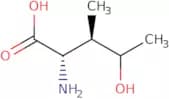
Pureza:Min. 95%4-Hydroxy-L-isoleucine
CAS:Insulinotropic; anti-diabeticFórmula:C6H13NO3Pureza:Min. 98 Area-%Forma y color:White PowderPeso molecular:147.17 g/mol2, 5- Anhydro- 3- deoxy-D- xylo- hexonic acid 1-propyl ester
2,5-Anhydro-3-deoxy-D-xylo-hexonic acid 1-propyl ester is a modification of the oligosaccharide xylan. The compound has been synthesized using chemical methods and can be used as a raw material in the production of other products. 2,5-Anhydro-3-deoxy-D-xylo-hexonic acid 1-propyl ester has been custom synthesized to produce high purity and is available with CAS number. It is a monosaccharide that can be methylated and glycosylated and is a polysaccharide made up of sugars (sucrose, glucose, fructose) with various types of saccharides (sugar).Pureza:Min. 95%[(2S, 3R,4S) - 3-Hydroxy-4-hydroxymethyl- 1- benzyl - 2- azetidinyl]carboxylic acid methylamide
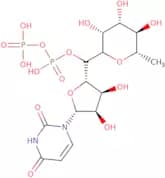
(2S, 3R,4S) - 3-Hydroxy-4-hydroxymethyl- 1- benzyl - 2- azetidinyl]carboxylic acid methylamide is a custom synthesis. It has been fluorinated at the 3 position. The glycosylation of this compound can be done by using a variety of sugars such as monosaccharides and disaccharides or oligosaccharides. This compound can also be methylated at the alpha position to produce (2S,3R,4S) - 3-methyoxy-4-hydroxymethyl-1-benzyl - 2-azetidinyl]carboxylic acid methylamide. This molecule is a carbohydrate. It is a complex carbohydrate that contains saccharide and oligosaccharide moieties.Pureza:Min. 95%UDP-α-L-rhamnose sodium
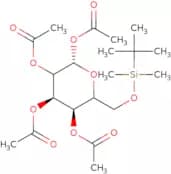
CAS:UDP-α-L-rhamnose sodium is a non-invasive prenatal diagnosis (NIPD) technique that detects the chorionic villus sampling (CVS) or amniocentesis samples of women. It is an in vivo assay that can be performed on pregnant women at any gestational age. The test is based on the detection of the uptake of UDP-α-L-rhamnose by cells, and it accommodates a wide range of sample types. The procedure is rapid, inexpensive, and highly accurate. Furthermore, it can be used as a screening tool for certain genetic disorders such as Down syndrome and Klinefelter syndrome.Fórmula:C15H22N2Na2O16P2Pureza:Min. 95%Forma y color:PowderPeso molecular:594.27 g/mol1,2,3,4-Tetra-O-acetyl-6-O-(tert-butyldimethylsilyl)-b-D-glucopyranose
CAS:1,2,3,4-Tetra-O-acetyl-6-O-(tert-butyldimethylsilyl)-b-D-glucopyranose is a custom synthesis of an Oligosaccharide. It is a complex carbohydrate that has been modified with Methylation and Glycosylation. Carbohydrate Click chemistry has been used to modify the sugar molecule with Fluorination. This product is manufactured in high purity and can be used for pharmaceutical purposes.Fórmula:C20H34O10SiPureza:Min. 95%Peso molecular:462.57 g/mol2-Amino-2-deoxy-D-talose
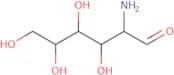
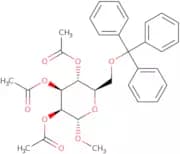
CAS:2-Amino-2-deoxy-D-talose (2ADDT) is an intermediate in the synthesis of 2,3:4,5-di-O-acetylideneamino-2,3:4,5-di-O-methylideneamino D -talose. It is obtained by the hydrolysis of 2,3:4,5-di-O-acetylideneamino D -talose with hydrochloric acid and methanol. The product is a white solid that can be purified by recrystallization from water or ethanol. 2ADDT can be converted to 2,3:4,5-di - O - acetylideneamino D - talose by treatment with sodium methoxide in methanolic solution. 2ADDT also reacts with nitromethane in methanolic solution to produce d - lyxose and 1 deoxy 1 nitroPureza:Min. 95%Methyl 2,3,4-tri-O-acetyl-6-O-trityl-a-D-mannopyranoside
CAS:Methyl 2,3,4-tri-O-acetyl-6-O-trityl-a-D-mannopyranoside is a custom synthesis that is fluorinated and acetylated. It is an oligosaccharide with a complex carbohydrate structure. Methyl 2,3,4-tri-O-acetyl-6-O-trityl -a D mannopyranoside has been modified to include fluorine atoms as well as acetyl groups. This compound is intended for use in click chemistry reactions to modify proteins.Fórmula:C32H34O9Pureza:Min. 95%Peso molecular:562.62 g/mol(1R) -1- [(2S, 3R) - 3- Hydroxy- 1- butyl - 2- azetidinyl] -1, 2- ethanediol
(1R) -1- [(2S, 3R) - 3- Hydroxy- 1- butyl - 2- azetidinyl] -1, 2- ethanediol is a glycosylase that catalyzes the hydrolysis of terminal sialic acid residues from oligosaccharides and monosaccharides. It is used in the synthesis of complex carbohydrates. This glycosylase has been shown to be highly specific for terminal sialic acids and can also be used to produce oligosaccharides with desired linkages between the sugars. The enzyme is most active at low pH and high temperatures.
Pureza:Min. 95%2,3-Di-O-benzoyl-L-threonic acid-1,4-lactone
2,3-Di-O-benzoyl-L-threonic acid-1,4-lactone is a custom synthesis of a fluorinated monosaccharide methylated at the C2 position. It is an oligosaccharide with a saccharide and polysaccharide linkage. The glycosylation of this compound has been modified by the Click chemistry reaction to create new sugar moieties.Pureza:Min. 95%4-O-Benzyl-2-O-levulinoyl-3-O-para-methoxybenzyl-a-L-rhamnopyranosyl trichloroacetimidate
4-O-Benzyl-2-O-levulinoyl-3-O-para-methoxybenzyl-a-L-rhamnopyranosyl trichloroacetimidate is a synthetic sugar that has been fluorinated and methylated. It has been custom synthesized for use in glycosylation and is also used as a reagent for click chemistry to modify complex carbohydrates. This compound is available with high purity, which is determined by its chemical composition, including the absence of impurities and the presence of only one type of atom. 4-O-Benzyl--2--O--levulinoyl--3--O--para--methoxybenzyl--a--L--rhamnopyranosyl trichloroacetimidate can be found on CAS registry number 10082282.Fórmula:C28H32Cl3NO8Pureza:Min. 98 Area-%Peso molecular:616.91 g/mol3,4-Di-O-acetyl-L-rhamnal
CAS:3,4-Di-O-acetyl-L-rhamnal is a synthetic sugar with the molecular formula C9H11F2N3O8. It can be used as a monomer for the synthesis of oligosaccharides or polysaccharides. 3,4-Di-O-acetyl-L-rhamnal is fluorinated and methylated to produce the desired product. This sugar can be synthesized in custom quantities and has a high purity level.Fórmula:C10H14O5Peso molecular:214.22 g/mol(3S, 4R,5S) -3-O-Benzhydryloxybis(trimethylsilyloxy)silyl- 1-benzyl-4,5-O-isopropylidene-3, 4, 5- piperidinetriol
(3S, 4R,5S) -3-O-Benzhydryloxybis(trimethylsilyloxy)silyl- 1-benzyl-4,5-O-isopropylidene-3, 4, 5- piperidinetriol is a synthetic monosaccharide that can be used in the synthesis of oligosaccharides and complex carbohydrates. This compound has a molecular weight of 487.43 g/mol and a CAS number of 634265-09-2. It is an Oligosaccharide that contains a sugar chain with three to five monosaccharide units. This product has been custom synthesized for the modification of glycans or polysaccharides by methylation or click chemistry.Pureza:Min. 95%Methyl 3,5-di-O-acetyl-2-deoxy-b-D-ribofuranoside
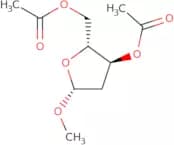
CAS:Methyl 3,5-di-O-acetyl-2-deoxy-b-D-ribofuranoside is a synthetic sugar that is used in the synthesis of glycosides. It is a high purity product and can be custom synthesized to meet your needs. This product is available as a solution in water and is also offered as an oil. Methyl 3,5-di-O-acetyl-2-deoxy-b-D-ribofuranoside is soluble in alcohols and ethers, but insoluble in hydrocarbons or chlorinated solvents. The CAS number for this product is 62853–55–8. Methyl 3,5-di-O-[(acetyloxymethyl)oxymethyl]-2 deoxy-[beta]D ribofuranoside can be used for Click modification reactions to introduce acetyl groups on the sugar moiety. Click chemistry has been shown to haveFórmula:C10H16O6Pureza:Min. 95%Peso molecular:232.23 g/molMethyl 2,3-di-O-p-toluenesulfonyl-a-D-glucopyranoside
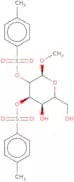
Methyl 2,3-di-O-p-toluenesulfonyl-a-D-glucopyranoside is a high purity, custom synthesis sugar that is used in glycosylation and modification. It has a CAS number of 83792-07-4 and can be synthesized from methyl p-toluenesulfonate, D-glucose, and sodium hydroxide. Methyl 2,3-di-O-p-toluenesulfonyl-a-Dglucopyranoside has been shown to react with fluorine to form fluoro derivatives. This compound reacts with glycosylations and modifications such as methylation or acetylation. It is also an oligosaccharide that is composed of monosaccharides and saccharides.
Fórmula:C21H26O10S2Pureza:Min. 95%Peso molecular:502.56 g/mol5-Azido-2-C-(benzylaminomethyl)-5-deoxy-2,3-O-isopropylidene-L-lyxonic acid b-lactam
5-Azido-2-C-(benzylaminomethyl)-5-deoxy-2,3-O-isopropylidene-L-lyxonic acid b-lactam is a synthetic glycoside. It is an intermediate in the synthesis of various saccharides and oligosaccharides. 5-Azido-2-C-(benzylaminomethyl)-5-deoxy-2,3-O-isopropylidene L -lyxonic acid b -lactam has been shown to be useful for click modification, a technique used to modify saccharides and oligosaccharides with azide groups.Pureza:Min. 95%Dodecyl a-D-thiomannopyranoside
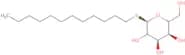
Dodecyl a-D-thiomannopyranoside is a glycosylation reagent that has been used in the synthesis of complex carbohydrates, polysaccharides, and oligosaccharides. It is a methylated thioglycoside that can be used for click modification. Dodecyl a-D-thiomannopyranoside is an excellent fluorinating agent for saccharides and sugars, which can be accomplished using sodium hypofluorite. Dodecyl a-D-thiomannopyranoside is also an excellent monosaccharide synthesizer and custom synthesiser. This compound has CAS number 95734-05-1 and can be ordered at very high purity from various chemical suppliers.Fórmula:C18H36O5SPureza:Min. 95%Peso molecular:364.54 g/mol3-O-Benzyl-a- D- glucofuranose cyclic 5, 6- carbonate
3-O-Benzyl-a-D-Glucofuranose Cyclic 5,6-Carbonate is a custom synthesis that can be modified with fluorination, methylation, and click modification. It is a saccharide with CAS number. 3-O-Benzyl-a-D-Glucofuranose Cyclic 5,6-Carbonate is an oligosaccharide and polysaccharide that has a sugar and carbohydrate structure.
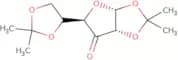
Pureza:Min. 95%1,2:5,6-Di-O-isopropylidene-α-D-ribo-hexofuranose-3-ulose hydrate
CAS:This is a sugar that is found in the urine of reindeer and caribou. It was first identified in the urine of animals captured in Alaska during the winter months. It has been shown to be present in human urine, as well, but at lower concentrations. Radiocarbon dating has revealed that this sugar is produced seasonally, with higher levels being found during the winter months. The seasonal variation may be due to changes in diet or metabolism.Fórmula:C12H18O6Pureza:Min. 95%Forma y color:PowderPeso molecular:258.27 g/mol1-Deoxy-3,4:6,7-Di-O-isopropylidene L-gulo-hept-2-ulose
CAS:1-Deoxy-3,4:6,7-Di-O-isopropylidene L-gulo-hept-2-ulose is a synthetic sugar that can be used to synthesize oligosaccharides. It is a methylated derivative of the natural sugar galactose and has been modified with fluorine atoms at C1 and C3 positions. This product is offered as a custom synthesis and can be ordered in high purity. Methylation of 1,2,3,4 tetra-, penta-, hexa-, or octa-saccharides is a way to introduce new chemical functionalities into the molecule. This process can be achieved through the use of methyl donors such as methanol or dimethyl sulfate. In this case, the methyl groups are introduced on the oxygen atom of glucose at position 3, 4, 6 or 7. The result is a new type of sugar called an oligosaccharidePureza:Min. 95%N-Acetyl-D-glucosaminitol
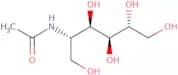
CAS:N-Acetyl-D-glucosaminitol is a fatty acid that is found in blood group antigens. It has been shown to be a potent inhibitor of human liver serine proteases, with an IC50 of 10 μM and a Ki value of 1.6 μM. N-Acetyl-D-glucosaminitol also inhibits the terminal steps in glycolysis and can be used as a substrate for glycosidases. It is capable of forming oligosaccharides with terminal residues and can be analyzed using titration calorimetry. The molecular weight of N-acetyl-D-glucosaminitol is calculated to be 398 Da by nmr spectroscopy. Structural analysis shows that this compound contains monoclonal antibodies and sugar residues, which are important for its function.Fórmula:C8H17NO6Pureza:Min. 95%Forma y color:White PowderPeso molecular:223.22 g/mol







![(3aS, 4S, 6aR) Tetrahydro- 2, 2, 6a- trimethyl- 4H- 1, 3- dioxolo[4, 5- c] pyrrole- 4- methanol](/_next/image/?url=https%3A%2Fstatic.cymitquimica.com%2Fproducts%2F3D%2Fthumb-webp%2FMT168716.webp&w=3840&q=75)


![[(2S, 3R,4S) - 3-Hydroxy-4-hydroxymethyl- 1- benzyl - 2- azetidinyl]carboxylic acid methylamide](/_next/image/?url=https%3A%2Fstatic.cymitquimica.com%2Fproducts%2F3D%2Fthumb-webp%2FMH163531.webp&w=3840&q=75)
![(1R) -1- [(2S, 3R) - 3- Hydroxy- 1- butyl - 2- azetidinyl] -1, 2- ethanediol](/_next/image/?url=https%3A%2Fstatic.cymitquimica.com%2Fproducts%2F3D%2Fthumb-webp%2FMH163534.webp&w=3840&q=75)