Monosacáridos
Los monosacáridos son la forma más simple de los carbohidratos y sirven como bloques fundamentales para azúcares más complejos y polisacáridos. Estas moléculas de azúcar única juegan roles críticos en el metabolismo energético, la comunicación celular y los componentes estructurales de las células. En esta sección, encontrará una amplia variedad de monosacáridos esenciales para la investigación en bioquímica, biología molecular y glicociencia. Estos compuestos son cruciales para estudiar las rutas metabólicas, los procesos de glucosilación y el desarrollo de agentes terapéuticos. En CymitQuimica, ofrecemos monosacáridos de alta calidad para apoyar sus necesidades de investigación, asegurando precisión y fiabilidad en sus investigaciones científicas.
Subcategorías de "Monosacáridos"
- Allosas(11 productos)
- Arabinosas(21 productos)
- Eritrosas(11 productos)
- Fructosas(9 productos)
- Fucosas(36 productos)
- Galactosamina(41 productos)
- Galactosa(260 productos)
- Glucosas(365 productos)
- Ácidos glucurónicos(51 productos)
- Glico-sustratos para enzimas(77 productos)
- Gulosas(6 productos)
- Idosas(4 productos)
- Inositoles(15 productos)
- Lyxosas(4 productos)
- Manosas(65 productos)
- O-glicanos(48 productos)
- Psicosas(3 productos)
- Ramnosas(10 productos)
- Ribosas(61 productos)
- Ácidos siálicos(100 productos)
- Sorbosas(4 productos)
- Azúcares(173 productos)
- Tagatosis(4 productos)
- Taloses(8 productos)
- Xilosas(20 productos)
Mostrar 17 subcategorías más
Se han encontrado 6088 productos de "Monosacáridos"
Ordenar por
Pureza (%)
0
100
|
0
|
50
|
90
|
95
|
100
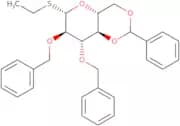
Ethyl 2,3-di-O-benzyl-4,6-O-benzylidene-b-D-thioglucopyranoside
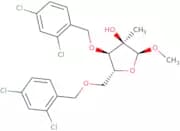
CAS:<p>Ethyl 2,3-di-O-benzyl-4,6-O-benzylidene-b-D-thioglucopyranoside is a glycosylated monosaccharide. It is synthesized by the reaction of 1,2,3,4,6-pentaacetyl bromohexose with benzaldehyde and thioglycolic acid. The product is purified by recrystallization. This compound has a CAS number of 141263-01-6 and can be custom synthesized to meet your needs.</p>Fórmula:C29H32O5SPureza:Min. 95%Forma y color:PowderPeso molecular:492.63 g/molMethyl 3,5-di-O-(2,4-dichlorobenzyl)-2-C-methyl-α-D-ribofuranoside
CAS:<p>Building block for the synthesis of 2'-âC-âmethyl substituted nucleosides</p>Fórmula:C21H22Cl4O5Pureza:Min. 95%Forma y color:Yellow PowderPeso molecular:496.21 g/mol1,2,3,4-Tetra-O-acetyl-D-galacturonic acid
CAS:<p>1,2,3,4-Tetra-O-acetyl-D-galacturonic acid is a carbohydrate that belongs to the group of oligosaccharides and sugars. It is used as a synthetic intermediate in the production of complex carbohydrates and glycosylations. 1,2,3,4-Tetra-O-acetyl-D-galacturonic acid is also used as an active ingredient in some topical medications. The fluorination of this product leads to increased solubility and stability. It has been shown to be resistant to degradation by enzymes such as alpha amylase or beta amylase. This product can be customized for customers requirements with high purity and custom synthesis services.</p>Fórmula:C14H18O11Pureza:Min. 95%Forma y color:PowderPeso molecular:362.29 g/mol2,7-Anhydro-D-sedoheptulose-2,3,4,5,6,7-13C6
<p>2,7-Anhydro-D-sedoheptulose-2,3,4,5,6,7-13C6 is a custom synthesis of a complex carbohydrate. It is an oligosaccharide that is modified with methylation and glycosylation. This compound has been synthesized by Click modification and fluorination. 2,7-Anhydro-D-sedoheptulose-2,3,4,5,6,7-13C6 is water soluble and has a high purity. It is used as a research tool in the field of saccharides and carbohydrates.</p>Pureza:Min. 95%N-Butyldeoxymannojirimycin HCl
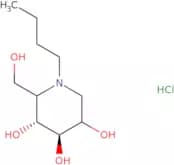
CAS:<p>N-Butyldeoxymannojirimycin HCl is a custom synthesis, complex carbohydrate that is synthesized from Oligosaccharides and Polysaccharides. This product is modified with Methylation, Glycosylation, and Carbohydrate. It has the CAS No. 155501-85-2 and it is high purity and fluorinated. The product can be used in Synthetic applications such as Click modification, sugar, or Fluorination.</p>Fórmula:C10H21NO4·HClPureza:Min. 95%Forma y color:SolidPeso molecular:255.74 g/molMethyl 4,6-O-(4-methoxybenzylidene)-2,3-di-O-pivaloyl-a-D-glucopyranoside
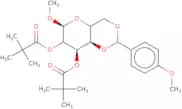
<p>Methyl 4,6-O-(4-methoxybenzylidene)-2,3-di-O-pivaloyl-a-D-glucopyranoside is a methylated saccharide that is used as an intermediate in the synthesis of other saccharides. It is a custom synthesis that can be synthesized to high purity and with low cost. Methyl 4,6-O-(4-methoxybenzylidene)-2,3-di-O-pivaloyl-a-D-glucopyranoside has been modified with click chemistry to provide a variety of functional groups. This modification allows for the production of complex carbohydrates such as oligosaccharides and glycosylation products.</p>Fórmula:C25H36O9Pureza:Min. 95%Peso molecular:480.56 g/mol1,2,3,4-Tetra-O-acetyl-6-O-triisopropylsilyl-b-D-glucopyranose
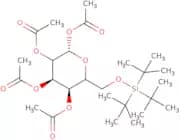
<p>1,2,3,4-Tetra-O-acetyl-6-O-triisopropylsilyl-b-D-glucopyranose is a carbohydrate molecule that can be synthesized to order. It is a synthetic compound that can be fluorinated and glycosylated. This product is a key intermediate for the synthesis of oligosaccharides and monosaccharides. 1,2,3,4-Tetra-O-acetyl-6-O-triisopropylsilyl-b-D glucopyranose has CAS No. 61453–07–5 and molecular weight of 496.07 g/mol.</p>Fórmula:C23H40O10SiPureza:Min. 95%Peso molecular:504.64 g/molN-Acetyl-L-talosaminuronic acid
CAS:<p>N-Acetyl-L-talosaminuronic acid is a natural product that has been shown to have anti-inflammatory activity in experimental models of inflammatory bowel disease. N-Acetyl-L-talosaminuronic acid inhibits the production of proinflammatory cytokines, such as tumor necrosis factor alpha (TNFα), by binding to TNFα receptors on the surface of cells. This can be attributed to its ability to inhibit ATP levels and reduce oxidative stress, which are both factors that contribute to inflammation. N-Acetyl-L-talosaminuronic acid also has been shown to inhibit inflammatory responses in human monocytes and neutrophils. It binds specifically to her2+ breast cancer cells and inhibits their growth in culture. Furthermore, it has been shown to have cytotoxic effects on bladder cancer cells and can be used for the treatment of bladder cancer.</p>Fórmula:C8H13NO7Pureza:Min. 95 Area-%Forma y color:PowderPeso molecular:235.19 g/mol(R)-3,6-O-Benzylidene-2,6-dideoxy-L-galacto(gluco)furanose
CAS:<p>(R)-3,6-O-Benzylidene-2,6-dideoxy-L-galacto(gluco)furanose is a synthetic carbohydrate that has been modified with the addition of a fluorine atom. This modification changes the properties of the sugar and allows it to be used as an effective anticancer drug. (R)-3,6-O-Benzylidene-2,6-dideoxy-L-galacto(gluco)furanose has been shown to inhibit the growth of tumor cells in vitro and in vivo. It is also capable of inhibiting the synthesis and activity of bacterial enzymes such as beta-glucosidase and alpha amylase.</p>Pureza:Min. 95%N-[2-(3'-Nitrophenylacetonitrile)]-2,3,4,6-tetra-O-pivaloyl-D-glucopyranoside
<p>N-[2-(3'-Nitrophenylacetonitrile)]-2,3,4,6-tetra-O-pivaloyl-D-glucopyranoside is a high purity custom synthesis sugar. It is synthesized through Click modification and fluorination. This chemical has been used as a building block for glycosylation and methylation. The CAS number is 95825-78-8.</p>Fórmula:C34H49N3O11Pureza:Min. 95%Peso molecular:675.77 g/molL-Erythrose
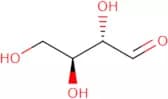
CAS:<p>L-Erythrose is a monosaccharide that contains an hydroxyl group on the second carbon atom. It can be synthesized by a synthetic scheme involving glycolaldehyde and hydroxylamine. L-Erythrose has been shown to inhibit the enzyme phosphoglycerate kinase, which converts 2-phosphoglycerate into phosphoenolpyruvate. L-Erythrose has also been shown to inhibit dehydroascorbic acid reductase, which converts dehydroascorbic acid into ascorbic acid, and galactitol reductase, which converts galactitol into D-tagatose. The mutant strain of Escherichia coli K12 that was engineered to produce L-erythrose showed a decreased susceptibility to phage infection and an increased resistance to oxidative stress. In addition, the polyol pathway in E. coli was induced by L-erythrose treatment.</p>Fórmula:C4H8O4Pureza:(%) Min. 90%Forma y color:Slightly Yellow PowderPeso molecular:120.1 g/molL-Sorbose
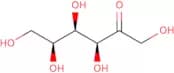
CAS:<p>Resource for the industrial synthesis of ascorbic acid alias Vitamin C</p>Fórmula:C6H12O6Pureza:Min. 98 Area-%Forma y color:White Off-White PowderPeso molecular:180.16 g/mol2-Deoxy- 4-C-methyl-2- methylene- 3, 4- O- isopropylidene -L- erythro- pentonic acid d- lactone
<p>2-Deoxy-4-C-methyl-2-methylene-3,4-O-isopropylidene -L-erythro pentonic acid d-lactone is a methylated sugar with a degree of substitution of 1.0, which can be used for the synthesis of various saccharides and polysaccharides. This product has been modified with click chemistry. It is available in custom synthesis and high purity. The CAS number for this compound is 121592-71-8, and it can be used to synthesize glycans or oligosaccharides. This product can be fluorinated or complexed with other sugars.</p>Pureza:Min. 95%2-Azido- 2- deoxy- 2- C- methyl-3,5-di-O-toluenesulfonyl-D- ribono-1,4- lactone
<p>2-Azido-2-deoxy-2-C-methyl-3,5-di-O-toluenesulfonyl-D-[alpha]-ribono--1,4--lactone is a glycosylation agent that has been modified with a click chemistry reaction. It has been shown to be effective in the synthesis of complex carbohydrates and saccharides. This compound is also capable of modifying sugar chains, oligosaccharides, and polysaccharides. 2AzoDS is available for custom synthesis in high purity and CAS number.</p>Pureza:Min. 95%5-Deoxy-5-dimethylamino-1,2-O-isopropylidene-a-D-xylofuranose
CAS:<p>5-Deoxy-5-dimethylamino-1,2-O-isopropylidene-a-D-xylofuranose is a fluorinated monosaccharide that is used as a synthetic building block for the synthesis of oligosaccharides and polysaccharides. It is used in glycosylation reactions to introduce fluoride at the anomeric carbon. 5-Deoxy-5-dimethylamino-1,2-O-isopropylidene is also used in click modification reactions to modify methyl groups. The CAS number for 5DDAIWF is 14514743. 9. This product has high purity with a purity of greater than 99%.</p>Fórmula:C10H19NO4Pureza:Min. 95%Forma y color:Colourless to pale yellow oil.Peso molecular:217.27 g/mol2,3:4,6-Di-O-isopropylidene-2-keto-L-gulonic acid monohydrate
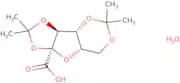
CAS:<p>2,3:4,6-Di-O-isopropylidene-2-keto-L-gulonic acid monohydrate is a natural product that is produced in a bioreactor by the reaction of sorbose and lipase. It can be used as a precursor to industrial chemicals, such as epoxides and ethers. The synthetic pathway for 2,3:4,6-di-O-isopropylidene-2-keto-l gulonic acid monohydrate (DIG) starts with the condensation of glycerol with sorbose in the presence of an enzyme such as lipase. The resulting intermediate is then oxidized to form 2,3:4,6 dihydroxyacetone phosphate (DHAP). DHAP reacts with hydrogen peroxide to form the corresponding ketone. This ketone can then react with hydrochloric acid to form 2,3:4,6 dihydroxy</p>Fórmula:C12H18O7·H2OPureza:Min. 95%Forma y color:White PowderPeso molecular:292.28 g/molEthyl 3,6-di-O-benzyl-2-deoxy-2-N-phthalamido-β-D-thioglucopyranoside
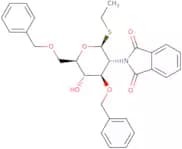
CAS:<p>Ethyl 3,6-di-O-benzyl-2-deoxy-2-N-phthalamido-β-D-thioglucopyranoside is a modification of 2,6 anhydro sugar. It is a white crystalline powder with a melting point of 142°C. This compound has been synthesized by the custom synthesis method and has been shown to be high purity. It has also been methylated and glycosylated. The molecular weight of this compound is 572.81 g/mol.</p>Fórmula:C30H31NO6SPureza:Min. 95%Peso molecular:533.64 g/mol1-Chloro-2-deoxy-3,5-di-O-acetyl-a-D-ribofuranose
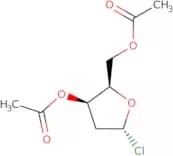
CAS:<p>Synthetic building block for nucleic acid research</p>Fórmula:C9H13ClO5Pureza:Min. 95%Peso molecular:236.65 g/molCerebrosides - Mixture of hydroxy and non-hydroxy fatty acid
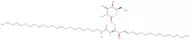
CAS:<p>Cerebrosides are complex carbohydrates that are synthesized by the modification of glycosylations, methylations, or fluorination of sugar molecules. They are used in the synthesis of polysaccharides and as a substitute for natural glycosphingolipids. Cerebrosides are also known to be involved in the synthesis of neuronal lipids, such as myelin and phosphatidylserine.</p>Fórmula:C48H93NO9Pureza:Min. 95%Forma y color:PowderPeso molecular:828.25 g/molPhenyl 2-azido-2-deoxy-b-D-thioglucopyranoside
<p>Phenyl 2-azido-2-deoxy-b-D-thioglucopyranoside is a sugar that has the ability to form glycosidic bonds with other sugars. This compound is a fluorinated carbohydrate and can be custom synthesized. Phenyl 2-azido-2-deoxy-b-D-thioglucopyranoside is also methylated and glycosylated, which gives it high purity. It has a CAS number and is an Oligosaccharide.</p>Pureza:Min. 95%2,3,4-Tri-O-benzyl-5-O-(2-naphthyl)methyl-D-ribitol
<p>2,3,4-Tri-O-benzyl-5-O-(2-naphthyl)methyl-D-ribitol is an organic compound that is an important intermediate in the synthesis of saccharides and oligosaccharides. This compound can be modified with methylation, click modification or fluorination. It is also used for the preparation of complex carbohydrates. 2,3,4-Tri-O-benzyl-5-O-(2-naphthyl)methyl -D-ribitol has a CAS number of 129610–41–8 and a molecular weight of 538.7 g/mol.</p>Fórmula:C44H44O5Pureza:Min. 95%Peso molecular:652.82 g/mol(+)-Lyoniresinol-3a-O-(6''-3,5-dimethoxy-4-hydroxybenzoyl)-b-D-glucopyranoside
<p>(+)-Lyoniresinol-3a-O-(6''-3,5-dimethoxy-4-hydroxybenzoyl)-b-D-glucopyranoside is a custom synthesis that is a methylated oligosaccharide with a 3,5-dimethoxy 4'-hydroxybenzoyl group. This compound has CAS number and is a complex carbohydrate that has been modified with fluorination. It is highly pure and can be used in the modification of monosaccharides or sugars.</p>Pureza:Min. 95%(R)-3,6-O-Benzylidene-2,6-dideoxy-L-galactono(glucono)-1.4-lactone
CAS:<p>(R)-3,6-O-Benzylidene-2,6-dideoxy-L-galactono(glucono)-1.4-lactone is a synthetic compound that has been prepared by methylation and click modification of the corresponding L-galactonolactone. The product is an oligosaccharide with a polysaccharide chain consisting of saccharides and monosaccharides. This product is also a complex carbohydrate with high purity, custom synthesis, and modification. The synthetic compound has been used in the synthesis of other compounds such as saccharides.</p>Pureza:Min. 95%N-Boc-1,5-imino-1,5-dideoxy-D-glucitol
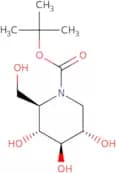
CAS:<p>N-Boc-1,5-imino-1,5-dideoxy-D-glucitol is a custom synthesis product that is synthesized by methylation and click chemistry. The chemical name of N-Boc-1,5-imino-1,5-dideoxyglucitol is 1,5-(N′-(tertiary butyloxycarbonyl)-L-serine)-1,5-dideoxyglucitol. It has a CAS number of 1305391207 and molecular weight of 478.18 g/mol. It is a modified carbohydrate with the molecular formula C14H27NO8 and molecular weight of 478.18 g/mol. It has an Oligosaccharide with the molecular formula C14H27NO8 and molecular weight of 478.18 g/mol. It has a Polysaccharide with the molecular formula C14H27NO8 and</p>Fórmula:C11H21NO6Pureza:Min. 95%Forma y color:Beige solid.Peso molecular:263.29 g/molα-D-Mannopyranosyl L-threonine
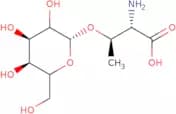
CAS:<p>a-D-Mannopyranosyl L-threonine is a carbohydrate with the molecular formula C6H14O5. It is a white crystalline powder that has a sweet taste. This product can be used as an ingredient in food and beverage products, such as confectionery products, soft drinks, dairy products, baked goods, and chewing gum. It may also be used in pharmaceuticals, such as chewable tablets or capsules for oral use.</p>Fórmula:C10H19NO8Pureza:Min. 95%Forma y color:PowderPeso molecular:281.26 g/molPhenyl 2-acetamido-3,4,6-tri-O-acetyl-2-deoxy-β-D-glucopyranoside
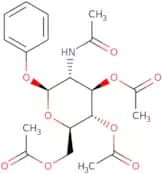
CAS:<p>Phenyl 2-acetamido-3,4,6-tri-O-acetyl-2-deoxy-b-D-glucopyranoside is a custom synthesis of the sugar phenyl 2-acetamido-3,4,6-tri-O-acetyl--2 deoxy--b D glucopyranoside. It is a modification of the monosaccharide and glycosylation. This synthetic compound has a CAS number of 1308921 9 and is used as an intermediate in the production of saccharides. Phenyl 2 acetamido 3,4,6 tri O acetyl 2 deoxy b D glucopyranoside is also classified as an oligosaccharide or complex carbohydrate.</p>Fórmula:C20H25NO9Pureza:Min. 95%Forma y color:White solid.Peso molecular:423.41 g/molEthyl 3-O-benzyl-4,6-O-benzylidene-2-O-levulinoyl-b-D-thioglucopyranoside
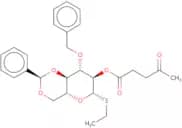
CAS:<p>Ethyl 3-O-benzyl-4,6-O-benzylidene-2-O-levulinoyl-b-D-thioglucopyranoside is a custom synthesis that belongs to the group of carbohydrates. It is a complex carbohydrate with an oligosaccharide and polysaccharide side chain. The saccharide contains a methylated and glycosylated benzene ring attached to the oxygen atom of glucose at position C1, which then has an acetate group that is attached to it. The glycosylation of this molecule is methylated at the C2 position, which is a rare modification that has not been studied extensively. This molecule also has a fluorinated acetate group at the C3 position on the glucose ring. This product is high purity and synthetic in origin.</p>Fórmula:C27H32O7SPureza:Min. 95%Forma y color:PowderPeso molecular:500.6 g/mol1,3,4,6-Tetra-O-acetyl-2-deoxy-2-fluoro-D-mannopyranose
<p>1,3,4,6-Tetra-O-acetyl-2-deoxy-2-fluoro-D-mannopyranose is a custom synthesis that can be used as a sugar and monosaccharide. It is a modification of an Oligosaccharide and Carbohydrate. Custom synthesis has been shown to have high purity and low cost. 1,3,4,6-Tetra-O-acetyl-2-deoxy-2-fluoro--D--mannopyranose is a complex carbohydrate that has been shown to have glycosylation and polysaccharide properties. This compound also has methylation properties that make it useful for creating custom synthesis with fluorination or saccharide modifications.</p>Pureza:Min. 95%Medicagenic acid 3,28-di-O-glucoside
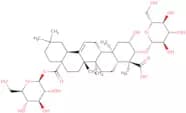
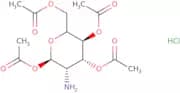
CAS:<p>Medicagenic acid 3,28-di-O-glucoside is a synthetic compound that is the product of a custom synthesis. It is a sugar with 1,2-linked glucose units. Medicagenic acid 3,28-di-O-glucoside is an intermediate in the synthesis of glycoconjugates. Medicagenic acid 3,28-di-O-glucoside can be modified to produce saccharides with various properties and functions. This compound has been modified by fluorination, methylation and click chemistry to produce medicagenic acid 3,28-di-O-[(2-(4′-[N′-(3′,5′'-dimethoxytrityl)-3H]thiophenyl)carbonyl]-6′-(4′-[N′-(3',5'-dimethoxytrityl)-3H]thiophenyl)methyl] glucopyranoside.</p>Fórmula:C42H66O16Pureza:Min. 95%Peso molecular:826.96 g/mol1,3,4,6-Tetra-O-acetyl-α-D-glucosamine hydrochloride
CAS:<p>Tetraacetyl-glucosamine is an acetylated derivative of glucosamine.</p>Fórmula:C14H21NO9•HClPureza:Min. 95%Forma y color:PowderPeso molecular:383.78 g/molN-Acetylmuramyl-L-alanyl-D-isoglutamine hydrate
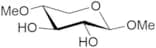
CAS:<p>Muramyl dipeptide is a component of the bacterial cell wall and is found in mycobacteria, mycoplasmas, spirochetes, and gram-positive bacteria. Muramyl dipeptide has been shown to induce the activation of macrophages and other cells by stimulating toll-like receptor 4. It also has significant cytotoxicity against various cancer cells, as well as potent inducers of ubiquitin ligases. The use of muramyl dipeptide in vitro was shown to inhibit replication of HIV-1 virus in human lymphocytes. This agent has also been used for the treatment of bowel disease.</p>Fórmula:C19H32N4O11·xH2OPureza:Min. 96 Area-%Forma y color:PowderPeso molecular:492.48 g/molMethyl 4-O-methyl-β-D-xylopyranoside
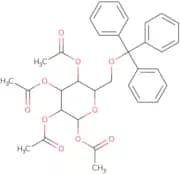
CAS:<p>A useful xylose building block</p>Fórmula:C7H14O5Pureza:Min. 95%Forma y color:PowderPeso molecular:178.18 g/mol1,2,3,4-Tetra-O-acetyl-6-O-trityl-b-D-mannopyranose
CAS:<p>1,2,3,4-Tetra-O-acetyl-6-O-trityl-b-D-mannopyranose is a synthetic sugar that can be used as a building block for the synthesis of oligosaccharides. It is also used to alter the properties of sugars and polysaccharides by modifying their glycosidic linkages. The product is insoluble in water and organic solvents. It is stable under acidic conditions and can be hydrolyzed with acids or alkalis. It is also soluble in methanol and methylene chloride. The CAS number for this product is 92621-31-3.End></p>Pureza:Min. 95%2-Azidomethyl-2-deoxy-3,4-O-isopropylidene-D-altrono-1.5-lactone
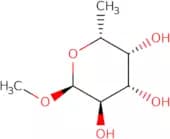
<p>2-Azidomethyl-2-deoxy-3,4-O-isopropylidene-D-altrono-1.5-lactone is a synthetic carbohydrate with the molecular formula C14H22N2O7. It is used in research as a building block for glycosylation and methylation of saccharides.</p>Pureza:Min. 95%Methyl a-D-fucopyranoside
CAS:<p>Methyl a-D-fucopyranoside is a monoclonal antibody that binds to the O-antigen of the polysaccharide chain. It is a synthetic trisaccharide consisting of an o-antigen, an α-linked D-fucose residue, and an α-linked galactose residue. This antibody interacts with the serologic subtypes of Group A Streptococcus, but not with other serogroups. Methyl a-D-fucopyranoside utilizes conformational epitopes and disaccharides which are not accessible to other antibodies in order to bind to the o-antigen. The o-antigen is composed of two serologically distinct regions: one region for binding by anti-A antibodies, and another for binding by anti-B antibodies.</p>Fórmula:C7H14O5Pureza:Min. 98 Area-%Forma y color:White Off-White PowderPeso molecular:178.18 g/mol[2S- (2a, 3a, 4b, 5b, 6a) ]-2- (Hydroxymethyl) - 6- methyl- 3, 4, 5- piperidinetriol
<p>The compound 2S-[2a,3a,4b,5b,6a] -2- (hydroxymethyl)-6-methyl-3,4,5-piperidinetriol is a saccharide with a piperidine ring. It is a synthetic carbohydrate that belongs to the group of oligosaccharides. The fluorine atom in this compound is substituted with methyl groups at positions 2 and 6 on the piperidine ring. This modification is used to increase the water solubility of this carbohydrate. The CAS number for this compound is 53543-33-8.</p>Pureza:Min. 95%2-[(1E)-2-[6-(β-D-Galactopyranosyloxy)-2,3-dihydro-1H-xanthen-4-yl]ethenyl]-3,3-dimethyl-1-propyl-3H-indolium iodide
CAS:<p>Please enquire for more information about 2-[(1E)-2-[6-(β-D-Galactopyranosyloxy)-2,3-dihydro-1H-xanthen-4-yl]ethenyl]-3,3-dimethyl-1-propyl-3H-indolium iodide including the price, delivery time and more detailed product information at the technical inquiry form on this page</p>Fórmula:C34H40NO7•IPureza:Min. 95%Peso molecular:701.59 g/molPhenyl 2,3,4,6-tetra-O-acetyl-a-D-thiomannopyranoside
CAS:<p>Phenyl 2,3,4,6-tetra-O-acetyl-a-D-thiomannopyranoside is an analog of a sugar molecule. This compound can be synthesized by the metathesis reaction between phenyl 2,3,4,6-tetra-O-acetyl-α-(2′→3′)-D-thiomannopyranoside and bis(trimethylsilyl) sulfate in the presence of polyphosphoric acid and potassium sulfate. The yield of this synthesis is high and can be increased with the addition of potassium sulfonate as a cofactor.</p>Fórmula:C20H24O9SPureza:Min. 98%Forma y color:PowderPeso molecular:440.46 g/molBenzyl 2-acetamido-2-deoxy-4,6-O-isopropylidene-α-D-glucopyranoside
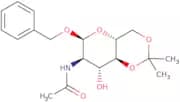
CAS:<p>Benzyl 2-acetamido-2-deoxy-4,6-O-isopropylidene-a-D-glucopyranoside is a custom synthetic sugar that is modified with fluorination and methylation. It is used as a building block for the synthesis of oligosaccharides and glycosylations. This compound has been used in the synthesis of polysaccharides and saccharides.</p>Fórmula:C18H25NO6Pureza:Min. 95%Forma y color:PowderPeso molecular:351.39 g/mol2,5-Anhydro- 3- deoxy-D- ribo- hexonic acid
<p>2,5-Anhydro-3-deoxy-D-ribohexonic acid is a fluorinated monosaccharide. It is synthesized by the modification of 2,5-anhydro-3-deoxyglucose with N-(2'-fluoroethyl)trimethoxysilane (FETS). This synthetic compound can be used as a glycosylation or polysaccharide building block in the synthesis of complex carbohydrates. The FETS modification allows for the introduction of various functional groups on C1 and C2 while maintaining the high purity.</p>Pureza:Min. 95%1,4-Anhydro-D-glucitol
CAS:<p>Intermediate in the synthesis of prostaglandins</p>Fórmula:C6H12O5Pureza:Min. 97 Area-%Forma y color:White Off-White PowderPeso molecular:164.16 g/molN-Acetyl-D-galactosamine-4,6-di-O-sulphate sodium salt
CAS:<p>N-Acetyl-D-galactosamine-4,6-di-O-sulphate sodium salt is a synthetic sugar that is used as an intermediate in the production of glycosides. It can be fluorinated, methylated, and modified with other functional groups such as acetyl or succinyl groups. The chemical name for this product is N-[2-(acetylamino)ethyl]-N'-(3,4,5-trimethoxybenzoyl)glycolamido]benzoic acid 4,6-di-O-(sodium sulfate). It has a molecular weight of 681.32 g/mol and a CAS number of 157296-98-5. This product is soluble in water (10 mg/ml), ethanol (100 mg/ml), ether (100 mg/ml), chloroform (1 mg/ml), and methanol (25 mg/ml).</p>Fórmula:C8H13NO12S2Na2Pureza:Min. 95%Forma y color:PowderPeso molecular:425.29 g/molMethyl 3,4,6-tri-O-acetyl-2-deoxy-2-phthalimido-β-D-glucopyranoside
CAS:<p>Methyl 3,4,6-tri-O-acetyl-2-deoxy-2-phthalimido-b-D-glucopyranoside is a high purity natural carbohydrate. It is an oligosaccharide that can be custom synthesized to meet your requirements. Methyl 3,4,6-tri-O-acetyl-2-deoxy-2-phthalimido b D glucopyranoside has many modifications including click and fluorination. Its CAS number is 76101 13 8. This product can be used for modification, glycosylation and fluorination in the synthesis of complex carbohydrates.<br>!-- <br>--><br>!-- <br>--></p>Fórmula:C21H23NO10Pureza:Min. 95%Forma y color:White to off-white solid.Peso molecular:449.41 g/molMethyl 2,4-Di-O-acetyl-3-O-benzyl-b-D-xylopyranoside
<p>Methyl 2,4-Di-O-acetyl-3-O-benzyl-b-D-xylopyranoside is a custom synthesis of an oligosaccharide. It is a modification of a monosaccharide and a polysaccharide. The fluorine atom in the methyl group prevents the glycosylation from occurring. This product can be used for various purposes, such as for use in sugar chemistry, as a carbohydrate or complex carbohydrate and as an additive to food products.</p>Pureza:Min. 95%D-Lyxono-1,4-lactone
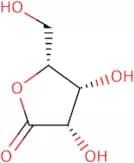
CAS:<p>D-Lyxono-1,4-lactone is an inhibitor of the enzyme fucosidase. It competitively inhibits the enzyme, but does not inhibit other hydroxamic acids such as enantiomers of D-lyxono-1,4-lactone. D-Lyxono-1,4-lactone has been used to treat HIV and AIDS because it prevents viral replication by blocking the synthesis of glycoproteins in the virus's envelope. It also has inhibitory effects on tumor cells that are not dependent on fucosidase activity. Magnetic resonance spectroscopy (NMR) studies have shown that d-lyxono-1,4-lactone binds to human liver cells and blocks the binding site for cytotoxic molecules in these cells. The molecular modelling study has demonstrated that d-lyxono 1,4 lactone binds to a specific site on human HLA class II molecule and reduces its</p>Fórmula:C5H8O5Pureza:(%) Min. 97%Forma y color:PowderPeso molecular:148.11 g/mol2,6-Anhydro-D-glycero-D-gluo-heptonic acid amide
<p>2,6-Anhydro-D-glycero-D-gluo-heptonic acid amide is a synthetic glycoside that is used as an intermediate in the synthesis of oligosaccharides and polysaccharides. The compound is a fluorinated sugar with a methoxy group at the 2 position. This modification provides for increased stability to oxidation reactions and improved solubility in organic solvents. The compound can be modified to include other functional groups, such as methyl or click modifications. 2,6-Anhydro-D-glycero-D-gluo-heptonic acid amide has CAS number 8881–41–8 and can be purchased from various chemical suppliers.</p>Pureza:Min. 95%5-O-tert-Butyldimethylsilyl-1,N-dehydro-1,4-dideoxy-1,4-imino-2,3-O-isopropylidene-D-ribitol
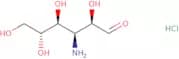
CAS:<p>5-O-tert-Butyldimethylsilyl-1,N-dehydro-1,4-dideoxy-1,4-imino-2,3-O-isopropylidene-D-ribitol is a modified carbohydrate that is synthesized from D ribitol. It has been used in the preparation of oligosaccharides and polysaccharides with methylation and glycosylation. 5BDSR can be fluorinated to give 5BDSF. This product is a white crystalline solid that melts at 120°C.</p>Fórmula:C14H27NO3SiPureza:Min. 95%Peso molecular:285.45 g/mol3-Amino-3-deoxy-D-glucose HCl
CAS:<p>3-Amino-3-deoxy-D-glucose HCl is a synthetic compound that inhibits the efflux of glucose from cells. It has been shown to inhibit growth in Saccharomyces cerevisiae, which may be due to its ability to inhibit the function of an efflux pump. 3-Amino-3-deoxy-D-glucose HCl has also shown antifungal activity against Candida albicans and Aspergillus fumigatus.</p>Fórmula:C6H13NO5·HClPureza:Min. 98 Area-%Forma y color:Slightly Yellow PowderPeso molecular:215.63 g/mol2-Acetamido-2,6-dideoxy-D-galactose
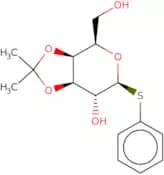
CAS:<p>2-Acetamido-2,6-dideoxy-D-galactose (2ADG) is a structural analogue of the natural monosaccharide 2,6-dideoxy-D-galactose. It has been shown to have an antimicrobial effect against aerobacter aerogenes in vitro. 2ADG is metabolized by glycosidases and methyl glycosides to form 1,4-anhydro-2,3,4,6 tetraacetamido-2,4,6 dideoxy D galactose. This compound inhibits the growth of bacterial strains that are resistant to polymyxin b., such as Pseudomonas aeruginosa. The inhibition of these bacteria is due to the inhibition of the synthesis of their outer membrane lipopolysaccharides by 2ADG. The antibacterial activity is also attributed to its ability to inhibit the metabolism of glycan molecules in some bacteria</p>Fórmula:C8H15NO5Pureza:Min. 95%Forma y color:White PowderPeso molecular:205.21 g/molPhenyl 3,4-O-isopropylidene-b-D-thiogalactopyranoside
CAS:<p>Phenyl 3,4-O-isopropylidene-b-D-thiogalactopyranoside is a custom synthesis of the complex carbohydrate Oligosaccharide, Polysaccharide. It belongs to Modification, saccharide, Methylation, Glycosylation, Carbohydrate. Phenyl 3,4-O-isopropylidene-b-D-thiogalactopyranoside can be used for Click modification, sugar and High purity. This compound is Fluorinated and Synthetic.</p>Fórmula:C15H20O5SPureza:Min. 95%Forma y color:PowderPeso molecular:312.38 g/mol




![N-[2-(3'-Nitrophenylacetonitrile)]-2,3,4,6-tetra-O-pivaloyl-D-glucopyranoside](/_next/image/?url=https%3A%2Fstatic.cymitquimica.com%2Fproducts%2F3D%2Fthumb-webp%2FMN08451.webp&w=3840&q=75)




![[2S- (2a, 3a, 4b, 5b, 6a) ]-2- (Hydroxymethyl) - 6- methyl- 3, 4, 5- piperidinetriol](/_next/image/?url=https%3A%2Fstatic.cymitquimica.com%2Fproducts%2F3D%2Fthumb-webp%2FMH163934.webp&w=3840&q=75)
![2-[(1E)-2-[6-(β-D-Galactopyranosyloxy)-2,3-dihydro-1H-xanthen-4-yl]ethenyl]-3,3-dimethyl-1-propyl-…](/_next/image/?url=https%3A%2Fstatic.cymitquimica.com%2Fproducts%2F3D%2Fthumb-webp%2FMG183953.webp&w=3840&q=75)