Monosacáridos
Los monosacáridos son la forma más simple de los carbohidratos y sirven como bloques fundamentales para azúcares más complejos y polisacáridos. Estas moléculas de azúcar única juegan roles críticos en el metabolismo energético, la comunicación celular y los componentes estructurales de las células. En esta sección, encontrará una amplia variedad de monosacáridos esenciales para la investigación en bioquímica, biología molecular y glicociencia. Estos compuestos son cruciales para estudiar las rutas metabólicas, los procesos de glucosilación y el desarrollo de agentes terapéuticos. En CymitQuimica, ofrecemos monosacáridos de alta calidad para apoyar sus necesidades de investigación, asegurando precisión y fiabilidad en sus investigaciones científicas.
Subcategorías de "Monosacáridos"
- Allosas(11 productos)
- Arabinosas(21 productos)
- Eritrosas(11 productos)
- Fructosas(9 productos)
- Fucosas(36 productos)
- Galactosamina(41 productos)
- Galactosa(261 productos)
- Glucosas(365 productos)
- Ácidos glucurónicos(51 productos)
- Glico-sustratos para enzimas(77 productos)
- Gulosas(6 productos)
- Idosas(4 productos)
- Inositoles(15 productos)
- Lyxosas(4 productos)
- Manosas(65 productos)
- O-glicanos(48 productos)
- Psicosas(3 productos)
- Ramnosas(10 productos)
- Ribosas(61 productos)
- Ácidos siálicos(100 productos)
- Sorbosas(4 productos)
- Azúcares(173 productos)
- Tagatosis(4 productos)
- Taloses(8 productos)
- Xilosas(20 productos)
Mostrar 17 subcategorías más
Se han encontrado 6090 productos de "Monosacáridos"
Ordenar por
Pureza (%)
0
100
|
0
|
50
|
90
|
95
|
100
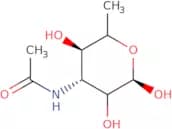
3-Acetamido-3,6-dideoxy-D-galactose
CAS:<p>3-Acetamido-3,6-dideoxy-D-galactose is a monosaccharide with two functional groups. It has been shown to be bifunctional and can act as a glycosyl donor or acceptor. 3-Acetamido-3,6-dideoxy-D-galactose was isolated from the type strain of Streptomyces venezuelae. It is also found in fatty acids and some strains of bacteria, such as Bacillus megaterium. The biological properties of 3-acetamido--3,6-dideoxy--D--galactose have been studied using monoclonal antibodies, magnetic resonance spectroscopy (MRS), and 13C nuclear magnetic resonance spectroscopy (NMR).</p>Fórmula:C8H15NO5Pureza:Min. 95%Forma y color:PowderPeso molecular:205.21 g/mola-Galactosylceramide
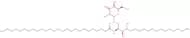
CAS:Ligand for human and mouse NKT cellsFórmula:C50H99NO9Pureza:Min. 95 Area-%Forma y color:White Slightly Yellow PowderPeso molecular:858.32 g/molN-Acetylmuramic acid 6-phosphate
CAS:<p>N-Acetylmuramic acid 6-phosphate is a molecule that belongs to the class of compounds known as nucleotide phosphates. It is an intermediate in the biosynthesis of peptidoglycan, which is a major component of bacterial cell walls. N-Acetylmuramic acid 6-phosphate is synthesized from ATP and N-acetylmuramic acid by hydrolysis. The reaction mechanism for this transformation involves an imine intermediate, which can be formed through the action of two molecules of ATP and one molecule of N-acetylmuramic acid. This reaction is catalyzed by an enzyme called heterocyst. The enzyme kinetics for this transformation are influenced by many factors, including temperature, pH, and substrate concentration.</p>Fórmula:C11H20NO11PPureza:Min. 95%Peso molecular:373.25 g/mol6-Chloro-6-deoxy-D-mannose
CAS:<p>6-Chloro-6-deoxy-D-mannose is a naturally occurring sugar that is found in the spermatozoa of many animals. It is a mannose derivative that has been shown to be an inhibitor of the enzyme glyceraldehyde 3-phosphate dehydrogenase, which plays an important role in energy metabolism and isomerization of 6-phosphate to glucose-1 phosphate. This property may be responsible for its contraceptive effects. The drug also inhibits phosphoglucomutase and enhances the transfer of glucose from the liver to other tissues, increasing blood glucose concentrations. 6-Chloro-6 deoxy mannose also has antifertility effects in rats by inhibiting transfer of spermatozoa through the female reproductive tract.</p>Fórmula:C6H11ClO5Pureza:Min. 95%Forma y color:White Off-White PowderPeso molecular:198.6 g/mol1,2,3-Tri-O-methyl-D-glucopyranoside
CAS:<p>1,2,3-Tri-O-methyl-D-glucopyranoside is a custom synthesis and modification of the natural product 1,2,3-tri-O-methyl-D-mannopyranoside. The compound was synthesized by fluorination of the 3' hydroxyl group followed by methylation of the 2', 3' hydroxyl groups to form a triol. This sugar was then glycosylated with D-glucose to produce an oligosaccharide. 1,2,3 - Tri -O - methyl - D - glucopyranoside is a natural product that can be found in plants such as barley and wheat. It has been shown to have antiinflammatory properties.</p>Fórmula:C9H18O6Pureza:Min. 95%Peso molecular:222.24 g/mol5-Deoxy-D-ribose
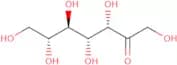
CAS:<p>5-Deoxy-D-ribose is a molecule that is an intermediate in the shikimate pathway, which produces the aromatic amino acids. 5-Deoxy-D-ribose can be synthesized from D-ribose and shikimic acid. The biosynthesis of 5-deoxy-D-ribose is catalyzed by the enzyme ribose 5'-phosphate kinase, which converts ribose 5'-phosphate to 5-deoxy--D--ribose phosphate. This reaction requires ATP as a source of energy, and it is inhibited by phosphoribosyl pyrophosphate (PRPP). The asymmetric synthesis of 5-deoxy--D--ribose has been achieved with a chiral Lewis acid catalyst. The molecular structure of 5-deoxy--D--ribose has been determined by NMR spectroscopy. Shikimate pathways are present in mammalian cells, but not in plants or bacteria.</p>Fórmula:C5H10O4Pureza:Min. 95 Area-%Forma y color:Orange Clear LiquidPeso molecular:134.13 g/molD-Sedoheptulose
CAS:<p>D-Sedoheptulose is a sugar that is a member of the pentoses. It has been shown to have a ph optimum of 4.5 and oxidizing potential of -0.18 V. It is also an important intermediate in carbohydrate metabolism and can be used as an energy source by cells. D-Sedoheptulose plays a role in transcriptional regulation and cellular physiology, as well as being involved in the production of acyl chains and disulfide bonds for proteins. D-Sedoheptulose has also been found to have synergic effects with other sugars such as glucose, sucrose, or fructose, which may be due to its ability to act as an inducer of reductive enzymes such as glucose-6-phosphate dehydrogenase (G6PD).</p>Fórmula:C7H14O7Pureza:Min. 95%Forma y color:PowderPeso molecular:210.18 g/molD-Fructose 1-phosphate barium salt trihydrate
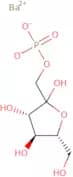
CAS:<p>D-Fructose 1-phosphate barium salt trihydrate is a custom synthesis, high purity sugar. It has been modified with fluorination, glycosylation, and methylation. D-Fructose 1-phosphate barium salt trihydrate is made from the modification of various sugars such as oligosaccharides and monosaccharides to form complex carbohydrates. It can be used for Click modification or in the synthesis of glycoconjugates. D-Fructose 1-phosphate barium salt trihydrate is also known as saccharide.</p>Fórmula:C6H11BaO9P·3H2OPureza:Min. 95%Forma y color:Yellow PowderPeso molecular:449.49 g/molα-D-Thiomannose sodium
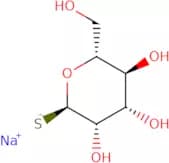
CAS:<p>A thio-sugar</p>Fórmula:C6H11O5SNaPureza:Min. 95 Area-%Forma y color:White PowderPeso molecular:218.21 g/mol2,5-Dideoxy-2,5-imino-D-glucitol
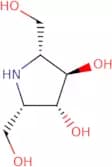
CAS:<p>2,5-Dideoxy-2,5-imino-D-glucitol is a potent inhibitor of glycosidases. It has been shown to have significant antifungal activity against Candida albicans in the caco-2 cell model system. 2,5-Dideoxy-2,5-imino-D-glucitol inhibits β-(1→3)-glycosidase activity by binding to the active site of the enzyme and preventing substrate hydrolysis. The compound is also an enantiopure and asymmetric synthesis. This drug has been shown to be a model system for studying glycosidase inhibition.</p>Fórmula:C6H13NO4Pureza:Min. 95%Peso molecular:163.17 g/molMethyl 5-acetamido-4,7,8,9-tetra-O-acetyl-2,6-anhydro-3,5-dideoxy-D-glycero-D-galacto-non-2-enonate
CAS:<p>Methyl 5-acetamido-4,7,8,9-tetra-O-acetyl-2,6-anhydro-3,5-dideoxy-D-glycero-D-galacto-non-2-enonate is a synthetic oligosaccharide that is used in the synthesis of glycosides. The carbohydrate has been modified to include fluorination and glycosylation. This product can be custom synthesized to meet your specifications.</p>Fórmula:C20H27NO12Pureza:Min. 95%Forma y color:White To Off-White SolidPeso molecular:473.43 g/molD-Glucose-6-phosphate barium hepthydrate
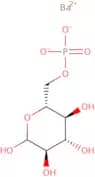
CAS:<p>D-Glucose-6-phosphate barium salt is a custom synthesis that is prepared by modification of D-glucose with phosphoric acid, fluorination, methylation, and monosaccharide. This compound is a synthetic carbohydrate that belongs to the category of oligosaccharides and polysaccharides. It has a molecular weight of 583.12 g/mol and an empirical formula of C7H8O10P2Ba. The CAS number for this compound is 150400-00-3.</p>Fórmula:C6H11BaO9P•(H2O)7Pureza:Min. 95%Forma y color:PowderPeso molecular:521.55 g/molGlycosylceramide - from plant origin
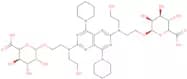
CAS:<p>Glucosylceramide (Glc-Cer) is the common precursor in the biosynthesis of most glycosphingolipids, with exception of some Gal-Cer derivatives, such as, GM4. Glucosylceramide consists of a glucosyl moiety which is β-O-glycosydically linked to ceramide, which itself, consists of the long-chain aminoalcohol sphingosine and a fatty acid. Glucosylceramide (also called glucocerebroside) is synthesised enzymatically, by the glucosylceramide synthase-catalysed with the addition of a glucose residue to ceramide. Glucosylceramide is involved in the regulation of various cellular events and also serves as a main constituent in liposome formulations.</p>Fórmula:C40H75NO9Pureza:Min. 95%Peso molecular:714.02 g/molDipyridamole di-O-b-D-glucuronide
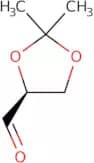
CAS:<p>Dipyridamole di-O-b-D-glucuronide is a fluorinated oligosaccharide that has been synthesized using the click chemistry reaction. It is a monosaccharide that has been glycosylated and modified with methyl groups to produce a high purity product. The carbohydrate consists of one or more sugar units linked by glycosidic bonds. Carbohydrates are classified by their number of sugar units and by the presence of other chemical groups such as phosphate, sulfate, or hydroxyl. This product is also used in the synthesis of complex carbohydrates and polysaccharides.</p>Fórmula:C36H56N8O16Pureza:Min. 95%Peso molecular:856.87 g/mol2,3-O-Isopropylidene-L-glyceraldehyde - 50% DCM solution
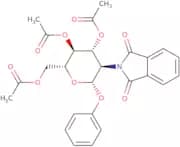
CAS:2,3-O-Isopropylidene-L-glyceraldehyde (2,3-OIPA) is a synthetic compound that was developed as an alternative to paraformaldehyde for the synthesis of enantiopure compounds. It has been used in metathesis reactions and catalysed the conversion of β-unsaturated ketones to enantiopure products. 2,3-OIPA also has significant cytotoxic activity against a range of human cancer cell lines. This compound can be used in asymmetric syntheses to produce chiral molecules with a high degree of optical purity.Fórmula:C6H10O3Pureza:Min. 95%Forma y color:Colorless PowderPeso molecular:130.14 g/molPhenyl 3,4,6-tri-O-acetyl-2-deoxy-2-phthalimido-b-D-glucopyranoside
CAS:<p>Phenyl 3,4,6-tri-O-acetyl-2-deoxy-2-phthalimido-b-D-glucopyranoside is a fluorinated synthetic monosaccharide that has been synthesized to serve as a glycosylation and polysaccharide modification agent. Phenyl 3,4,6-tri-O-acetyl-2-deoxy-2--phthalimido--b--D--glucopyranoside is an effective methylation agent for the synthesis of complex carbohydrates. It can be used for click modifications on the sugar moiety of oligosaccharides and polysaccharides. Phenyl 3,4,6 -tri -O -acetyl -2 -deoxy -2 -phthalimido -b -D--glucopyranoside is soluble in water as well as many organic solvents. The CAS No. 120498 97 7 is assigned to</p>Fórmula:C26H25NO10Pureza:Min. 95%Peso molecular:511.48 g/molD-Glucose-6-phosphate dipotassium salt hydrate
CAS:<p>Glucose 6-phosphatase substrate</p>Fórmula:C6H11O9PK2·H2OPureza:Min. 95%Peso molecular:354.33 g/mol3-Azido-3-deoxy-1,2-O-isopropylidene-a-D-ribofuranose
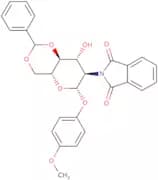
CAS:<p>3-Azido-3-deoxy-1,2-O-isopropylidene-a-D-ribofuranose is a synthetic carbohydrate that contains fluorine and is used as a glycosylation and methylation reagent. It has been shown to react with various saccharides, including glucose, maltose, lactose, sucrose, and cellobiose. In addition to its use in glycosylation reactions, 3-azido-3-deoxy-1,2-O-isopropylidene -a D ribofuranose can be used for click chemistry. This reagent is available in high purity and is synthesized from the natural sugar ribofuranose.</p>Pureza:Min. 95%4-Methoxyphenyl 4,6-O-benzylidene-2-deoxy-2-phthalimido-β-D-glucopyranoside
CAS:<p>4-Methoxyphenyl 4,6-O-benzylidene-2-deoxy-2-phthalimido-b-D-glucopyranoside is an organic compound with the formula C13H14N4O8. It is a white solid that is soluble in water, methanol and ethanol. The compound has been synthesized using Click chemistry, fluorination, glycosylation, and methylation of the sugar. It has also been modified with an oligosaccharide and monosaccharide to form a complex carbohydrate.</p>Fórmula:C28H25NO8Pureza:Min. 98 Area-%Forma y color:PowderPeso molecular:503.51 g/molMethyl 2-deoxy-5-O-toluoyl-L-ribofuranoside
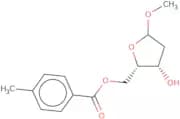
CAS:<p>Methyl 2-deoxy-5-O-toluoyl-L-ribofuranoside is a high purity, custom synthesis, methylated, Glycosylation and Oligosaccharide. It has CAS No. 676598-19-9 and is Glycosylated and Methylated. This complex carbohydrate is a synthetic, monosaccharide or saccharide that can be modified with fluorination, Click modification or glycosylation.</p>Fórmula:C14H18O5Pureza:Min. 95%Forma y color:Brown oil.Peso molecular:266.3 g/mol