Monosacáridos
Los monosacáridos son la forma más simple de los carbohidratos y sirven como bloques fundamentales para azúcares más complejos y polisacáridos. Estas moléculas de azúcar única juegan roles críticos en el metabolismo energético, la comunicación celular y los componentes estructurales de las células. En esta sección, encontrará una amplia variedad de monosacáridos esenciales para la investigación en bioquímica, biología molecular y glicociencia. Estos compuestos son cruciales para estudiar las rutas metabólicas, los procesos de glucosilación y el desarrollo de agentes terapéuticos. En CymitQuimica, ofrecemos monosacáridos de alta calidad para apoyar sus necesidades de investigación, asegurando precisión y fiabilidad en sus investigaciones científicas.
Subcategorías de "Monosacáridos"
- Allosas(11 productos)
- Arabinosas(21 productos)
- Eritrosas(11 productos)
- Fructosas(9 productos)
- Fucosas(36 productos)
- Galactosamina(41 productos)
- Galactosa(261 productos)
- Glucosas(365 productos)
- Ácidos glucurónicos(51 productos)
- Glico-sustratos para enzimas(77 productos)
- Gulosas(6 productos)
- Idosas(4 productos)
- Inositoles(15 productos)
- Lyxosas(4 productos)
- Manosas(65 productos)
- O-glicanos(48 productos)
- Psicosas(3 productos)
- Ramnosas(10 productos)
- Ribosas(61 productos)
- Ácidos siálicos(100 productos)
- Sorbosas(4 productos)
- Azúcares(173 productos)
- Tagatosis(4 productos)
- Taloses(8 productos)
- Xilosas(20 productos)
Mostrar 17 subcategorías más
Se han encontrado 6090 productos de "Monosacáridos"
Ordenar por
Pureza (%)
0
100
|
0
|
50
|
90
|
95
|
100
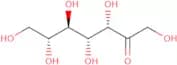
D-Sedoheptulose
CAS:<p>D-Sedoheptulose is a sugar that is a member of the pentoses. It has been shown to have a ph optimum of 4.5 and oxidizing potential of -0.18 V. It is also an important intermediate in carbohydrate metabolism and can be used as an energy source by cells. D-Sedoheptulose plays a role in transcriptional regulation and cellular physiology, as well as being involved in the production of acyl chains and disulfide bonds for proteins. D-Sedoheptulose has also been found to have synergic effects with other sugars such as glucose, sucrose, or fructose, which may be due to its ability to act as an inducer of reductive enzymes such as glucose-6-phosphate dehydrogenase (G6PD).</p>Fórmula:C7H14O7Pureza:Min. 95%Forma y color:PowderPeso molecular:210.18 g/mol2,3,4,6-Tetra-O-benzoyl-a-D-mannopyranosyl trichloroacetimidate
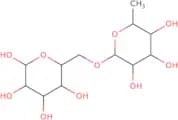
CAS:Glycosyl-donor for syntheses of mannosyl-glycoconjugatesFórmula:C36H28Cl3NO10Pureza:Min. 95%Forma y color:White PowderPeso molecular:740.98 g/molβ-Rutinose
CAS:<p>Beta-rutinose is a potent kinase inhibitor that has shown anti-tumor activity in Chinese hamster ovary (CHO) cells. It inhibits the activity of cyclin-dependent kinases, which are essential for cell division and proliferation. Beta-rutinose has been shown to induce apoptosis in human cancer cells, making it a promising candidate for anticancer therapy. This compound is an analog of rutin, a flavonoid found in many plants, and has been shown to have potent anticancer effects in vitro and in vivo. Beta-rutinose inhibits the growth of cancer cells by blocking the activity of specific kinases involved in tumor progression, making it an attractive target for developing new cancer therapies. Additionally, this compound has been found to be effective at reducing protein levels associated with cancer cell growth and proliferation.</p>Fórmula:C12H22O10Pureza:Min. 95%Peso molecular:326.3 g/molCorchoionoside C
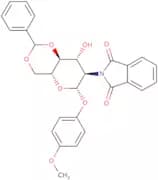
CAS:<p>Corchoionoside C is a natural compound classified as an iridoid glycoside. This compound is isolated from various plant species, particularly those within the Boraginaceae family. The mode of action of Corchoionoside C involves modulation of biological pathways, likely through its interaction with cellular enzymes and receptors, contributing to its potential therapeutic effects.</p>Pureza:Min. 98%4-Methoxyphenyl 4,6-O-benzylidene-2-deoxy-2-phthalimido-β-D-glucopyranoside
CAS:<p>4-Methoxyphenyl 4,6-O-benzylidene-2-deoxy-2-phthalimido-b-D-glucopyranoside is an organic compound with the formula C13H14N4O8. It is a white solid that is soluble in water, methanol and ethanol. The compound has been synthesized using Click chemistry, fluorination, glycosylation, and methylation of the sugar. It has also been modified with an oligosaccharide and monosaccharide to form a complex carbohydrate.</p>Fórmula:C28H25NO8Pureza:Min. 98 Area-%Forma y color:PowderPeso molecular:503.51 g/mol2-Aminophenyl β-D-glucuronide hydrochloride
CAS:<p>2-Aminophenyl b-D-glucuronide HCl is a custom synthesis chemical. It is a white to pale yellow crystalline powder. This compound has a molecular weight of 363.2 and it's chemical formula is C8H10N2O7Glucuronic acid. 2-Aminophenyl b-D-glucuronide HCl is used in the modification of oligosaccharides, polysaccharides, saccharides, carbohydrates, fluorination and complex carbohydrate. The purity of this chemical is high and it can be modified with monosaccharide or sugar.</p>Fórmula:C12H15NO7•HClPureza:Min. 95%Peso molecular:321.71 g/mola-Galactosylceramide
CAS:Ligand for human and mouse NKT cellsFórmula:C50H99NO9Pureza:Min. 95 Area-%Forma y color:White Slightly Yellow PowderPeso molecular:858.32 g/molUDP-b-L-arabinofuranose
CAS:<p>UDP-b-L-arabinofuranose is a custom synthesis product that is used to modify polysaccharides. It is a high purity sugar nucleotide. UDP-b-L-arabinofuranose has CAS number 331001-44-6.</p>Fórmula:C14H22N2O16P2Pureza:Min. 95%Forma y color:PowderPeso molecular:536.28 g/mol5-Deoxy-D-ribose
CAS:<p>5-Deoxy-D-ribose is a molecule that is an intermediate in the shikimate pathway, which produces the aromatic amino acids. 5-Deoxy-D-ribose can be synthesized from D-ribose and shikimic acid. The biosynthesis of 5-deoxy-D-ribose is catalyzed by the enzyme ribose 5'-phosphate kinase, which converts ribose 5'-phosphate to 5-deoxy--D--ribose phosphate. This reaction requires ATP as a source of energy, and it is inhibited by phosphoribosyl pyrophosphate (PRPP). The asymmetric synthesis of 5-deoxy--D--ribose has been achieved with a chiral Lewis acid catalyst. The molecular structure of 5-deoxy--D--ribose has been determined by NMR spectroscopy. Shikimate pathways are present in mammalian cells, but not in plants or bacteria.</p>Fórmula:C5H10O4Pureza:Min. 95 Area-%Forma y color:Orange Clear LiquidPeso molecular:134.13 g/mol1,3,4,6-Tetra-O-galloyl glucose
CAS:<p>Tetra-O-galloyl glucose is a pentagalloyl glucose that is found in the Chinese herb Paeonia lactiflora. It has been shown to inhibit the replication of hepatitis B virus, and can be used for the treatment of hepatitis B infection. Tetra-O-galloyl glucose also has anti-inflammatory activities, which may be due to its ability to inhibit prostaglandin synthesis.</p>Fórmula:C34H28O22Pureza:Min. 95%Peso molecular:788.57 g/mol3,6’-Disinapoyl sucrose
CAS:<p>3,6’-Disinapoyl sucrose is a saponin that has been shown to be neuroprotective and antidepressant. It is also able to increase the absorption of drugs in the gastrointestinal tract. 3,6’-Disinapoyl sucrose was found to have neurotrophic effects on neurons and inhibit glutamate-induced excitotoxicity. 3,6’-Disinapoyl sucrose has been shown to inhibit the mineralocorticoid receptor in vitro and may be useful as an antihypertensive agent. 3,6’-Disinapoyl sucrose can be used for clinical use in the treatment of depression and other neurological disorders such as Alzheimer's disease.</p>Fórmula:C34H42O19Pureza:Min. 95%Forma y color:PowderPeso molecular:754.69 g/mol11a-Hydroxy progesterone b-D-glucuronide
CAS:<p>11a-Hydroxy progesterone b-D-glucuronide is a fluorinated steroid that is synthesized with high purity. It has been modified with methylation and glycosylation. 11a-Hydroxy progesterone b-D-glucuronide is a complex carbohydrate, which consists of saccharides in the form of oligosaccharides. The sugar in 11a-hydroxy progesterone b-D-glucuronide is a monosaccharide, which can be modified with fluorination or click chemistry to create a new compound. This product has CAS No. 77710-64-6 and can be custom synthesized to meet your specifications.</p>Fórmula:C27H38O9Pureza:Min. 95%Forma y color:PowderPeso molecular:506.59 g/mol1,2,3-Tri-O-benzoyl-α-L-fucopyranose
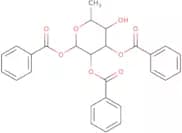
CAS:<p>1,2,3-Tri-O-benzoyl-a-L-fucopyranose is a synthetic, fluorinated monosaccharide that can be synthesized from D-glucose in two steps. It is a useful building block for the synthesis of oligosaccharides and polysaccharides with different glycosylation patterns. This compound has been shown to react with methyl iodide to form 1,2,3-triiodo-a-L-fucopyranose. It has also been used as a click modification reagent for carbohydrates.</p>Fórmula:C27H24O8Pureza:Min. 95%Peso molecular:476.47 g/molα-D-Thiomannose sodium
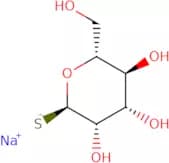
CAS:<p>A thio-sugar</p>Fórmula:C6H11O5SNaPureza:Min. 95 Area-%Forma y color:White PowderPeso molecular:218.21 g/mol2,3,4,6-Tetra-O-acetyl-a-D-mannopyranosyl azide
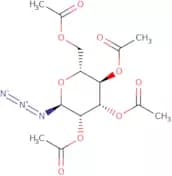
CAS:<p>2,3,4,6-Tetra-O-acetyl-a-D-mannopyranosyl azide is a crystalline solid that can be obtained by heating 2,3,4,6-tetra-O-acetyl-a-D-mannopyranose with sodium azide. This compound has been used in the x-ray crystallographic technique for obtaining electron density maps. The x ray data collected from this compound showed the distinct difference between the electron density of the atoms and their surroundings.</p>Fórmula:C14H19N3O9Forma y color:PowderPeso molecular:373.32 g/mola-D-Glucose
CAS:<p>Glucose is a monosaccharide that is an important source of energy for the human body. It is a simple sugar found in many carbohydrates and is the main form of fuel used by the brain. Glucose is also used as a chemical building block for polysaccharides such as glycogen, cellulose, and chitin. The hypoglycemic effect of glucose can be observed when blood glucose levels are below 70 mg/dL. This effect can be due to its ability to increase the production of insulin or decrease the rate of gluconeogenesis in liver cells. It also has been shown to have an inhibitory effect on some viruses and bacteria, which may be due to its ability to inhibit transcription activators or polymerase chain reactions.</p>Fórmula:C6H12O6Pureza:Min. 96 Area-%Forma y color:White PowderPeso molecular:180.16 g/mol1,6-Di-O-galloyl-b-D-glucopyranose
CAS:1,6-Di-O-galloyl-β-D-glucopyranose is a plant active compound that has been shown to have insecticidal and antifungal properties. It is also an inhibitor of serine proteases. 1,6-Di-O-galloyl-β-D-glucopyranose may be used to control the spread of human immunodeficiency virus (HIV) in humans. In an in vitro study, 1,6-di galloyl β-D glucopyranose was found to inhibit HIV by binding to the viral envelope gp120 protein and preventing it from attaching to CD4 receptor sites on T cells. This inhibition prevents the virus from entering the cell and infecting it. 1,6 - di - O - galloyl - β - D - glucopyranose also inhibits HIV by blocking its entry into the host cell through interaction with gp41 protein on theFórmula:C20H20O5Pureza:Min. 95%Peso molecular:340.37 g/mol2,3,4,6-Tetra-O-acetyl-a-D-mannopyranosyl chloride
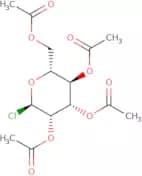
CAS:<p>2,3,4,6-Tetra-O-acetyl-a-D-mannopyranosyl chloride is a carbohydrate that has been modified by fluorination. It is used as an ingredient in the synthesis of saccharides and oligosaccharides. This product is synthesized by the reaction of 2,3,4,6-tetra-O-acetylmannose with chlorodifluoromethane in the presence of a base.</p>Fórmula:C14H19ClO9Pureza:Min. 95%Forma y color:PowderPeso molecular:366.75 g/mol2,5-Anhydro-1,3-O-isopropylidene-6-O-trityl-D-glucitol
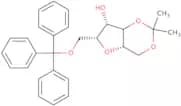
CAS:<p>2,5-Anhydro-1,3-O-isopropylidene-6-O-trityl-D-glucitol is a complex carbohydrate that is synthesized by the modification of glucose. This product has been modified with methylation and glycosylation.<br>2,5-Anhydro-1,3-O-isopropylidene-6-O-trityl--D--glucitol is a white powder that is soluble in water and ethanol. <br>It can be used for fluoroquinolone resistance studies, which are important for developing new antibiotics to combat bacterial infections.</p>Fórmula:C28H30O5Pureza:Min. 95%Peso molecular:446.53 g/molMefenamic acid-acyl-b-D-glucuronide
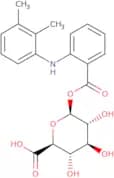
CAS:<p>Mefenamic acid-acyl-b-D-glucuronide is a synthetic drug that binds to albumin and human serum albumin. It has been shown to irreversibly inhibit human UDP-glucuronosyltransferase, an enzyme in the human liver that catalyzes the addition of glucuronic acid to drugs and other xenobiotics. Mefenamic acid-acyl-b-D-glucuronide has also been shown to inhibit the activity of a wide range of enzymes in humans, including isoenzyme UGT1A6, which is found in the liver and kidney. This drug has been studied as a potential treatment for pain and inflammation in humans.</p>Fórmula:C21H23NO8Pureza:Min. 95%Forma y color:White To Off-White SolidPeso molecular:417.41 g/mol