Sales de metal
Se han encontrado 2872 productos de "Sales de metal"
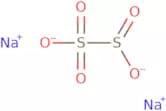
Sodium metabisulfite
CAS:Sodium metabisulfite is a preservative used to inhibit microbial growth in food and drinks. This chemical has been shown to cause bronchoconstriction in animals, but the mechanism for this effect is not well understood. Sodium metabisulfite may also cause anaphylactic reactions in humans. There are no toxicity studies available for sodium metabisulfite injection solutions, but it has been shown that anhydrous sodium metabisulfite can be toxic at high doses. The effects of sodium metabisulfite on human cells have been studied using a surface methodology and cytotoxicity assay. These experiments showed that sodium metabisulfite significantly reduced cellular viability and had significant cytotoxic effects on cells. The mechanism of this cell death was found to be due to the enzyme activity of sulfite oxidase, which produces hydrogen peroxide as a by-product. This hydrogen peroxide causes oxidative stress and leads to the production of reactive oxygen species (ROS) that induce DNA damage
Fórmula:Na2S2O5Pureza:Min. 97%Forma y color:PowderPeso molecular:190.11 g/molRef: 3D-FS40910
Producto descatalogadoPotassium tetrachloroplatinate(II)
CAS:Potassium tetrachloroplatinate(II) is a metal chelate of potassium and platinum. It can be used as a catalyst for organic syntheses, such as hydrogenation reactions. Potassium tetrachloroplatinate(II) has a high affinity for the amide ligands in substrates, which allows it to be used for hydrogenation reactions. The reaction mechanism of this compound has been investigated by x-ray crystal structures and in vitro experiments. The reaction mechanism primarily involves the formation of an organometallic intermediate that subsequently reacts with the substrate via an addition-elimination process. This compound also emits light when heated and produces a dark red color due to its ability to absorb visible light.
Fórmula:K2PtCl4Pureza:Min. 95%Forma y color:PowderPeso molecular:415.09 g/molRef: 3D-FP54960
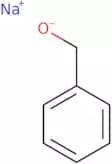
Producto descatalogadoSodium benzyloxide solution - 1.0 M in benzyl alcohol
CAS:Sodium benzyloxide is an alkanoic acid with the chemical formula CH3C6H2O2. It is used as a matrix metalloproteinase inhibitor in the synthesis of bicyclic heterocycles. It is also used in asymmetric synthesis and as a substrate for enzyme inhibitors. Sodium benzyloxide has been shown to be effective against herpes simplex virus by preventing viral replication and inducing apoptosis.
Fórmula:C6H5CH2ONaForma y color:Clear LiquidPeso molecular:130.12 g/molRef: 3D-FS165047
Producto descatalogadoSamarium(II) Iodide (ca. 0.1mol/L in Tetrahydrofuran)
CAS:Samarium(II) iodide is a synthetic carbonyl, soluble in acetonitrile, dioxolane and formyl. It is used as a reactant in preparative methods to produce alkyl halides. Samarium(II) iodide reacts with an aldehyde or ketone in the presence of acetic acid to produce an alkyl halide. This compound has chemoselectivity for the production of secondary alcohols and can be used to prepare coupling products. Samarium(II) iodide can also be used to prepare alkene and ketone compounds by reacting with formaldehyde and acetone respectively.
Fórmula:SmI2Pureza:Min. 95%Peso molecular:404.17 g/molRef: 3D-FS61157
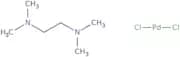
Producto descatalogadocis-Dichloro(N,N,N',N'-tetramethylethylenediamine)palladium(II)
CAS:Producto controladoPlease enquire for more information about cis-Dichloro(N,N,N',N'-tetramethylethylenediamine)palladium(II) including the price, delivery time and more detailed product information at the technical inquiry form on this pageFórmula:C6H16Cl2N2PdPureza:Min. 95%Peso molecular:293.53 g/molRef: 3D-FD149470
Producto descatalogadoSodium chlorite
CAS:Sodium chlorite is a disinfectant that is used to reduce the number of bacteria in the air, water, and surfaces. It is acidic and has been shown to be effective against infectious diseases such as tuberculosis, cholera, and malaria. Sodium chlorite can be produced through the oxidation of sodium chloride by chlorite ion at high temperatures. The optimum concentration for sodium chlorite is 10-15%. This agent can also be used as an analytical method for determining the presence of organic compounds that are difficult to measure by other methods. Laser ablation coupled with mass spectrometry is one example of this technique. Sodium chlorite can also be used to treat wastewater and inhibits oxidative injury in cells.
Fórmula:NaClO2Pureza:Min. 95%Forma y color:White To Yellow SolidPeso molecular:90.44 g/molRef: 3D-FS09639
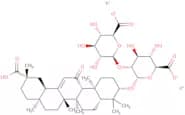
Producto descatalogadoDipotassium glycyrrhizinate
CAS:Dipotassium glycyrrhizinate is a compound that is soluble in water and is found in the roots of Glycyrrhiza glabra, an herb that has been used for centuries to treat a variety of inflammatory conditions. The main component of this extract is glycyrrhizinic acid, a triterpene that has been shown to have anti-inflammatory effects. This compound binds to toll-like receptor 4 (TLR4), which is involved in the innate immune response. Dipotassium glycyrrhizinate can inhibit the production of pro-inflammatory cytokines such as tumor necrosis factor alpha and interleukin-8. It also inhibits the release of histamine from mast cells, which are implicated in allergic reactions.
Fórmula:C42H60K2O16Pureza:75%Peso molecular:899.11 g/molRef: 3D-FD166891
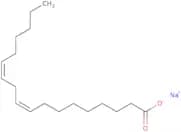
Producto descatalogadoSodium linoleate
CAS:Sodium linoleate is a model system for studying the effect of radiation on tumorigenesis. Sodium linoleate is used to study the relationship between light exposure and cancer. It has been shown to inhibit Cox-2 expression in carcinoma cell lines, which may be due to its ability to inhibit cox-2 activity by preventing the production of prostaglandins E2 (PGE2). The increased levels of PGE2 can lead to an increase in inflammation and cancer growth. Sodium linoleate has also been shown to have a synergic effect with sodium carbonate in inhibiting tumour growth, which is due to the inhibition of nuclear DNA transcription and protein synthesis.
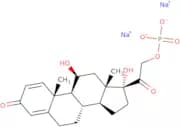
Fórmula:C18H32O2·NaPureza:Min. 95%Forma y color:PowderPeso molecular:303.44 g/molPrednisolone disodium phosphate
CAS:Prednisolone is a corticosteroid that is used to treat inflammation and reduce the body's immune response. Prednisolone disodium phosphate (PDSP) is an enteric-coated tablet that releases prednisolone in the small intestine, where it can be absorbed into the bloodstream. It has been shown to be effective at reducing bowel disease activity in patients with inflammatory bowel disease. Prednisolone disodium phosphate may also have a role in controlling infectious diseases, such as tuberculosis, due to its ability to inhibit toll-like receptor 4 signaling. The drug has been studied as a model system for predicting drug interactions by monitoring the rate constant for benzalkonium chloride binding to human serum albumin.
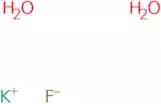
Fórmula:C21H29O8P•Na2Pureza:Min. 95%Forma y color:PowderPeso molecular:486.4 g/molPotassium fluoride dihydrate
CAS:Producto controladoPotassium fluoride is an inorganic chemical that is used in the water fluoridation process. It is also used as a source of fluoride ions for the synthesis of hydroxyapatite, a mineral found in teeth and bones. Fluoride ions are also used to treat certain infectious diseases, such as malaria. The asymmetric synthesis of potassium fluoride was first reported by M. S. Kharasch and J. A. Fink in 1943 using plasma mass spectrometry. This method has been widely adopted for commercial production of potassium fluoride because it can be scaled up easily and does not require specialized equipment.
Potassium fluoride has been shown to inhibit viral replication by hydrogen bonding with the guanine-cytosine base pairs on the viral dsDNA, which prevents the DNA from uncoiling and copying its genetic information into new viral particles. Potassium fluoride has also been shown to be effective against hepatitis B virus (HBV) and mammalian cells infected by HBFórmula:KF·2H2OPureza:Min. 95%Peso molecular:94.13 g/molRef: 3D-FP34794
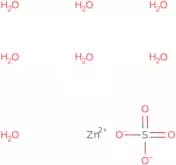
Producto descatalogadoZinc sulfate heptahydrate
CAS:Zinc sulfate heptahydrate is a chemical compound that is used in sample preparation. It is an acid complex with a high degree of chemical stability. Zinc sulfate heptahydrate can be used to prepare fluorescent derivatives for the detection of organic compounds and metal ions. Zinc sulfate heptahydrate has been shown to have controlled-release properties, which may be due to its ability to form microcapsules with anhydrous sodium carbonate, water vapor, and potassium dichromate. Structural analysis has been conducted on zinc sulfate heptahydrate in order to determine the reaction mechanism for this compound. The reaction mechanism involves the formation of zinc oxide and hydrogen peroxide from the decomposition of zinc sulfate heptahydrate. This product also has applications in the treatment of infectious diseases such as malaria and tuberculosis.
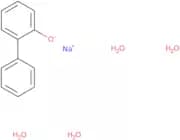
Fórmula:ZnSO4·7H2OPureza:Min. 95%Forma y color:PowderPeso molecular:287.55 g/mol2-Hydroxybiphenyl sodium salt tetrahydrate
CAS:2-Hydroxybiphenyl sodium salt tetrahydrate is an inorganic, colorimetric mediator that is used for the determination of symbiotic N 2 fixation. It is a salt of 2-hydroxybiphenyl and sodium hydroxide. The color change from yellow to violet is indicative of the presence of nitrogenase activity. This mediator can be used to measure the efficiency of immobilized N 2 -fixing bacteria on various surfaces or to determine the uptake of nutrients by bacteria.
Fórmula:C12H17NaO5Pureza:Min. 95%Peso molecular:264.25 g/molRef: 3D-FH137345
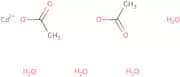
Producto descatalogadoCobalt(II) acetate tetrahydrate
CAS:Cobalt(II) acetate tetrahydrate is a model system that can be used to study the structures of coordination complexes. The cobalt ion has a coordination geometry with two water molecules, two oxygen atoms from the acetate anion, and one proton from the hydroxide anion. The crystal structure is composed of six-membered rings of alternating metal ions and oxygen atoms. The reaction solution contains excess sodium hydroxide and water vapor. It was determined that cobalt(II) acetate tetrahydrate reacts electrochemically at low frequencies as well as with 5-hmf, an oxidizing agent, in the presence of sodium citrate as an oxidation catalyst.
Fórmula:C4H6CoO4·4H2OPureza:Min. 95%Forma y color:Pink To Red SolidPeso molecular:249.08 g/molRef: 3D-FC47519
Producto descatalogadoDicobalt Octacarbonyl (stabilized with 1-10% Hexane)
CAS:Dicobalt octacarbonyl is a carbonylative agent that converts alkenes to epoxides. It is used in the synthesis of cyclopentenones, as well as in the conversion of benzylic alcohols to aldehydes. Dicobalt octacarbonyl has been shown to react with glycosyl compounds, such as glycosides and cyclitols, to form carbon dioxide and water. This reaction produces very little hydrogen gas and no free radicals, which makes it useful for applications where these byproducts are undesirable.
Fórmula:C8Co2O8Pureza:Min. 95%Peso molecular:341.95 g/molRef: 3D-FD60932
Producto descatalogadoSodium percarbonate
CAS:Sodium percarbonate is a chemical compound that has a high degree of chemical stability. It is a white, crystalline solid with an appearance similar to table salt. Sodium percarbonate can be used for wastewater treatment by reacting with the hydrogen peroxide in wastewater to produce carbon dioxide and sodium sulfate. The reaction mechanism is based on the oxidation of p-hydroxybenzoic acid by hydrogen peroxide. Sodium percarbonate can also be used as an oxidizing agent in organic synthesis reactions, such as ester hydrolysis, nitro reduction, and decomposition of boron compounds. Optimum concentrations range from 1% to 3%.
Fórmula:C2H6Na4O12Pureza:Min. 95%Peso molecular:314.02 g/molRef: 3D-FS41980
Producto descatalogado[1,3-Bis(diphenylphosphino)propane]palladium(II) dichloride
CAS:Producto controladoPlease enquire for more information about [1,3-Bis(diphenylphosphino)propane]palladium(II) dichloride including the price, delivery time and more detailed product information at the technical inquiry form on this page
Fórmula:C27H26Cl2P2PdPureza:Min. 95%Peso molecular:589.77 g/molRef: 3D-FB46063
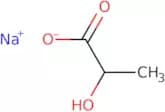
Producto descatalogadoDL-Lactic acid sodium salt, 60% w/w syrup
CAS:Lactic acid is a natural product that has been used for many years as an antimicrobial agent in wastewater treatment. It is also used in the food industry to prevent the growth of bacteria and fungi, and as a preservative. Lactic acid has been shown to have a physiological effect on locomotor activity, which may be due to its ability to convert pyruvate into lactate. Lactic acid also inhibits the growth of some bacterial strains by increasing the disulfide bond formation between two cysteine residues. The sodium salt form of lactic acid is more soluble than the acid form and can be used as an experimental model for studying sodium-lactate interactions. Sodium lactate is used in maternal blood transfusions to increase blood pH levels during labor, and is also added to water vapor for humidification purposes.
Fórmula:C3H5O3NaForma y color:Colorless Clear LiquidPeso molecular:112.06 g/molLithium hydroxide anhydrous
CAS:Lithium hydroxide is a white solid with a high melting point. It is used in the production of other lithium salts, such as lithium carbonate, lithium citrate, and lithium bromide. Lithium hydroxide reacts with acids to produce hydrogen fluoride and water vapor. The reaction is reversible and the equilibrium constant can be calculated by measuring the concentrations of reactants and products at various temperatures. The chemical biology of lithium hydroxide has been studied using different electrochemical impedance spectroscopy techniques.
Fórmula:LiOHForma y color:White PowderPeso molecular:23.95 g/molRef: 3D-FL49109
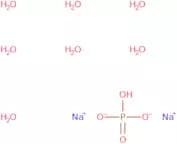
Producto descatalogadoSodium phosphate dibasic heptahydrate
CAS:The particle size of sodium phosphate dibasic heptahydrate is between 0.1 and 1.0 μm. It has a fluorescence detector that can be used to identify metabolic disorders in humans, such as autoimmune diseases and human immunoglobulin deficiency. The particle size of sodium phosphate dibasic heptahydrate is between 0.1 and 1.0 μm. It has a fluorescence detector that can be used to identify metabolic disorders in humans, such as autoimmune diseases and human immunoglobulin deficiency. The particle size of sodium phosphate dibasic heptahydrate is between 0.1 and 1.0 μm. It has a fluorescence detector that can be used to identify metabolic disorders in humans, such as autoimmune diseases and human immunoglobulin deficiency
Fórmula:Na2HPO4·7H2OPureza:Min. 95%Forma y color:White PowderPeso molecular:268.07 g/molRef: 3D-FS47163
Producto descatalogadoSodium 1-Tetradecanesulfonate
CAS:Sodium 1-tetradecanesulfonate is a detergent additive that can be used in water-based cleaning compositions. It is a sodium salt and fatty acid that has been shown to provide high viscosity in the presence of water vapor. This product also provides excellent detergency on oily soils, and is compatible with other ingredients such as fatty alcohols, glycol ethers, glycerin, aluminium, dodecyl cations, and polyvinyl alcohols. Sodium 1-tetradecanesulfonate has been shown to have a wide range of applications including wastewater treatment and analytical chemistry.
Pureza:Min. 95%Ref: 3D-FS63002
Producto descatalogado





![[1,3-Bis(diphenylphosphino)propane]palladium(II) dichloride](/_next/image/?url=https%3A%2Fstatic.cymitquimica.com%2Fproducts%2F3D%2Fthumb-webp%2FFB46063.webp&w=3840&q=75)